| Author |
 Replies: 12 / Views: 2,630 Replies: 12 / Views: 2,630 |
|
|
Rest in Peace
7742 Posts |
|
|
Hi guys..Was looking at this Scott #196 Mint stamp..Could not figure out the back..There are vertical lines as you can see on the picture, but also where the arrows are, there is horizontal lines going across the stamp..  ...Any help would be appreciated...Thanks. 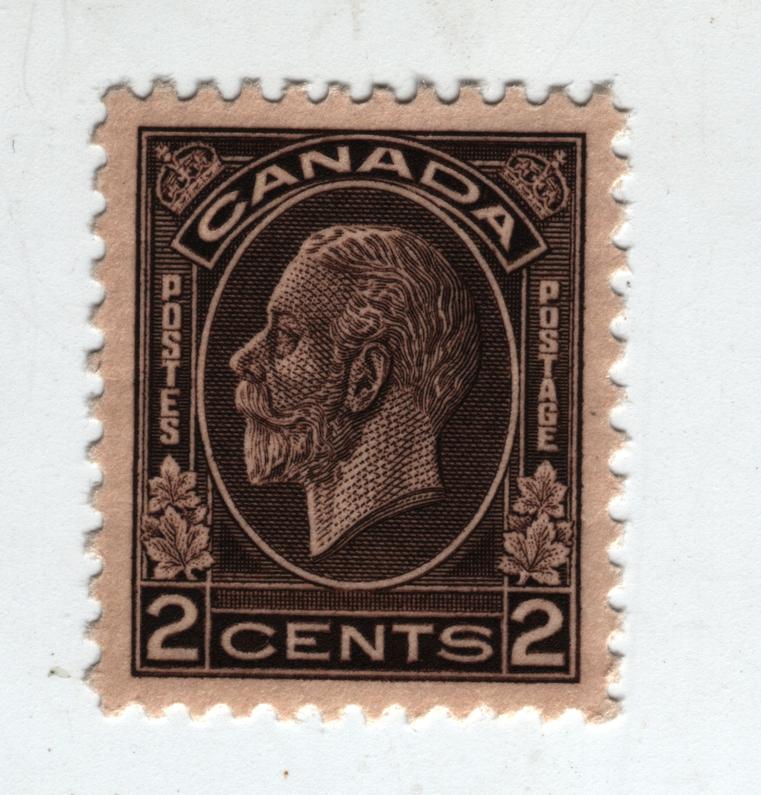 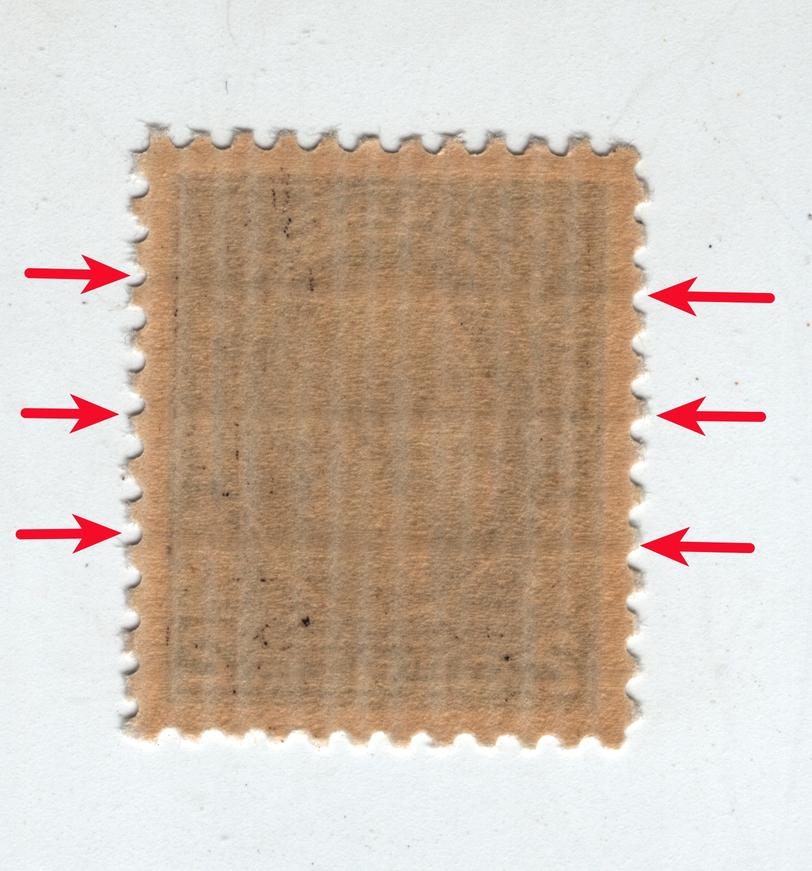 |
|
Send note to Staff
|
| Edited by wert - 04/26/2014 6:05 pm |
|
|
|
|
Pillar Of The Community
United States
2947 Posts |
|
|
Rest in Peace
7742 Posts |
|
|
Hi stampcrow...I just took another look with my 10X and the gum is very, very fresh and there seems to be no breaks/cracks in the gum at all..strange...??
P.S. - if you are referring to the horizontal lines..?? |
Send note to Staff 
|
| Edited by wert - 04/26/2014 6:17 pm |
|
|
Valued Member
Canada
170 Posts |
|
|
The horizontal lines are the result of so called "ribbed paper". The paper being passed between rigid rollers. |
|
Send note to Staff
|
|
|
Pillar Of The Community
3860 Posts |
|
|
They are horizontal gum breaker lines that are around 5-5.5 mm apart from each other. They were applied to rotary press stamps to prevent them from curling. The vertical lines are from the rollers that applied the gum to the back. See: https://goscf.com/t/35011&SearchTerms=rotary,press |
|
Send note to Staff
|
| Edited by jogil - 04/26/2014 7:07 pm |
|
|
Pillar Of The Community
Canada
4648 Posts |
|
|
To the best of my knowledge, I don't think it is 'ribbed paper' but, more the result of gum being applied to the stamps. Some sheets of stamps were fed vertically, and, others horizontally. By mentioning 'gum breaks', we are not referring to a defect, but, more of a gumming process and the gum breaks were the end result.
Chimo
Bujutsu |
|
Send note to Staff
|
|
|
Valued Member
Canada
170 Posts |
|
|
KG V Arch/Leaf Issue #169 was printed on a RP (rotary press)which looks like the original pic posted by Wert. The other #169a was printed on a flat press.
Sheets printed on a rotary press tend to curl and are passed through a series of fracturing rollers to break up the gum crystals thus stopping the curing.
Bujutsu and Jogil you were right nothing to do with ribbed paper. |
|
Send note to Staff
|
|
|
Pillar Of The Community
3860 Posts |
|
|
There have been some new articles recently on this in BNAPS BNA Topics (Volume 70, Number 4) and RPSC The Canadian Philatelist (Volume 65, Number 2) which are both very helpful. |
|
Send note to Staff
|
| Edited by jogil - 04/28/2014 07:08 am |
|
|
Pillar Of The Community
United States
2963 Posts |
|
|
As has been stated by several people here, the back looks like this due to the printing and gumming process (rotary press). There are plenty of articles written on the US stamps from this era that are really helpful. Here is a helpful article ... Brian http://www.1847usa.com/GumBreakers.htm |
|
Send note to Staff
|
| Edited by Rileysan - 04/28/2014 09:53 am |
|
|
Rest in Peace
7742 Posts |
|
|
Pillar Of The Community
3860 Posts |
|
|
From the above link, it looks like the Canadian Stickney rotary press stamps have U.S. Type I gum breakers which are 5.5 mm apart. |
|
Send note to Staff
|
|
|
Pillar Of The Community
United States
2963 Posts |
|
|
From the article - Quote:
There are many experimental gum breaker types other than the three noted here. In the 1948 issue of The Bureau Specialist, Durland writes, "I have before me nine different breaker varieties on that stamp alone the 1922 2¢ rotary stamp and they were taken from a comparatively small number of blocks." Sloane wrote about a block of the twenty cent Special Delivery stamp with breakers running in both directions. I am not sure how many of these apply to Canada stamps or if the US BEP even shared this technology with the British American Banknote Company. It's possible this technology was developed independently of the US BEP. I have no doubt that there are people out there that collect the different types of experimental gum breakers. Thankfully there are no catalogues available that specify and price the different types (that I am aware of). I would hate to collect any more varities of Washington/Franklins than already identified by Scott! Brian |
|
Send note to Staff
|
| Edited by Rileysan - 04/28/2014 12:03 pm |
|
|
Rest in Peace
7742 Posts |
|
|
Rileysan...I would imagine that the printing technology for both Canada and the States back in the 30's would have been maybe dictated by English inventions..Presses and techniques I mean..Just a thought |
|
Send note to Staff
|
|
| |
Replies: 12 / Views: 2,630 |
|




 Posted 04/26/2014 6:05 pm


