| Author |
 Replies: 14 / Views: 2,457 Replies: 14 / Views: 2,457 |
|
|
Rest in Peace
7742 Posts |
|
|
|
|
Pillar Of The Community
United States
8956 Posts |
|
|
Rest in Peace
7742 Posts |
|
|
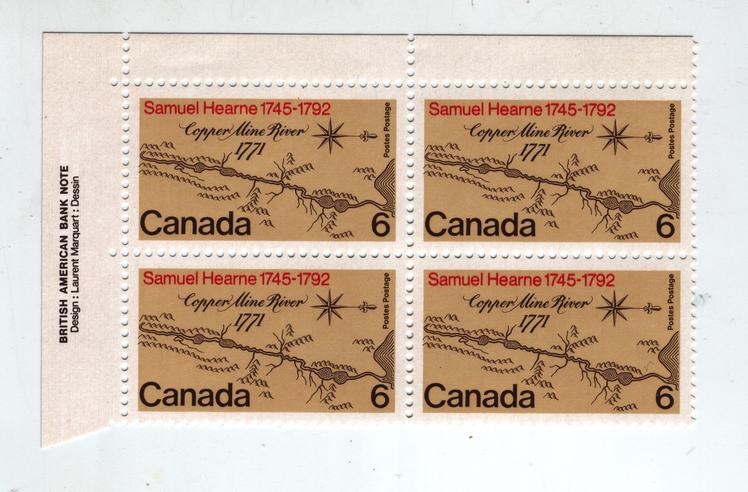
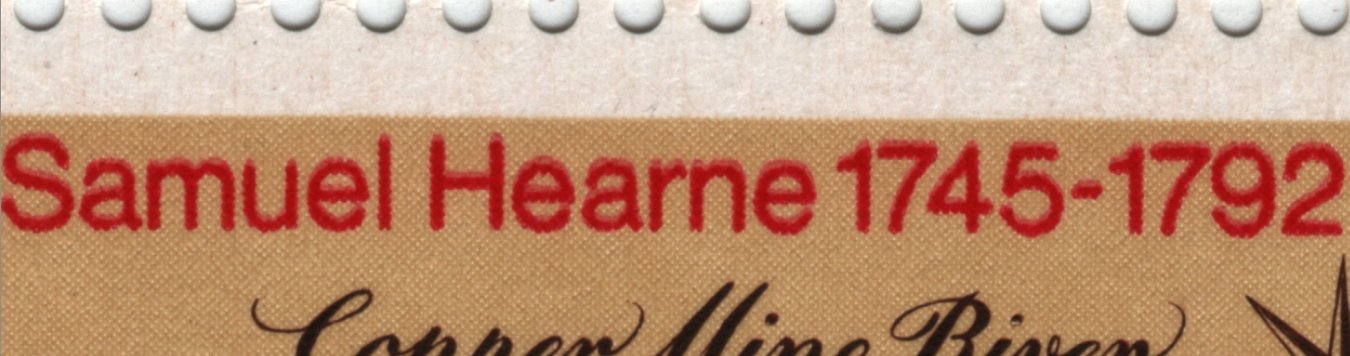
Peter..I think they classify it as "ghosting" in the Unitrade catalog. |
Send note to Staff 
|
| Edited by wert - 04/27/2014 4:21 pm |
|
|
Moderator

United States
5106 Posts |
|
|
Quote:
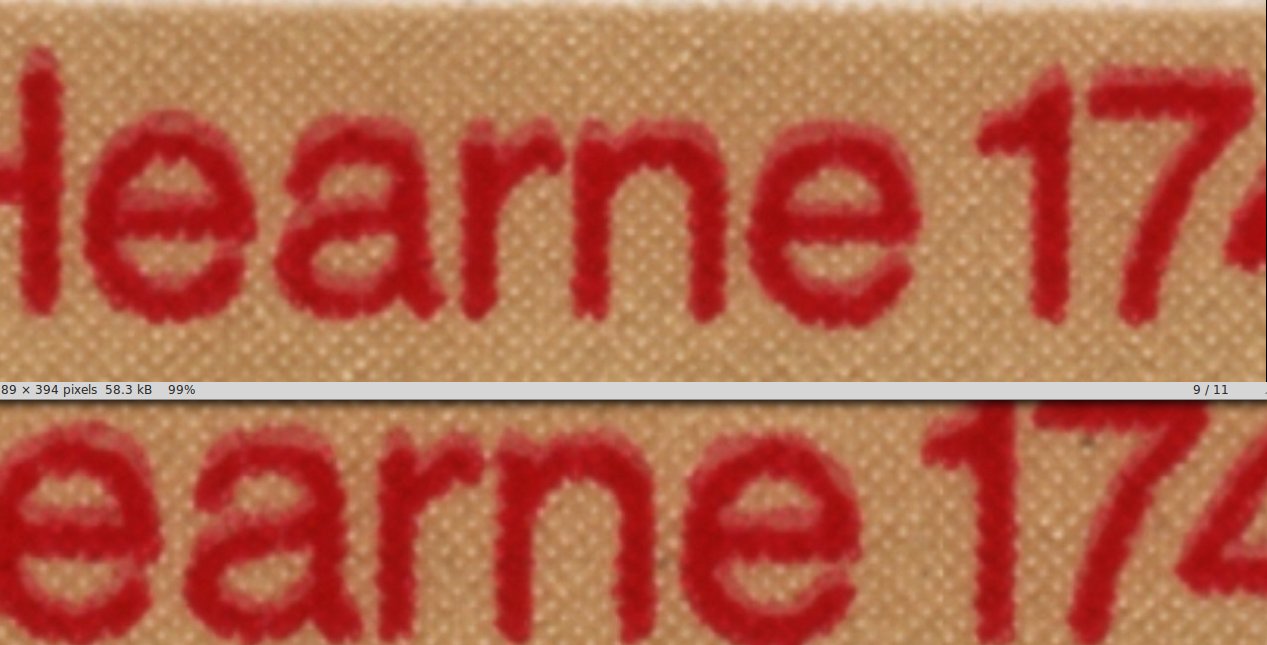
... what is Scott 540i? The exact wording in the newest Unitrade is: "ghost" print, red doubled on "Samuel Hearne 1745-1792". This sure does seem to qualify. However, Unitrade also states that a weak kiss print showing only a shadow are worth much less. I don't think it qualifies for the strong (separate) second impression that you need for best price. |
|
Send note to Staff
|
|
|
Pillar Of The Community
Canada
1401 Posts |
|
|
Sorry Partime, but I disagree.
Wert's example is quite a bit stronger than others that I've seen. |
|
Send note to Staff
|
|
|
Pillar Of The Community
725 Posts |
|
|
I have to add weight to Parttime's comment. Many of the kiss print varieties listed in Unitrade show a high propensity of minor shadowing across that particular stamp. The proportionately much higher value listed is for very extreme varieties. Given the number of stamps such as Wert's that I've seen and given the opinion of Montreal Stamps regarding several that I had, this would not be classified by many as the variety.
Again, it's a matter of opinion as to the degree necessary to classify. I would not list this is the variety, though, if it were me. |
|
Send note to Staff
|
|
|
Rest in Peace
7742 Posts |
|
|
Given the amount of disagreement, I still believe it is a Scott #540i...Whether it is a slight kiss/ghost or an extreme kiss/ghost...Just glad to have blocks and singles of this stamp...  |
|
Send note to Staff
|
|
|
Moderator
United States
5106 Posts |
|
|
Moderator

United States
12330 Posts |
|
|
I think that the digital age, including high resolution scanners and software, have changed the EFO market. Traditionally EFOs really had to 'pop' off the page to catch the attention of collectors; adding a cute marketing name often helped drive popularity. And of course getting a catalog publisher to list it really helped drive up prices. But in this day and age we have fellows like Wert who throw every single stamp they own on the scanner bed at high resolution.  'EFOs' are coming out of the woodwork for virtually every issue if you are willing to scan enough stamps. At some point the hobby, in particular the catalog publishers, are going to have to come up with a method to start sorting through this new infusion of information. In my opinion the old school standard of 'is it a really striking difference' will always be the largest factor in determining value. But I would love to see an in-depth study/collection that demonstrates various printing methods and their outputted degrees of EFOs across specific issues. don |
|
Send note to Staff
|
|
|
Rest in Peace
7742 Posts |
|
|
Quote:
fellows like Wert who throw every single stamp they own on the scanner bed at high resolution Really 51studebaker...I start out the old fashion way with a magnifying glass..If there is a need to use additional equipment/software...I do... I am by no means a stamp expert..I am sure there are people out there that want/need additional means to analyzing stamps..I even use all that is available to me on the COIN side of this forum to...I dont really mind you posting your opinions about you dislike about what the new generation uses in stamp identification..But when you use words like ""fellows like wert""..I take that as an attack on me personally..That hurts. Let me ask you a question...What do you do if YOU find a oddity on one of your stamps..Maybe a scanner.???? |
|
Send note to Staff
|
| Edited by wert - 05/02/2014 08:55 am |
|
|
Pillar Of The Community
Canada
1401 Posts |
|
|
Being a philatelist who "flyspecks", like Wert, I don't think the comment was meant to be personal, but more of an acknowlgement of a person who as known to do what others may not. Had I been commenting on this subject, I'm sure that my name would have been added added as one of the fellows.
Edited only for two spelling mistakes. |
|
Send note to Staff
|
| Edited by BlackJag - 05/02/2014 1:26 pm |
|
|
Moderator
United States
12330 Posts |
|
|
Wert,
Woah, no offense was meant at all. In fact, I make the point that due to fellows like you (flyspeckers) and the new technology are driving a ton of new information into the hobby. I don't understand how you would think that is an insult. And although I am not a flyspecker I went on to say that would love to see an exhibit where it is used to further explore printing methodologies. And lastly I am a retired fellow who owned several technology companies; I guarantee you that I have just as many techie toys as anyone here in this forum! (I'm writing this on my 2 years old Windows tablet that runs apps like AutoCad and Photoshop while the robotic vacuum is buzzing about my feet.) But I am fairly old and use words like 'fellow'; perhaps this has taken a new meaning in today's lingo but no disrespect was meant at all!
I humbly apologize that you read my post as a criticism. I will redouble my efforts before posting into the future to try to ensure that it does not come across like that. I would never, ever, be critical of anyone who collects stamps in any fashion, we all should follow whatever path results in intrinsic enjoyment!
sorry,
don
Edit:
Wert,
My primary point was that philately, in particular EFOs, have been greatly impacted by technology. While a 'line in the sand' can made when discussing plate flaws it seems to me that EFOs are a completely different animal. At what point does a stamp become an EFO? Is a 1 pixel color shift considered normal? Or is it sloppy printing? Or is it a EFO?
In most quality manuals and specifications there are methods defined to spot flaws. They often read something like 'visible to unaided eye, held at arm's length, under office lighting'. They use this kind of definition since it does not require special equipment or technology to inspect to, but we have lots of folks (much like yourself) who have much greater inspection technology today.
So just like the threads where we discuss color imaging, my posts are meant only to help further the understanding of the confluence of technology and the hobby we love. Don't be discouraged by the obstacles in this confluence; they simply need to be thought through, discussed, and get everyone on the same page.
don
|
|
Send note to Staff
|
| Edited by 51studebaker - 05/02/2014 11:55 am |
|
|
Rest in Peace
7742 Posts |
|
|
Quote:
while the robotic vacuum is buzzing about my feet. WOW..That is so neat...I was going to dabble in robotics myself..Now I don't use Windows, haven't used it for 7 years..I believe that ALL software should be FREE to anyone, hence that is why I use Linux which has approx. 37,000 free programs..But getting back to my reply..Hey, I am getting older to myself, and the reason I came on this forum is because of the love I have for collecting stamps and the helpfulness and friendship I get from people like you 51studebaker . Yes I know me and you have not seen eye to eye on a couple of things/ideas, and you know which one I am talking about...haha Bottom line my friend (if you will let me address you as such) I appreciate your posts, whether positive or negative..I enjoy your responses..NO OFFENCE TAKEN... |
|
Send note to Staff
|
|
|
Moderator
United States
12330 Posts |
|
|
Wert,
I would be proud to count you as a friend. I am interested in your (and others) opinions about an EFO definition.
As I am sure you probably already know, there are always specifications and inspection criteria in the manufacturing of any product. The PO has requirements which the stamp maker must meet or exceed. These include exact colors to be used, dimensions, gum chemistry, etc.; but specifications also define tolerances. So for example if the design drawing calls for a stamp to be 75mm x 50mm it would also include a tolerance of let's say +- .3mm. This is what the PO would expect in the final product and this is what the maker of the stamp would inspect to. If everyone is doing their jobs we should find no stamps that fall beyond this specification. So can we define an EFO as one that falls outside the those specifications?
And with regard to technology, what happens when current technology exceed that that was available when the stamp was manufactured? In other words, if we can inspect stamp far beyond what was readily available at time of manufacture, can we still call it an EFO? Thoughts?
don
|
|
Send note to Staff
|
|
|
Rest in Peace
7742 Posts |
|
|
Quote:
if we can inspect stamp far beyond what was readily available at time of manufacture, can we still call it an EFO? 51studebaker...I don't see why not..Like you said and like what others did including myself years ago was to inspect each and every stamp for EFO with the naked eye and with the help of a magnifying glass..That was the extent of the technology that was available to us at the time...Is technology bad..??..Well yes and no... Yes it is bad because we pass by the real fundamental aspect of stamp collecting.The thrill of looking trough a cheap $1.00 magnifying glass was fun...and the identification of a EFO was so exciting..Now, today with my USB microscope, my expensive magnifying glass, my computer and ALL the software available to me, it is just as exciting. But it takes the fun out of the hunt. No it is not bad...Take for example "watermark fluid", hardware, software...not available in the 20;s..30's..etc. Now we can find EFO the were not available to us...I would not be called a "flyspecker" if it wasn't for all this new technology...It opened up a new way of looking at stamp collectiong. Just my personal opinion.. |
|
Send note to Staff
|
| Edited by wert - 05/03/2014 09:53 am |
|
| |
Replies: 14 / Views: 2,457 |
|




 Posted 04/27/2014 4:06 pm