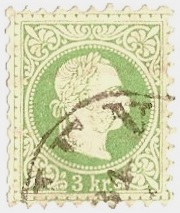
This stamp is in fact a common (Austrian and Hungarian) issue. It was used in Hungarian Kingdom too, until 1871, when Hungary issued it`s first stamps.
A lot of early European stamps do not bear the name of the country. This is from 1867. Perhaps, they thought that the emperor portrait was enough to identify the country: Austria-Hungary.
It is a condition of membership of the UPU that countries (except UK) put their name on any stamps which might be used on mail which subsequently ends up being handled in a foreign country. This is to help sorters in the foreign country know where a letter has come from so they can check it for underpayment, and so they can keep a record of the number of items they have handled from each individual country (I believe that at various times there were payments required if traffic one way greatly exceeded that in the opposite direction.)
This means that a) there was no requirement on any state to put their name on stamps before the foundation of the UPU (1874 - and I'm not sure that the naming regulation was made immediately) b)there was no requirement on any state to put their name on stamps before the state joined the UPU c) there was and is still no requirement on any state to put their name on stamps that can not be used on mail to abroad (e.g. postage dues, internal rate newspaper stamps, internal rate postal stationery, obligatory tax stamps)
Disclaimer: While a tremendous amount of effort goes into ensuring the accuracy of the information contained in this site, Stamp Community assumes no liability for errors. Copyright 2005 - 2026 Stamp Community Family - All rights reserved worldwide. Use of any images or content on this website without prior written permission of Stamp Community or the original lender is strictly prohibited. Privacy Policy / Terms of UseAdvertise Here





 Posted 08/30/2014 3:04 pm