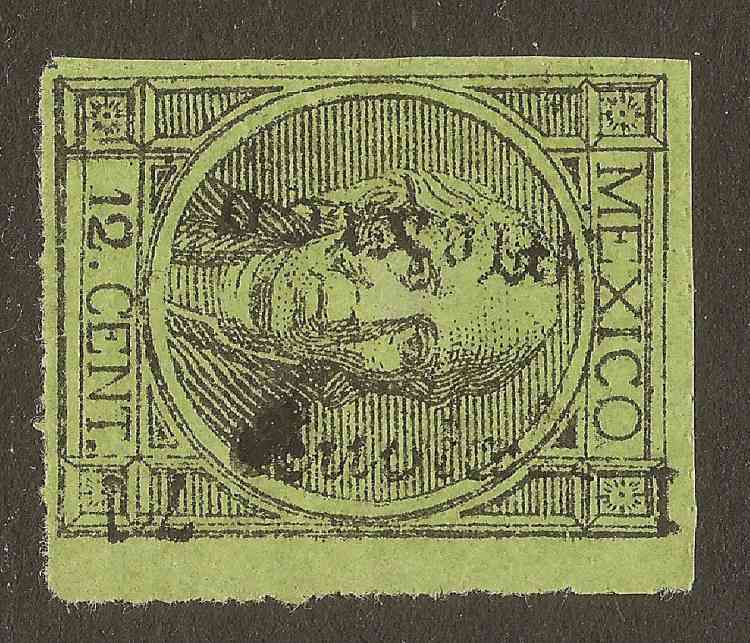
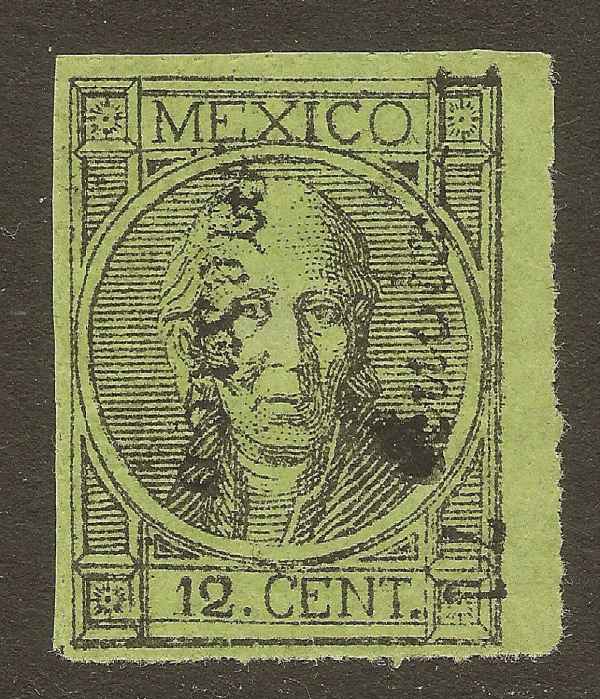
My reading of my ancient SG catalogue is that the diagonal "Anotado" overprint is the norm. There's also a reference to the combination of "Mexico" and the names of smaller offices. And the phrase "dangerous forgeries" also pops up more than once!
Yes, it is a big stretch. But, if you assume that the blip of ink covers "A", and "do" is nearly invisible (underinked); then, what remains of "A", and letters forming "nota" look very damn similar to Anotado overprint in my Scott catalog.
Thank you very much for the link. Unfortunately, my example only have "nota" more or less clearly visible out of whole overprint. I can't really compare it to the example, and can't measure it too. From what I can see my letters are much heavier, but kind of similar to the example. I assumed, being a hand stamp it can have a great variation in the weight of the overprint; beside "more than one overprinting devise was used". It meets the time and location criteria, but as noted by the author "Unless the anotado fits the profile exactly, consider it to be a forgery". Anyhow, genuine or forgery, I'm inclined to believe it is an "Anotado" overprint, and not something else. Given the condition of the overprint, even a specialist would have a hard time determining its authenticity.
Disclaimer: While a tremendous amount of effort goes into ensuring the accuracy of the information contained in this site, Stamp Community assumes no liability for errors. Copyright 2005 - 2026 Stamp Community Family - All rights reserved worldwide. Use of any images or content on this website without prior written permission of Stamp Community or the original lender is strictly prohibited. Privacy Policy / Terms of UseAdvertise Here





 Posted 11/15/2014 12:07 am