|
This page may contain links that result in small commissions to keep this free site up and running.

Welcome Guest! Registering and/or logging in will remove the anchor (bottom) ads. It's Free!
To participate in the forum you must log in or register.
| Author |
 Replies: 144 / Views: 28,558 Replies: 144 / Views: 28,558 |
|
|
|
Pillar Of The Community
United States
845 Posts |
|
|
I have only been following this thread casually. The last update by essayK interested me purely from a logical standpoint. EssayK reports: Quote:
Based on his examination of the photos he has received from me and the owner, he announced his conclusion that this stamp is a double cap variety that has been altered on the left numeral "2." This he determined from the form and presence of certain "shadow" markings near particular shading lines in three regions of the design. He demonstrated that these markings are particular to the "two-cap" varieties. Let me summarize what I have learned, which indicates nothing of consequence has been learned about the authenticity of this right-cap example. Point out if a step in my reasoning is wrong. 1. No right-cap varieties have been certified except the example from the OP. 2. An expert in relief breaks saw markings on this example that are tell-tale signs of the double-cap variety. 3. The expert offered no other evidence that this example was actually physically altered (of course he didn't have the stamp in hand...I know that). 4. There are no right-cap varieties to examine, except this one, to determine if those markings are also tell-tale signs of the elusive right-cap variety. |
Send note to Staff 
|
| Edited by HungaryForStamps - 09/22/2016 4:46 pm |
|
|
Pillar Of The Community
United States
1946 Posts |
|
|
Quote:
4. There are no right-cap varieties to examine, except this one, to determine if those markings are also tell-tale signs of the elusive right-cap variety. This is not correct, other examples appearing as right cap only do exist. Dr. Sollenberger has three in his own collection, if I correctly recall what he once reported to me. However, among the examples known to the specialists, published or not, no two right cap examples show all the same features. Not a problem for a printing variety, but a serious problem for relief and transfer varieties. The 220a and 220c varieties are identifiable relief breaks. So far that cannot be said for the 220 right "break" examples. Another strike against the right cap alone is that no multiples linking a right cap with any other type have been reported. To the non specialist (like me) none of these points nail the matter down. But so far the best experts are not convinced that any of the known "right cap only" examples passes muster. |
|
Send note to Staff
|
|
|
Pillar Of The Community
United States
1868 Posts |
|
|
The four-point summary by Hungary also omits this: Quote:
He wonders if the PF had given much attention to the left "2" in its examination, and would like to see what result they would get with their new scanning tool that is able to detect layering thickness differences in printing. So the expert has posed a hypothesis which, like the owner's own hypo, needs to be tested with a tool like the VSC-6000 and a qualified analyst. Little else can be done to characterize this stamp unless that is done. |
|
Send note to Staff
|
|
|
Pillar Of The Community
United States
1946 Posts |
|
|
Quote:
Little else can be done to characterize this stamp unless that is done. Yes, CJ. That was exactly the consensus of the group in NY. However, Dr. Sollenberger finds his identification of the other extraneous markings consistent and convincing. Suffice it to say that his opinion is more than a conjecture; he is able to point to evidence in an orderly way. I just wish I was enough on top of that to do it justice for you here. |
|
Send note to Staff
|
|
|
Pillar Of The Community
United States
1868 Posts |
|
|
essayk, I'm grateful for all your contributions thus far. Dr. Sollenberger's analysis makes sense to me and I realize that your summary of his presentation does not include every detail. I hope the owner of the stamp will work with PF to undertake VSC analysis, and that Dr. Sollenberger or others write a journal article thereafter. |
|
Send note to Staff
|
|
|
Moderator

United States
12330 Posts |
|
|
Has Dr. Sollenberger presented his 'right cap only' examples and/or research to any publishers or submitted them for certifications? If so, a link/source would be much appreciated. If not, why not?
Don |
|
Send note to Staff
|
|
|
Pillar Of The Community
United States
845 Posts |
|
|
Quote:Quote: Quote:
He wonders if the PF had given much attention to the left "2" in its examination, and would like to see what result they would get with their new scanning tool that is able to detect layering thickness differences in printing. So the expert has posed a hypothesis which, like the owner's own hypo, needs to be tested with a tool like the VSC-6000 and a qualified analyst. Little else can be done to characterize this stamp unless that is done. I'm not sure I understand the nature of the expert's hypothesis. EssayK's post implies the hypothesis is the stamp was altered, presumably turning a 2-cap into a 1-cap variety. Surely, the first step is an examination at 30x magnification to look for alterations (which would presumably be application of ink to fill in the cap). Should be easy enough to determine. I feel some small concern for the owner of this stamp. He has a legitimate certification. Now a group of people want him to submit for another certification with direction apparently to the certifying organization from another expert. It is most important to maintain objectivity with any new assessment and not push any particular agenda. |
|
Send note to Staff
|
| Edited by HungaryForStamps - 09/23/2016 12:39 pm |
|
|
Pillar Of The Community
United States
1946 Posts |
|
|
It seems people are losing track of points that have already been covered in this lengthy thread. The last two inquiries have been addressed earlier in the thread - but let me try to pull it together. Don: I had earlier referenced USSS Research Paper #22 which was written by Sollenberger. It covers exactly the questions in your last post. Here is another link to the paper which you may download if you are a USSS member. http://www.usstamps.org/download/re...mpany-issue/HFS: I share your empathy, and did so personally when I met the man in New York. He is a nice fellow, and genuinely interested in understanding the truth about the stamp he owns. However, there are a couple of things about this stamp and the certification process that do not appear in your comments. I suspect they are not clearly understood by you. 1. It is not enough to say that a white spot that ought to have ink is another "cap" variety in the same sense that 220a and 220c are "cap" varieties. The latter two are verifiable "relief breaks." They have their origin on a transfer roll, and their defects were entered into plates in a flawed condition. Each plate position with the flaw will be consistent from one impression to another. The "right cap" examples are seldom seen, and those that have been isolated so far do not show this kind of consistency. This suggests that the right cap varieties are printing flaws but not relief or transfer varieties. In terms of catalog identity, this matters. The burden of proof rests with anyone claiming this is a relief break. 2. "Certification" of a stamp is not a guarantee of anything. All the authorities doing it point out that they give as informed an OPINION as they are able at that point. I spoke with Lew Kaufmann who had headed up the group that certified this stamp in 2008, and he acknowledged that they had neither the tools nor the pool of authorities to make a definitive identification at the the time. Since they could not deny that there is a white spot where color should be they worded the cert so as to allow for that but without calling it a relief break. Since 2008 the PF has acquired the VSC-6000 and the assistance of actual authorities on the details of the relief breaks on this stamp. Initially Kaufmann was not sure that a resubmit could be given a less ambiguous cert statement, but now Sollenberger has given them a scientifically valid basis for comparison. For these reasons, the PF needs to give the stamp another look. It is one thing to simply throw cold water on a fellow's hopes, it is another thing to follow scientifically valid and replicable procedure in making a determination. The reason for a resubmit is to satisfy that second need. |
|
Send note to Staff
|
| Edited by essayk - 09/23/2016 3:11 pm |
|
|
Pillar Of The Community
United States
937 Posts |
|
|
essayk,
Disregarding other omissions (which might be pertinent), "...but now Sollenberger has given them a scientifically valid basis for comparison. For these reasons, the PF needs to give the stamp another look." You give us no specific anything so that we can understand what you allude to in this statement so that we can understand you in a technical manner.
Also...again, you allude to having access to a higher resolution image of this stamp, yet refuse to provide it despite being specifically asked to do so. You are certainly not obligated to do so, but I do wonder why you have not.
Previously, I asked for a micro-tomography analysis of this stamp. Given your own words in your multiple later replies to this topic, my opinion of what analysis methods that should be conducted are still pertinent in that it will achieve exactly what you propose. Technical jargon does dilute what we are both asking for, but I can not see any difference in methods that I advise versus what methods that you desire. I do however see a great divide between why I ask for certain analysis methods versus your shotgun approach to advocating analysis methods that others advocate to you and that you subsequently demand.
I ask of you for explanation of the analytic methods that you desire and why you dismiss others.
-------------------------
ikeyPikey and cjpalermo1964
The difference in specific naming explains my confusion. I have already read the provided links much earlier than now. I have also presented similar topics in terms of color analysis as well as other methods of analysis prior to now. Suffice it to say, I am familiar with these methods of analysis.
Regardless, both of you have solved my misunderstanding and I greatly appreciate your input. Thank you. |
|
Send note to Staff
|
Ryan = HDNAC = DNA = HDC = Hysterical DNA Collector = Historical DNA Collector = me who just loves stamps :) |
| Edited by Historical DNA Collector - 09/23/2016 10:26 pm |
|
|
Valued Member
United States
466 Posts |
|
|
Interesting discussion. It reminds me of the Scott 233 4c Columbian "three leaf" variety. I was working on the progression of the leaf from a minor trace to a full third leaf. For those unfamiliar a photo is here showing an extra leaf in the scrolling ornaments around the right numeral 4. I was speaking with Tom Corette, the premiere scholar on the two cent Columbian, and he explained the "three leaf" is an inking flaw and not a plate or relief flaw. Studying plates reveals this. Therefore the variety would never be annotated by Scott. The broken hat Columbian, Scott 231 var, is listed however because it is a documented progressive relief flaw (also per Mr. Corette). This flaw is even noted on proofs of the issue. With this explained I abandoned my progression study of the three leaf variety because I was creating an order that was only a coincidence and not really anything truly progressive. The 233 three leaf is not scarce, and it is fairly easy to find multiple examples that have the exact same inking flaw. This would lead one to believe it is a plate flaw, but study of the plate has to demonstrate it as such by positioning and repeatability. Otherwise it is a neat under-inking variety. So back to "220b" it is worth further study and hopefully more show up, in multiples, consistent shades, or as proofs. 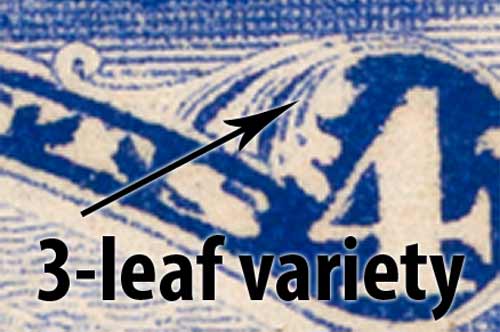 |
|
Send note to Staff
|
| Edited by Crouse27 - 09/23/2016 11:44 pm |
|
|
Rest in Peace
United States
4052 Posts |
|
|
Quote:
... Previously, I asked for a micro-tomography analysis of this stamp ... HDNAC Ryan: The hobby now has access to several copies of the VSC-6000. As you probably know, unlike a kilogram scale, these instruments interrogate the target, and the results must be interpreted, with the correct interpretation of those results requiring familiarity with the physics of the instrument, the conditions under which the subject is tested, etc. That several facilities use the same instrument is an important advantage for the hobby, as researchers can apply their collective skills at more than one facility, and the results become more comparable & repeatable. I do not think that the benefits of introducing another analytic technique - eg, micro-tomography - outweigh the disadvantages of introducing results that few(er) people in the hobby can readily interpret. <tangential anecdote> Ages ago, I was at the annual international distributor's meeting for the manufacturer of a bio-analytic device. The OEM promised to send along a packet of properly prepared sample tissues to support the distributors' sales, eg, one each of rat kidney, and mouse liver, and chicken brain ... whatever, you get the idea. The Japanese distributor got up and asked if his samples could all be adjacent slices of a single organ - he did not much care which organ, or which animal - just that the samples be as near to identical as possible. For their kind of group-based decision-making, it was important that the different researchers at the different universities all be looking at the same thing, so that they would have the same facts and, therefor, could reach the same decision. Together. </tangential anecdote> For now - in these early days - the hobby is better-off if we all use a common technique on a common instrument, so that we can build confidence in our experts, their expertise, and their findings. Baby steps! Cheers, /s/ ikeyPikey |
|
Send note to Staff
|
|
|
Pillar Of The Community

United States
1273 Posts |
|
|
Pillar Of The Community
United States
937 Posts |
|
|
ikey,
All of your points are pertinent and insightful.
Let me start off with admitting that I was in a frustrated mood last night. I asked for clarification of the situation in a manner that cannot be expected by anyone other than those that are directly tasked with detailed analysis of this stamp.
essayk, I asked for more from you than what anyone could reasonable expect given the situation. I appologize. I do however still hope that you have a higher resolution image to share with us. I'll back off of pressing you so hard to produce such an image. If you can, I and probably others would be greatful.
ikey, you do present a compelling argument concerning the progression of analysis methods and reproducibility amongst philatelic researchers. I agree that reproducibility is crucial. However, it matters little if the methods utilized are not sensitive enough. That is a major basis of my argument. However, I am proposing what seems to be an uncommon analysis method. One which may seem perfectly reasonable to me but may not seem warranted to others. You have reminded me to consider other's viewpoints.
I do need to take a step back myself. Since I am not intimately involved in the process of analyzing this stamp and privy to all of the information, my conjecture is based on a limited amount of information. Speculation is not an accurate tool.
I thank you for the effort you took to participate in argumentation.
essayk, I look forward to hearing more from you concerning this topic. I thank you for taking the time to update us with what you know. |
|
Send note to Staff
|
Ryan = HDNAC = DNA = HDC = Hysterical DNA Collector = Historical DNA Collector = me who just loves stamps :) |
|
|
Rest in Peace
United States
4052 Posts |
|
|
Quote:
... argumentation ... Gosh ... I hope you meant "instrumentation", and got spell-checked. Visual spectrum instrumentation seems like a good place for the hobby to start, since so many of our most impossible disagreements seem to be about color, what with carmine, pink, rose, carminey-pink, pinky-rose, rosey-pink ... and because, well, its comparatively cheap. You are correct, HDNAC, that there are other types of instrumentation that are more appropriate to other issues. An x-ray-based instrument would almost certainly be a better way to detect tears'n'repairs, for example, but would also need baseline research to determine the optimal beam strength, wavelength, etc ... and would be able to draw on a smaller community of outside researchers for support. And, while we're at it, why not get past the current apparent color, and start characterizing the actual chemistry of the actual ink? This would probably create hundreds of new minor varieties! Cheers, /s/ ikeyPikey |
|
Send note to Staff
|
|
|
Pillar Of The Community
United States
937 Posts |
|
|
ikey, I normally appreciate your humor and sarcasm, but I think that you are way off the mark here. Your comment makes it apparent that you lack a fundamental understanding of how the analysis methods that you mock do actually work and how they are benefiting philatelic research. Quote:
An x-ray-based instrument would almost certainly be a better way to detect tears'n'repairs, for example, but would also need baseline research to determine the optimal beam strength, wavelength, etc ... and would be able to draw on a smaller community of outside researchers for support.
The issue is not necessarily about "tears'n'repairs". The current discussion is about deducing the conditions by which a right cap only variant could have been produced. Sure, the stamp in question at the start of this discussion could be further vetted by an absence of detectable alterations. The same could be said about any of the many similar variants of this type that are mentioned in this thread. However, the topic has been longstanding as of now to be about the possibility of an actual right cap only variety. Since you do not demonstrate a technical understanding of any of the analytical methods that you mock, I will try to make this simple. Tomography will lend insight into the three dimensional shape of the transfer roll that is responsible for a potential right cap only stamp. I alluded to my observations that might be pertinent much earlier in this thread. After a tomographical analysis, modes of failure of the metal(s) used at that time will lead to even more understanding of the progression of these relief breaks. Such analysis that also considers the information that is currently known about the patterns of these relief breaks could very well lead to insights into the present topic of discussion. With further analysis, we could deduce a means by which a right cap only variant could physically occur, or not. Additionally to satisfy the question of scarcity, could those means explain why only a handful of resultant stamp printings occured? If your last reply was entirely made in some sort of jest that I didn't understand, then please explain it to me. Otherwise, I now know the limitation of your understanding of philatelic analysis methods. If that is the case, I advise you to not try to exceed your capabilities. Your are an intelligent individual and I do appreciate most of your commentary on this site. However, I believe that you are lacking in understanding of the concepts at hand at this moment of the discussion. I will gladly point you towards educational resources without prejudice. I am always eager for more persons that are knowledgeable to engage in discussion. To simplify, please explain why you present yourself as not knowledgeable about the topics described above in an unashamed manner. Simple misunderstanding? An issue of unintentional ignorance? Something else? If you are not knowledgeable of above said topics, then please educate yourself. If you desire to do so, I will gladly point you towards educational resources. Additionally, please explain Quote:
"Gosh ... I hope you meant "instrumentation", and got spell-checked." I cannot find how this could be humorous, sarcastic, nor anything. I am truly puzzled as to why you chose this response as the beginning to your reply to me. I have no desire to mute you. I only desire to work towards resolving the unknown in this situation. |
|
Send note to Staff
|
Ryan = HDNAC = DNA = HDC = Hysterical DNA Collector = Historical DNA Collector = me who just loves stamps :) |
|
|
Replies: 144 / Views: 28,558 |
|
|
To participate in the forum you must log in or register. | |
Disclaimer: While a tremendous amount of effort goes into ensuring the accuracy of the information contained in this site, Stamp Community assumes no liability for errors. Copyright 2005 - 2026 Stamp Community Family - All rights reserved worldwide. Use of any images or content on this website without prior written permission of Stamp Community or the original lender is strictly prohibited.
Privacy Policy / Terms of Use Advertise Here |
| Stamp Community Forum |
© 2007 - 2026 Stamp Community Forums |
| It took 0.27 seconds to lick this stamp. |
 |
|
|
|


 Posted 09/22/2016 4:38 pm


