| Author |
 Replies: 9 / Views: 3,142 Replies: 9 / Views: 3,142 |
|
|
Pillar Of The Community
United Kingdom
895 Posts |
|
|
|
An open question - I was reading on here about a block of stamps with colours missing, and the general opinion was that the stamps had probably lost their colour because they had been exposed to prolonged sunlight.
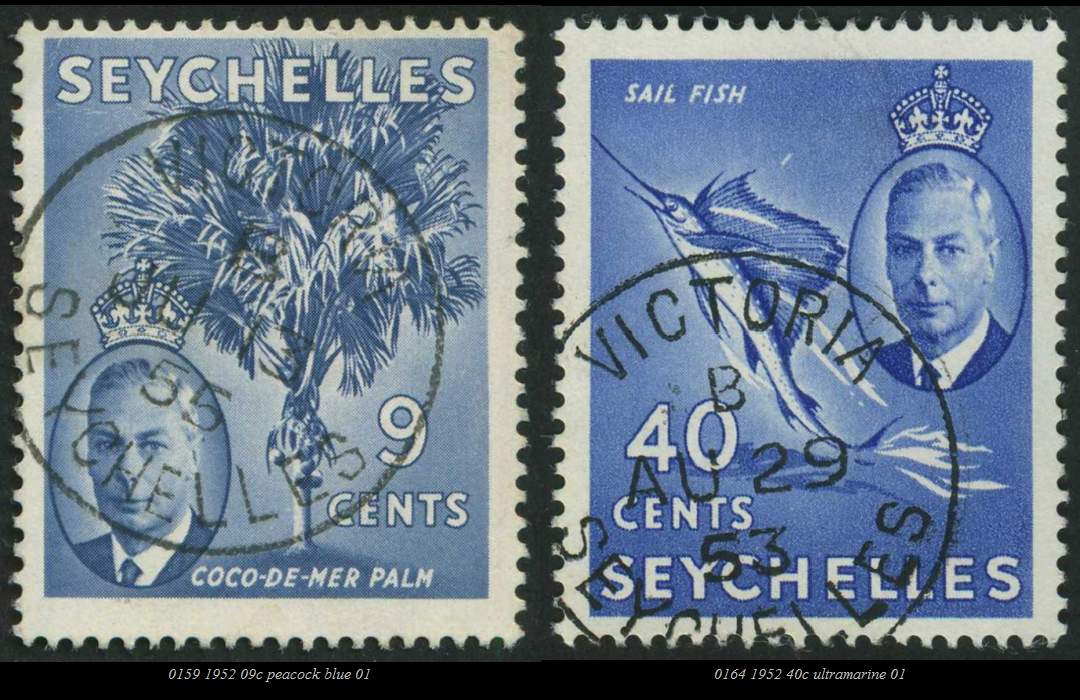
Fair enough - but then I also note a lot of attention is given to shade variations on stamps, for example the GB Penny Red, which is known in all manner of shades from deep maroon to light pink.
So, the question is, if the intensity of stamp colours can change through sunlight and other factors (water, chemicals etc), how can we ever decide if a stamp was originally printed in a specific shade, and hasn't just faded over time?
|
|
Send note to Staff
|
|
|
|
|
Bedrock Of The Community
United States
10832 Posts |
|
|
Realistically one can't in many cases. All one can do is try to determine what shade or color a stamp is today. The classics are 115-175 years old, and very few inks from that time are stable for so long unless they were immediately put into someplace dry and dark and left there ever since. Black, blue and green are usually pretty good, and the many of the reds, violets, oranges, etc. are often not. |
Send note to Staff 
|
|
|
Rest in Peace
United States
7097 Posts |
|
|
Also please take into consideration that the types of inks and even the presses are vastly different and modern-day stamps just don't stand the test of time like the classic era stamps do but that's certainly not to say that they aren't impervious to fading or chemical exposure but the information we go off was documented when said stamps was current if that helps at all? |
|
Send note to Staff
|
|
|
Pillar Of The Community
United States
8579 Posts |
|
|
Once you get into shade varieties ,you need to get some of the specialized catalogs for that country .Some of my Italian States stamps have sub-shades because I have found a shade not listed but over time picked up 3 or 4 of that shade from various sources. I list them separate and leave it at that and let the next owner decide. I believe some shades are caused by the paper used and moisture of the paper ,also the making of ink back then wasn't as accurate in their mixtures . |
|
Send note to Staff
|
|
|
Pillar Of The Community
Australia
4034 Posts |
|
|
The Australian KGV penny red 1914 to 1921 was recorded by a Mr Blogg in the 1920's to have 422 different shades.
Red ink at the time came out of Germany so the WWI stop the red ink supply. So the penny red printer mixed all sorts of inks to get some sort of red colour for the KGV penny red.
Changelings and Fadelings are now easy to ID because UV longwave shade reaction tells no lies but then there are a very few red shades that need to have there ID done in daylight shade reaction.
They are the most collected stamp in the world. In 1914 the stamp printer of the day printed 500 million KGV penny red stamps in that year alone. |
|
Send note to Staff
|
| Edited by KGV Collector - 11/30/2014 06:33 am |
|
|
Pillar Of The Community
United Kingdom
1255 Posts |
|
|
Shades are very much in the eye of the beholder. One S African dealer I know has a bias in certain types of blue and I am sure he sees shades that don't exist. KGV Collector says it for the "reds." UV is about the only way to get anywhere close to identifying reds. Also note that colours have ranges (e.g. a carmine group, a rose group, a lake group, etc) and there are many variaitons in between. Blues and greens from early surface printings have a similar problem, and the inks are often fugitive. Collectors of KGV British Colonial definitives will know the issues. I have over 30 shades for the "green" 1/2d perf. 14 British South Africa Company "Double Head" (S.G. 119-122) and they are pretty much impossible to catalogue accurately in used or mint condition. Like Floortrader I just leave the stamps in groups and heaven help the next owners.
Rarer shades exist of course, and these will need to be expertised. |
|
Send note to Staff
|
|
|
Pillar Of The Community
United States
604 Posts |
|
|
The simplest and most common cause of shade varieties is the thickness of the ink on the stamp. This can vary widely even during a single press run. The next most common cause of legitimate shade varieties is variation in the ink formula. Measuring accuracy including mixing by eye under varying lighting conditions figure strongly here. Shade varieties due to the effects of environment (including light, oxidation and sulphreting)are all too common and are not legitimate shade varieties. Early dealers and even some collectors identified and listed shade varieties that should have been ignored but continue to this day. |
|
Send note to Staff
|
Bill Lehr
US Postal Stationery Specialist |
|
|
Bedrock Of The Community
Australia
38679 Posts |
|
|
Pillar Of The Community
United States
8579 Posts |
|
|
From all the postings above on the subject of shade varieties . It is difficult to know and it is best to leave it to the specialized catalogs . Since I am a worldwide collector and it is not reasonable to have every specialized catalog and the ability to show a scan on a computer screen is questionable. What I do is just make room for them in my collection . Like this one . 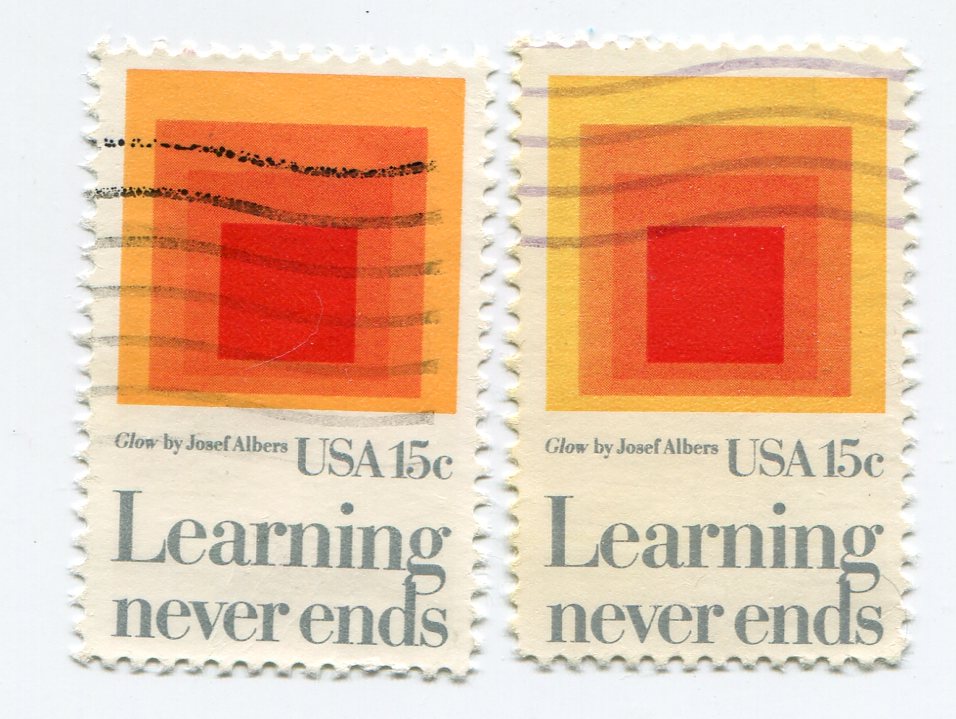 |
|
Send note to Staff
|
|
|
Pillar Of The Community
United States
4170 Posts |
|
|
floor = those were printed by gravure with a mix of red and yellow and the one on the left has more red or the one on the right has less red. The shades of the red and yellow aren't different, so it isn't a different shade in the same sense that a single color engraved stamp has. |
|
Send note to Staff
|
|
| |
Replies: 9 / Views: 3,142 |
|



 Posted 11/27/2014 07:13 am