It was not unusual during the period between the World Wars for officers to switch services, especially within the fledgling air branches. Many were "recruited" to training and doctrine development positions. Found a history of his unit here >
http://www.marin-turpin.com/images/bff06.pdf< Here's a short passage:
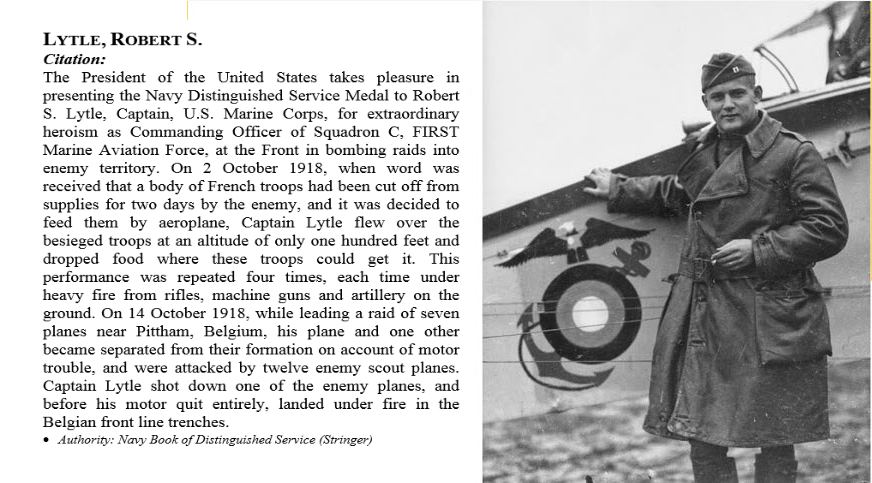
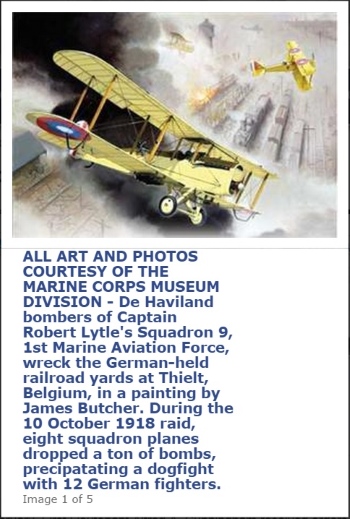
Talbot played a part in another, bigger raid two days later. Captain Robert S. Lytle,
commanding officer of Squadron 9, took out five DH-4s and three DH-9As to strike the
German' held railroad yards at Thielt, Belgium. They dropped a ton of bombs. On the
way home, 12 German fighters â€" eight Fokker D-VIIs and four Pfalz D-IIIs â€" jumped
Lytle's eight DC Havillands. In the melee, the Germans singled out the DH-4 flown by
Talbot with Corporal Robert G. Robinson in the hack seat. Captain Lytle's engine failed
as be tried to come to Talbot's aid. Robinson brought down one attacking plane with his
twin Lewis guns. Two others closed in from below. Robinson took a bullet in his elbow,
but clearing a jammed gun with his one good hand, he continued to fire until he was hit
twice more. With Robinson unconscious in the back seat, Talbot whipped his DH-4
around and got a second German with his front guns. He then for his damaged plane
into a long dive, clearing the German lines at 50 feet and coming in safely at a Belgian
airfield. Robinson was taken to a field hospital, and the surgeon general of the Belgian
Army operated on his arm and saved it.
Lytle, meanwhile, came down without power and made a dead-stick landing in front of
the Belgian lines, and he and his observer scrambled to safety. That night, under cover
of darkness, a Marine working party dismantled his plane and brought it hack in
through the lines.





 Posted 12/01/2014 5:57 pm