| Author |
 Replies: 56 / Views: 12,371 Replies: 56 / Views: 12,371 |
|
|
|
Rest in Peace
Canada
5701 Posts |
|
|
Rest in Peace
Netherlands
963 Posts |
|
|
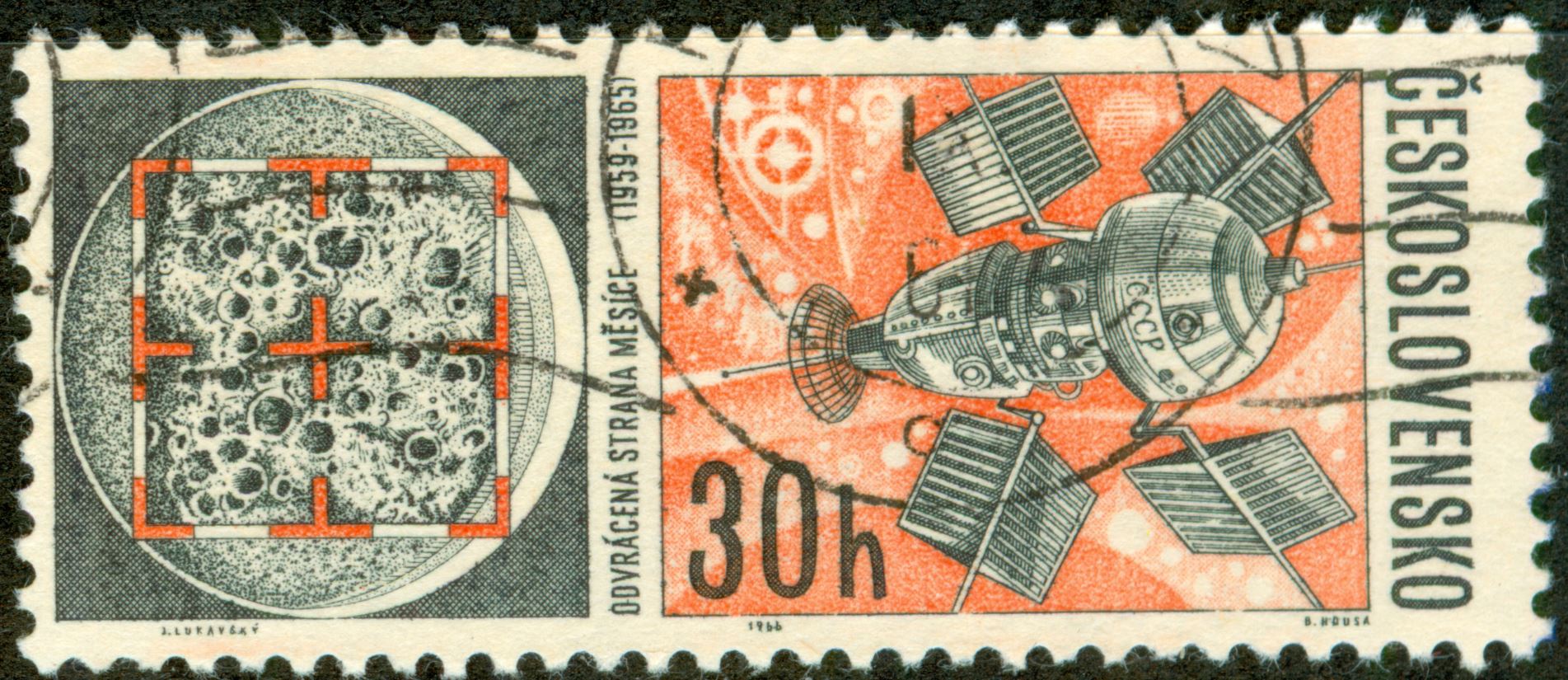 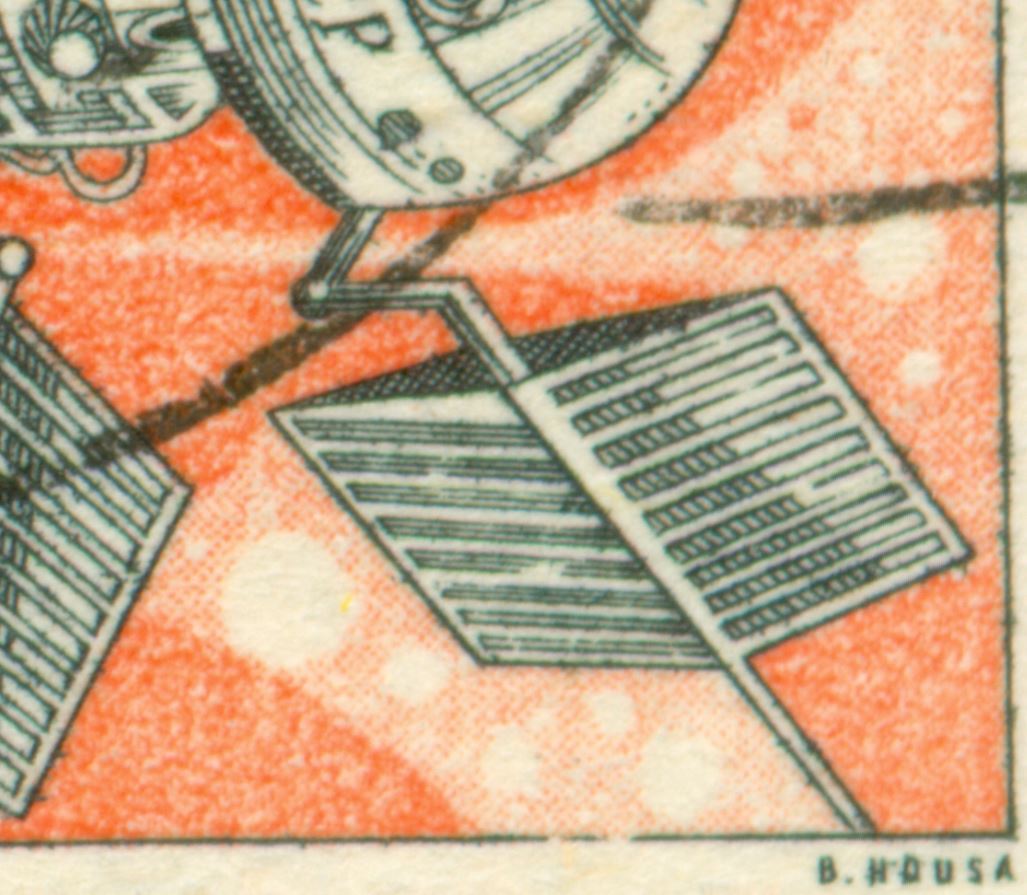 In 1966 - so still the old WIFAG - with a perfectly engraved screen??? To me the no etching equipment story is an urban myth. |
Send note to Staff 
|
|
|
Pillar Of The Community
Canada
5821 Posts |
|
|
Rein, those diagonal lines are also visible on the 30h. I darkened the scan a bit to try and bring out the lines better but I don't know if it is an improvement. 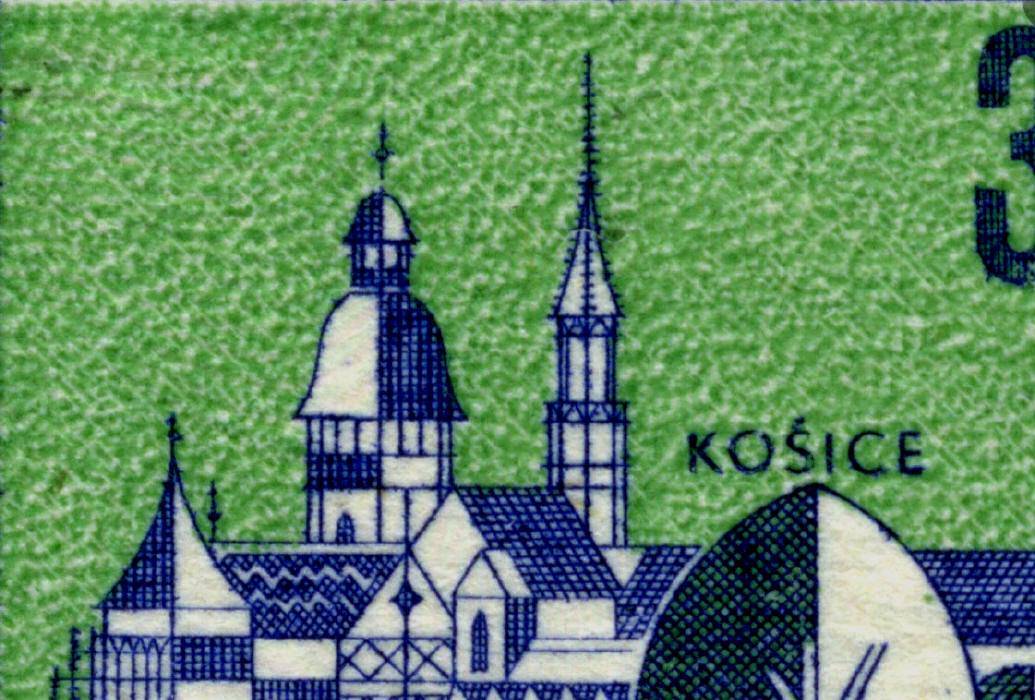 I can't see any similar lines on the 40h, 50h or the 1K. |
|
Send note to Staff
|
| Edited by lithograving - 03/24/2018 7:30 pm |
|
|
Rest in Peace
Netherlands
963 Posts |
|
|
Martin, the diagonal lines are necessary to keep the printing ink on the cylinder! This was of the trick invented by the NRM in the early 1920-ies. The South African Pictorials show this galore! All 1965 Czech definitives should have the diagonal lines from the start whether descending or ascending! Or even both. Later on, after 1967, different cylinders may have been prepared with maybe other characteristics. Bear in mind that the paper surface plays an enormous role! And the grill - gum breaking pattern - best seen at the back of the stamp but surely influencing the printing result! descending: 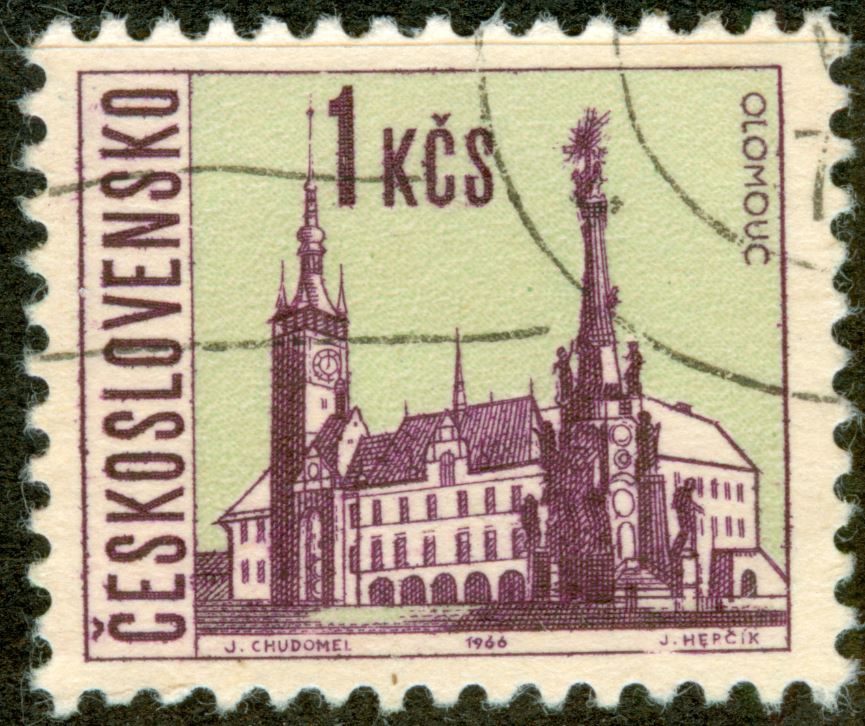 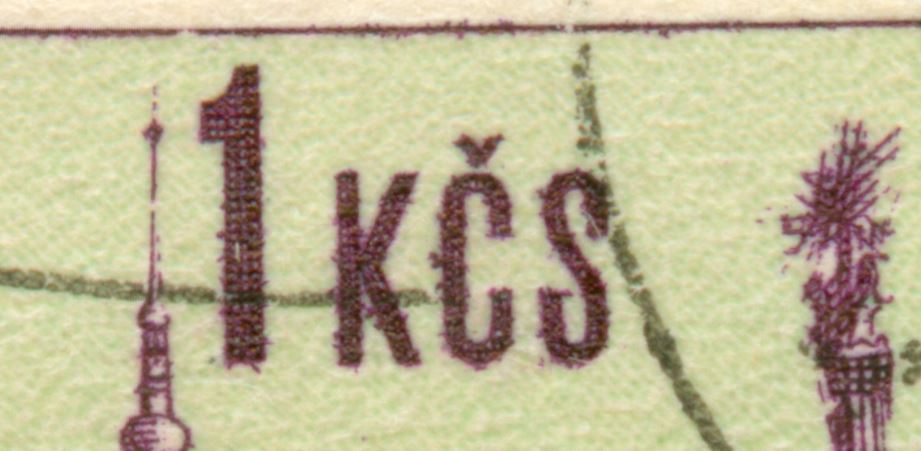 ascending: 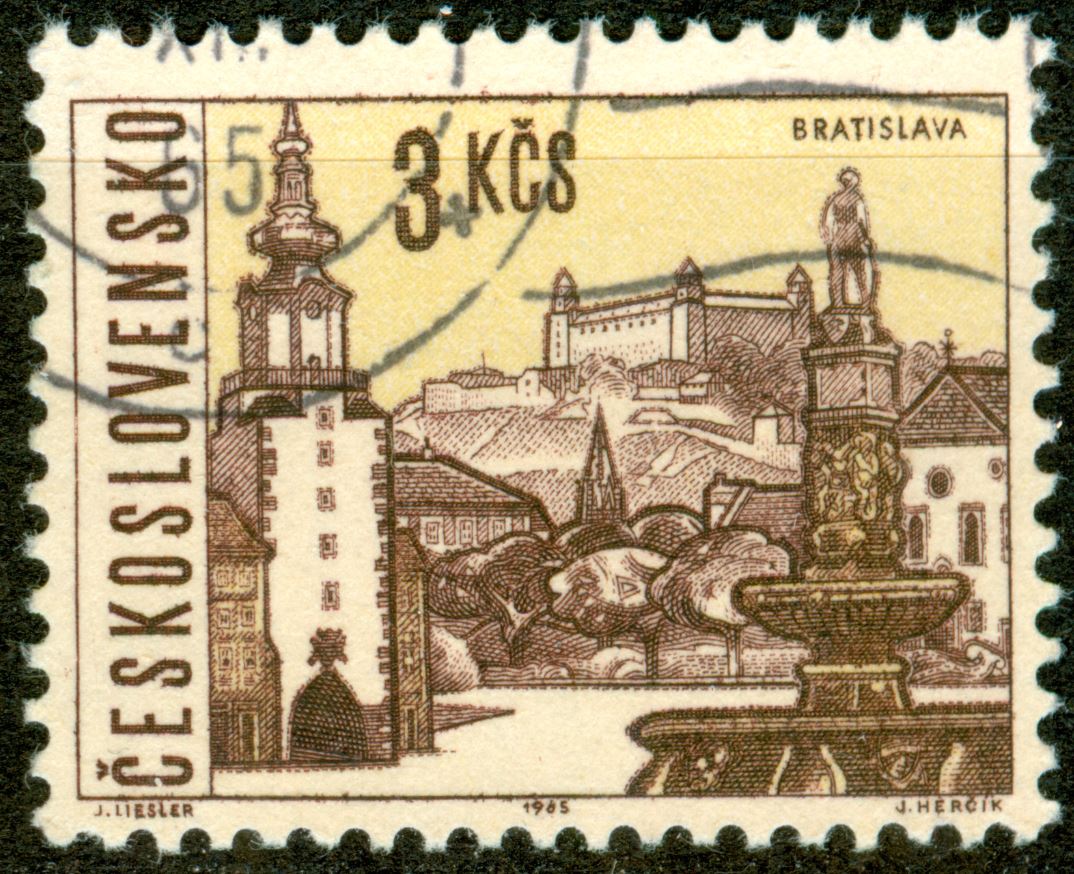 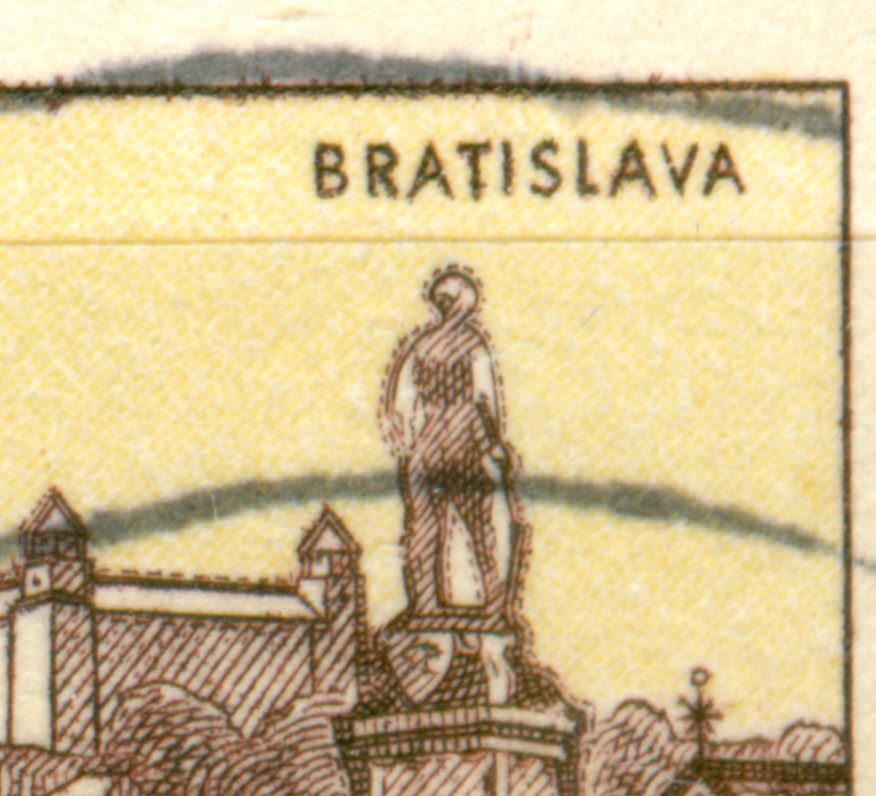 |
|
Send note to Staff
|
|
|
Pillar Of The Community
Czech Republic
623 Posts |
|
|
Not that I could follow you in technical details being no expert but to make matters clearer, let me try and translate what the retired stamp printer Miroslav Vondøich published, ten years ago, on Czechoslovakian WIFAG-printed stamps in the first two paragraphs of section I Rotaèní tisk (= I. Rotary printing) on p. 18 of FILATELIE 4/2004. (See http://knihovna.filaso.cz/filatelie_2004_04.pdf ) I. Rotary printing
Both the WIFAG machines in operation at present include one intaglio printing unit and photogravure units for other colours. The same was true of the WIFAG 1, which is out of operation now. When production was started on the WIFAG 1 press, the printing works lacked etching equipment for the photogravure cylinders and therefore after several abortive attempts to produce them at Naše vojsko printing works the photogravure cylinders began to be "transfer-rolled". "Transfer-rolling" copper cylinders, however, presented a number of problems. That was why it was abandoned and it was now steel cylinders that were "transfer-rolled". For this method of printing, it was of course necessary to make an engraving for the photogravure colour as well. This kind of technology was later on used for some stamps printed on WIFAG 2 and WIFAG 3 even if the etching equipment was available ever since WIFAG 2 was put into operation.
For "transfer-rolled" printing on the photogravure unit, I recommend the designation "'transfer-rolled' photogravure". The tone of the colour created by this technique, however, lacks halftone gradation. This deficiency is partially dealt with through the density of the engraving, either that of the lines engraved in one direction or of the crosshatching. Moreover, individual lines of the engraving have to be engraved, if possible, at an angle of 45°, otherwise there is a danger that the thin photogravure ink will not stay in the "transfer-rolled" cylinder during the printing.Excuse my inadequate English. Note that first combo WIFAG printings were aimed at in 1952 with http://www.cpslib.org/aip/1952-627.htm http://www.cpslib.org/aip/1952-628.htm but the attempt failed, so the very first such printings were realised in 1953 with http://www.cpslib.org/aip/1953-766.htm http://www.cpslib.org/aip/1953-767.htm continuing in later years with http://www.cpslib.org/aip/1954-808.htm http://www.cpslib.org/aip/1954-809.htm http://www.cpslib.org/aip/1954-810.htmhttp://www.cpslib.org/aip/1955-815.htmhttp://www.cpslib.org/aip/1955-825.htm http://www.cpslib.org/aip/1955-826.htmhttp://www.cpslib.org/aip/1955-844.htm http://www.cpslib.org/aip/1955-845.htm http://www.cpslib.org/aip/1955-846.htm http://www.cpslib.org/aip/1955-847.htm http://www.cpslib.org/aip/1955-848.htmhttp://www.cpslib.org/aip/1956-884.htm http://www.cpslib.org/aip/1956-885.htm http://www.cpslib.org/aip/1956-886.htmhttp://www.cpslib.org/aip/1956-887.htm http://www.cpslib.org/aip/1956-888.htm http://www.cpslib.org/aip/1956-889.htm http://www.cpslib.org/aip/1956-890.htm http://www.cpslib.org/aip/1956-891.htm http://www.cpslib.org/aip/1956-892.htmhttp://www.cpslib.org/aip/1956-900.htm http://www.cpslib.org/aip/1956-901.htm http://www.cpslib.org/aip/1956-902.htmhttp://www.cpslib.org/aip/1957-932.htm http://www.cpslib.org/aip/1957-933.htm http://www.cpslib.org/aip/1957-934.htm http://www.cpslib.org/aip/1957-935.htm http://www.cpslib.org/aip/1957-936.htm http://www.cpslib.org/aip/1957-937.htmhttp://www.cpslib.org/aip/1957-954.htm http://www.cpslib.org/aip/1957-955.htm http://www.cpslib.org/aip/1957-956.htm http://www.cpslib.org/aip/1957-957.htm http://www.cpslib.org/aip/1957-958.htmhttp://www.cpslib.org/aip/1957-959.htmhttp://www.cpslib.org/aip/1957-L42.htm http://www.cpslib.org/aip/1957-L43.htmhttp://www.cpslib.org/aip/1957-961.htm http://www.cpslib.org/aip/1957-962.htmhttp://www.cpslib.org/aip/1957-972.htm http://www.cpslib.org/aip/1957-973.htm http://www.cpslib.org/aip/1957-974.htmFirst "transfer-rolled' photogravure" stamps seem to have been the following issues: http://www.cpslib.org/aip/1958-1001.htm http://www.cpslib.org/aip/1959-1033.htmhttp://www.cpslib.org/aip/1959-1055.htmhttp://www.cpslib.org/aip/1959-1085.htm http://www.cpslib.org/aip/1959-1088.htmSome sets appear to be mixed: http://www.cpslib.org/aip/1961-1198.htm http://www.cpslib.org/aip/1961-1202.htm http://www.cpslib.org/aip/1961-1199.htm http://www.cpslib.org/aip/1961-1200.htm http://www.cpslib.org/aip/1961-1201.htm http://www.cpslib.org/aip/1961-1203.htm |
|
Send note to Staff
|
| Edited by florian - 01/07/2015 10:14 am |
|
|
Pillar Of The Community
Canada
5821 Posts |
|
|
Thank you Rein and Florian for all that great info.
I'm still not understanding all of it but it's
so much fun learning more about the various
print techniques.
And since so much information has been lost
and/or forgotten it is good to have some
record here for future stamp collectors
interested in this aspect of philately. |
|
Send note to Staff
|
|
|
Rest in Peace
Netherlands
963 Posts |
|
|
Florian,
Their not having an etching equipment had to do with the printing works and NOT with the very WIFAG-machine.
The combination of moletting and photogravure cylinders giving problems, makes sense and that is probably what Papy24 meant as well. Using steel cylinders instead would allow for moletting but does require much more from the press/equipment.
Nevertheless, most of the so-called engraved lines do not remind me of engraved lines at all! Their purpose was retaining the ink and that is what I was saying!
I still do not believe the sets of lines are engraved. The recesses have been made by a crude way of mechanical scratching but rather by a just as crude or careless manner of etching.
pozdrawiam, Rein |
|
Send note to Staff
|
|
|
Valued Member
France
69 Posts |
|
|
Hello, Thank you very much Florian for the translation. And what I thought impossible becomes possible. I wondered how they did, I think I have found. Czech workers were very good. They made an engraved die, covering the surface with bitumen, drawing parallel lines with a needle and using a Corn-Grain screen for the place of the background, and they engraved the die by acid. A Corn-Grain screen consists of irregularly scattered dots of irregular size and shape, and is produced by dusting a surface with a powder, usually resin or bitumen. This is the résult for this egyptian stamp.  They made a transfer roll and used a steel printing cylinder, because this metal do not deform like copper after moletting. And they printed stamp on Wifag, with photogravure and intaglio. This is what explain this result.  |
|
Send note to Staff
|
| Edited by Papy24 - 01/07/2015 1:29 pm |
|
|
Rest in Peace
Netherlands
963 Posts |
|
|
Papy24,
I can follow you upto and including the Egyptian stamp!
So far it is the method the Nederlandsche Rotogravure Maatschappij was using for stamps! They actually did print your Egypt stamp in Leiden - my hometown! - acting on behalve of Harrison and Sons, London. The NRM did instruct the printers in Pretoria, South Africa in 1929 and worked closely together with Goebel AG, Darmstadt.
I do not see, however, why they used a transfer roll????
And it does not explain the use of a traditional photogravure screen in 1966!?
The use of a transfer roll, however, might explain the use of printing plates made since 1917 in Mexico for the diestamp printing with Waite & Saville presses! The technique may so go back to Waite & Saville rather than the Czech printers ;)
groetjes, Rein
|
|
Send note to Staff
|
| Edited by Galeoptix - 01/07/2015 3:06 pm |
|
|
Valued Member
United Kingdom
314 Posts |
|
|
I continue to be confused with some aspects of photogravure screening. I came across the enlargement of the attached DDR MS on Delcampe this morning (they were showing the enlargement to depict the broken number, not for the screening). So, we have the screened "saw tooth" effect at the edge of the design and within the white-out lettering, but then there is a sort of 'corn grain' effect on the rest of the design with no apparent screening visible. What type of screening is this known as, please? GLENN 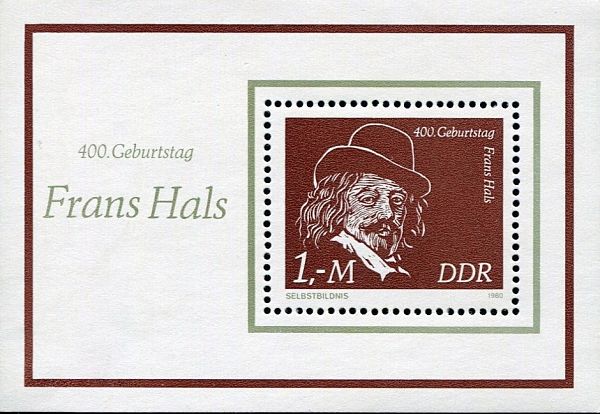 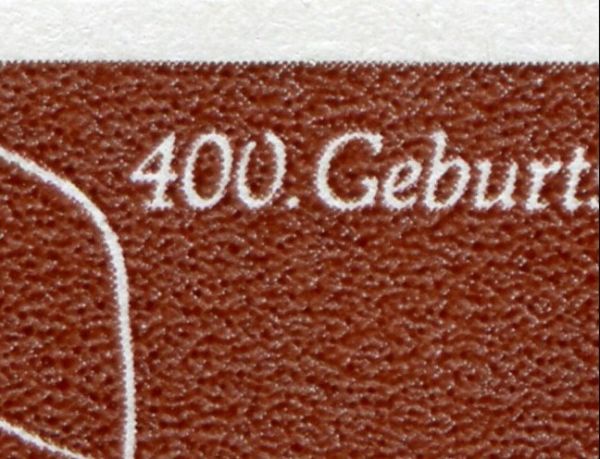 |
|
Send note to Staff
|
|
|
Rest in Peace
Netherlands
963 Posts |
|
|
Glenn, the screen is a normal cross-screen! The wavy effect is quite common in particular in most products of Courvoisier SA! The photogravure screen and the ink is resulting in a peculiar structure parallel to the direction of printing! 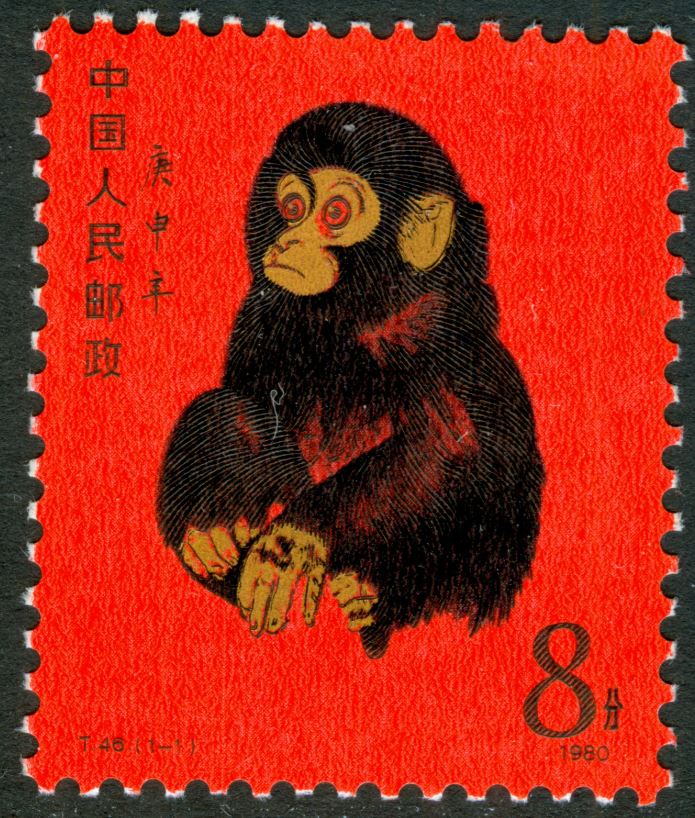 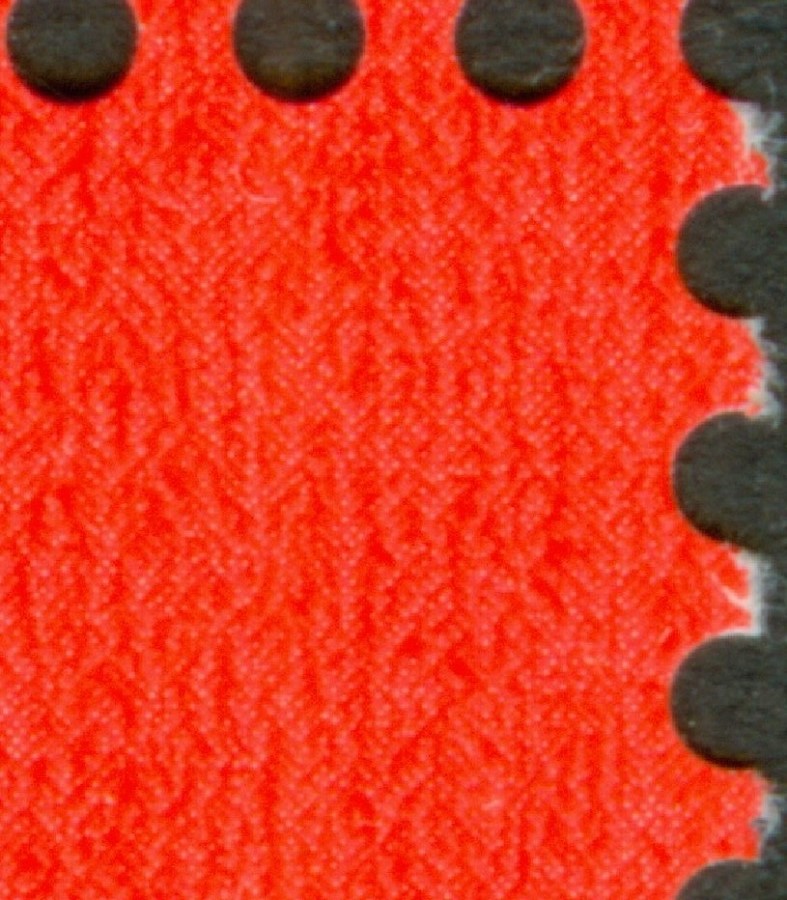 The ink shows something that might be compared to a wood of branches or a staphylococci swimming.... The Swiss archetypes - ink flowing horizontally: 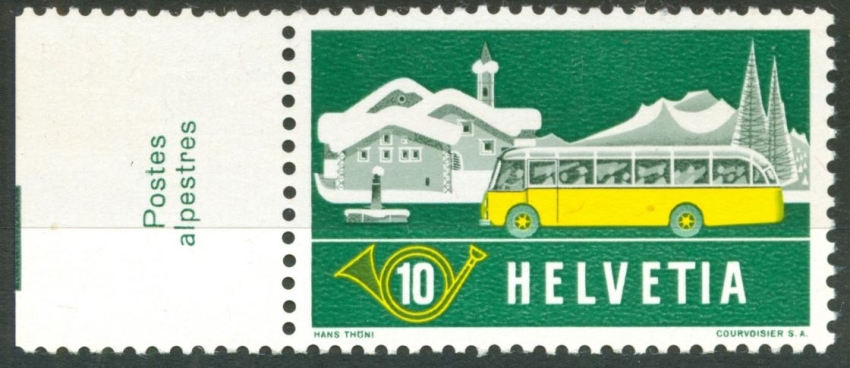 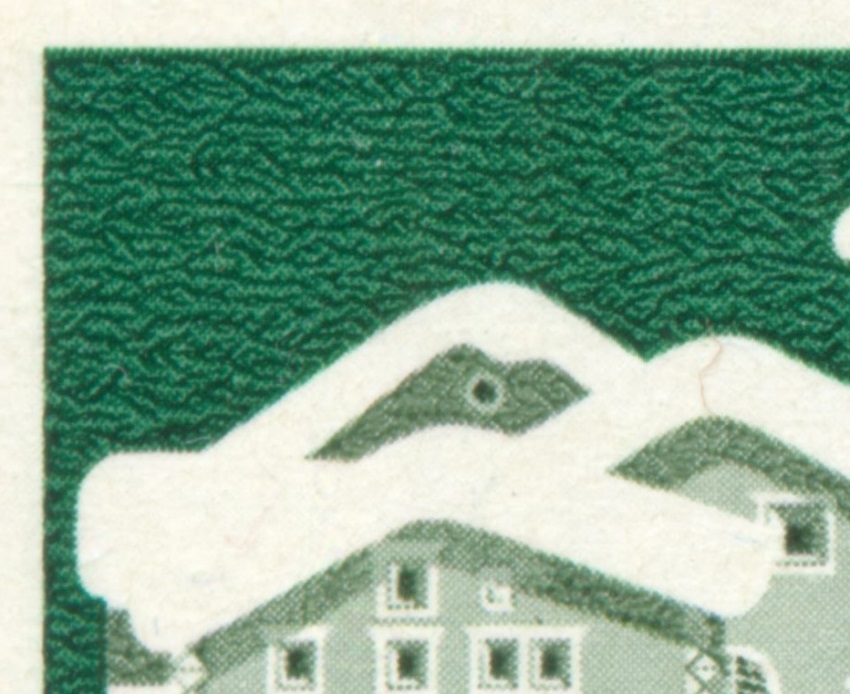 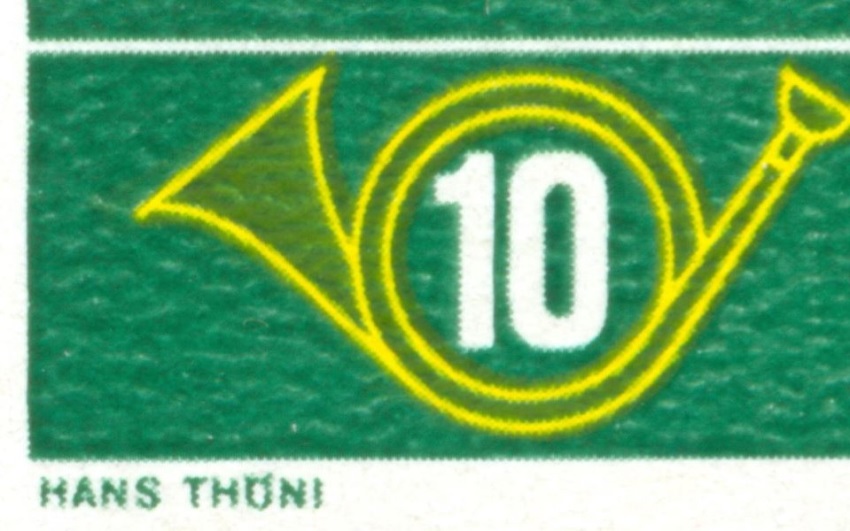 [ |
|
Send note to Staff
|
|
|
Pillar Of The Community
Czech Republic
623 Posts |
|
|
Back home yesterday, checking old POFIS catalogues for 'transfer-rolled' photogravure, I found they first mentioned two engravers, Ladislav Jirka and Jaroslav Goldschmied, responsible for the engraving of the 1.95 Kè value of the Brussels 1958 issue ( http://www.cpslib.org/aip/1958-990.htm ). The description of the 1958 Communications Conference set of two ( http://www.cpslib.org/aip/1958-1001.htm http://www.cpslib.org/aip/1958-1002.htm ) carried a note saying that the dies for second colours were prepared by Jaroslav Golschmied. The same note was attached to the description of the 1958 Czech Car, Bus, Lorry series ( http://www.cpslib.org/aip/1958-1026.htm http://www.cpslib.org/aip/1958-1027.htm http://www.cpslib.org/aip/1958-1028.htm http://www.cpslib.org/aip/1958-1029.htm http://www.cpslib.org/aip/1958-1030.htm http://www.cpslib.org/aip/1958-1031.htm ). Finally, the description of the 1959 Young Pioneers issue ( http://www.cpslib.org/aip/1959-1044.htm http://www.cpslib.org/aip/1959-1045.htm http://www.cpslib.org/aip/1959-1046.htm http://www.cpslib.org/aip/1959-1047.htm ) contained the info that the dies for second colours were etched and engraved by Jaroslav Golschmied. Beginning with the 1960 issues, such info was dropped even though the practice continued. While the early 1953 - 1957 combo issues seem to have had the photogravure part etched, starting from 1958 some values of the same set (e.g. http://www.cpslib.org/aip/1959-1034.htm ) look as if they had had the photogravure etched only but others appear to have had the photogravure produced by 'transfer-rolling' the engraving (e.g. http://www.cpslib.org/aip/1959-1033.htm ) if I understand it correctly. Also, compare the 1957 http://www.cpslib.org/aip/1957-974.htm with the 1966 http://www.cpslib.org/aip/1966-1558.htm - both the photogravure parts look etched without any engraving. Besides, if the etching equipment (independent of the WIFAG press as Galeoptix holds) had been available by the time WIFAG 2 (purchased in 1966) was put into production, the former could have been used for producing the above http://www.cpslib.org/aip/1966-1558.htm . |
|
Send note to Staff
|
| Edited by florian - 01/08/2015 07:05 am |
|
|
Rest in Peace
Netherlands
963 Posts |
|
|
Florian,
I can only see the stamp image but no further descriptions or informations?! Can you give me the direct link to that?? |
|
Send note to Staff
|
|
|
Pillar Of The Community
Czech Republic
623 Posts |
|
|
Galeoptix - Rein, Relata refero.
Greetings,
Florián
|
|
Send note to Staff
|
| Edited by florian - 01/08/2015 07:08 am |
|
|
Pillar Of The Community
Czech Republic
623 Posts |
|
|
Galeoptix - Rein, which stamp image and what further descriptions / information are you referring to? I can see everything clear and complete on my monitor and have checked the links as well and found them working. |
|
Send note to Staff
|
|
|
Replies: 56 / Views: 12,371 |
|




 Posted 01/06/2015 4:07 pm


