| Author |
 Replies: 14 / Views: 2,782 Replies: 14 / Views: 2,782 |
|
|
Moderator

United States
5106 Posts |
|
|
Sorry, but can't figure this one out. I don't see any imperf variety listed, and the margins look a bit wide for a fake creation. The paper is very thin. Any ideas? 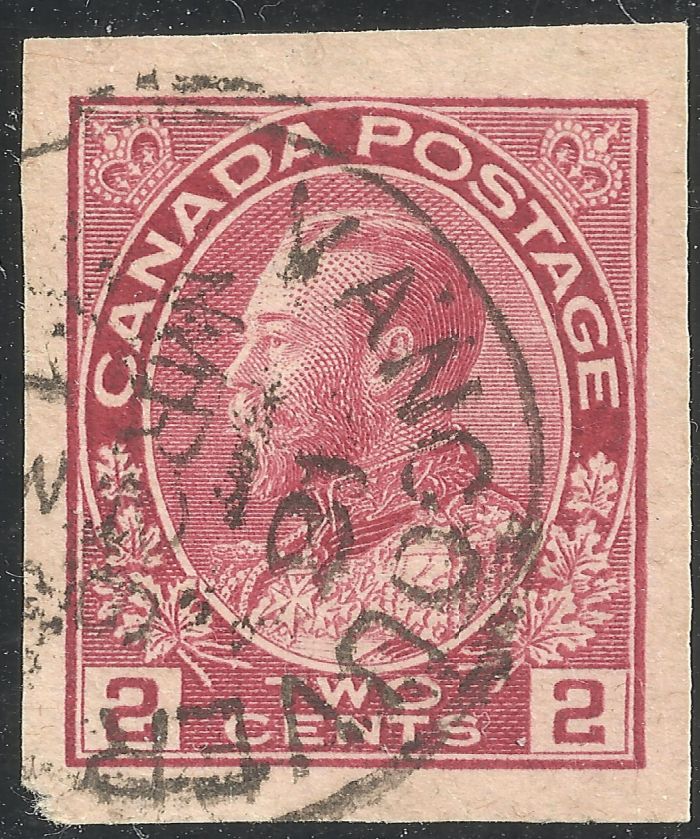 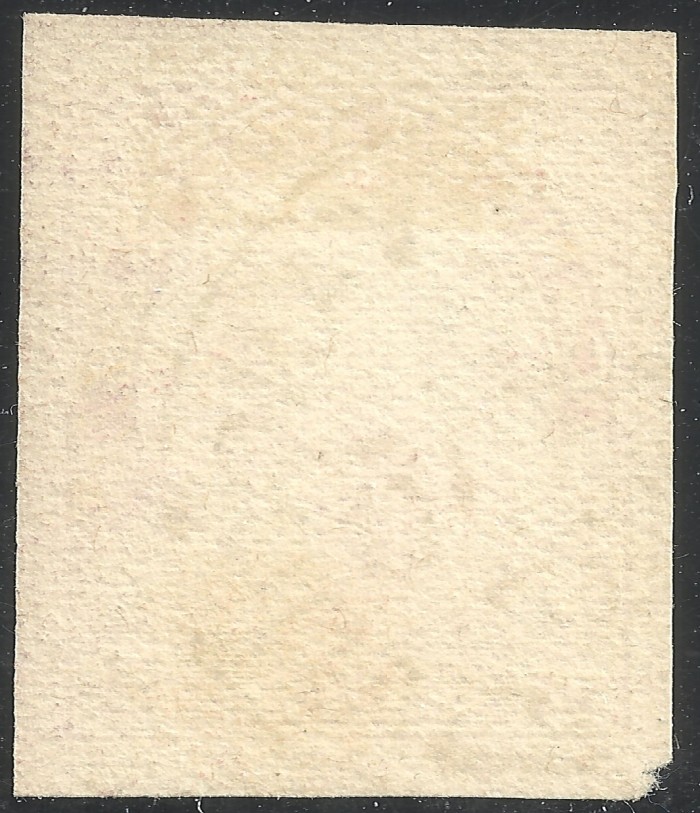 |
|
Send note to Staff
|
|
|
|
|
Pillar Of The Community
United States
727 Posts |
|
|
Rest in Peace
7742 Posts |
|
|
Pillar Of The Community
923 Posts |
|
|
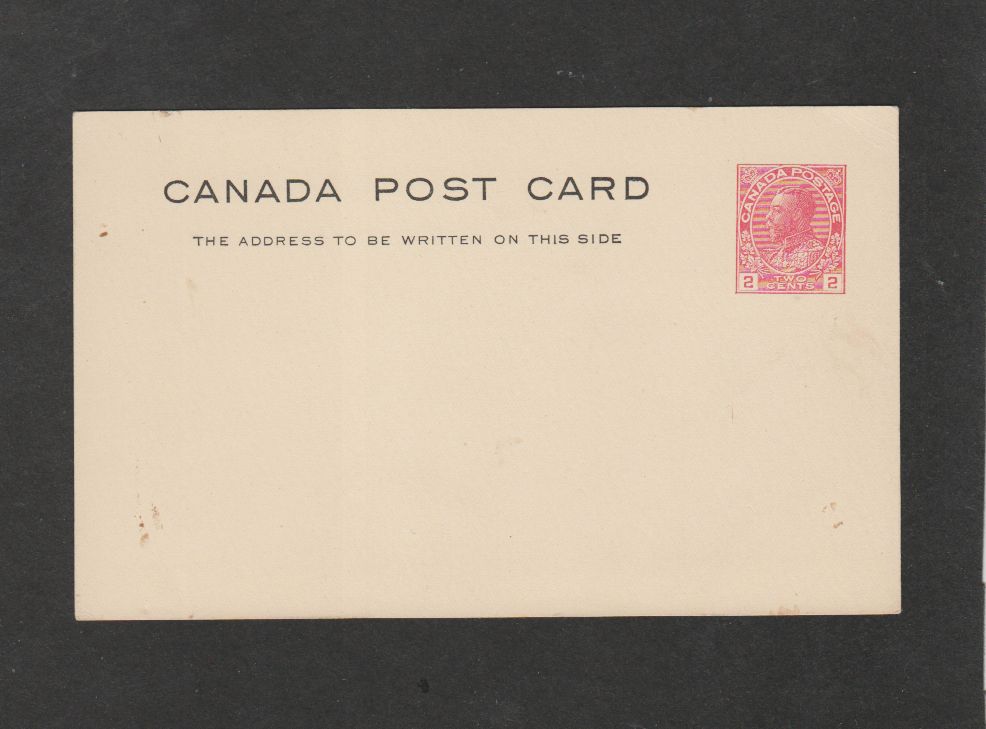
In postal stationery:
- there were no Admiral envelopes, post bands, letter cards or sheets. [Webb's]
- there was a postal card: P33a-m 13 varieties (none thin)
- there were no flimsies, but some RR pictorials (none thin)
|
Send note to Staff 
|
|
|
Valued Member
Canada
228 Posts |
|
|
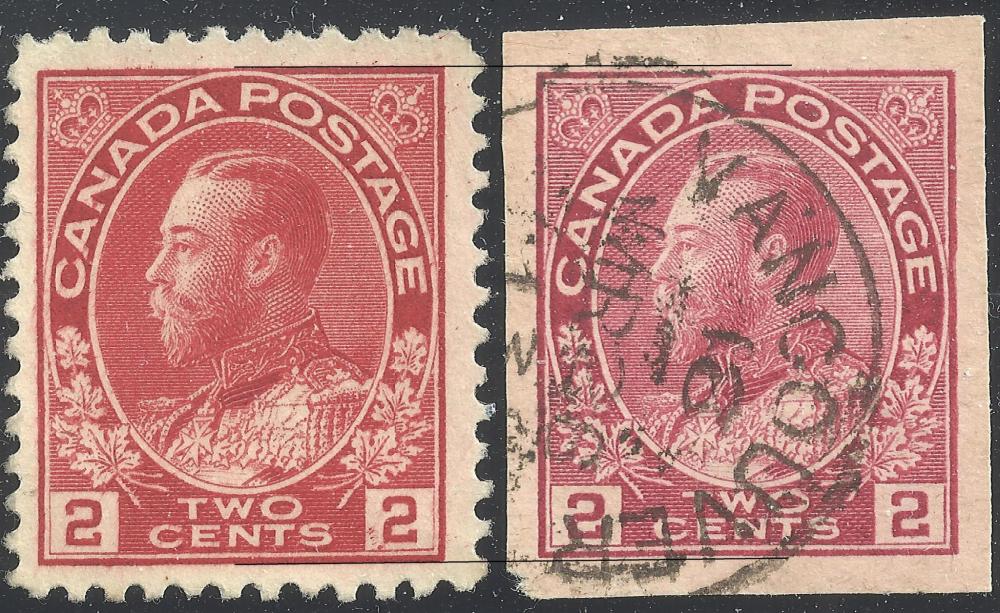
Partime, this is indeed an interesting find. I am no Admiral expert but did a little digging on this and it seems that there are no recorded imperforate issues of the 2c carmine. At first I was thinking that this could be a proof but the look of the paper and certainly the cancellation make this very unlikely. Watermark's suggestion of it being a cut square from postal stationary seemed quite reasonable except that this design only appears on post cards issued by the post office. Your description of the paper being "very thin" makes me think that this is not from a "card". I have only handled a few of these, but they always appeared to me to be on paper stock that was at least as thick as a regular stamp if not considerably thicker. Also, your image shows clear diagonal lines in the background at the top of the portrait and above the right shoulder. According to Unitrade these were only added to post cards with die III. The listings for the 2c carmine card do not mention any for this die although they have several where no die is mentioned. I am of the opinion that this may come from booklet 106a. The most obvious difference between your stamp and a regular sheet issue (other than no perfs) is that yours is way shorter in height than the sheet issues. All of the 2c carmine were printed via the wet method but most booklets were printed with horizontal wove paper as opposed to the vertical wove paper for the sheet stamps. This caused the booklet stamps to shrink vertically whereas the sheet stamps shrunk horizontally. See my comparison between your stamp and a typical sheet stamp below. The horizontal wove paper is also suggested in your images. To me, your stamp looks like a squat printing from a booklet with generous margins so that it could be trimmed to resemble an imperforate. I do notice that your stamp has two very straight but wavy edges as is typical on booklets and then two other edges that are clearly cut with scissors. How did you acquire this stamp? 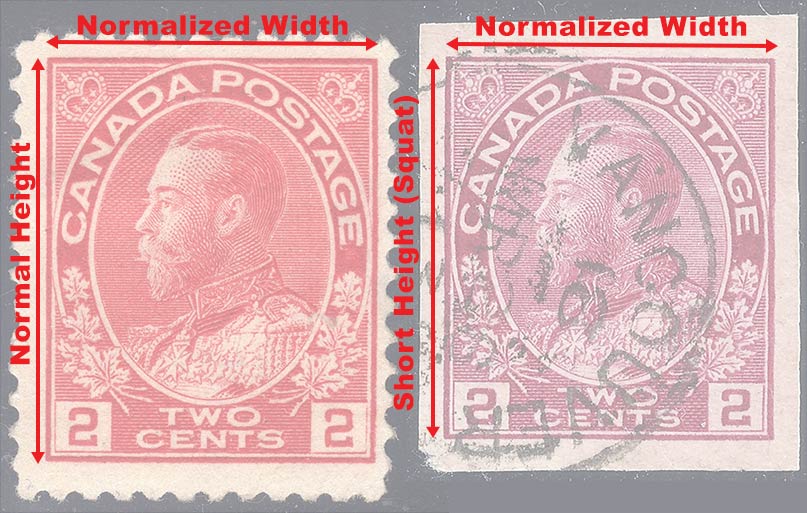 |
|
Send note to Staff
|
|
|
Rest in Peace
7742 Posts |
|
|
Quote:
there were no Admiral envelopes, post bands, letter cards or sheets. guess you are right sak...  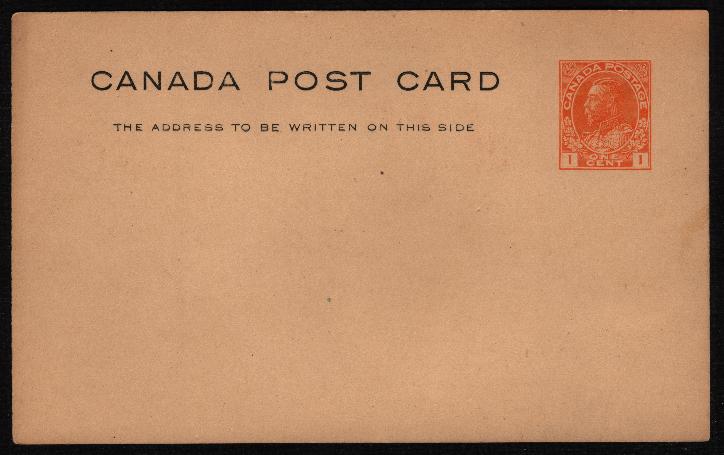 |
|
Send note to Staff
|
|
|
Pillar Of The Community
923 Posts |
|
|
The above postal card is Webb's P29f (normal) or P29g (thick soft paper). |
|
Send note to Staff
|
|
|
Moderator
United States
5106 Posts |
|
|
Hi guys ... thanks for the interesting responses. Quote:
How did you acquire this stamp? I received this from Stamporator. http://www.stamporator.com/Categories.htmlTony described as, "Scott/Unitrade 106: King George V 'Admiral' Issue, 2¢ carmine, imperforate single". I'll reply in a little bit with more info. By-the-way, Stamporator's website is excellent for filling in those nasty holes. A lot of very high quality stamps, with some excellent scanned images to help you out. |
|
Send note to Staff
|
|
|
Moderator
United States
5106 Posts |
|
|
Pillar Of The Community
3860 Posts |
|
|
Pillar Of The Community
Canada
4648 Posts |
|
|
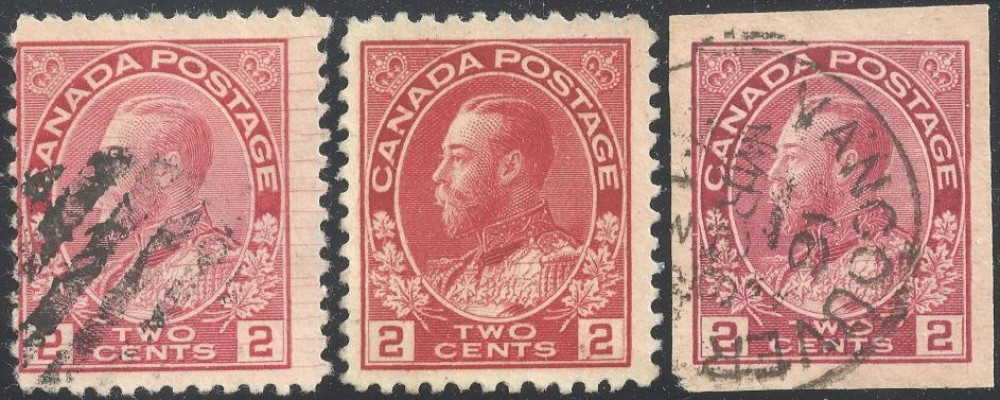
Partime, I really like the 'hair lines' variety on your first 2 cents Admiral. Very clear and strong.
Chimo
Bujutsu |
|
Send note to Staff
|
|
|
Pillar Of The Community
3860 Posts |
|
|
Moderator
United States
5106 Posts |
|
|
I'm leaning towards 106a. The paper is much too thin for a postcard and definitely matches the horizontal grid. |
|
Send note to Staff
|
|
|
Pillar Of The Community
3860 Posts |
|
|
Wouldn't it be Canada 106aiiis? Is the catalog description wrong for Canada 106a through Canada 106avs in that it would have to have a horizontally wove paper in order for it to be vertically squat? I have a 2014 catalogue. Compare it against Canada 104a through Canada 104avs which has the opposite written for them. For wet printings the paper tends to shrink against the grain of the paper so that a wet printed stamp with a horizontal paper grain will shrink vertically somewhat and a wet printed stamp with a vertical paper grain will shrink horizontally somewhat. |
|
Send note to Staff
|
| Edited by jogil - 04/27/2015 12:22 am |
|
|
Moderator
United States
5106 Posts |
|
|
Jogil ... thanks for the very informative links to the often faked varieties. I think I have it nailed down. I measured the stamp dimensions, and came up with 18 x 20.7 mm which puts it closest to 106aiiis, a squat single from 106aiii. I actually have a 104aiiis and compared the two side-by-side. They are extremely close to the same height and width. So I am pretty confident that I have an unfortunate case of a 106aiiis that was trimmed down from a perforate to an imperforate stamp, lowering the value from $20 to about ??
However, I still have questions about the paper quality. It still seems to be slightly thinner than all of my other stamps, and the wove still confuses me. It looks to be Horizontal Wove, but then that contradicts with Unitrade. My 104aiiis wove is very hard to see, so I can't compare the two.
Oh well, filed and forgotten ... for now. |
|
Send note to Staff
|
|
| |
Replies: 14 / Views: 2,782 |
|




 Posted 04/25/2015 6:58 pm