| Author |
 Replies: 17 / Views: 4,001 Replies: 17 / Views: 4,001 |
|
Valued Member
United States
86 Posts |
|
|
I watermarked several hundred Wildings the last couple of days, and one of them (and only one) had an oddity. 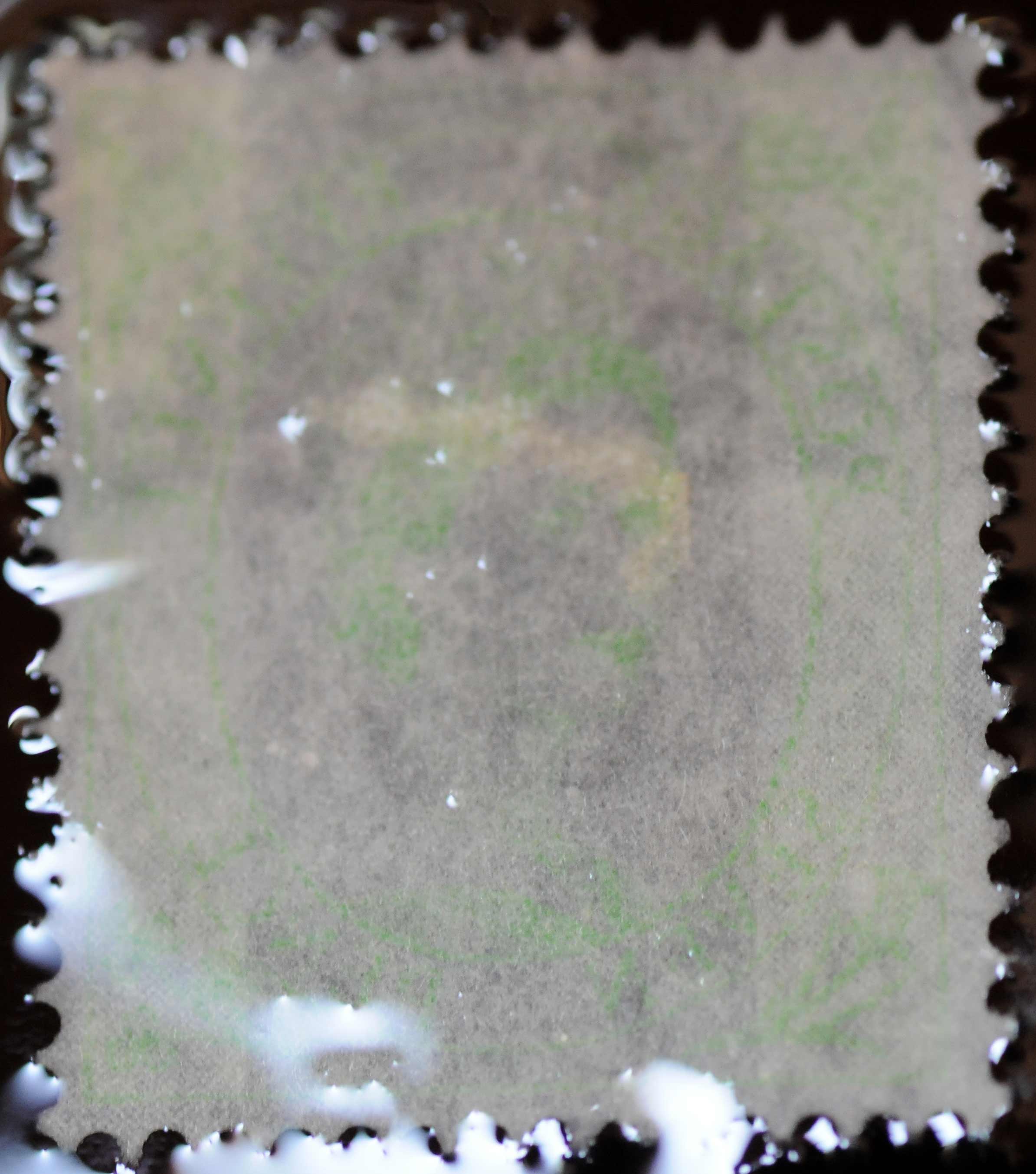 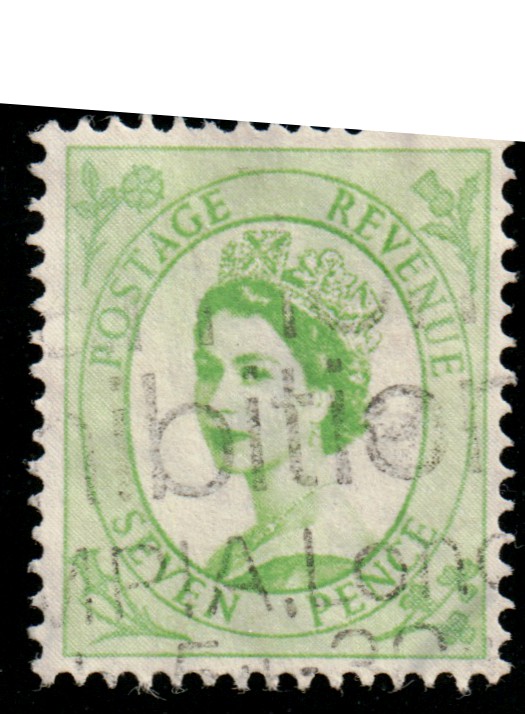 She's a perfectly ordinary (far as I can tell) example of the 1958 regular issue. (SG 580, SC 363) She doesn't even glow in the dark. And the band is not visible at all when she's dry. 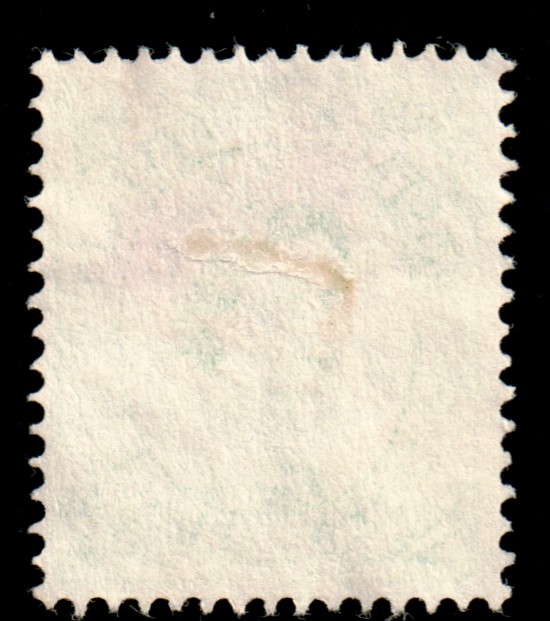 I'm guessing this is known and mentioned someplace, but I don't have the Elizabeth Specialized. I hunted through my SG Concise and found nothing relevant. Does anybody have any information about this fairly wide, dark vertical band? |
|
Send note to Staff
|
|
|
|
|
Pillar Of The Community
United Kingdom
895 Posts |
|
|
Pillar Of The Community
Germany
1714 Posts |
|
|
Your stamp is a 1967 crowns watermark Wilding and the "dark band" is not a band as there are phosphor bands left and right... the bands should be around 9.5mm wide and can be seen using a short-wave lamp as reacting violet assuming the stamp has not been washed too much. |
Send note to Staff 
|
|
|
Valued Member
United States
86 Posts |
|
|
Thank you for the reply scotzm! I'm confused -- the phosphor bands were on the back of the stamp? (I thought they were on the front...?)
Do you have a catalogue number? |
|
Send note to Staff
|
|
|
Pillar Of The Community
Germany
1714 Posts |
|
|
Valued Member
United States
86 Posts |
|
|
Phew - had me worried for a sec. (phosphor on the back would just be beyond weird haha).
She still isn't glowing, and I have to believe you're right. So she's been washed too much I guess. Incidentally, from the back (measuring from the edge of the 'not' dark band), those two sides bands are nowhere near 9 1/2. But that's not a precise measure I'm assuming.
So my take away from this is that a phosphor stamp can actually be detected from the back. I had no idea.
Thank you! |
|
Send note to Staff
|
|
|
Pillar Of The Community
Germany
1714 Posts |
|
|
No... you asked what the dark band was. The dark band does not exist as it is the dark background of your fluid container shining thru. The phosphor bands are the left and right areas which, as it has an extra layer of phosphor, does not show the fluid container so much. The bands are printed on the front of the stamp and should be viewed that way.
edit...or perhaps you meant seeing the bands from the back whern in the watermark tray? In that case...yes as yours show two bands when wet and nothing much when dry. |
|
Send note to Staff
|
| Edited by scotzm - 05/06/2015 9:07 pm |
|
|
Valued Member
United States
86 Posts |
|
|
:) Yes, I realize I'm not seeing the phosphor from the back. (I'm not looking there for it either.) But the phosphor isn't showing on this stamp (on the front, of course - :) ) at all. Instead, the only clue I had that there was anything different about this stamp was the... non-opacity (probably not a word) .... of the two sides. Which made the center appear dark in comparison. You've explained beautifully, and I appreciate it very much. I don't think I'm reflecting my understanding very well. So sorry to be confusing. :( All I was trying to say was... the phosphor is washed off the front of this stamp, apparently. But from the back there was some irregularity when I watermarked. Thus I concluded (perhaps erroneously) that even when there is no phosphor on the front to detect, it is still possible to know that a stamp did glow at one time. editing to respond to your edit.... yes. exactly.  |
|
Send note to Staff
|
| Edited by Polimom - 05/06/2015 9:11 pm |
|
|
Pillar Of The Community
United States
733 Posts |
|
|
Pillar Of The Community
Germany
1714 Posts |
|
|
"Thus I concluded (perhaps erroneously) that even when there is no phosphor on the front to detect, it is still possible to know that a stamp did glow at one time."
As already mentioned be me and repeated by danko, these stamps need a short-wave lamp... 2537 Angstroms to be exact...to react violet. You may be able to get a faint reaction using a long-wave lamp with a piece of glass used as a filter over the stamp. |
|
Send note to Staff
|
|
|
Valued Member
United States
86 Posts |
|
|
Great input danko and scotzm! And funnily enough, I don't know the answer to the question of which wavelength I've been using. Along with this vast stamp collection, I inherited all my mother's "stuff" as well -- which included a UV lamp. Prior to this moment, I hadn't inspected it very closely. I just discovered, though, that it actually has two lamps (one of which has been hidden by a slide cover). There are no instructions and no description, but I think this must be a combination lamp. I just played around a bit with the slide cover, hoping to get a different reaction from the stamp but there was no change. I think, though, that I am still not using this correctly. Can somebody describe the "afterglow" effect? |
|
Send note to Staff
|
|
|
Pillar Of The Community
Germany
1714 Posts |
|
|
The phosphor bands will glow a particular colour depending on the variety... green, blue, violet etc... when a UV light shines on them. The effect would be like strip lighting down the edges of the stamp and it can persist for a few seconds or not depending on the phosphor ingredients used... but it will light up under the lamp anyway.
Tilting the stamp and see the front showing matt strips either on the edges or down the middle is the best way to see if a stamp has phosphor bands if you have no short or long wave lamp. That works for most collectors, I think, as the color and width of bands gets you into specialized territory but it is sometimes nice to know anyway. You have noticed that the bands show up in a watermark tray so that is enough indication that there is phosphor banding.
Best way to measure the width of bands is to measure the gap between bands on a single stamp and then subtract that from the width of a stamp. That is because the stamps are phosphor banded by printing the phosphor down the middle of the perforations so covering two stamps at a time...but exact registration is not always done. These are the 9.5mm or 8mm bands on GB stamps... one 9.5mm vertical column of banding covers two columns of stamps so you should have, in a perfect stamp registration, half on each edge. Measure as above will always give you the intended width of banding. |
|
Send note to Staff
|
|
|
Valued Member
United States
86 Posts |
|
|
Just wanted to follow up -- Thanks to your input, I investigated this UV lamp my mother left me. Had to take it apart, but discovered inside that sure enough, one end is long wave, the other short. And of course I'd been using the long. (haha)
And yes, I can indeed detect a very faint glow. Oddly, it's down the middle while the sides remain dull. I think I'm going to set this one aside for awhile and see if I can find some other glowing wildings (now that I understand the silly lamp!) -- maybe some more views will give me a better feel for these.
Thanks again! |
|
Send note to Staff
|
|
|
Pillar Of The Community
Germany
1714 Posts |
|
|
Your "very faint glow" is not due to any phosphor bands. It is due to the optical brighteners used in the paper manufacturing... it would be called fluoresence. |
|
Send note to Staff
|
|
|
Pillar Of The Community
United Kingdom
895 Posts |
|
|
I seem to recall hearing about errors, whereby the phosphor bands were applied to the back of the stamp by mistake. Have you tried the lamp on the back of the stamp. You never know, that might solve the conundrum. |
|
Send note to Staff
|
|
|
Pillar Of The Community
Germany
1714 Posts |
|
|
Stamps with phosphor bands on the back are more common in special issue stamps as normal practice in definitives was to use an extra cylinder to apply the bands at the same time as printing the stamps.
With special issues there was not always the option of a spare cylinder due to the multicolor nature of the stamps so that the bands were later applied on a sheet fed press resulting in offset bands. |
|
Send note to Staff
|
|
|
Replies: 17 / Views: 4,001 |
|



 Posted 05/06/2015 3:38 pm


