Some additional information for identification ;
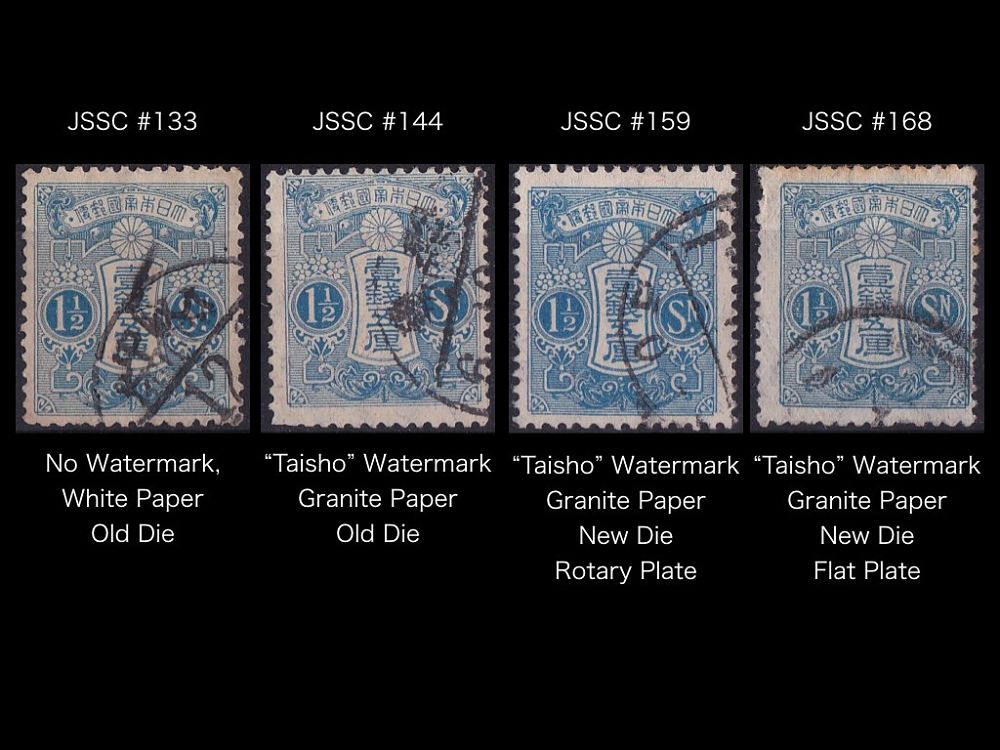
As already has been mentioned, this Tazawa 1.5sen stamp could be further categorized to the following four stamps, depending on the paper, watermark, die and pressing method.
- No watermark / white paper / old die : Scott #117 / JSSC #133
- Taisho Watermark (Wmk 141) / granite paper / old die : Scott #129 / JSSC #144
- Taisho Watermark (Wmk 141) / granite paper / new die /rotary press : Scott #129b / JSSC #159
- Taisho Watermark (Wmk 141) / granite paper / new die /flat plate press : Scott #129b / JSSC #168
(JSSC = Japanese Stamp Specialized Catalogue; Note that Scott catalogue number for the latter two are identical (at least in my old 1977 version))
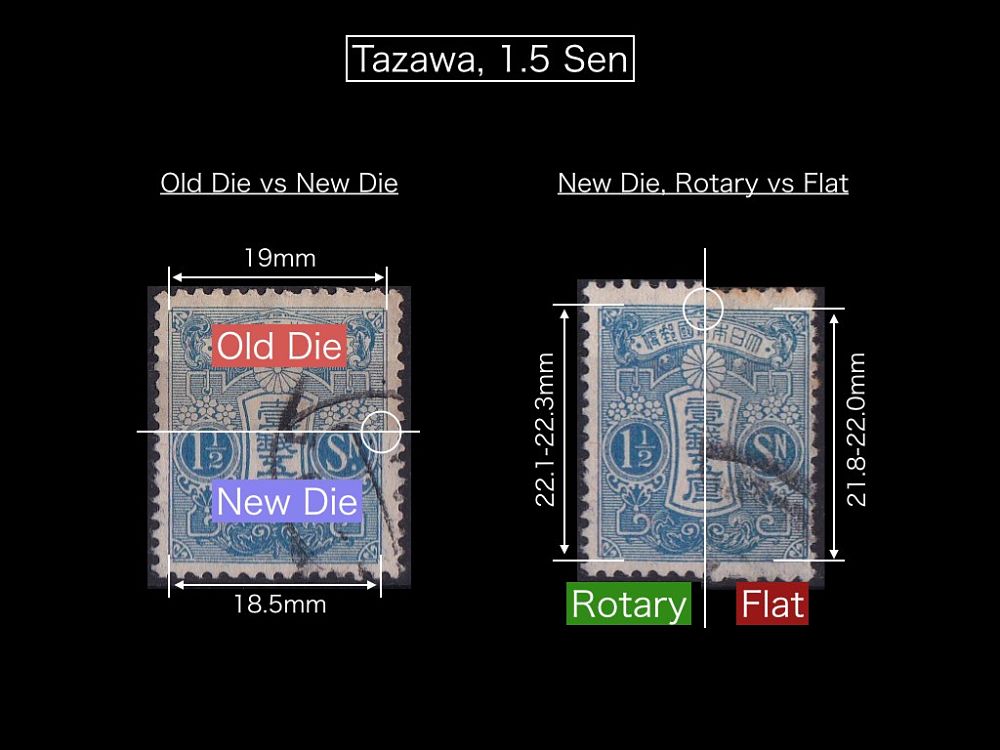
The nominal size of the die is as follows;
- old die : 19.0 x 22.5 mm
- new die, rotary : 18.5 x 22.5 mm
- new die, flat : 18.5 x 22.0 mm
So the easiest way for distinguishing the stamp would be;
1)
Paper type ; if it does not contain any coloured fiber (i.e. white paper), that is Scott #117. If it is granite, go to step 2).
2) measure the
width of the printed area. If it is 19mm, that is Scott #129, if it is smaller than 19mm, go to step 3). The difference between old die and new die could be best identified by comparing the width; the difference is quite evident. The overall appearance of the stamp is also quite different, as the new die shows wider margin in general.
3) measure the height of the printed area. If it is larger than 22mm, that is Scott #129b with rotary print (JSSC #159). If smaller than 22mm, that is Scott #129b with flat plate print (JSSC #168). The actual size of the printed area has a certain variation and for Tazawa 1.5 sen stamp it is about 18.3mm x 22.1-22.3mm for rotary print and about 18.3mm x 21.8-22.0mm for flat plate print. And the difference in the height is quite significant.
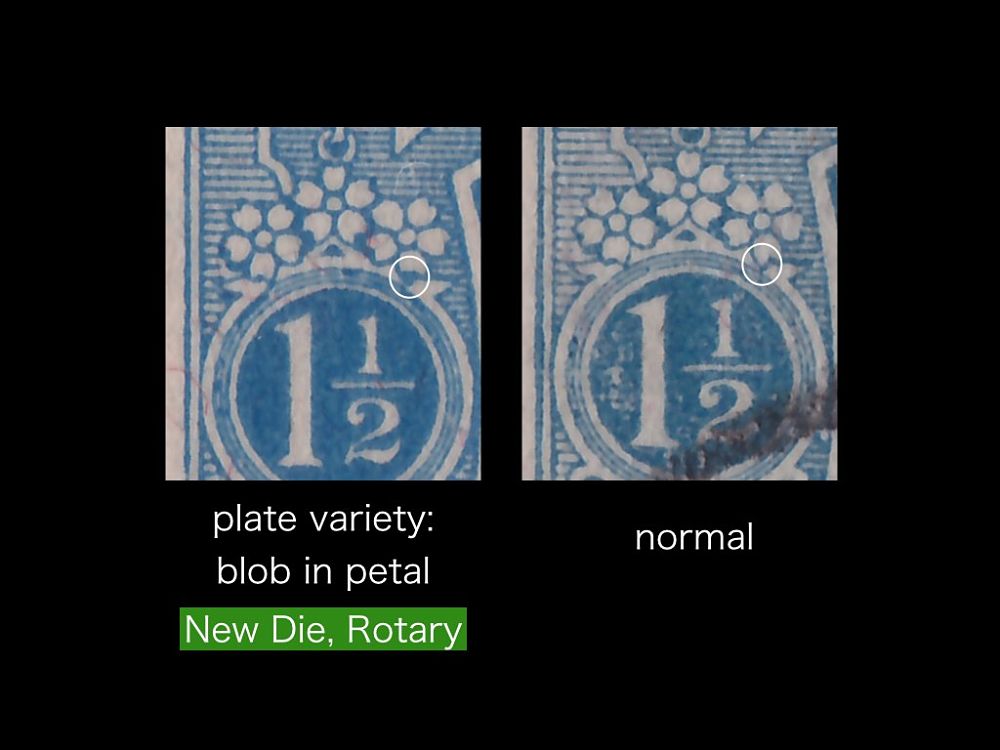
Another checkpoint would be the cherry blossom petal on the left side (above "1 1/2"); most of the Scott #129b with rotary print (JSSC #159) stamp has a "blob" in the lower petal of the right flower.
The color variation would be also help, and we can generally say that the latter issues tend to have lighter shade. However we have to be careful as there could be significant variety in the shades even within the same main catalogue number. For example, JSSC further subdivides #168 to three varieties (light blue, deep dull blue and new blue).
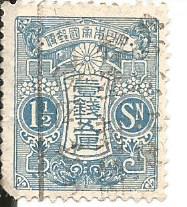
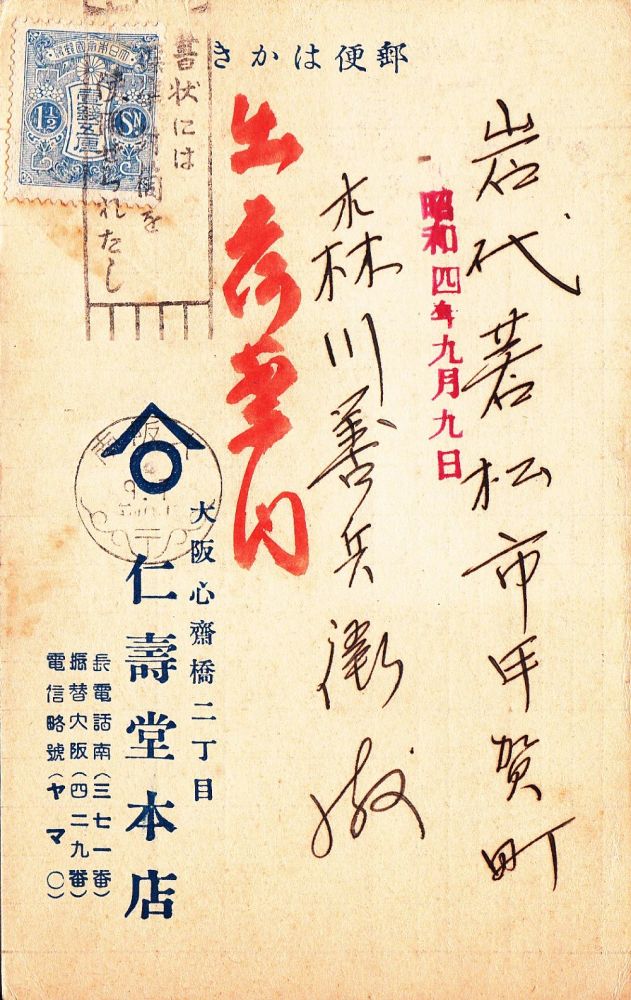
According to the posted image, I assume that the stamp is likely to be Scott #129b with flat plate print (JSSC #168); it has rather large margin, there's no blob in the petal, and the shade is quite light. I appreciate if you can confirm this by checking the paper and measuring the printed area !
Another interesting thing about this stamp is the cancellation. This is a part of a slogan cancel saying "Use standard envelope for letters", used between 1925 and 1938. Here's how the whole cancellation looks like;
Happy collecting !
unechan@Osaka, Japan





 Posted 06/27/2015 12:10 am