Stamp Community Family of Web Sites
Thousands of stamps, consistently graded, competitively priced and hundreds of in-depth blog posts to read


Stamp Community Forum
 
Username:
Password:
Save Password
Forgot your Password?

This page may contain links that result in small commissions to keep this free site up and running.

Welcome Guest! Registering and/or logging in will remove the anchor (bottom) ads. It's Free!

Hiv, Vih, Aids, Sida, And Pwas

Previous Page | Next Page    
 
To participate in the forum you must log in or register.
Author Previous TopicReplies: 141 / Views: 16,814Next Topic
Page: of 10
Pillar Of The Community
Germany
3028 Posts
Posted 04/19/2020   01:10 am  Show Profile Bookmark this reply Add Kris Rascher to your friends list  Get a Link to this Reply
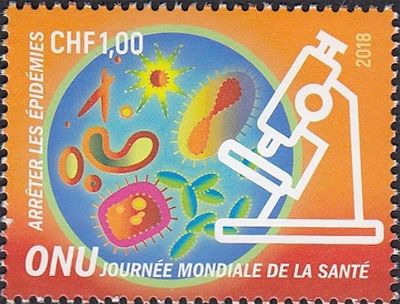
This UN stamp, along with 5 others, was issued to honor 70 years of the World Health Organization. Diverse pathogens are sketched along with an antique microscope, representing the quest to find the cause of epi- and pandemics. (A virus would not be visible in a microscope of this type.) The WHO was founded in April, 1948 and is centered in Geneva, Switzerland.
Send note to Staff  Go to Top of Page
Pillar Of The Community
Germany
3028 Posts
Posted 04/20/2020   01:25 am  Show Profile Bookmark this reply Add Kris Rascher to your friends list  Get a Link to this Reply
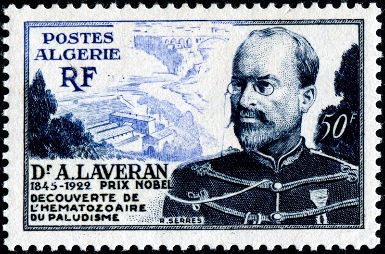
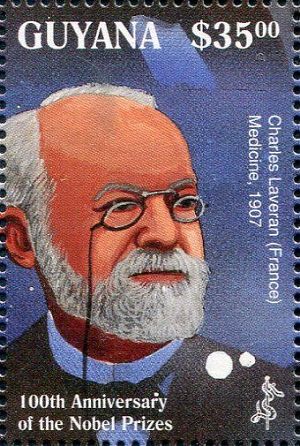
A tribute to Alphonse Laveran (1845-1922), who examined the blood of malaria patients during his years in Algeria and discovered the pathogen. Later he found them again in patients in Rome, but it took years for his findings to become accepted. It wasn't 'bad air', it was a parasite that was causing the disease. He received the Nobel Prize in 1907.
Send note to Staff  Go to Top of Page
Pillar Of The Community
Germany
3028 Posts
Posted 04/21/2020   01:29 am  Show Profile Bookmark this reply Add Kris Rascher to your friends list  Get a Link to this Reply
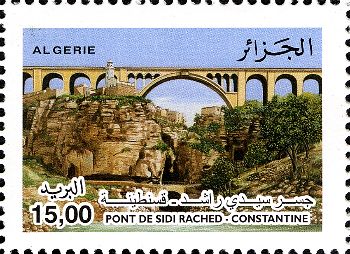
The French/Algerian tribute to A. Laveran shows him on the background of the hospital in Constantine, Algeria, where he first discovered the malaria pathogen. A newer stamp shows the Pont Sidi Rached, a well-known landmark of the city which was built decades after Laveran's years there but is also included in the older stamp. 1954 and 2008
Send note to Staff  Go to Top of Page
Pillar Of The Community
Germany
3028 Posts
Posted 04/24/2020   01:04 am  Show Profile Bookmark this reply Add Kris Rascher to your friends list  Get a Link to this Reply
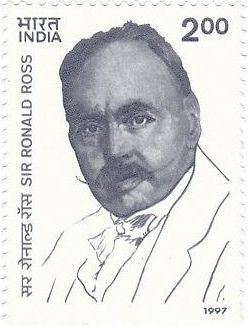
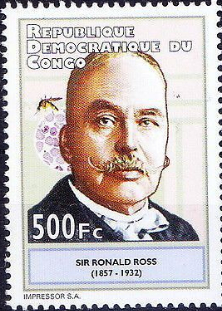
Ronald Ross (1857-1932) worked for many years in India; one of his main areas of interest was the examination of mosquitoes that had been recognized by Laveran as the vectors of malaria. He was the first to describe the complicated development of the parasite within the insect.
Send note to Staff  Go to Top of Page
Pillar Of The Community
Germany
3028 Posts
Posted 04/25/2020   12:29 am  Show Profile Bookmark this reply Add Kris Rascher to your friends list  Get a Link to this Reply
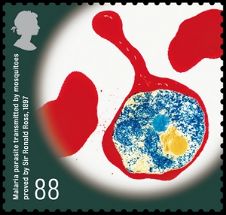
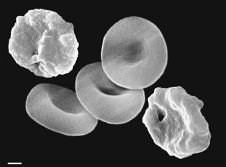
A stamp which honors Ronald Ross (1857-1932) shows the malaria parasite inside a red blood cell and the black and white photograph shows the difference between healthy and infected (the wrinkled ones) red blood cells as seen in a scanning electron microscope. Part of the "Medical Breakthroughs" set 2010.
Send note to Staff  Go to Top of Page
Pillar Of The Community
Germany
3028 Posts
Posted 04/26/2020   01:01 am  Show Profile Bookmark this reply Add Kris Rascher to your friends list  Get a Link to this Reply
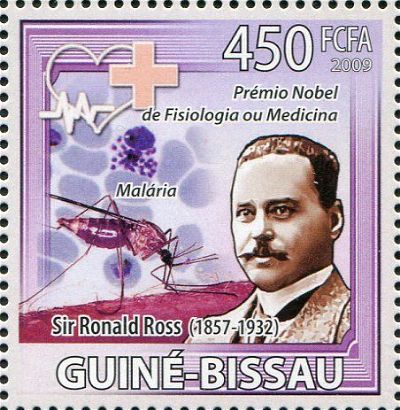
A tribute to Ronald Ross. In the background a mosquito having supper and a light microscope image of blood cells of an infected person. 2009
Send note to Staff  Go to Top of Page
Pillar Of The Community
Germany
3028 Posts
Posted 04/27/2020   01:26 am  Show Profile Bookmark this reply Add Kris Rascher to your friends list  Get a Link to this Reply
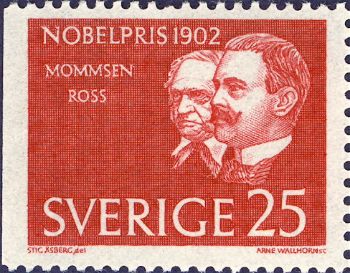
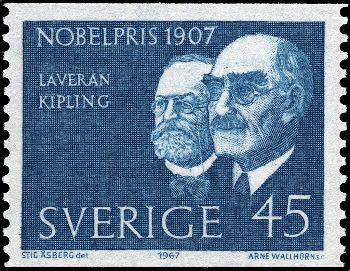
Both Laveran and Ross were honored on Swedish Nobel stamps. 1962, 1967
Send note to Staff  Go to Top of Page
Pillar Of The Community
Germany
3028 Posts
Posted 04/28/2020   05:00 am  Show Profile Bookmark this reply Add Kris Rascher to your friends list  Get a Link to this Reply
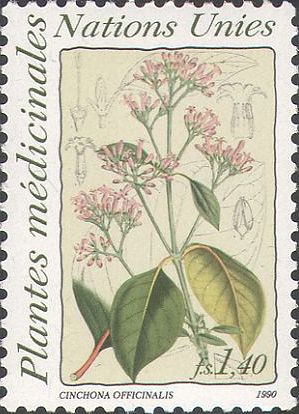
The peoples of South America knew about the fever-quenching properties of an extract from the bark of cinchona plants. These plants are native to South America and became much sought after when Europeans came there and began using such extracts to treat malaria fevers. Seeds were taken to other parts of the world and quinine is now produced in Africa and Indonesia. UN 1990
Send note to Staff  Go to Top of Page
Pillar Of The Community
Germany
3028 Posts
Posted 04/29/2020   12:28 am  Show Profile Bookmark this reply Add Kris Rascher to your friends list  Get a Link to this Reply
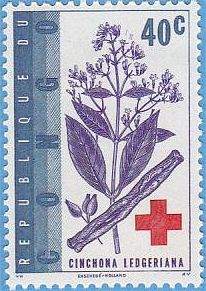
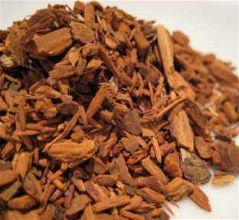
Cinchona plants can be grown in central Africa and this region is one of the producers of natural quinine. Most species grow in sub-tropical and tropical regions at about 1-3 thousand meters altitude. Chips of cinchona bark.
Send note to Staff  Go to Top of Page
Pillar Of The Community
Germany
3028 Posts
Posted 04/30/2020   01:04 am  Show Profile Bookmark this reply Add Kris Rascher to your friends list  Get a Link to this Reply
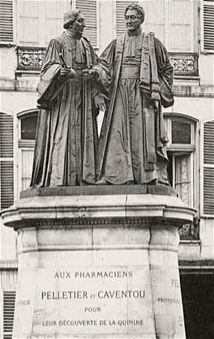
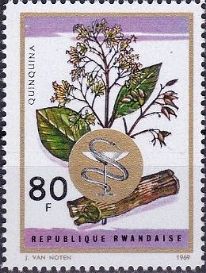
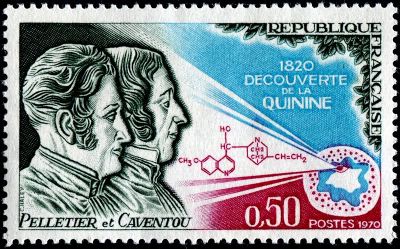
Joseph Caventou (1795–1877) was a French pharmacist, a professor at the School of Pharmacy in Paris. He collaborated with Pierre-J. Pelletier (1788-1842) to isolate the active anti-malarial ingredient quinine from cinchona plants. Quinaquina is the original name of the cinchona plants. Note that this was accomplished years before the work of Laveran and Ross.
Send note to Staff  Go to Top of Page
Pillar Of The Community
Germany
3028 Posts
Posted 05/01/2020   02:31 am  Show Profile Bookmark this reply Add Kris Rascher to your friends list  Get a Link to this Reply
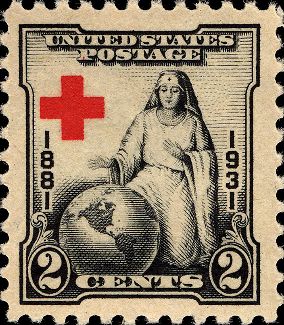
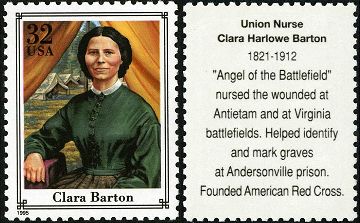
In many countries the first of May is Labor Day - a holiday during which millions of people gather in town squares, etc. to discuss and perhaps demonstrate for improved working conditions. A good day to honor and thank all nurses across the world for their tireless work taking care of the ill. 1931, 50 years after the nurse Clara Barton founded the American Red Cross.
Send note to Staff  Go to Top of Page
Pillar Of The Community
Germany
3028 Posts
Posted 05/02/2020   11:01 am  Show Profile Bookmark this reply Add Kris Rascher to your friends list  Get a Link to this Reply
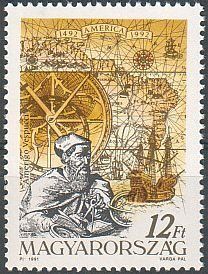
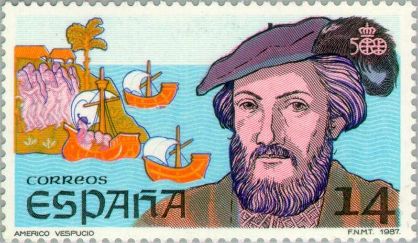
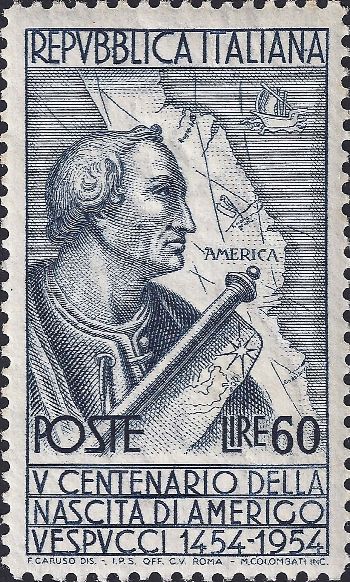
Amerigo Vespucci (1454–1512) was an Italian merchant, explorer, and navigator from Florence. He is credited with having sailed to what he called the New World and doubting that it was the far east as Columbus first thought ("Indians"). The claim inspired cartographer Martin Waldseemüller to recognize Vespucci's accomplishments in 1507 by applying the name America for the first time to his map showing the New World. Stamp, 1954, designed after portrait attributed to Cristofano dell'Altissimo. Pathogens and history make a fascinating topic: Vespucci died of malaria.
Send note to Staff  Go to Top of Page
Pillar Of The Community
Germany
3028 Posts
Posted 05/03/2020   02:31 am  Show Profile Bookmark this reply Add Kris Rascher to your friends list  Get a Link to this Reply
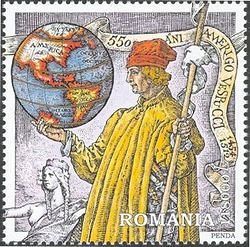
A few more stamps honoring Amerigo Vespucci. Maybe he contracted malaria on one of his travels; on the other hand, Spain was not called free of malaria until about 50 years ago. Vespucci died in Sevilla which is close to extended wetlands, and he also spent years in Italy, where malaria was widespread.
Send note to Staff  Go to Top of Page
Edited by Kris Rascher - 05/03/2020 02:33 am
Pillar Of The Community
Germany
3028 Posts
Posted 05/04/2020   03:42 am  Show Profile Bookmark this reply Add Kris Rascher to your friends list  Get a Link to this Reply
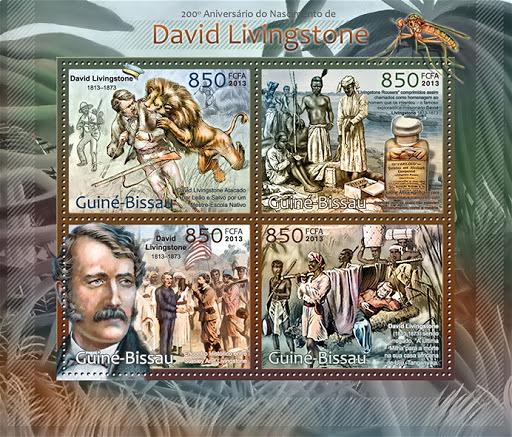
David Livingstone (1813-1873) is known for his years of exploring Africa; one of the highlights of his expeditions was seeing (and naming) the Victoria Falls. The souvenir sheet by Guinea Bissau (2013) illustrates scenes from his life, the fourth stamp shows how sick he became, needing to be carried by his helpers. The mosquito up on the frame symbolizes malaria, and he had already been weakened by dysentery.
Send note to Staff  Go to Top of Page
Pillar Of The Community
Germany
3028 Posts
Posted 05/05/2020   03:18 am  Show Profile Bookmark this reply Add Kris Rascher to your friends list  Get a Link to this Reply
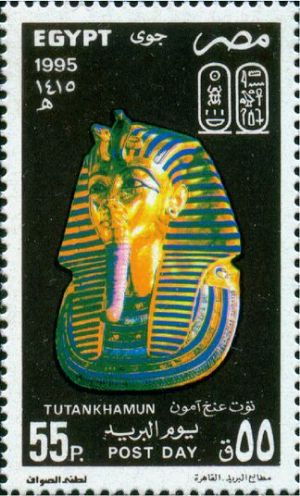
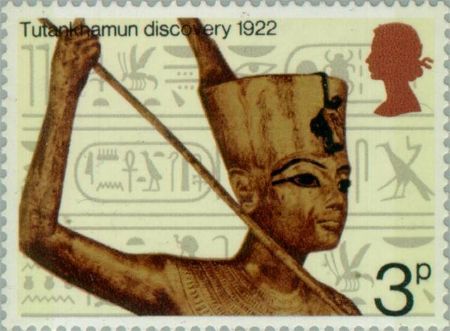
Only a few years ago DNA analysis of Tutankhamun's mummy revealed that he carried several strains of malaria. Malaria may well have been the cause of death in this young pharaoh, although his mummy showed signs of several other ailments, primarily genetic disorders. He died in 1325 BC and is the oldest known case of malaria so far.
Send note to Staff  Go to Top of Page
Page: of 10 Previous TopicReplies: 141 / Views: 16,814Next Topic  
Previous Page | Next Page
 
To participate in the forum you must log in or register.

  Question Regarding My Grandfather's Stamp Collection
  How Did Engravers At Babn In 1980 Make Changes To An Engraved Cylinder?
  Louisville & Nashville Rail Road CO Postcards And Mail Related Items
  Unusual World War 1 Patriotic War Effort Fundraising Postcards
  Almost There, One More Stamp To Go.share Your Pages Missing One Stamp
  Do You Collect Hungarian Philately With A Judaic Focus?
  Vertical Line Across 2 Stamps Of Bk291
  Difference Between 6096A And 6096B ?
  Need To Know If These Stamps Are Real Errors And Worth Certifying
  Sweden 1.40kr Fluorescent Paper - Interesting Letter
  Patriotic Covers During The Civil War
  Tracking Standard Envelopes? (Imb / Informed Visibility). Intelligent Mail Barcodes.
  Caught In The Mail: Using A "muster" (Specimen) As Postage A Month Early!
  Looking For Ken Pugh Fakes & Forgeries Books / Manuals
  Sending Invoices For Ebay International Orders
  Collecting Aerograms/Air Letters
  #u536 Pre-First Day Cover
  "it's Just Me" Quarterly Stamp Show On August 7th, 8th, & 9th 2026 In Nashville, TN
  Any Info On A Scotts US 65 Imperf On Left
  Any Tips On Identifying Scott 6107 - 6112
  Scott US 406c The Search Continues
  Nashville Philatelic Society-Your Invitation To Our Auction Night Meeting Monday, July 27, 2026
  Help Identifying Pair Of Vertically Perforated 1 Cent Franklins
  Help Identify French Local And Colonial Revenues
  Plating Help Requested: KGV 1½d Brown - Potential Crown Flaw And Watermark Check

Go to Top of Page

Disclaimer: While a tremendous amount of effort goes into ensuring the accuracy of the information contained in this site, Stamp Community assumes no liability for errors. Copyright 2005 - 2026 Stamp Community Family - All rights reserved worldwide. Use of any images or content on this website without prior written permission of Stamp Community or the original lender is strictly prohibited.
Privacy Policy / Terms of Use    Advertise Here
Stamp Community Forum © 2007 - 2026 Stamp Community Forums
It took 0.21 seconds to lick this stamp. Powered By: Snitz Forums 2000 Version 3.4.05