| Author |
 Replies: 141 / Views: 17,144 Replies: 141 / Views: 17,144 |
|
|
|
Pillar Of The Community
Germany
3028 Posts |
|
|
A set of stamps issued by Rwanda summarizes aspects of the malaria pathogen and the discovery of quinine: the mosquito on the right is being killed by a hunter's arrow. 1970  |
Send note to Staff 
|
|
|
Pillar Of The Community
Germany
3028 Posts |
|
|
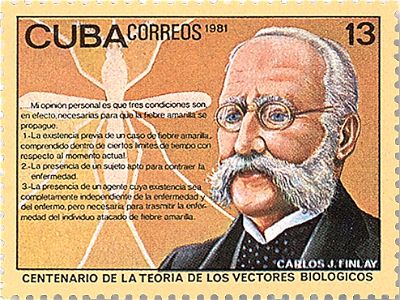
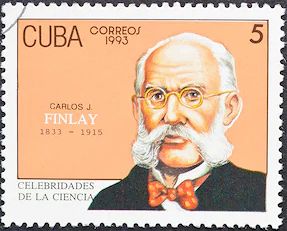
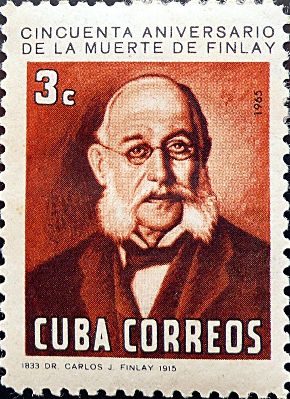
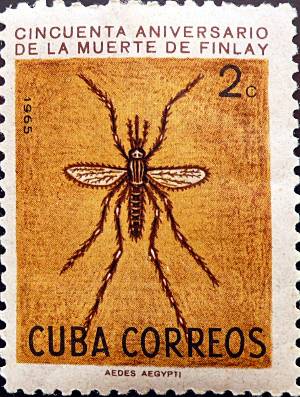
Introduction to another species of mosquito: the Aedes aegypti mosquito was discovered by Carlos Finlay (1833-1915) to be the vector of the often fatal disease known as yellow fever. It is illustrated on a stamp from Panama, because this disease had a very significant effect on the construction of the Panama canal. Note the misspelling on the stamp. 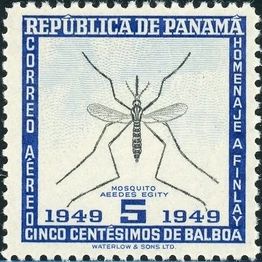  |
|
Send note to Staff
|
|
|
Pillar Of The Community
Germany
3028 Posts |
|
|
The partner stamp to the mosquito stamp above. The Cuban epidemiologist Carlos Finlay honored in Panama.  |
|
Send note to Staff
|
|
|
Valued Member
Canada
11 Posts |
|
|
The topic photos are great!
I learned about the UN issue that was posted on April 19 - does anyone want to guess what the cartoon images represent? I think 2 of them are viruses (with the small protrusions on the outside), and the 2 circular ones on the left are blood cells.
What might the 'green' at the bottom and the 'star' at the top be? |
|
Send note to Staff
|
|
|
Pillar Of The Community
Germany
3028 Posts |
|
|
It is still the International Week of Nurses, so it is more than appropriate to honor all nurses who gave the ultimate gift - their lives to help the ill. Clara Maass let herself be infected by mosquitos carrying the yellow fever pathogen and died of the disease. She was one of the very first to give informed consent for a potentially fatal medical experiment. She was part of the team of the Yellow Fever Commission. 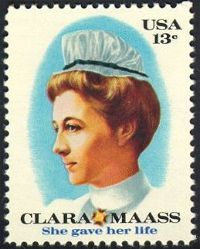  (Welcome Condor, good to hear that you appreciate the thread. I wouldn't be able to say that any of the pathogens seen in the UN stamp are real representations of viruses or bacteria or single-celled parasites - I see them more as an artistic attempt to put everything together on one microscope slide. I worked with light and electron microscopes for decades and know how difficult it can be to see viruses. Greetings, K.) |
|
Send note to Staff
|
|
|
Pillar Of The Community
Germany
3028 Posts |
|
|
Pillar Of The Community
Germany
3028 Posts |
|
|
Pillar Of The Community
Germany
3028 Posts |
|
|
Pillar Of The Community
Germany
3028 Posts |
|
|
Way back in the 16th century Spanish explorers recognized the possibilities of digging a canal through the Panama isthmus. The project was begun by the French three centuries later. One of the factors leading to the failure of their attempt was yellow fever, killing thousands of workers from France and the West Indies. The Canal Zone stamps show what the working conditions were like (your imagination can add heat and humidity, poor sanitation, poor housing). The USA took over the canal project in 1904.   |
|
Send note to Staff
|
|
|
Pillar Of The Community
Germany
3028 Posts |
|
|
Pillar Of The Community
Germany
3028 Posts |
|
|
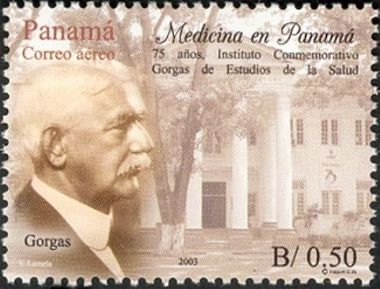
The Canal Zone featured William Gorgas on an earlier stamp, 1928. It was part of the first set of Zone stamps that weren't just overprints. The Canal Zone post office was established in 1904 when the US took over construction of the canal and lasted till 1978 when the Zone became part of Panama. A hospital in Panama was re-named after Gorgas.  |
|
Send note to Staff
|
|
|
Pillar Of The Community
Germany
3028 Posts |
|
|
Pillar Of The Community
Germany
3028 Posts |
|
|
Pillar Of The Community
Germany
3028 Posts |
|
|
Pillar Of The Community
Germany
3028 Posts |
|
|
Another fever caused by a virus carried by the Aedes mosquito is dengue fever. This virus is a relative of the yellow fever virus: both are flaviviruses (Latin flavus = yellow) that do not have a corona. Dengue is often a leading cause of illness in areas with risk, primarily tropical/subtropical areas in which Aedes can thrive.  |
|
Send note to Staff
|
|
|
Replies: 141 / Views: 17,144 |
|



 Posted 05/06/2020 12:59 am