| Author |
 Replies: 14 / Views: 4,567 Replies: 14 / Views: 4,567 |
|
|
Valued Member
United States
13 Posts |
|
|
Recently obtained an odd cover. Am familiar with the stamps issued by anti-Bolshevik forces in Mitau region circa 1919-1920; this set is always listed as unissued, with remainder purchased by German stamp dealer. I'm guessing this cover was made up in Berlin, but wonder when? Is it a contemporary effort to give the appearance of real postal usage, or a modern fantasy? I get "Mitava," but can not translate the bottom part of the cancellation, and am not smart enough to figure how to place Cyrillic characters onto this page. Do I see an abbreviation for telegraphs in that middle word? Date also seems odd. Any advice on this strange item appreciated. 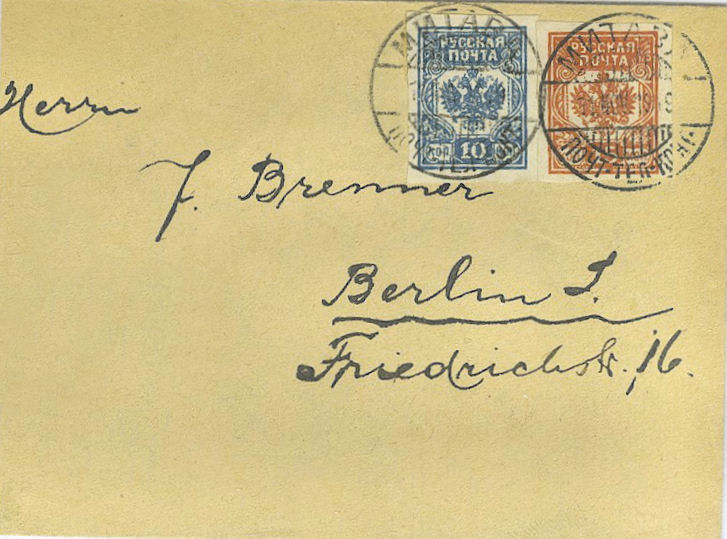 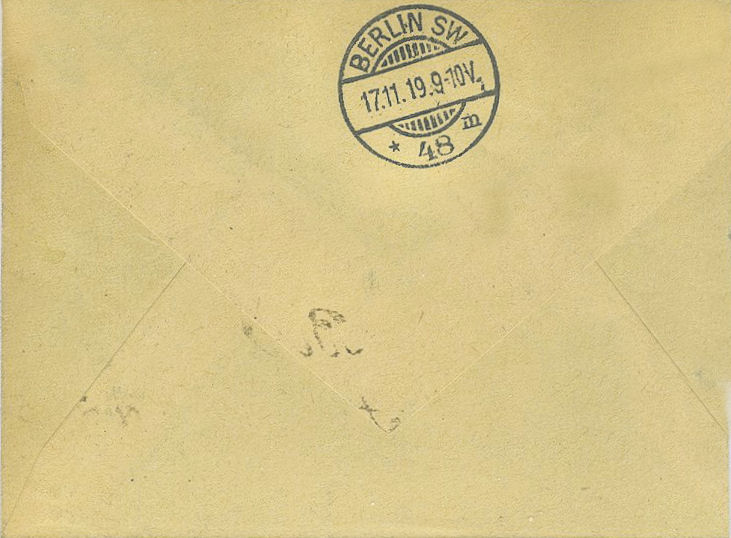 |
|
Send note to Staff
|
|
|
|
|
Pillar Of The Community
United States
572 Posts |
|
|
The bottom half of the CDS is Russian for Main Post & Telegraph Office. The book I have shows that in use on earlier cancels before 1905 but the WW1 vintage cancels no longer have that showing. Which of course may not be definitive. This is actually the first cover I have seen with the Western Army Eagles on it. My guess is that it's from the period but manufactured as were more than a few Bermondt-Avalov covers. Still a nice cover and curiosity, |
Send note to Staff 
|
|
|
Pillar Of The Community
United States
572 Posts |
|
|
The Western Army was active in Mitau(Jelgava) from October 10 to November 11, 1919. |
|
Send note to Staff
|
| Edited by John Freibergs - 08/10/2015 10:42 pm |
|
|
Pillar Of The Community
United States
7239 Posts |
|
|
Khedive, welcome to the forum. I am no expert on this area of post ww1 philately, but I am a long time Germany collector. Everything about this cover leads me to believe it is a German production. I find it interesting that the maker put an arrival cancel on the back flap, but didn't put the sender's name and address there first. Also, note the offset of the handwritten ink on the back. I wonder how many of these the person made. I'd guess that just about all of them have the offset from the previously produced item. The cancels are sharp and clean, too clean...and the envelope paper is too nice and too clean.
At least the maker used what look to be the genuine stamps. They have the characteristic notches above the value tablets. Maybe this dates them to the 1920's...but that's my wild guess. Sorry I can't be of more help. |
|
Send note to Staff
|
|
|
Pillar Of The Community
United States
572 Posts |
|
|
I found a small paragraph in another book that lists the only known valid Mitau cancel with a small Cyrillic b below and to the right of the date. |
|
Send note to Staff
|
|
|
Valued Member
United States
13 Posts |
|
|
Pillar Of The Community
United States
2423 Posts |
|
|
I found these cancels last night and may look a little further today. I don't know if this sheds any light on the OP's cover. This first image is of a post card from 1915. 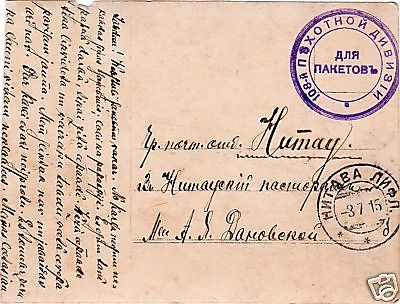 This one is purportedly from after the World War. You can see the LP overprint. 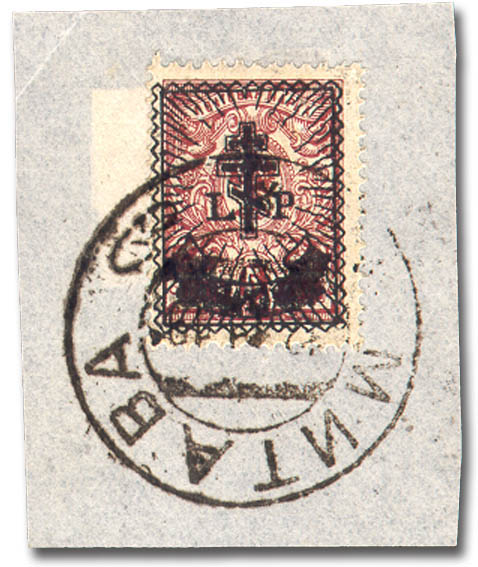 And this one is from Imperial Russia. 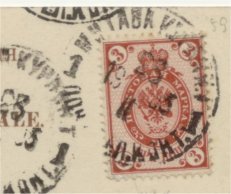 What I have seen, after quite a lot of googling and puzzlement, leads me to trust more the Jelgava postmarks from after the war |
|
Send note to Staff
|
|
|
Pillar Of The Community
United States
2423 Posts |
|
|
Pillar Of The Community
United States
572 Posts |
|
|
The middle stamp with the L P appears to be a genuine stamp but I don't know about the cancel. The one short article I read indicated that the only Mitau cancel known to be real has the Cyrillic lower case b in the lower right quadrant(what looks like an English small case d with a bar at the top).
The postcard is Free Soldier Mail from WW 1 but I'm not sure of the unit. The Mitau cancel I think is valid.
The lower one with the Russian stamp appears to be correct. |
|
Send note to Staff
|
|
|
Pillar Of The Community
United States
572 Posts |
|
|
Here's a small sample of Mitau cancels from a book I have. Though I collect Latvia during the Russian period pre-WW 1, I've really never spent a lot of time researching stuff for those years. The Cyrillic cancels on the lowermost stamp would appear to be from the main post office. 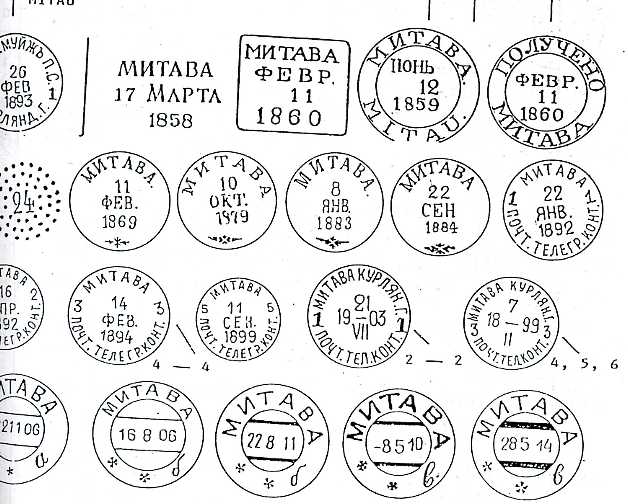 |
|
Send note to Staff
|
|
|
Pillar Of The Community
United States
2423 Posts |
|
|
Pillar Of The Community
United States
572 Posts |
|
|
I think so too. But then again I'm prejudiced since my family were refugees from Latvia after WW 2.  |
|
Send note to Staff
|
|
|
Pillar Of The Community
United States
8956 Posts |
|
|
John, thank you for all this insight! However, none of the cancels in your picture is like the one on the original letter of this post. What could be the reason for that? Just a later cancel?
Peter |
|
Send note to Staff
|
|
|
Pillar Of The Community
United States
572 Posts |
|
|
I think that cancel is strictly a fabrication by someone. Probably to make the cover look more real. |
|
Send note to Staff
|
|
|
Valued Member
Greece
233 Posts |
|
|
As others have mentioned, I am afraid this "cover" is a total fabrication. Below are some references that support this conclusion: " The Eagle stamps were prepared in Berlin for use by the Western Army in Latvia. They were not, however, prepared in time before the evacuation (1/12/1919). and were sold directly to the stamp trade. The whole remainder of the unissued stamps had been purchased by a dealer in Hanover". from R.J.Benns, "The Eagle stamps of the Western Army", British Journal of Russian Philately #37 (1965), pp 5-16. You can also read similar information in the following article in the Rossica Journal: http://ufdc.ufl.edu/UF00020235/00005/67 |
|
Send note to Staff
|
|
| |
Replies: 14 / Views: 4,567 |
|




 Posted 08/10/2015 10:04 pm


