| Author |
 Replies: 9 / Views: 2,018 Replies: 9 / Views: 2,018 |
|
|
New Member
United States
2 Posts |
|
|
Hello all, I am new to the site and was lucky enough to come across a Penny Black stamp. I know very little about it and was wondering if anyone can give me information on this particular stamp and its value. I greatly appreciate any information anyone can give me about its condition, and what the lettering means exactly. 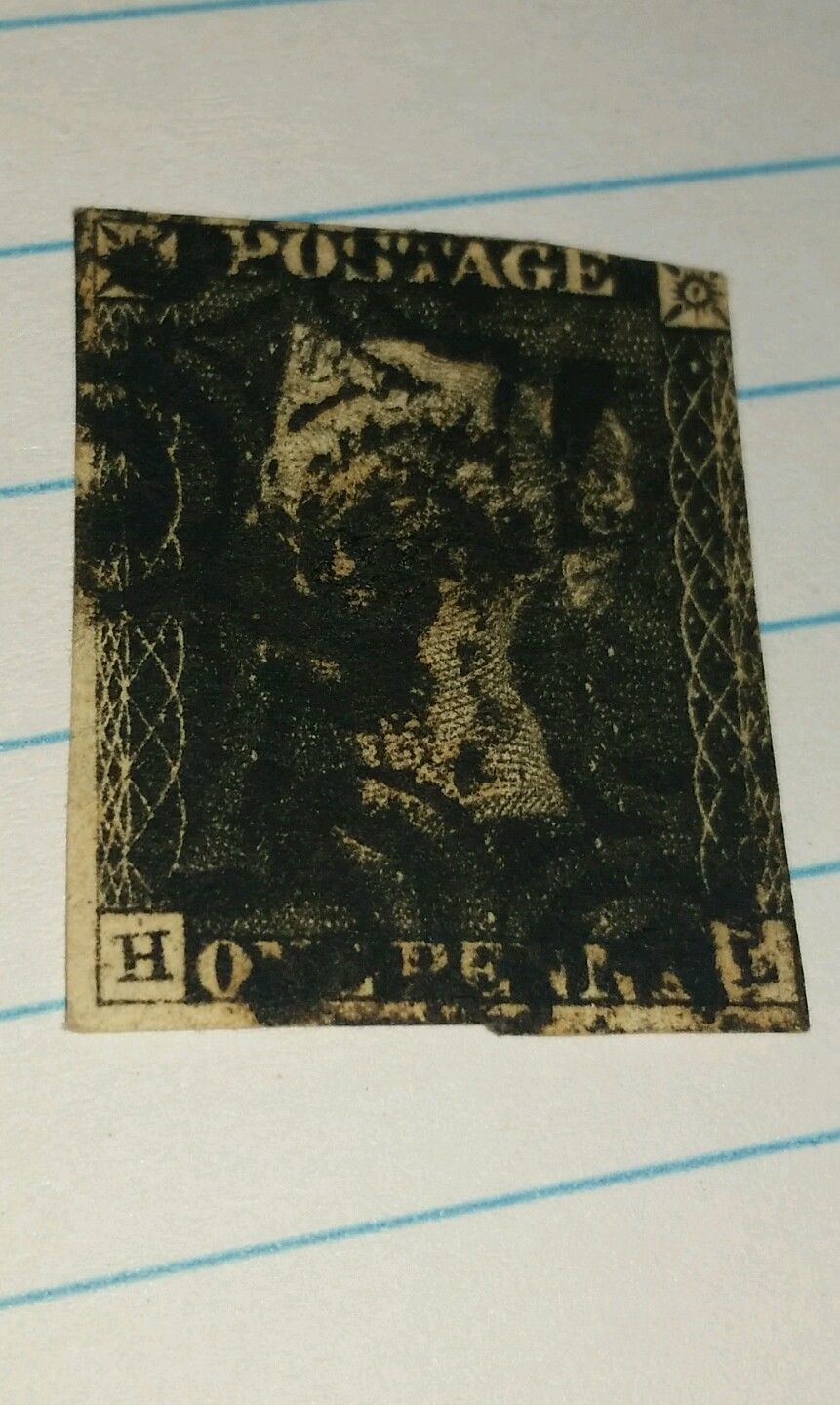 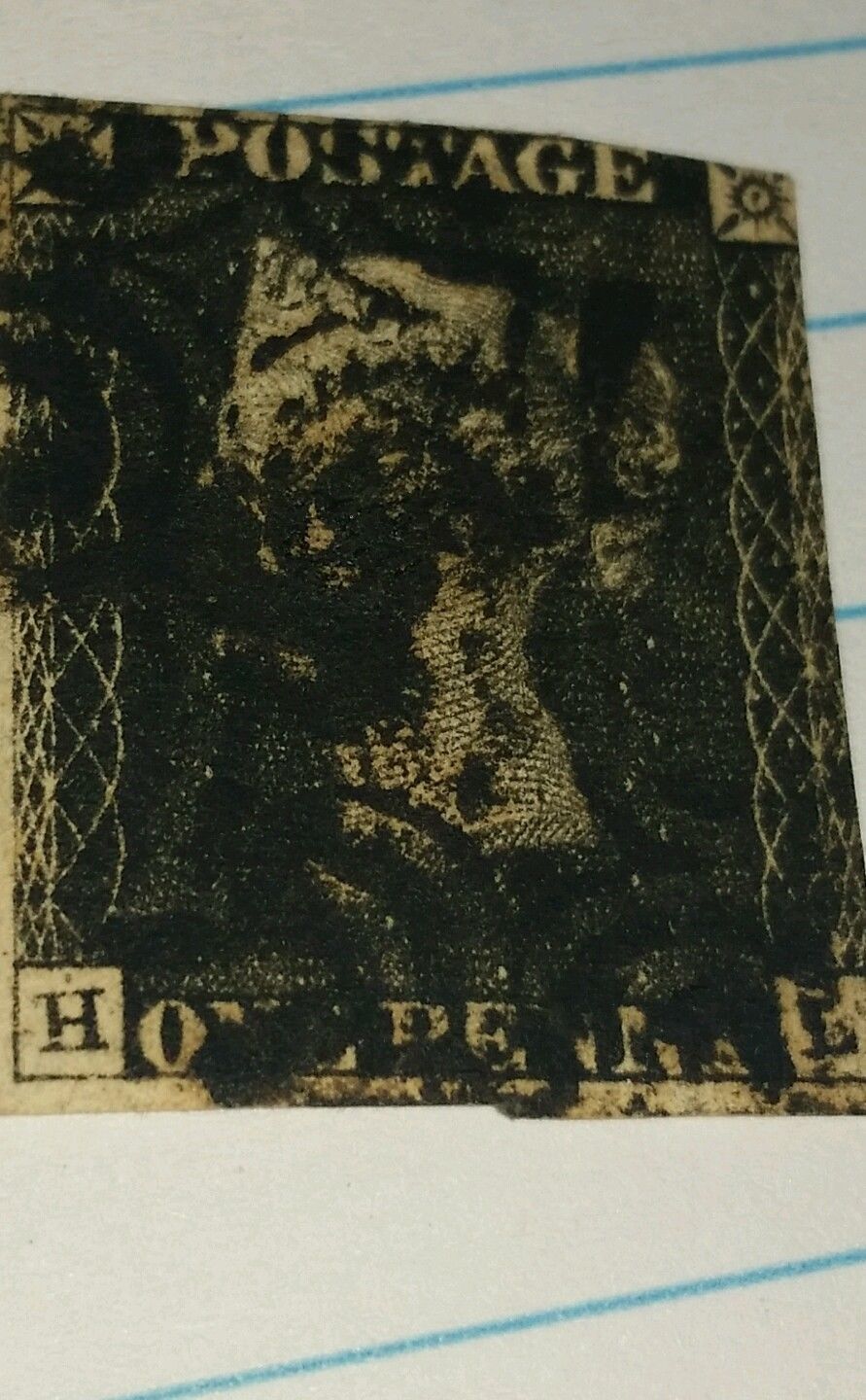 |
|
Send note to Staff
|
|
|
|
|
Pillar Of The Community
United Kingdom
8628 Posts |
|
|
Sheets of 1d blacks had letters in the lower corners of each stamp.
To have much value, a 1d black should, as well as other points, have four clear margins around the design. Yours has two. It's also very heavily postmarked, so the queen's head is obscured. I doubt if you'd get more than a few £s/$s for it. |
Send note to Staff 
|
|
|
Pillar Of The Community
Germany
1714 Posts |
|
|
As GeoffHa has indicated.. condition is everything. Your stamp is from plate 6 and has a very heavy cancellation. The lack of margins on two sides and that cancellation means the stamp is space-filler quality and has very little value. |
|
Send note to Staff
|
|
|
New Member
United States
2 Posts |
|
|
Pillar Of The Community
1515 Posts |
|
|
Two experts have told all there is to tell about your stamp  To recap: Plate 6 Only two margins Heavy cancel Space filler That's about all the info possible. |
|
Send note to Staff
|
|
|
Pillar Of The Community
United Kingdom
8628 Posts |
|
|
Pillar Of The Community
1515 Posts |
|
|
Pillar Of The Community
United Kingdom
8628 Posts |
|
|
Pillar Of The Community
United States
1026 Posts |
|
|
So why would an L column stamp be trimmed into the design at right? Seems like an unneeded extra step for the person who used it to mail a letter originally. Trimmed when taken from the letter maybe? It should have a nice wide margin at left since it's the leftmost stamp on that row... |
|
Send note to Staff
|
|
|
Valued Member
United States
428 Posts |
|
|
Typically, post office window clerks prepared for the day's business by cutting up imperforate penny blacks and reds into strips of twelve, A to L.
This is a time saving measure when faced with an impatient queue of customers. Classically, the clerk would cut each row as a strip and many would then snip off each stamp, so there'd be a ready supply of individual stamps. Both margins almost always went. You do no usually see margins on stamps still affixed to covers from either the A or L rank. Thinking about the mechanics or using a scissor to separate a large number of stamps in the morning in this manner. It's a very mechanical affair.
The tendency of clerks to scissor off rows means that today, you very rarely see "vertical" blocks, but do frequently see horizontal strips of more than one.
In this stamp, most probably the clerk, using his scissor, snipped the row and then each stamp, in turn, the margin most probably went into the trash. (Please also remember that no one collected stamps in 1840) Highly unlikely it was removed after soaking.
Hope this helps,
Larry
|
|
Send note to Staff
|
|
| |
Replies: 9 / Views: 2,018 |
|



 Posted 09/24/2015 12:36 pm


