Stamp Community Family of Web Sites
Thousands of stamps, consistently graded, competitively priced and hundreds of in-depth blog posts to read


Stamp Community Forum
 
Username:
Password:
Save Password
Forgot your Password?

This page may contain links that result in small commissions to keep this free site up and running.

Welcome Guest! Registering and/or logging in will remove the anchor (bottom) ads. It's Free!

Australian Antarctic Territory, Air Mail December 1959

 
To participate in the forum you must log in or register.
Author Previous TopicReplies: 5 / Views: 2,537Next Topic  
Valued Member

United States
5 Posts
Posted 10/09/2015   5:56 pm  Show Profile Bookmark this topic Add LennyG to your friends list Get a Link to this Message
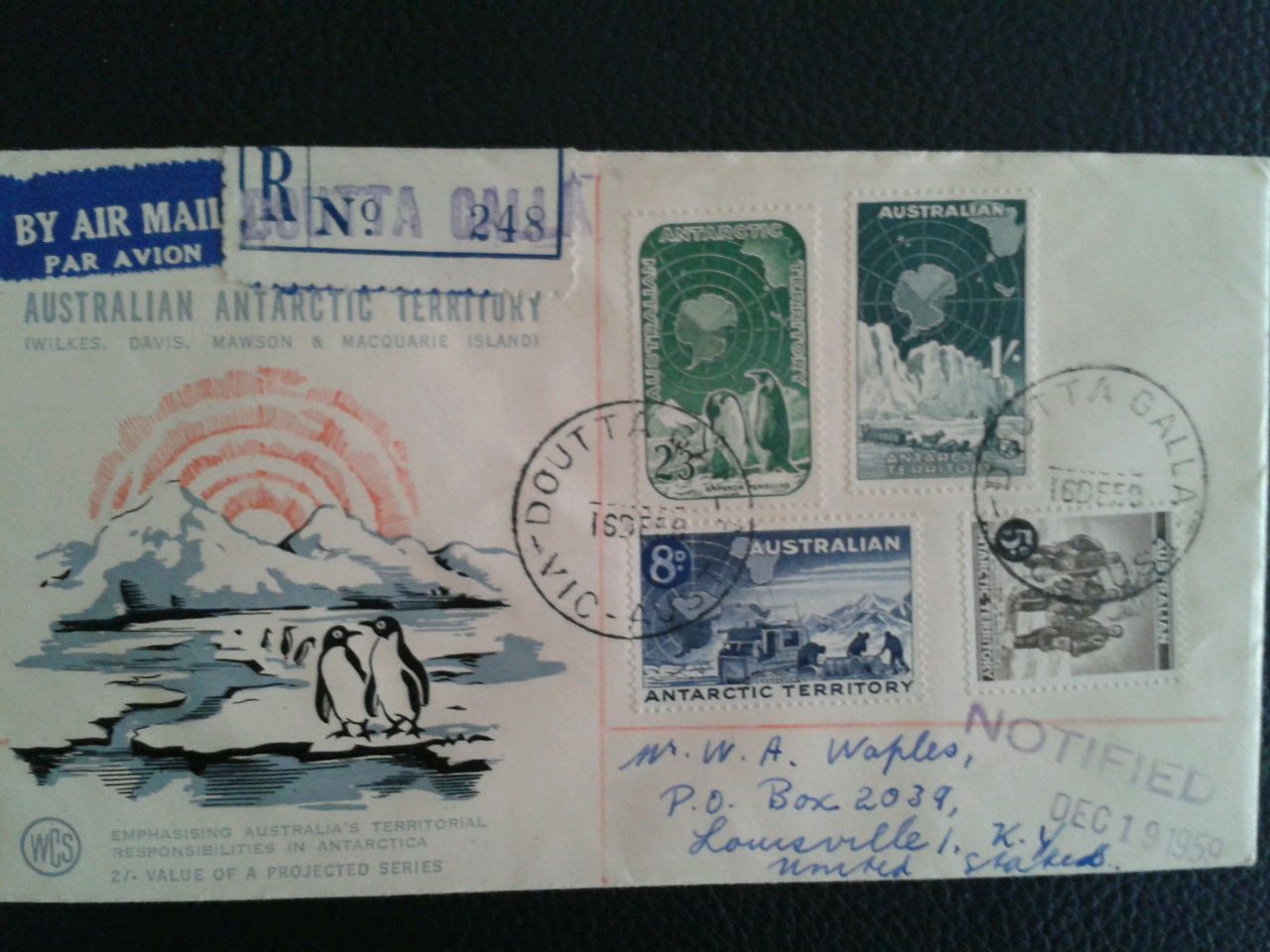
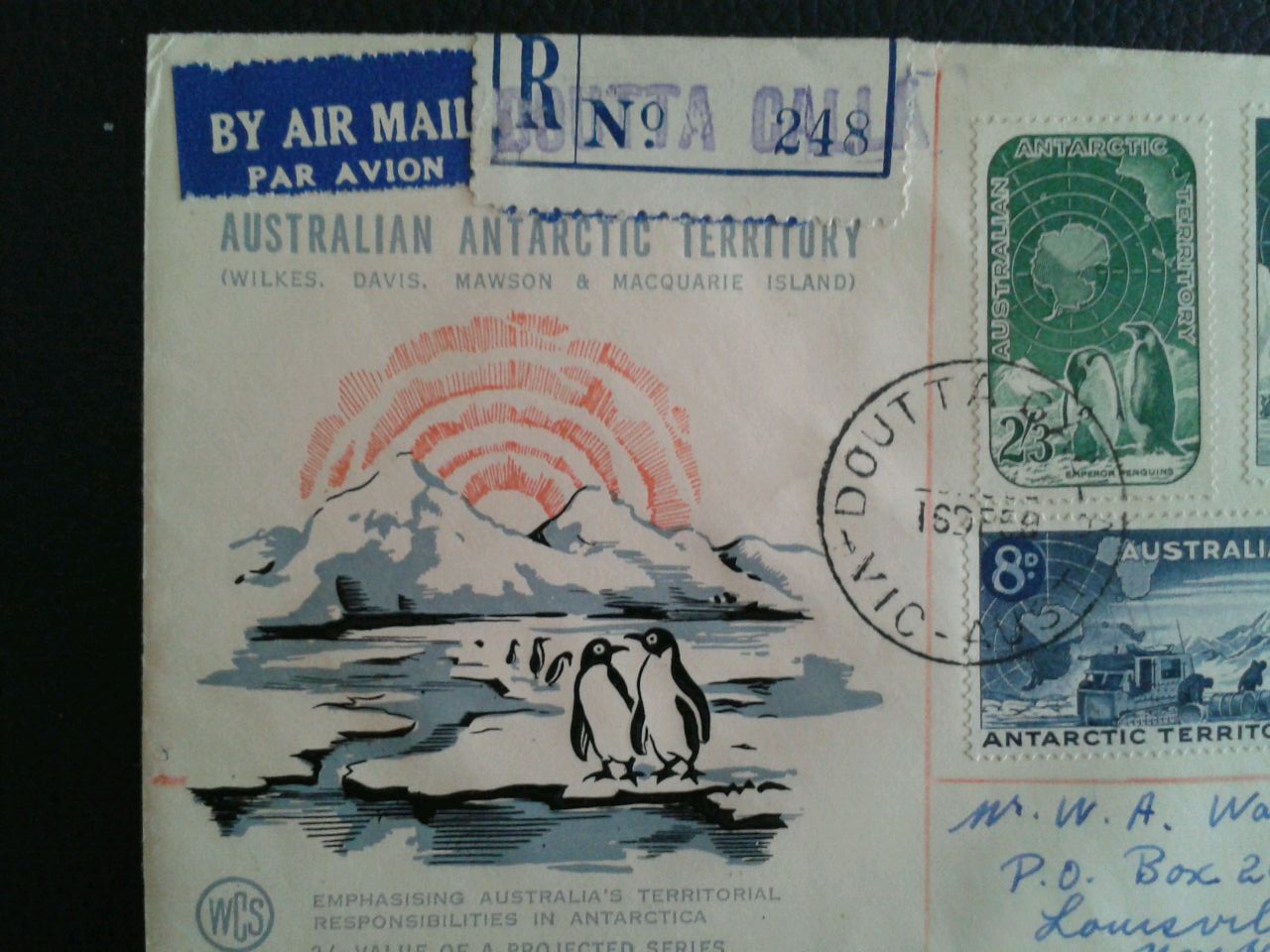
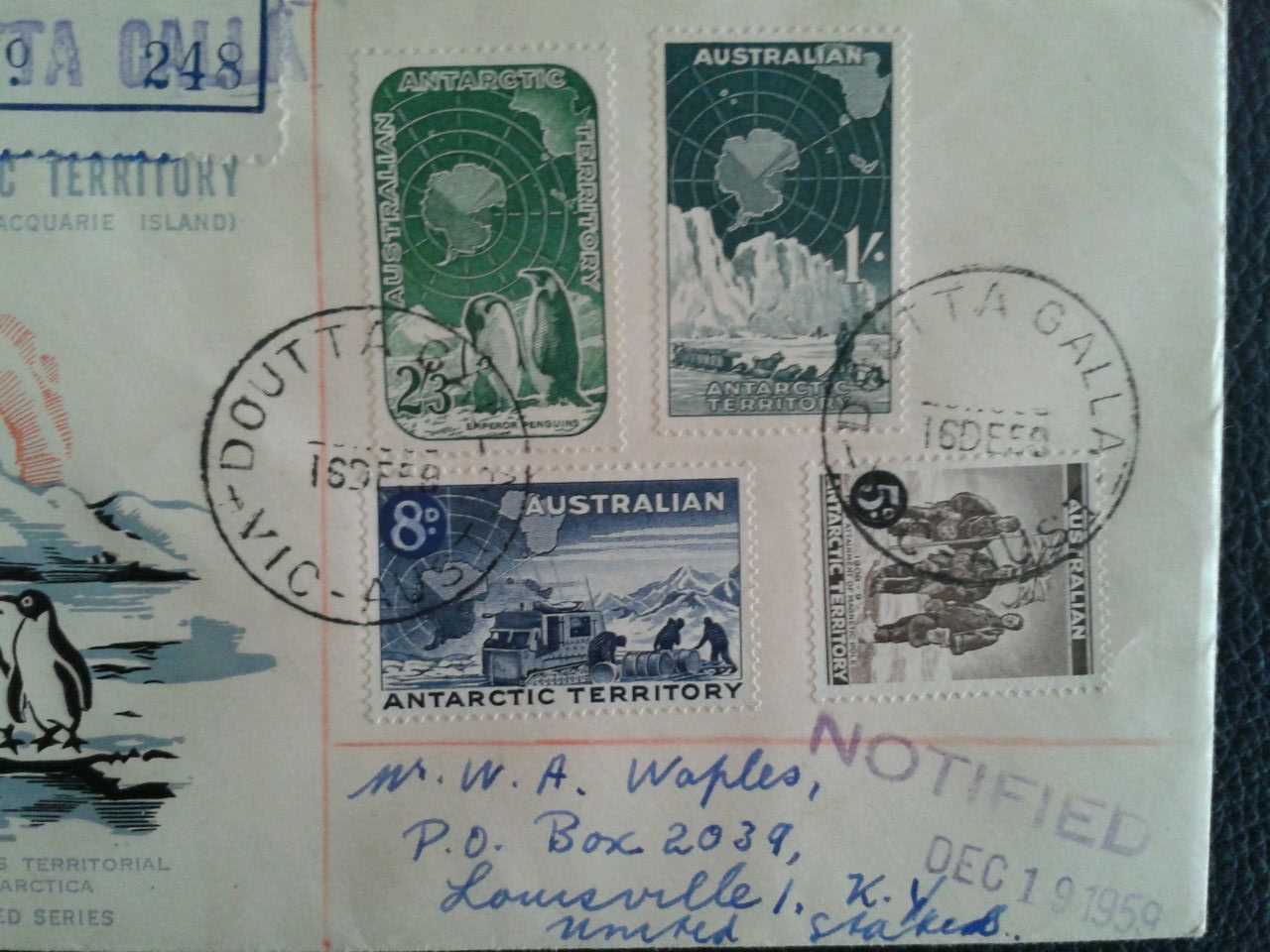
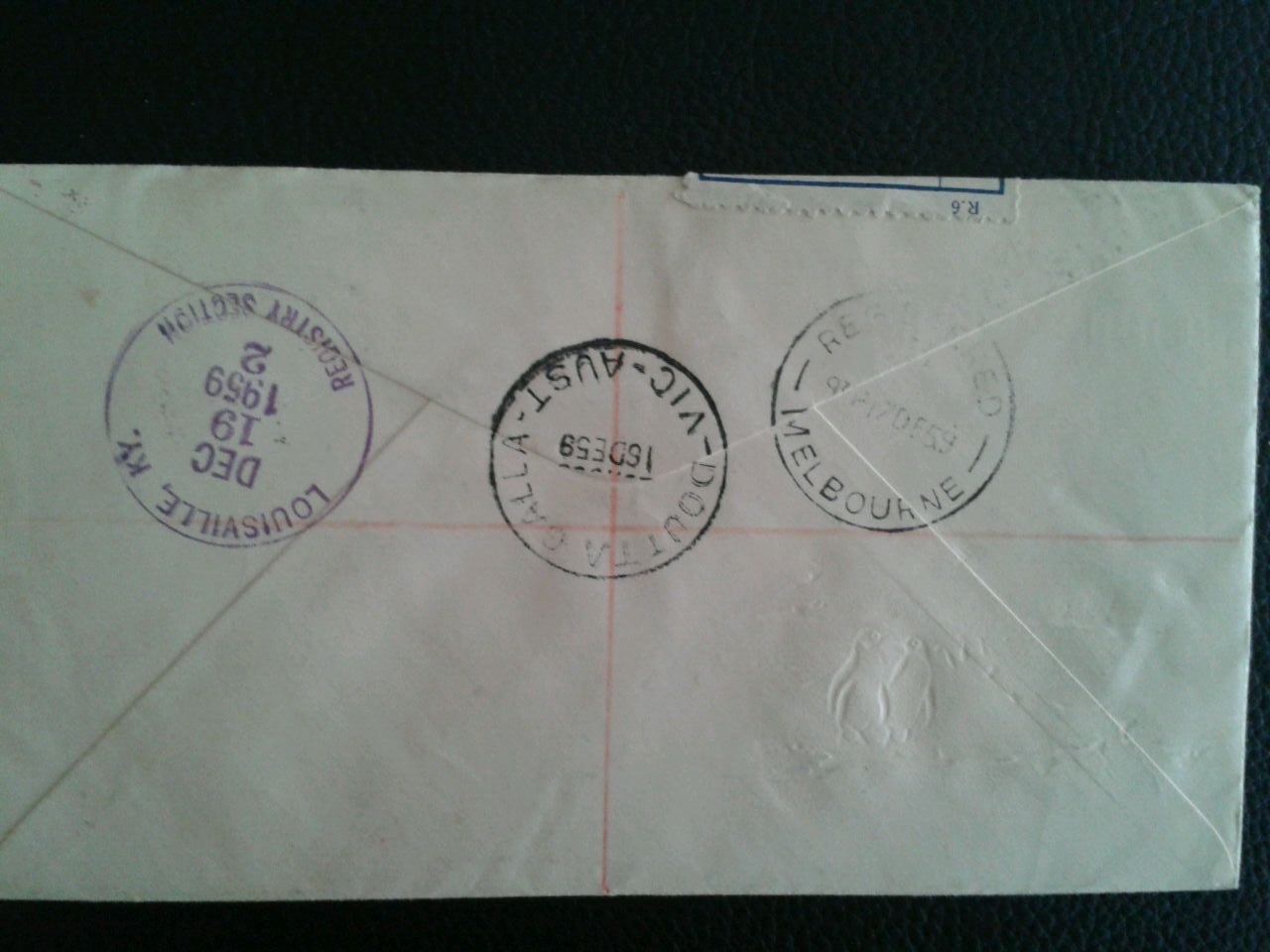
I purchased this in an estate sale about 4 years ago and do not know much about it. There is a stamp on cover No 248. What is that stamp? There are 5 cancellations. On the stamps is the 8D and 5D Australian Dollars? Anyone know what the exchange rate in 1959 USD to ASD? I find this very interesting. Any info would be great.

Does this cover have any monetary value? I value it as a piece of history.


Send note to Staff

Pillar Of The Community
United States
2423 Posts
Posted 10/09/2015   8:14 pm  Show Profile Bookmark this reply Add KGB to your friends list  Get a Link to this Reply
This cover was mailed before the Australian dollar was established and that makes a conversion into American dollars a little difficult. If I understand things, conversion of this amount into American dollars would have given approximately 56 cents. (I hope someone will correct me if I'm wrong about that.)

Incidentally, the 'd' you see on two of the stamps stands for 'penny.' (Why is a long story.)
Send note to Staff  Go to Top of Page
Rest in Peace
720 Posts
Posted 10/09/2015   8:57 pm  Show Profile Bookmark this reply Add Glenn Estus to your friends list  Get a Link to this Reply
The "d" stands for dinarius which was an old Roman coin. In England "d" was used to stand for "penny" or its plural "pence". The "/" in 1/- & 2/3 stands for shilling. 1/- = 1 shilling (or 12 pence). 2/3 = 2 shillings 3 pence.

12d = 1/ (12pence = 1 shilling). Continuing the lesson: 20/ = £1 (20 shillings = 1 pound). This was all pre-decimal era which ended in 1971.

The "248" is the number of the registration label and is not a stamp
Send note to Staff  Go to Top of Page
Valued Member
Australia
177 Posts
Posted 10/09/2015   9:02 pm  Show Profile Bookmark this reply Add StevieG to your friends list  Get a Link to this Reply
The four stamps add up to a total of 4 shillings and 4 pence. I shilling equals 12 pence (d). (The 2/3 stamp is two shillings and 3 pence).
When decimal currency was introduced to Australia in 1966, one shilling (12d) equalled 10 cents. So in Australian currency, the total value of the stamps was about 43 cents Australian. In 1959, the government regulated the value of the dollar and I believe at that time it was worth more than the American dollar. When the Australian dollar was floated in the 1980's, its value has fluctuated a lot against the American dollar. At present, it is equal to about 73 US cents. About 2 years ago, it was higher than the American dollar.
The R stamp you mention is a registration label.
Send note to Staff  Go to Top of Page
Pillar Of The Community
United States
2423 Posts
Posted 10/09/2015   11:45 pm  Show Profile Bookmark this reply Add KGB to your friends list  Get a Link to this Reply
I found a pre-decimal inflation calculator for Australia and, all things being equal, the four shillings and four pence registered letter sent in 1959 would cost AUS$6.23 in 2014.
Send note to Staff  Go to Top of Page
Pillar Of The Community
1211 Posts
Posted 10/14/2015   02:24 am  Show Profile Bookmark this reply Add Kimo to your friends list  Get a Link to this Reply
Registered mail was started in the UK in 1841. Markings on registered letters and parcels used to be green ribbon tied around the letter or parcel, then it became green string, then it became pre-printed blue lines to imitate the string or blue pencil lines drawn to look like the string, then it became small labels such as the one on your letter. Registration is an extra cost above and beyond the regular postage rate and it provides extra services comprised of proof that you mailed the letter and when it is delivered proof that it was delivered, and in between it is kept under greater security than the regular mail. It is mostly used for sending important papers or sometimes cash or such where you really want to be sure your letter or parcel arrives without problems. Each post office kept a ledger book in which they would note the sequential registration number and details about the sending of the letter or parcel. The number served as a kind of internal control number within the post office. As the others have said, these are not stamps, they are simply labels supplied by the post office when a sender paid the extra fee.

Your cover was mailed at Doutta Galla which is just outside of Melbourne, Australia. This one, and ones that were mailed from the post offices in the Australian Antarctic Territories are relatively common and sell on ebay for $1 to $2 but I think they are really nicely made and fun to collect.
Send note to Staff  Go to Top of Page
Edited by Kimo - 10/14/2015 02:44 am
  Previous TopicReplies: 5 / Views: 2,537Next Topic  
 
To participate in the forum you must log in or register.

Go to Top of Page

Disclaimer: While a tremendous amount of effort goes into ensuring the accuracy of the information contained in this site, Stamp Community assumes no liability for errors. Copyright 2005 - 2026 Stamp Community Family - All rights reserved worldwide. Use of any images or content on this website without prior written permission of Stamp Community or the original lender is strictly prohibited.
Privacy Policy / Terms of Use    Advertise Here
Stamp Community Forum © 2007 - 2026 Stamp Community Forums
It took 0.14 seconds to lick this stamp. Powered By: Snitz Forums 2000 Version 3.4.05