This stamp was printed by British American Bank Note Co. on its web-fed Goebel press. On the Goebel press, the stamps are printed on a large roll of paper, not individual sheets. The colours are printed using a combination of photogravure and engraving in one pass through the press. All the photogravure colours are printed first. This includes the tagging which is a photogravure "colour". The Goebel press includes a perforating unit that perforates the roll of paper and a guillotine unit and slitters that cut the roll into individual panes. Corgi Times, the newsletter of the BNAPS Elizabethan II Study Group, published a very detailed article on the Goebel press several years ago.
According to Library and Archives Canada, the stamp was printed using four colours (
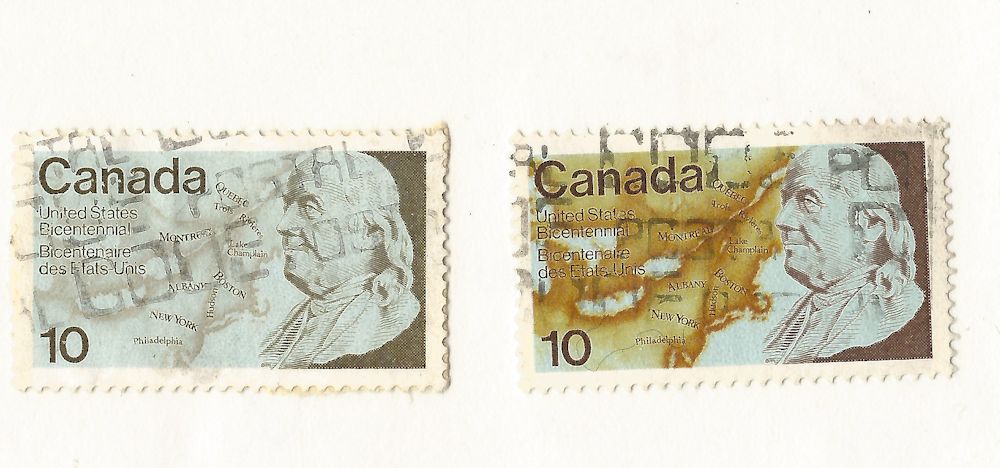
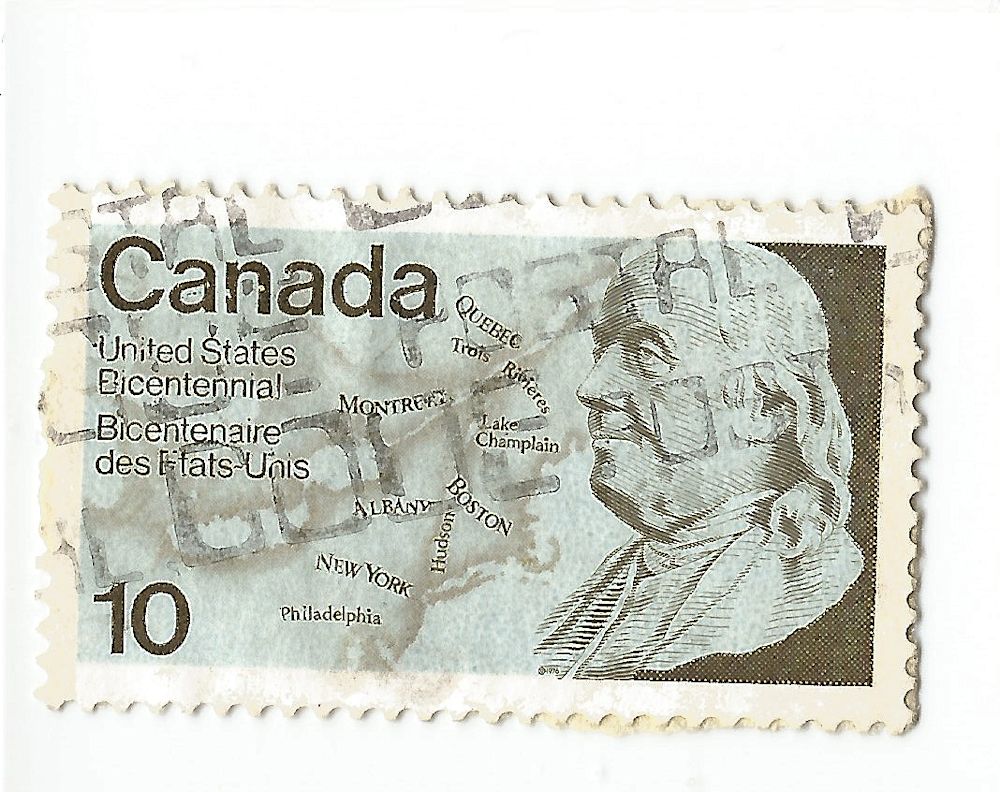
http://data4.collectionscanada.ca/n...=ITLV&p=1&u=http://www.collectionscanada.ca/archivianet/020117_e.html&r=1&f=S&SECT3=ITLV). Two of the photogravure colours are obvious: the blue background and the orange map. There was a third photogravure colour, light magenta, which is difficult to discern even with a good magnifying glass because it was used sparingly to accentuate the darker orange on the map. There was one engraved colour, dark brown, used to print the lines in the portrait, the cross-hatching to the right of the portrait, and all the lettering ("Canada", "10", and the place names on the map). The tagging is excluded from the colour count. Note that the map was printed using just two colours, orange and light magenta, and the orange predominated.
Looking at the scan of the stamp with the "missing colour", it is apparent that the colours are all there (except for the light magenta which is difficult to see even on a normal stamp). In particular, the orange colour which is used to render the map on the light blue background is on the "missing colour" stamp. What appears to have happened is that the orange was somehow turned to a greyish colour. The brown engraved colour appears to have changed as well, to a darker colour.
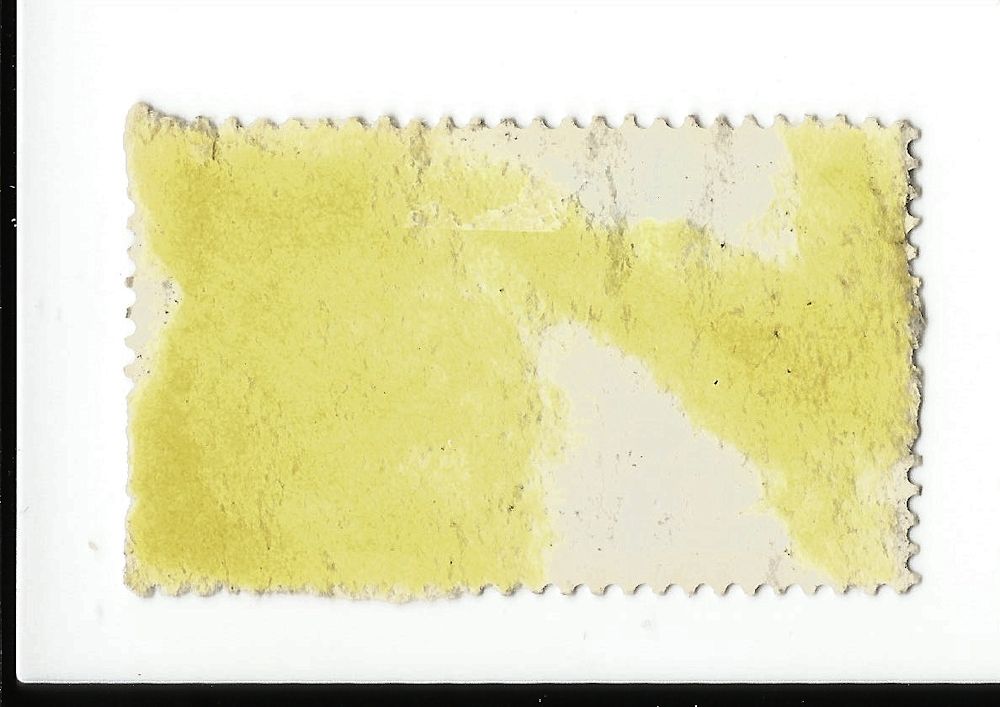
I believe the "missing colour" stamp is not an example of a missing colour. Rather, the stamp is an example of a colour changeling, probably produced as a result of exposure to external elements.





 Posted 10/21/2015 1:23 pm