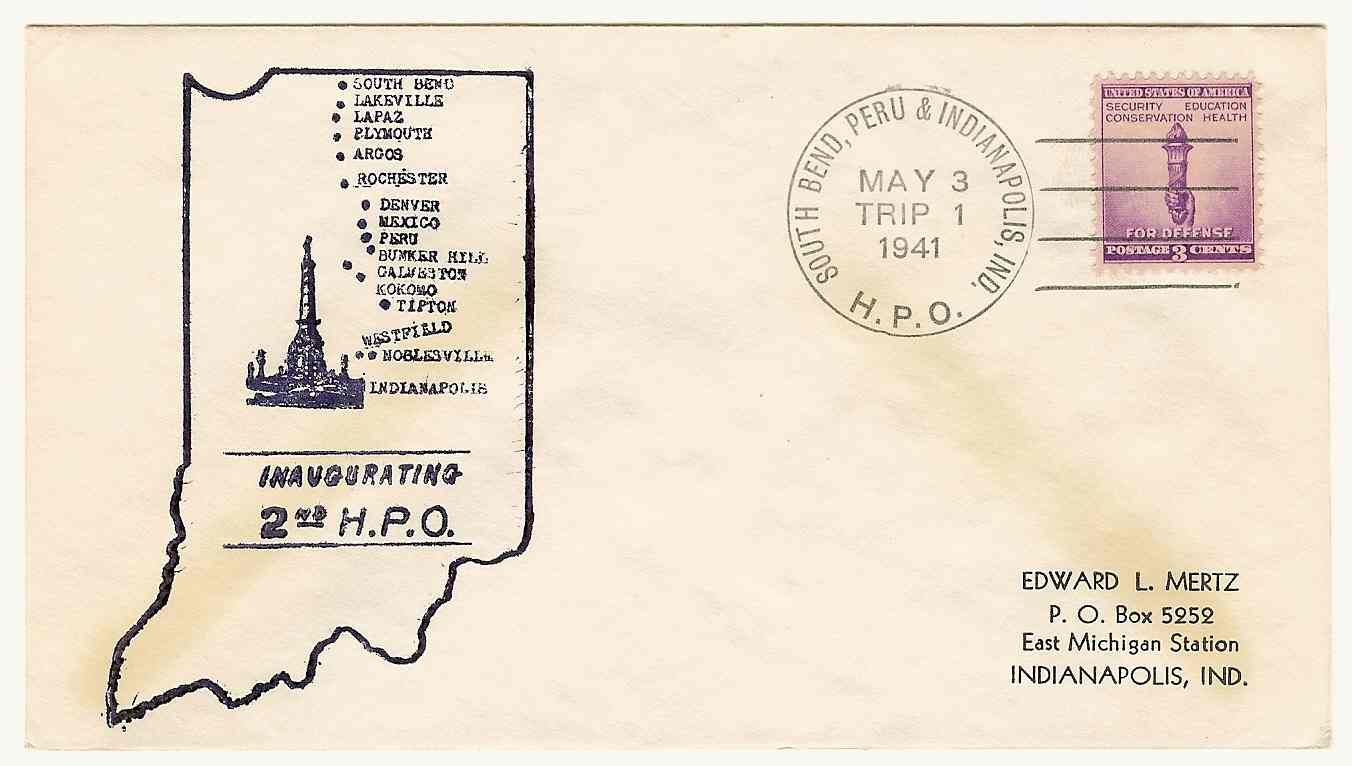
We've had (at least) four threads that touched on H.P.O. (Highway Post Office) cancels:
https://goscf.com/t/13879 ... 2011 ... HPO Trip 1 Cancel
https://goscf.com/t/12637 ... 2011 ... Mobile Post Office USPS Truck
https://goscf.com/t/5429 ... 2009 ... Show me your highway post office AKA HPO covers
https://goscf.com/t/3665 ... 2009 ... Question HPO Cover
Some of the resources cited in those threads include:
http://postalmuseum.si.edu/ ... search { H.P.O. }
http://postalmuseum.si.edu/mailonwheels/ ... five-part article "MAIL ON WHEELS" about The Highway Post Office
http://postalmuseum.si.edu/collecti...hpo-bus.html ... 'spotlight' on The Highway Post Office Bus
http://postalmuseumblog.si.edu/2010...e-power.html ... blog post w/ advertisement from the vehicle manufacturer
http://postalmuseum.si.edu/exhibits...-covers.html ... Highway Post Office First Trip Covers
http://arago.si.edu/record_53145_img_1.html ... closeup of the actual Cleveland and Cincinnati HPO duplex handstamp
http://arago.si.edu/glossary_h.html ... from the glossary at the Smithsonian National Postal Museum:
Quote:
HPO - an abbreviation of the Highway Post Office Service which operated between 1941 and 1974.
Highway Post Office buses were used to replace Railway Mail Service in areas where train service had been discontinued.
Quote:
Highway Post Office Service - a mail distribution network.
To compensate rural communities for the loss of Railway Mail Service, the Post Office Department inaugurated Highway Post Office (HPO) Service on February 10, 1941.
President Franklin D. Roosevelt had signed a measure creating the Highway Post Office Service on July 11, 1940.
The inaugural route ran between Washington, D.C., and Harrisonburg, Virginia.
The expansion of the Highway Post Office Service was postponed during World War II.
A second route was established in 1946.
This new service, like railway service, was to be a mail distribution network comprised of rapid pick-up, sorting, and dispatch to key points en route between two principal terminal cities.
Mail processed on HPO vehicles was transferred along the route to connecting Star Routes, mail trains, and to various rural post offices.
Highway mail routes generally served an average of twenty-five post offices directly and many others indirectly through Star Route and railway mail connections.
Highway Post Office routes were organized on round trips which averaged 150 miles each way.
There were very good reasons for this: 1) the bus generally held enough gas for about one 150 mile trip, and fuel stops wasted time; 2) service garages would have to be set up at both terminal cities, doubling the cost.
For roughly the next decade, as railway mail service shrank, highway mail service grew.
From 1960 to 1963 HPO service was replacing an average of 20 trains a month.
The service essentially became obsolete when the Post Office Department decided to reorganize its mail handling/distribution system by adopting the sectional center concept (see ZIP Code).
On June 30, 1974, 33 years after the first experimental trip, the last Highway Post Office made its final run over the Cincinnati-Cleveland (Ohio) route.
Ironically, Railway Mail Service outlasted Highway Post Office Service by three years.
Cheers,
/s/ ikeyPikey
Q/ Did George ever look better?
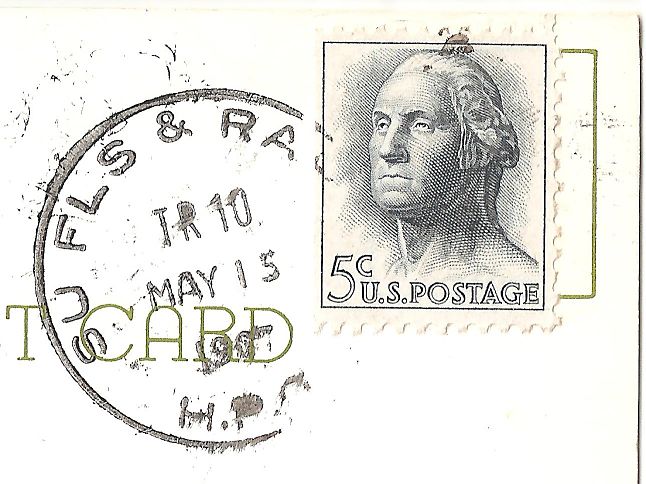
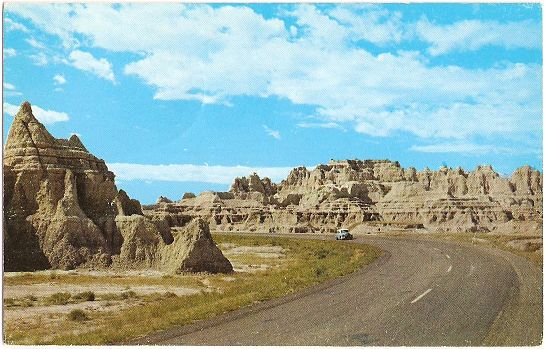
Murdo SD is on a straight line between Sioux Falls & Rapid City.
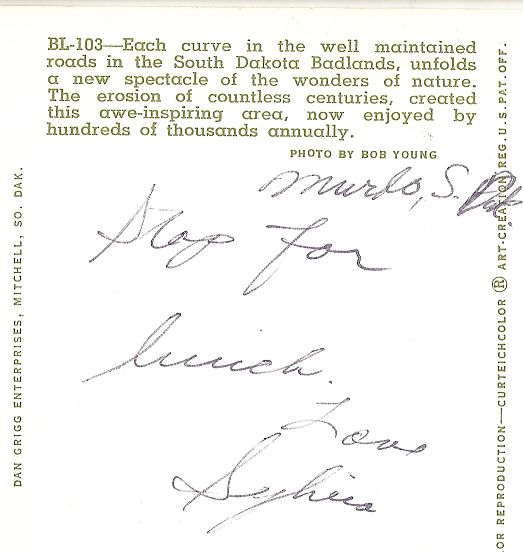
Better yet, that road along the railway is called "Railway Street".





 Posted 01/29/2016 8:04 pm