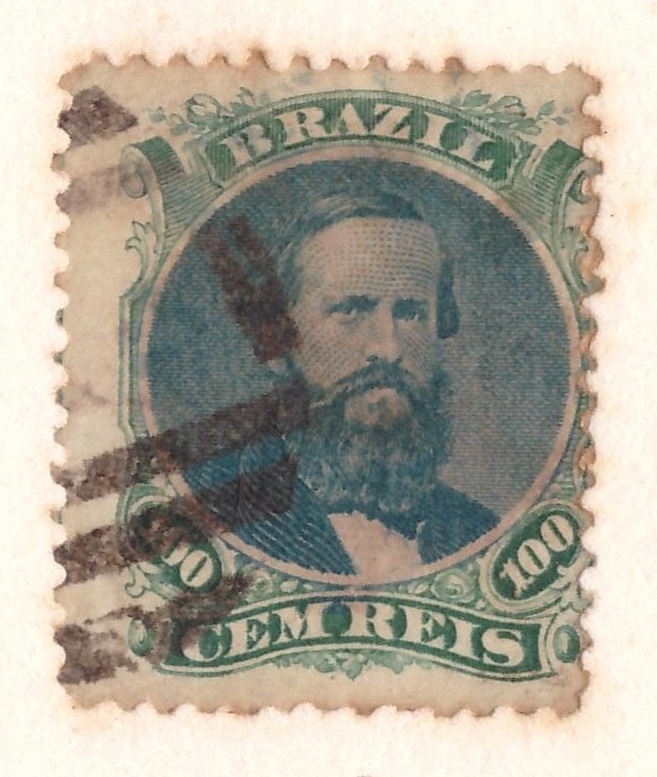
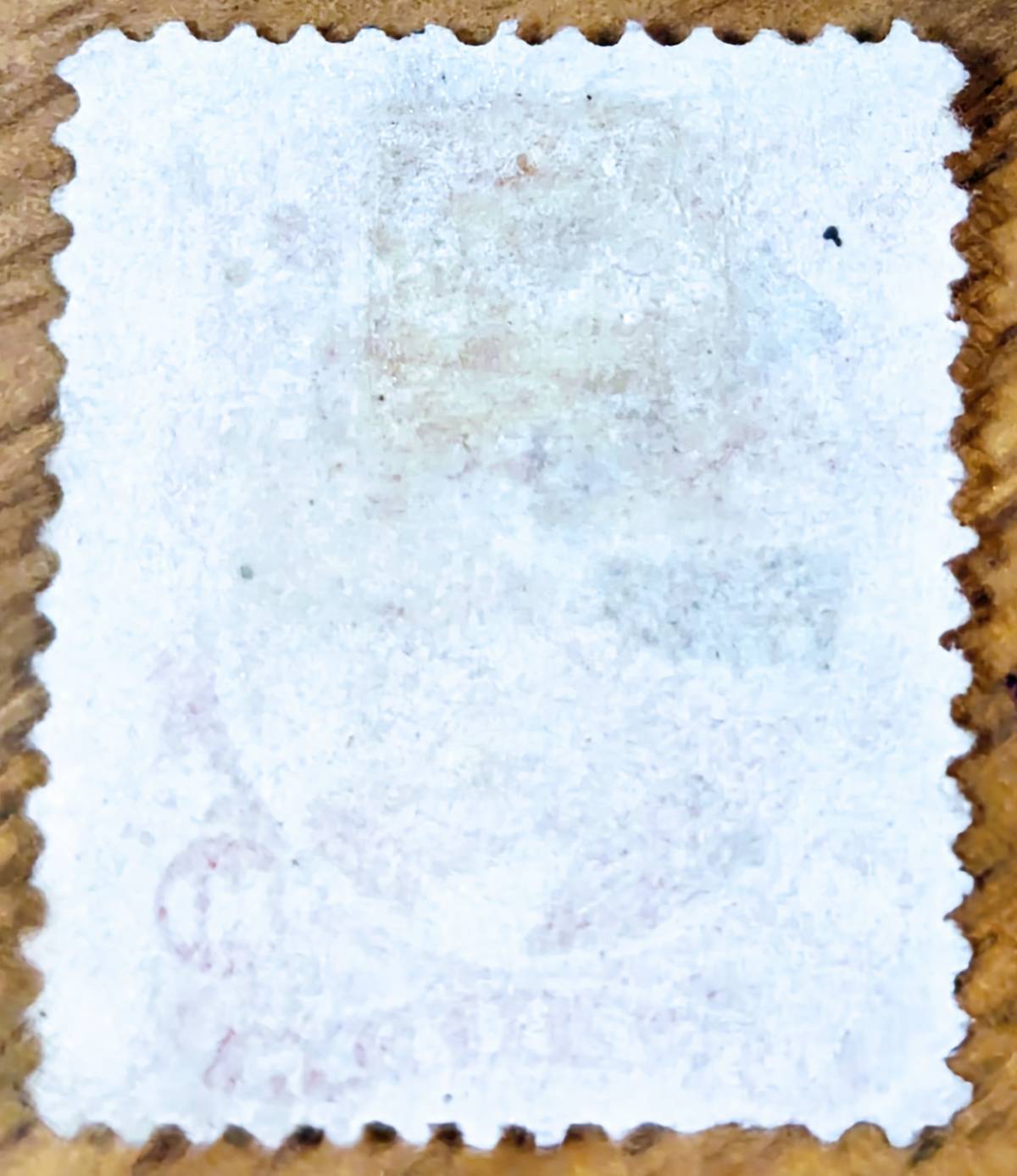
I found the answer, I think.
http://webcache.googleusercontent.c...t=clnk&gl=us1868 – PAPEL AZULADO (GOMA AZUL)
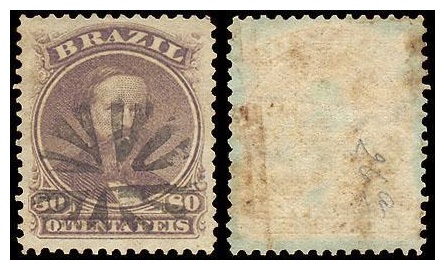
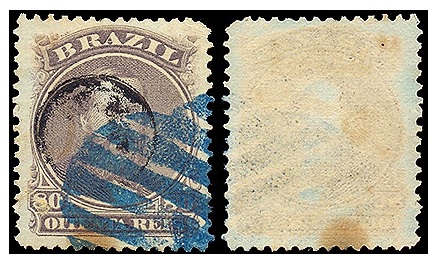
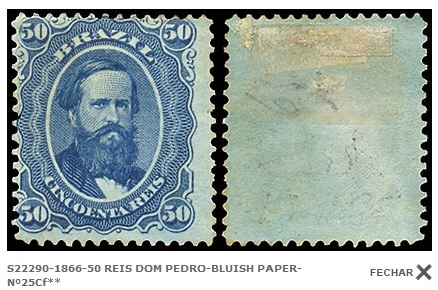
Para evitar um novo aproveitamento dos selos mediante a lavagem dos carimbos, foi excogitado um sistema de usar papel com substância que, em contato com a umidade deveria provocar intensa coloração azul ao papel.
A reação provocada pelas condições atmosféricas do país tornou ineficaz a iniciativa, porquanto o papel dos selos tornava-se azul, mesmo sem o contato com a água.
Suspender-se, assim, o fabrico de tais selos, os chamados "azulados" ou, erroneamente, "azulados pela goma". O 50 réis apresenta-se geralmente com o verso inteiramente azulado idêntico ao selo fiscal SF-25, nos demais valores e raramente no 50 reis, as manchas só atingem as margens (100 réis) e as partes não correspondentes à impressão.
Essentially, the government was experimenting with a substance that would turn the stamp blue once it was exposed to moisture. The problem, of course, is that Brazil is a humid country (for the most part) and the stamps turned even without being postally used. This brought the experiment to a close.
EDIT: I should point out that the above claims that it is wrong to say 'blued by the gum,' which leads me to believe that the reagent was placed in the stamp's paper and not in the gum.





 Posted 02/22/2016 5:59 pm