| Author |
 Replies: 97 / Views: 13,660 Replies: 97 / Views: 13,660 |
|
Rest in Peace
Netherlands
963 Posts |
|
|
Just describing the production of plates in simple terms: Creating the master die 1 The engraving method of intaglio begins with the creation of a "master die" in which the design of the stamp is engraved, in reverse. The design is in the lowered portion of the die—the raised portion of the die will not be reproduced in the final product. This is an exacting hand process, in which the engraver is carefully cutting a mirror image of the original drawing for the stamp. It might be several weeks before the engraver is satisfied that he or she has created the perfect duplicate. 2 After the die has been completed, it is heated to harden the engraved image. In the next step, the hardened intaglio is transferred to a transfer roll, which consists of soft steel wrapped around a rod-shaped carrier, or mandrel, and which resembles a shortened rolling pin. The transfer roll is machine-pressed against the master die, and rocked back and forth until the master die has created a relief impression on the transfer roll. At this point, the relief is a positive impression (no longer in reverse). The process is repeated until the desired number of reliefs has been created on the transfer roll. Preparing the printing plate 3 Like the master die, the transfer roll is hardened by heating. It is then pressed against a printing plate, leaving another relief, again in reverse, on the printing plate. If there are several reliefs on a transfer roll, all can be passed to the printing plate. Several printing plates can be made from the same transfer roll if the decision is made to use more than one machine to produce a particular stamp. The impression on the plate is in the form of grooves rather than a raised image. Read more: http://www.madehow.com/Volume-1/Pos...xzz44TaZ2PtR |
|
Send note to Staff
|
|
|
|
|
Rest in Peace
Netherlands
963 Posts |
|
|
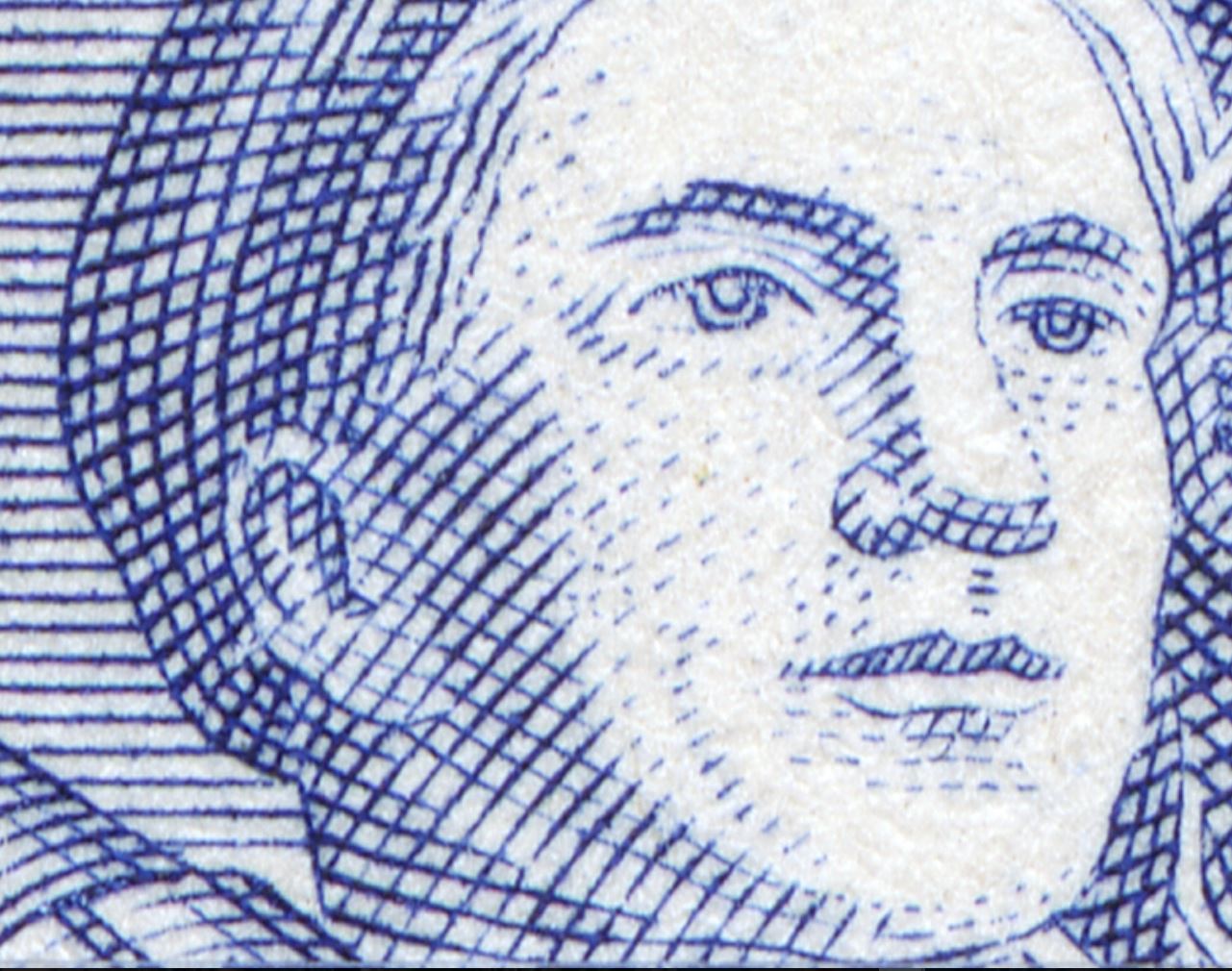
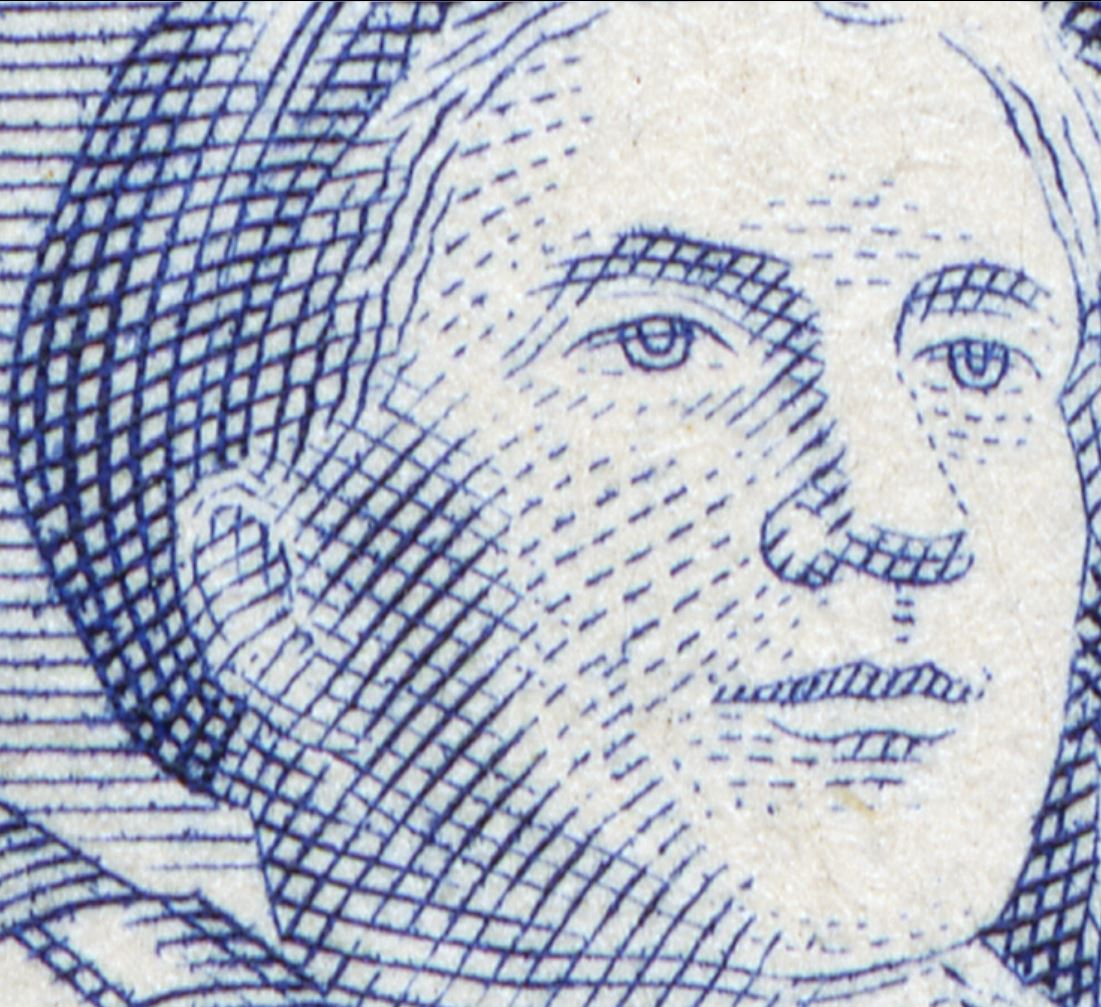
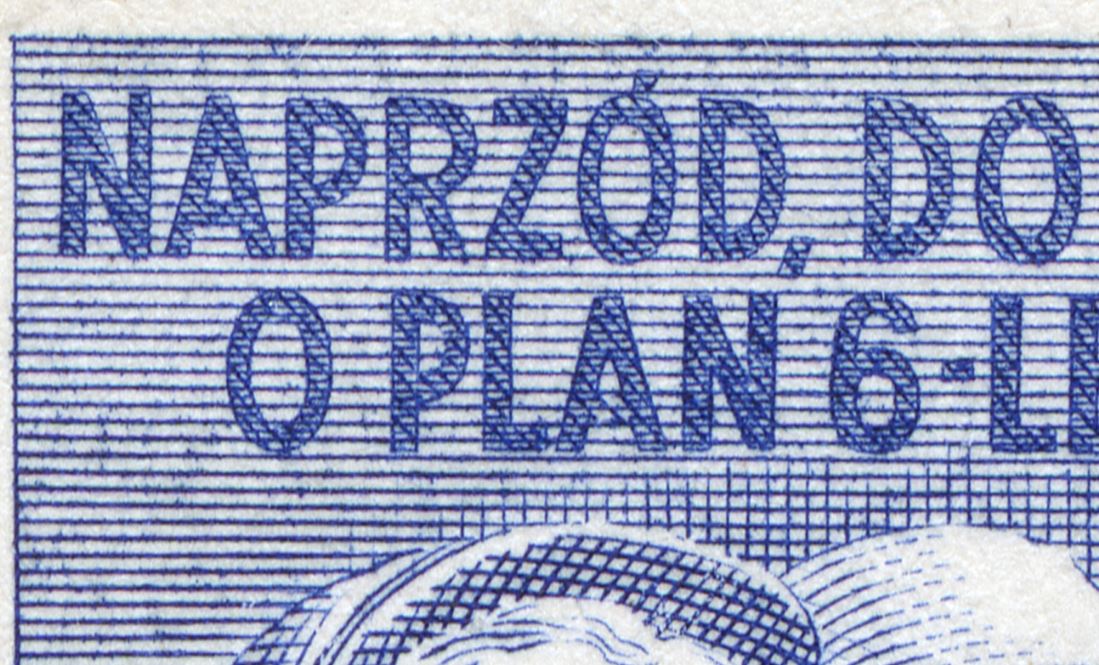
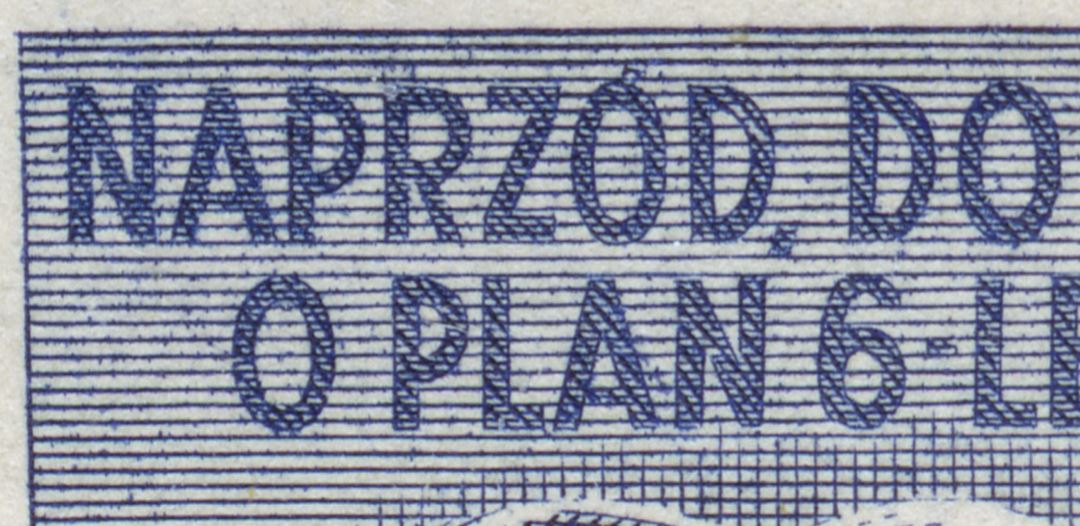
I came to this problem when sorting out a lot of 1950-ies Polish definitives! The 1950 15zl 6-year plan exists in two types with at first sight the difference being the adding of a few lines to fragments of the design! 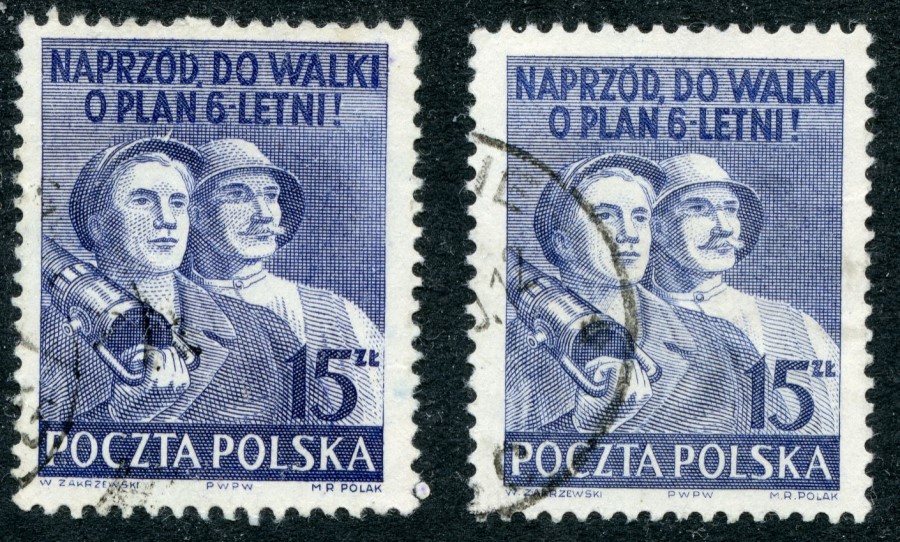 First type: 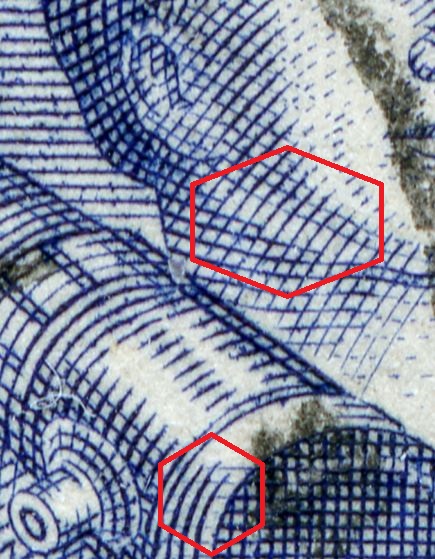 Second type: 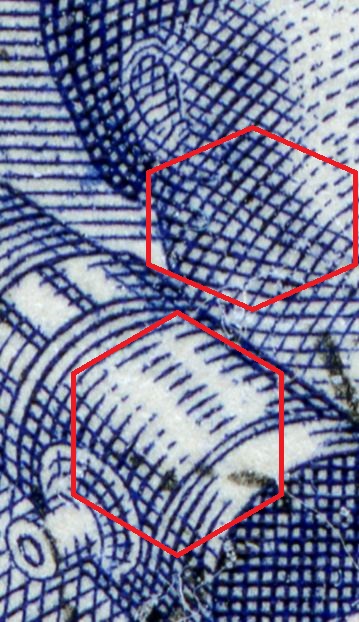 |
Send note to Staff 
|
|
|
Rest in Peace
Netherlands
963 Posts |
|
|
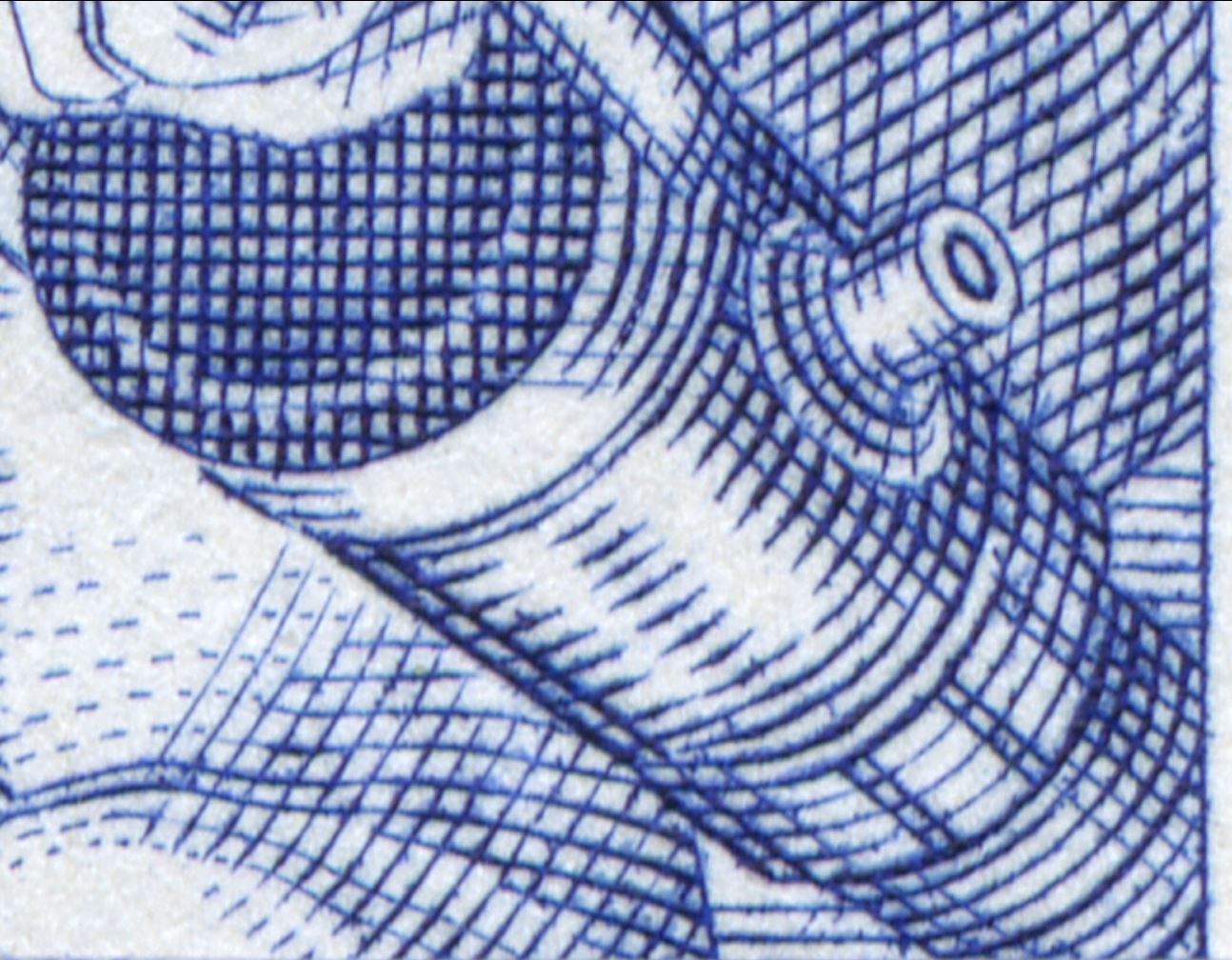
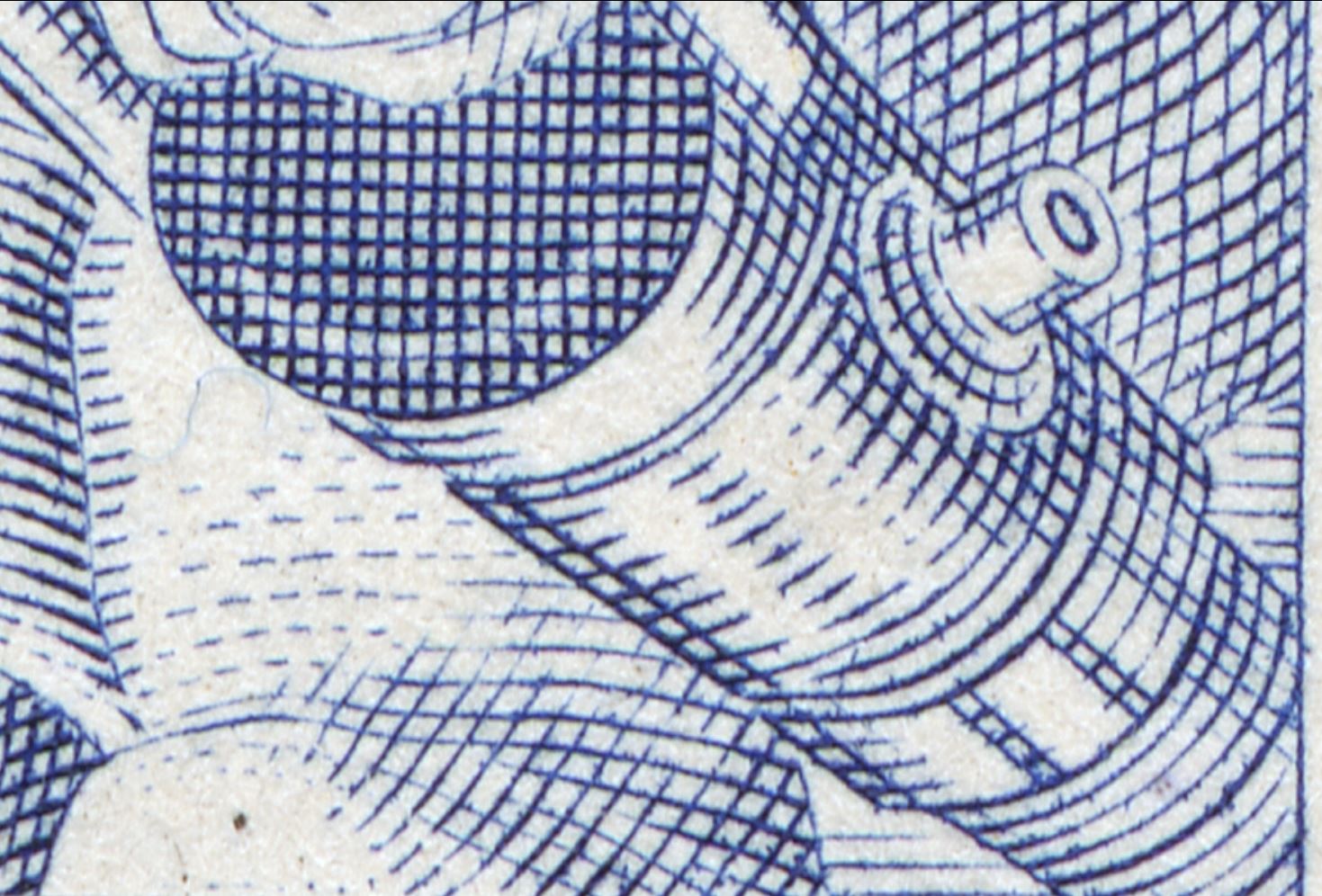
However, reading about these types in the Handbook of Polish Postage Stamps [1960], I became intrigued! 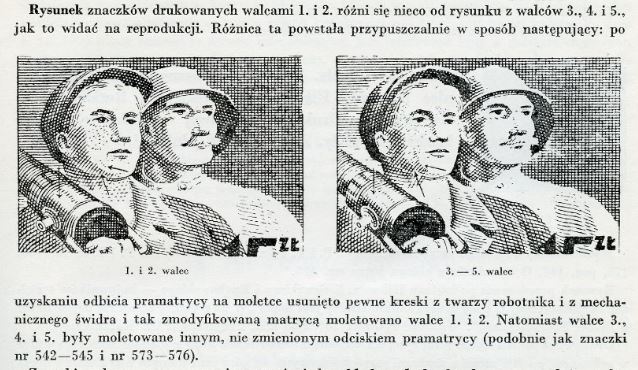 It read that probably the second represents the master die and that on the transfer roll for the FIRST printings the printers had removed some lines! And that this master die had been used for later new denominations .... Not telling that some horizontal lines had been added as well... How could they have written such non-sense in the official Handbook???? |
|
Send note to Staff
|
|
|
Rest in Peace
Netherlands
963 Posts |
|
|
Rest in Peace
Netherlands
963 Posts |
|
|
Rest in Peace
Netherlands
963 Posts |
|
|
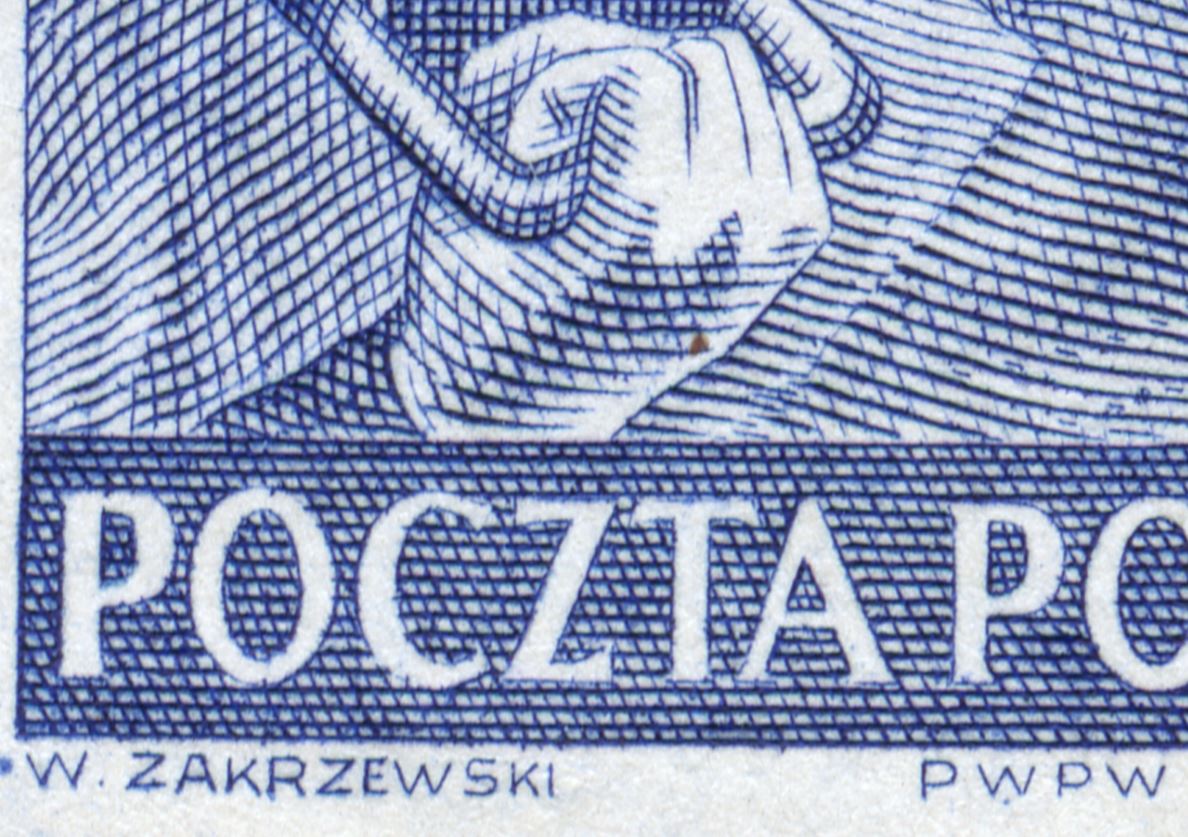
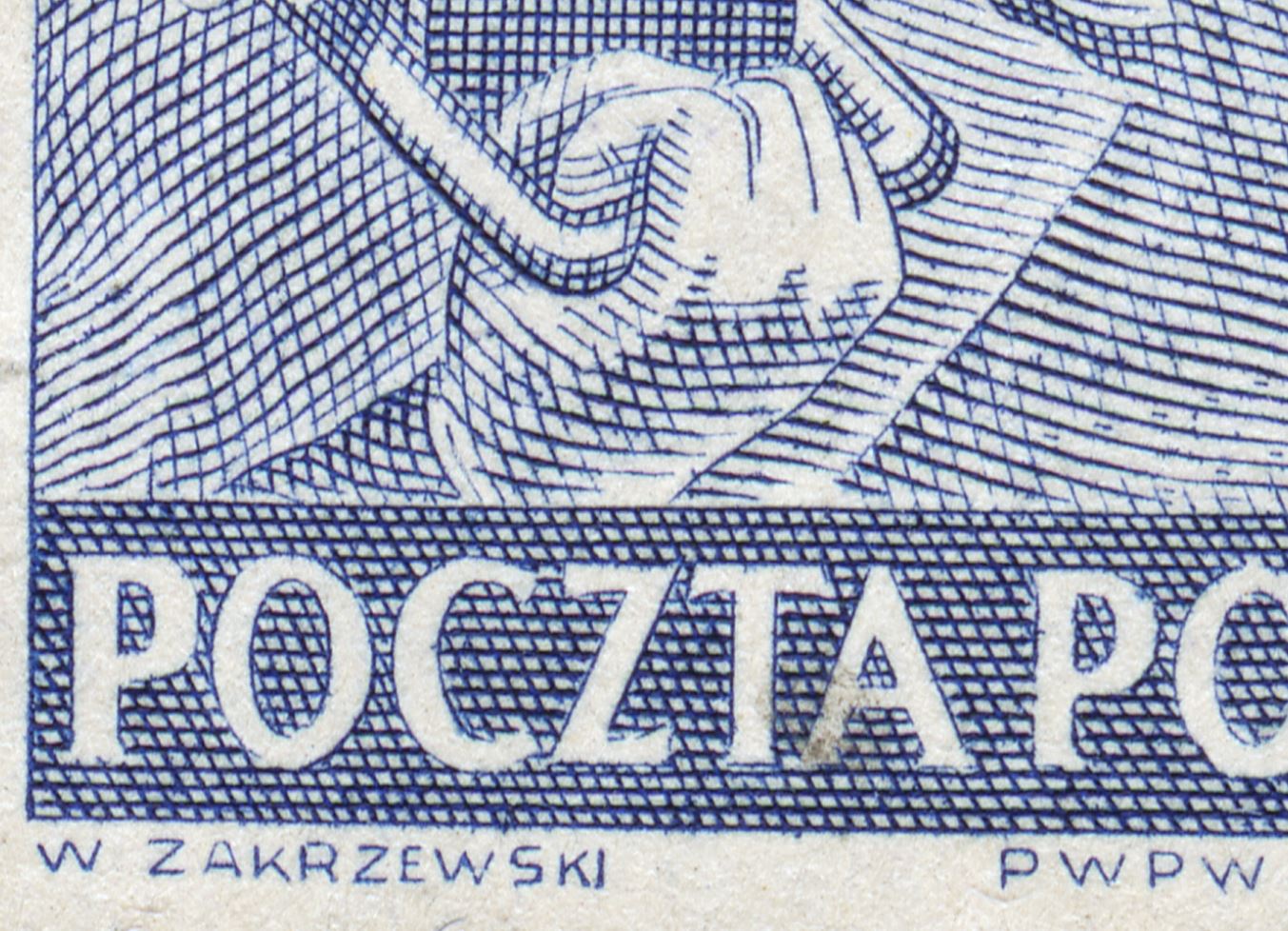
Fragment of the first plates: 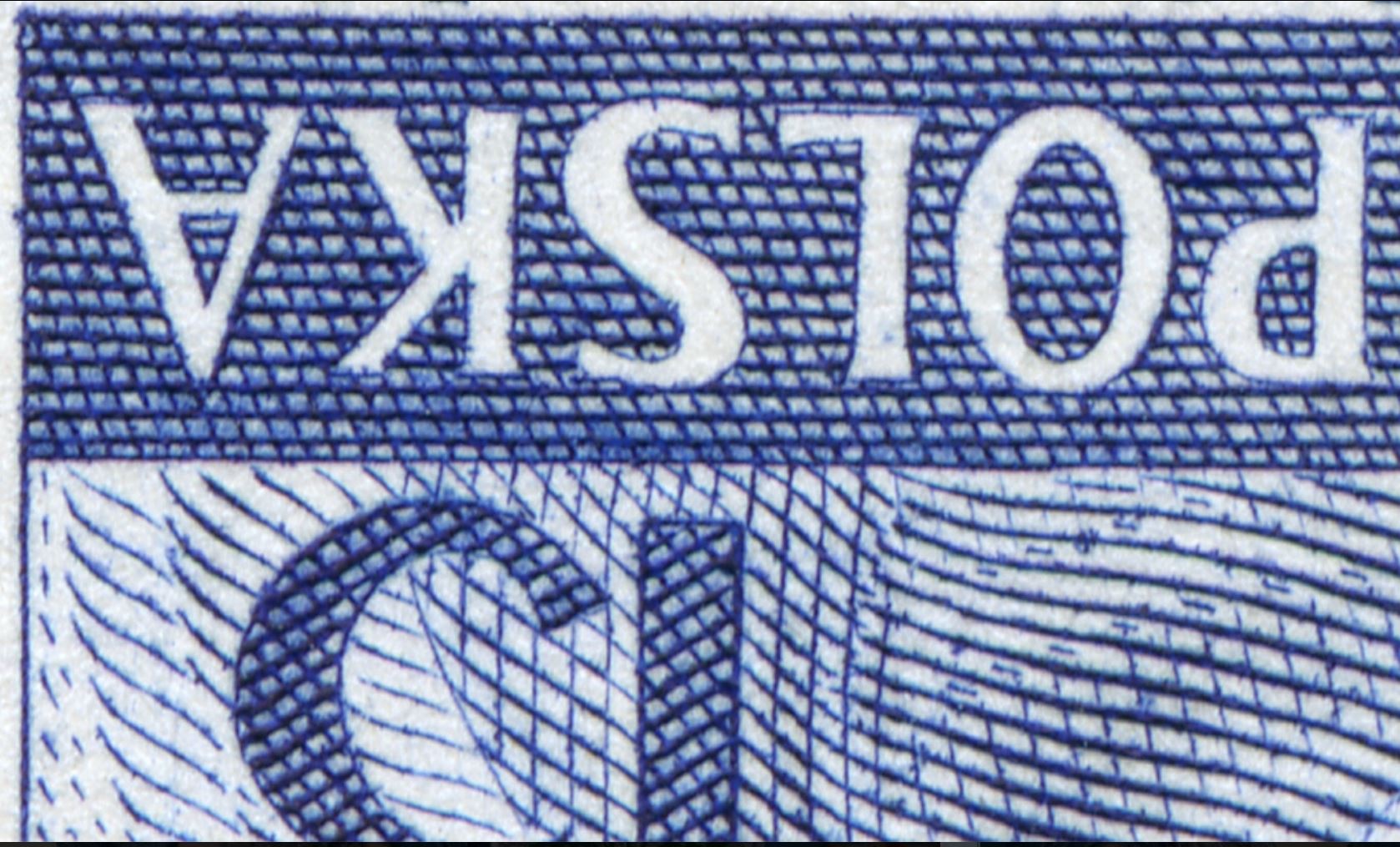 Fragment of the later plates: 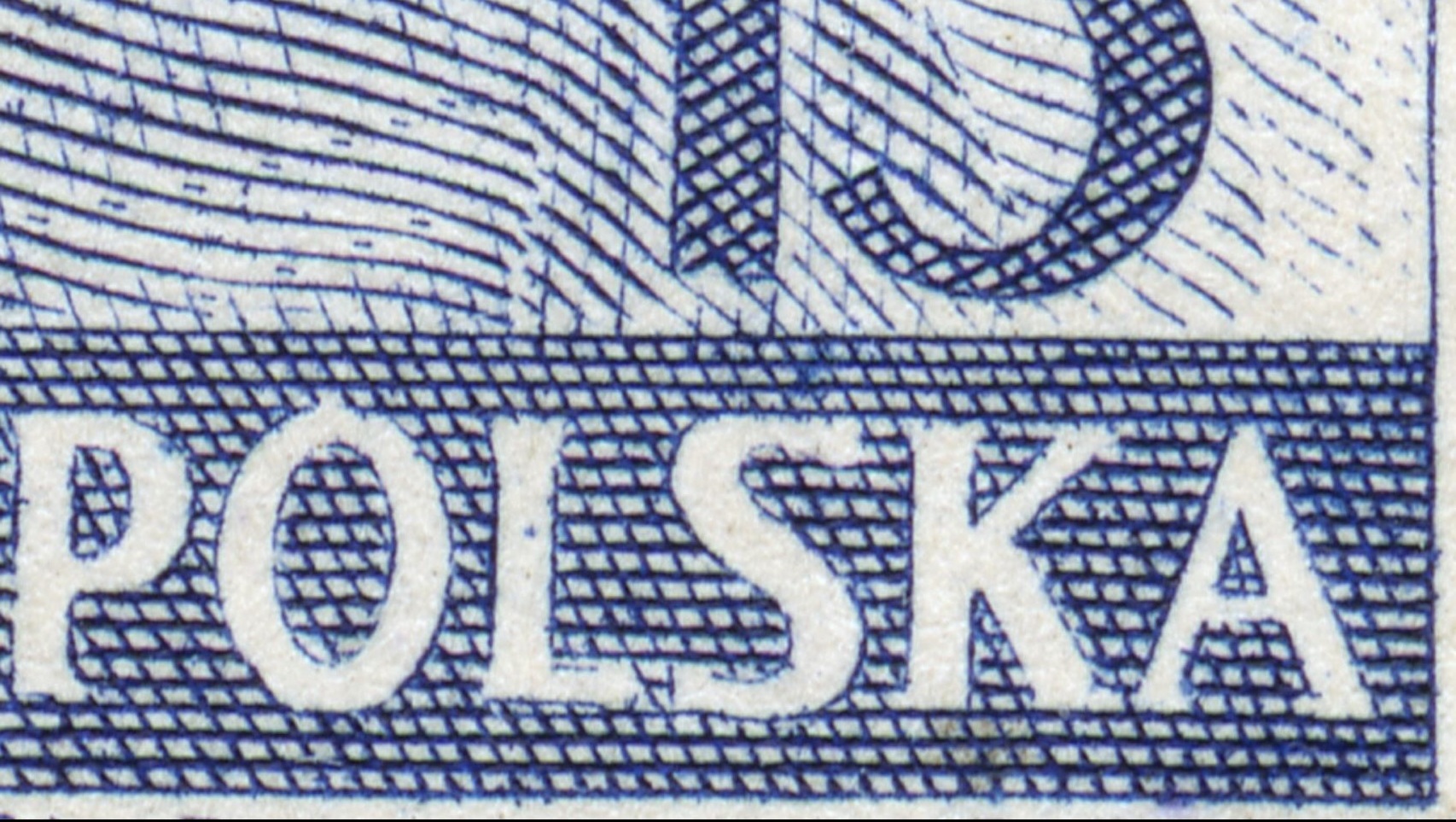 Take a good look at the "L" and the "S" ! Nothing mentioned about it in their Handbook! |
|
Send note to Staff
|
| Edited by Galeoptix - 03/31/2016 07:25 am |
|
|
Rest in Peace
Netherlands
963 Posts |
|
|
Windows 10 is messing with my files! When I turn them 180 degrees and save them they later still turn up upsidedown!! |
|
Send note to Staff
|
|
|
Rest in Peace
Netherlands
963 Posts |
|
|
But what apparently NO ONE had noticed! Fragment of the first plates: 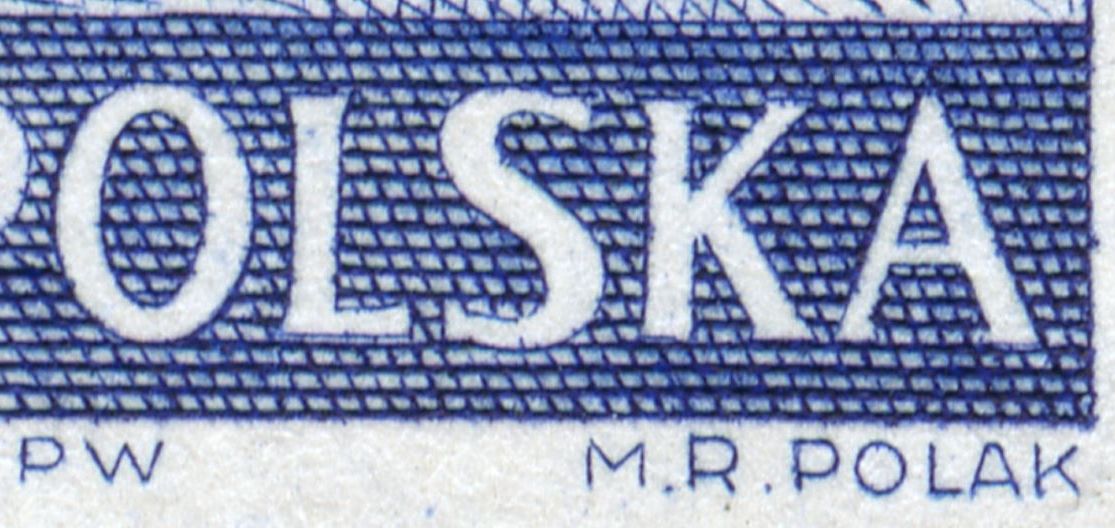 Fragment of the later plates: 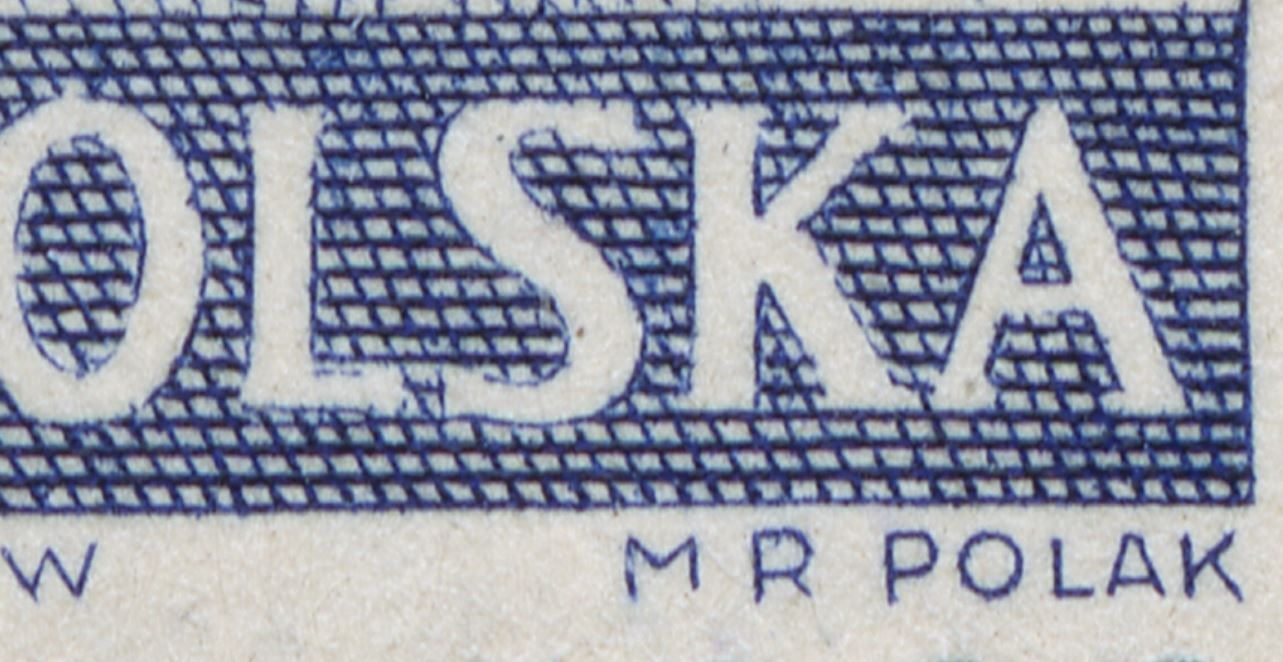 "M.R. Polak" versus "M R Polak" - WITH or WITHOUT dots! |
|
Send note to Staff
|
| Edited by Galeoptix - 03/31/2016 07:38 am |
|
|
Rest in Peace
Netherlands
963 Posts |
|
|
Doing some more reading in the old Polish Handbooks I came up with the following as to sizes of the design! - 15zl type I 21.3x27.3mm 21.08.1950 - 15zl type II 21.8x27.7 xx.xx.1950 - 45gr type I 22.0x27.8 08.01.1951 - 45gr type II 22.3x28.1 xx.10.1951 - 75gr 22.3x28.1 15.06.1951 - 1zl15 22.3x28.1 15.06.1951 - 1 zl20 22.3x281. 15.06.1951 15 zl two types: 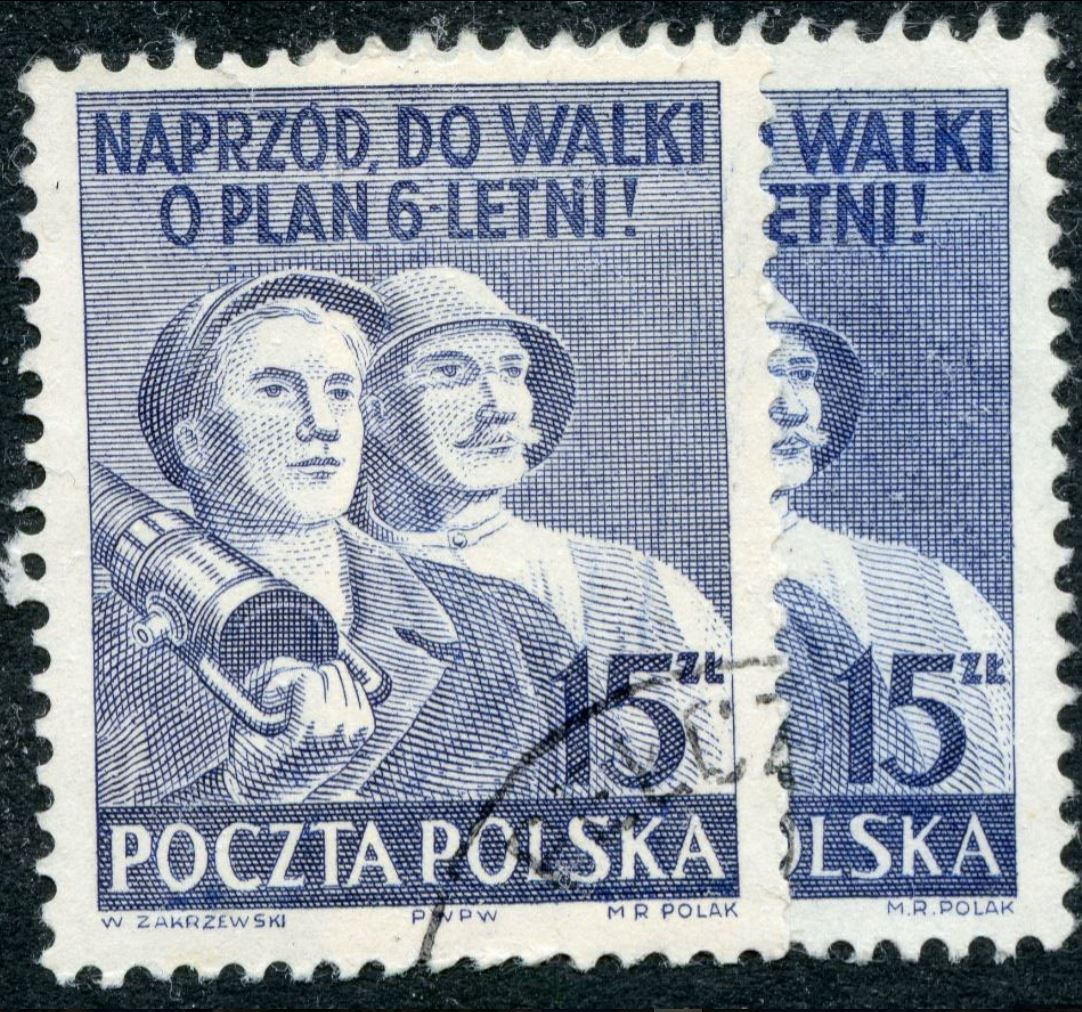 |
|
Send note to Staff
|
| Edited by Galeoptix - 03/31/2016 07:50 am |
|
|
Rest in Peace
Netherlands
963 Posts |
|
|
Mentioning my observations to the author of the new Polish Handbooks - Adam Kielbasa-Schoeni - he came up with an interesting article by mr Tadeusz Nowy re-published in 1986! But published somewhat earlier in 1973. Mr Nowy died in 1979.
Mr T. Nowy also observed the obvious non-sense in the 1960-ies Handbooks but in view of the growing sizes of the design he came up with a surprising theory!
Preparing a new "master die" by using the transfer roll - NOT preparing new cylinders/plate by rolling off the 100x images - the design had GROWN proportionally. |
|
Send note to Staff
|
|
|
Rest in Peace
Netherlands
963 Posts |
|
|
T. Nowy mentioned several other Polish stamps in recess printing with comparable changes in size. I have to get them and study them!
BUT, as to the two types of the 15zl, there is NO explanation WHY there should be a change of size as the two types originated from TWO completely different engravings! |
|
Send note to Staff
|
|
|
Pillar Of The Community
Czech Republic
623 Posts |
|
|
Galeoptix - Rein, this is how I understand the text in Polish:
Rysunek znaczków drukowanych walcami 1. I 2. ró¿ni siê nieco od rysunku z walców 3.,4. I 5., jak to widaæ na reprodukcji. Ró¿nica ta powsta³a przypuszczalnie w sposób nastêpuj¹cy: po uzyskaniu odbicia pramatrycy na moletce usuniêto pewne kreski z twarzy robotnika I z mechanicznego œwidra I tak zmodyfikowan¹ matryc¹ moletovano walce 1. I 2. Natomiast walce 3., 4. I 5. by³y moletovane innym, nie zmienionym odciskiem pramatrycy (podobnie jak znaczki nr 542-545 I nr 573-576).
"The image of the stamps printed by cylinders 1 and 2 differs slightly from that printed by cylinders 3, 4 and 5, as illustrated below: Cylinders 1 and 2. Cylinders 3 - 5. This difference probably arose as follows: when obtaining the impression of the master die onto the transfer roll, some lines on the face of the worker and the mechanical drill got lost / disappeared and the matrix thus modified was imprinted with the transfer roll onto printing cylinders 1 and 2. Printing cylinders 3, 4 and 5 were obtained with a different imprint of the master die, not the above mentioned one (like stamps Nos 542-545 and Nos 573-576)."
The text in Polish never says that "the printers had removed some lines", it only says that some lines got lost in the process of transferring the image from the master die onto the tranfer roll.
To me, however, the missing lines / dots appear to be the case of an "underengraved" master die, later on corrected, rather than an "undertransferred" one. That is to say: certain cuts / incisions were either missing or not deep enough (they were too shallow) to be picked up by the transfer roll. That was why they required corrections performed in the master die.
The difference in size is for experts in printing technology to clarify. To me, the engravings do not look redone, just retouched. |
|
Send note to Staff
|
| Edited by florian - 04/01/2016 03:12 am |
|
|
Rest in Peace
Netherlands
963 Posts |
|
|
Florian,
you are right in the sense that "usunieto" means "had been removed" not explicitely telling who did it or how it came to be! |
|
Send note to Staff
|
|
|
Rest in Peace
Netherlands
963 Posts |
|
|
Fragment of the first plates: 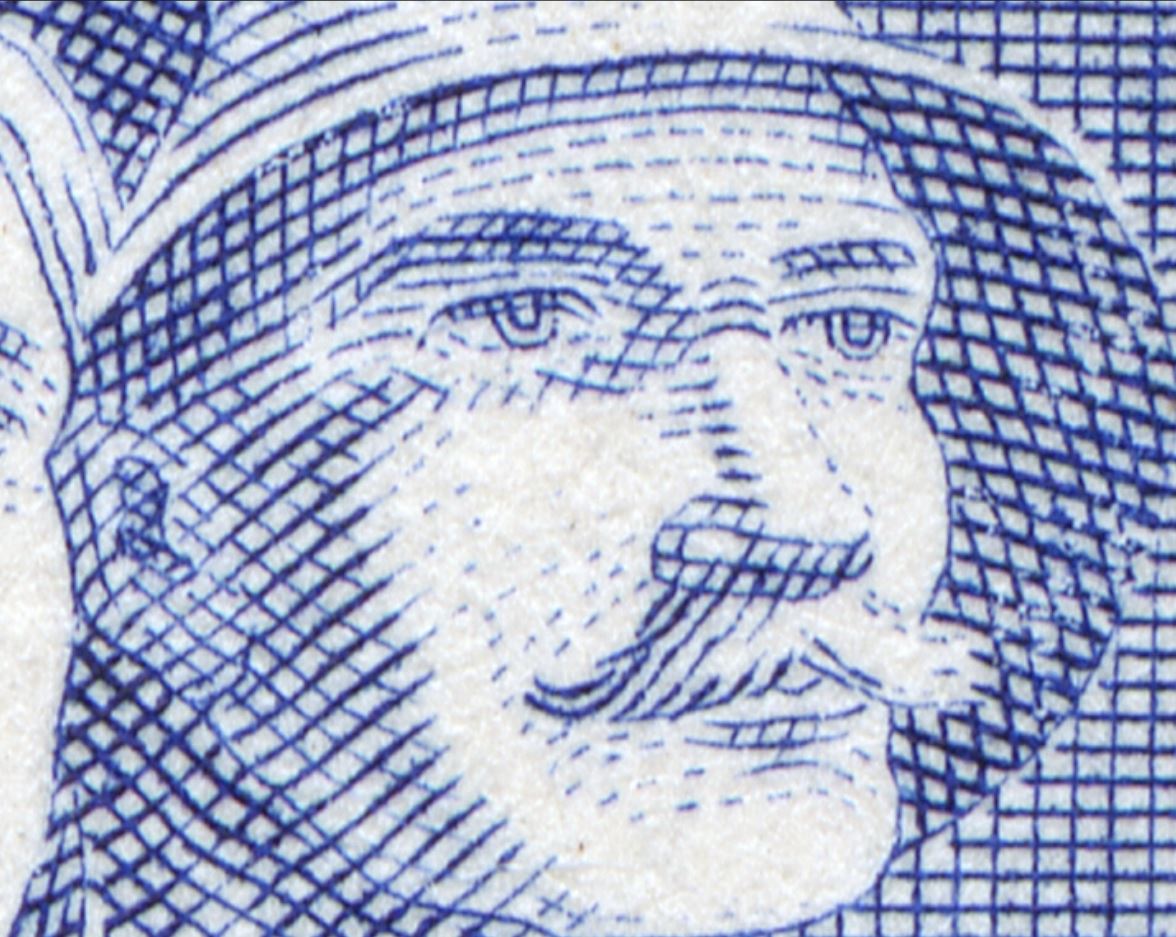 Some more details: Fragment of the later plates: 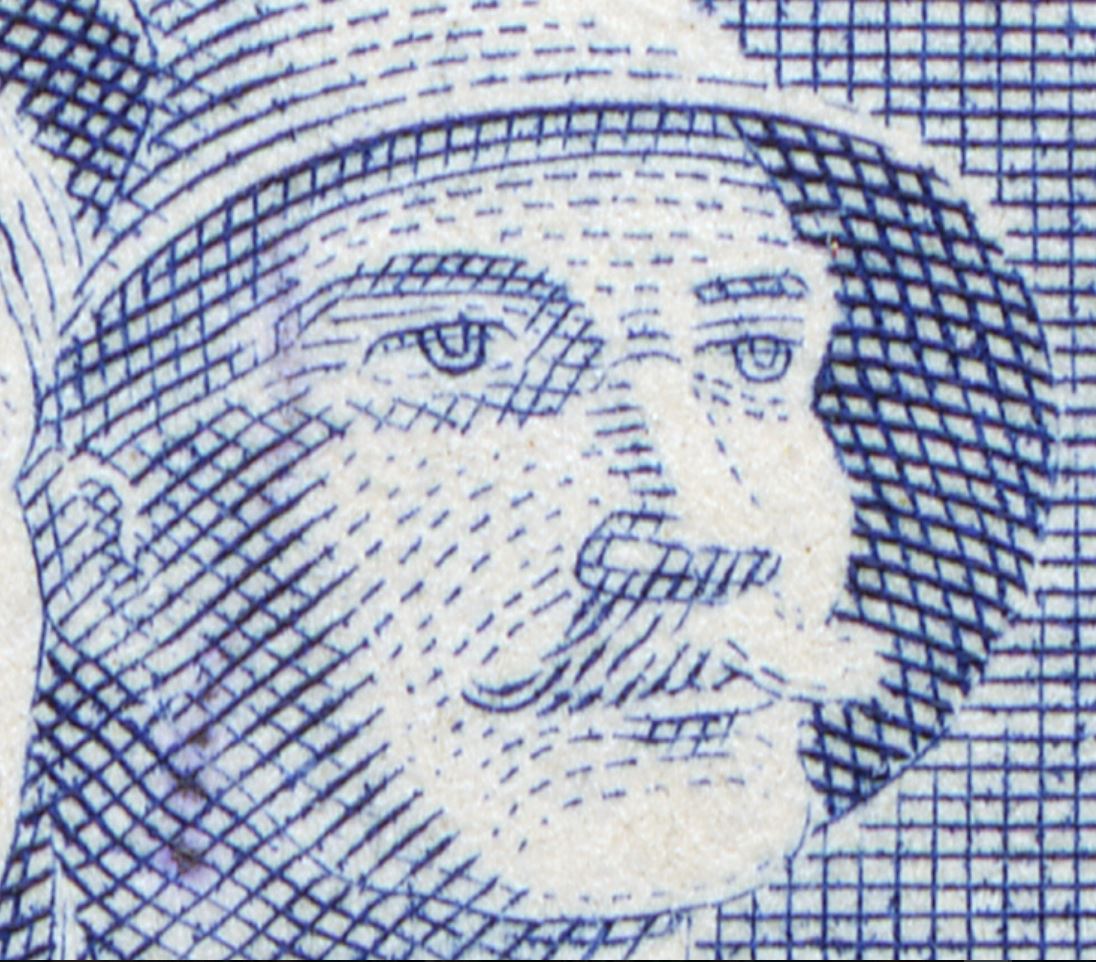 |
|
Send note to Staff
|
|
|
Rest in Peace
Netherlands
963 Posts |
|
|
Rest in Peace
Netherlands
963 Posts |
|
|
Replies: 97 / Views: 13,660 |
|



 Posted 03/31/2016 06:50 am