|
This page may contain links that result in small commissions to keep this free site up and running.

Welcome Guest! Registering and/or logging in will remove the anchor (bottom) ads. It's Free!
To participate in the forum you must log in or register.
| Author |
 Replies: 97 / Views: 13,667 Replies: 97 / Views: 13,667 |
|
|
|
Pillar Of The Community
Czech Republic
623 Posts |
|
|
Papy24 has just published a detailed article on the problem of DIFFÉRENCES DE GRAVURE on his blog http://blog-impressions-timbrees.blogspot.cz/The explanation in French is most lucid but I am afraid rendering the technical terms and phraseology into English is time-consuming for an amateur like me as it requires a knowledgeable native speaker of English. Being unexpectedly pressed for time I cannot but leave the task to a fluent as well as well-informed amateur, or better still a professional. |
Send note to Staff 
|
| Edited by florian - 05/16/2016 10:54 am |
|
|
Pillar Of The Community
Czech Republic
623 Posts |
|
|
Rest in Peace
Netherlands
963 Posts |
|
|
I can understand that certain details got lost while frequently using the transfer roll, but that does NOT explain differences in size! |
|
Send note to Staff
|
|
|
Pillar Of The Community
Czech Republic
623 Posts |
|
|
Here is an attempt at a translation of Papy24´s excellent article on value tablet changes published in his blog IMPRESSIONS TIMBRÉES:
Image: France Scott 569
Pour un changement de valeur ou bien des modifications sur le timbre,
To change the value or make minor changes to the stamp,
une nouvelle molette avec une empreinte en relief est réalisée.
a new transfer roll with a raised impression ("trasfer relief") is made.
Les parties du timbres qui doivent etre changées sont arasées,
Parts of the stamp that have to be changed are burnished out,
enlevées du relief par le graveur. Cette molette, durcie, est
the relief removed by the engraver. This roll, hardened, is
utilisée pour obtenir une reproduction en creux sur un nouveau poinçon
used to obtain a reproduction in recess on a new
appelé "poinçon secondaire", mais sans les parties retirées. Cette
master die called "secondary master die", but without the parts removed. This
façon de faire est utilisée pour éviter une nouvelle gravure entiere
approach is used to avoid re-engraving the whole
du timbre sur un nouveau poinçon car un graveur, meme le meilleur
stamp on a new plate as any engraver, even the best
et le plus expérimenté, est incapable de graver deux fois le meme
and most experienced one, is unable to engrave twice the same
trait au meme endroit sans faire des différences.
line in the same place without any differences.
Sur ce poinçon est alors gravée la nouvelle valeur. Les modifications des nouveaux textes sont gravées a leur place.
The new value is then engraved onto this "secondary master die". Modifications to the texts are also added.
Image: France Scott 591
Ce deuxieme poinçon a 12 f a servi pour un troisieme en enlevant le 12, pour une nouvelle valeur a 15 f.
The "secondary master die" with the 12 f value was used for producing a "tertiary one" by removing the figure 12 to be replaced with a new value 15 f.
Ces changements ont sans doute était faits, non pas par Decaris, mais par un des graveurs de l'atelier, la forme des lettres a changé.
These changes will not have been made by Decaris but by one of the engravers in-house, the shape of the letters being changed.
Image: France Scott 592
Mais des différences sont visibles dans la gravure du palais. On peut les expliquer de plusieurs façons :
Yet certain differences can be seen in the engraving of the palace itself. These can be explained in the following ways:
A chaque fois qu'on prend une empreinte par pression sur la presse a transfert, il y a une perte dans la gravure. Des traits sont plus faibles ou
Each time an imprint is taken under pressure on the transfer press, there is certain loss in the engraving. Some lines are weaker or
disparaissent. Les tailles de la gravure s'arrondissent. Un graveur doit intervenir pour regraver, renforcer certaines tailles plus profondément comme
disappear. The incisions of the engraving are rounded. An engraver has to intervene to re-engrave, deepen certain cuts such as those
pour les traits entre "France" et "Postes" en haut du timbre.
between the inscriptions France and Postes at the top of the stamp.
Mais pour ce timbre a 15 f. l'encrage semble engraisser les traits du Palais, c'est tres probablement cette encre rouge, qui a l'époque était plus difficile
But with this 15 f. stamp the inking seems to have produced certain thickening of the Palace features, probably due to that particular red ink, which, at the time, was more difficult
a essuyer sur les clichés par la matiere du cylindre essuyeur, surtout dans ce sens de l'impression, ce qui donne ce résultat un peu lourd et bouché.
Image: France Scott 592 - block of four in the sense of printing
to wipe from the printing cylinder by the material of the wiping cylinder, especially for that particular sense of printing, resulting in somewhat heavy and dense lines.
Papy24 has recently added:
L'usure ne se fait pas sur le cliché d'impression, mais il se produit un mauvais transfert a chaque fois, meme léger, c'est inévitable, et a force cela se
The wear and tear is not produced on the printing cylinder but is always due to an inadequate transfer relief, even if just a slightly inadequate one,
voit sur le résultat final, surtout apres un troisieme transfert ou plutôt une troisieme molette.
which duly becomes manifest on the final result, especially after a tertiary transfer or rather a tertiary transfer roll has been used.
Maintenant avec la gravure numérique, il n'y a plus ce défaut, c'est l'ordinateur qui fait les modifications. Il n'y a plus de transfert.
Now with digital engraving, there is no such failure because it is the computer that makes the changes. The transfer roll process is no longer used. |
|
Send note to Staff
|
| Edited by florian - 06/04/2016 05:47 am |
|
|
Pillar Of The Community
Czech Republic
623 Posts |
|
|
This is what Papy24 has to say on the differences in size in Polish and Czechoslovakian stamps with value tablet changes: J'ai vu sur SCF que certains ne comprennent pas l'allongement des timbres, il est possible que cet allongement provienne de la déformation de la gravure sur la plaque de métal lors de la I can see on SCF that some do not understand the elongation of stamps. It is possible that this extension comes from the deformation of the engraving on the metal plate as the latter is beingcourbure pour pouvoir l'enrouler sur le cylindre porte plaque des rotatives. Cette déformation peut etre importante si la plaque a une certaine épaisseur, mais minime si la plaque est mince.curved so as to fit the press cylinder. This deformation may be important if the plate has a certain thickness, but small when the plate is thin.Pour la France cela ne se produit pas puisque le moletage se fait directement sur le cylindre de métal, il n'y a pas de courbure de la plaque sur les rotatives "Chambon".In France this does not occur since the transfer process is done directly on the metal cylinder, there is no bending of the plate on the "Chambon" rotary presses.Et pourtant des plaques ont été utilisées sur la rotative "Epikos" (Presse 215) et sur la presse spéciale PTD4, mais avec une courbure légere pour un cylindre beaucoup plus gros, Yet plates have been curved for the "Epikos" rotary press (Presse 215) and for the special press PTD4, both, however, requiring slight curvatures on much larger cylinders, ce qui ne produit pas une déformation visible. De plus ces plaques (en creux) ne sont pas moletées mais obtenues par galvanoplastie, ce qui n'est pas comparable.thus producing no visible deformation. Moreover, these recessed plates are obtained not by transfer operations but by electroplating, which is a different process.----- In support of his argument I remember there was an observation in a FILATELIE bi-monthly concerning the differences in the proportions of Gottwald's head between the 1948 small-format low values and the large-format high value due to the changed sense of printing of the latter requiring the portrait on the plate to be curved in a different direction (see http://www.filaso.cz/katalog-znamky...ent-gottwald ). Consequently, Gottwald's head looks either longer or wider. |
|
Send note to Staff
|
| Edited by florian - 06/06/2016 08:34 am |
|
|
Rest in Peace
Netherlands
963 Posts |
|
|
Florian,
In the Polish article the author noticed that Polish printers weren't aware of any change in size due to transfer-rolling ....
The curvature Papy24 is referring to is in just one direction! Not two!
pozdrawiam, Rein |
|
Send note to Staff
|
|
|
Rest in Peace
Netherlands
963 Posts |
|
|
In 1937 some of the the definitives printed in recess were transferred from the flat-bed press to the reel-fed Goebel. Diffrence in size occurred! 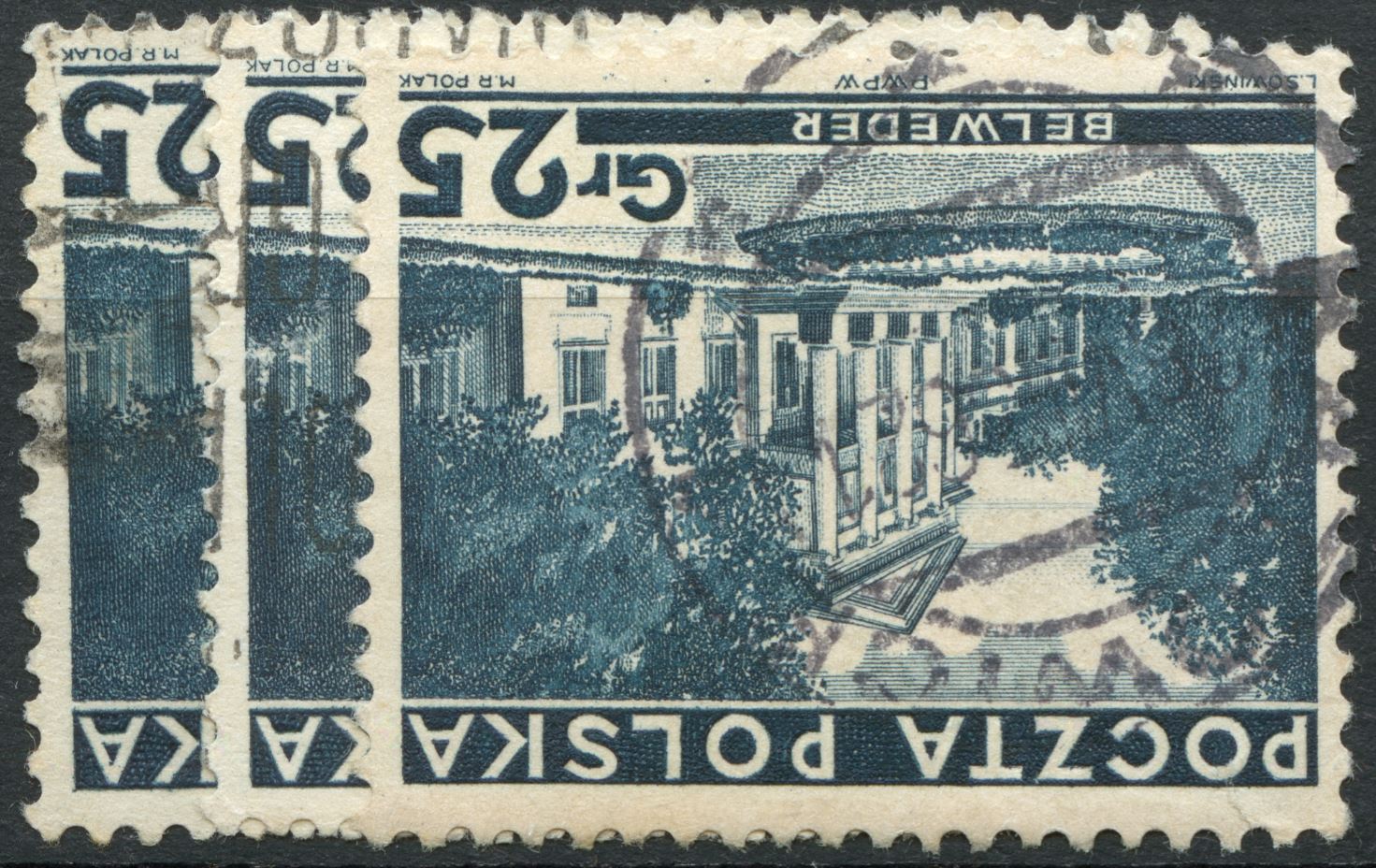 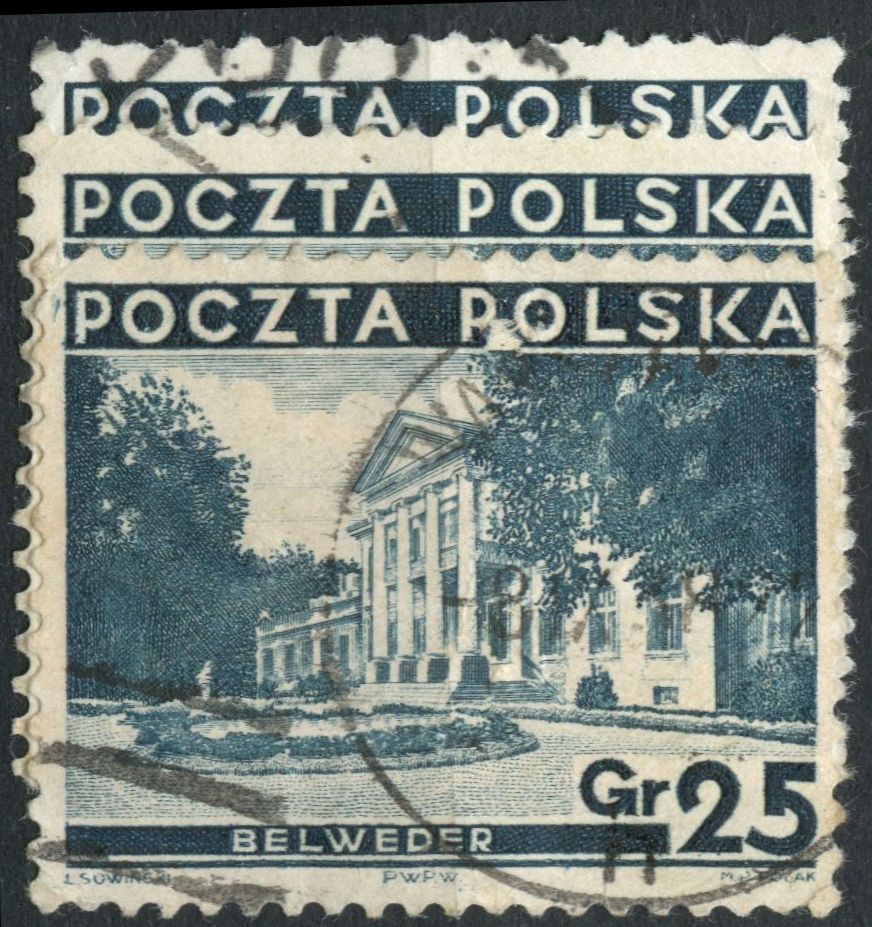 The 25gr had 3 sizes, the 45gr, 50gr and 55gr just two.... |
|
Send note to Staff
|
| Edited by Galeoptix - 06/07/2016 07:00 am |
|
|
Pillar Of The Community
Czech Republic
623 Posts |
|
|
Galeoptyx - Rein, in my opinion, two of the three sizes of the Polish stamp (Belweder 25 gr) will be due to their printing on a flat-bed press with sheets of paper laid on in different grain directions as it had often happened with similar systems in Austria(-Hungary) as well as Czechoslovakia up to the 1930s (compare the Czechoslovakian airmail stamps of the 1930s in either narrow or wide formats printed on the antiquated Nádherný flat-bed press often on overdampened hand-fed sheets, or the Austrian Nibelungen issue of 1926). |
|
Send note to Staff
|
| Edited by florian - 06/09/2016 09:54 am |
|
|
Pillar Of The Community
Czech Republic
623 Posts |
|
|
Galeoptyx - Rein,
The Czechoslovakian issues of the early 1950s printed on the old Stickney machines on dampened paper do show certain differences in the size of the printed area on their master die derivatives with value tablets changed. I do, however, find your examples of Wifag printings (on dry paper this time!) purporting to prove the same phenomenon rather inconclusive.
---
This is what Papy24 added to his commentary I posted here on 06/06/2016 at 08:16 am:
----
Vous confirmez mon point de vue sur l'allongement des clichés en plaque d'acier selon le sens de courbure et surtout le sens du déroulement de la presse.
You confirm my views on the extension of the soft steel master plates according to the direction of curvature and to the press running direction in particular.
Une autre cause peut se produire pour le changement de dimension, c'est l'humidification du papier avant l'impression et aussi les variations apres
Another cause that can produce a change of dimension is the dampening of the paper before printing as well as the follow-up changes
selon l'humidité de l'air qui fait gonfler les fibres du papier dans le sens du travers de la bobine. Lors de la fabrication du papier, les fibres de cellulose
due to the humidity in air which swells the fibers of the paper throughout the coil. In the papermaking process, cellulose fibers
se trouvent alignées en majorité dans le sens de la machine. Sur la longueur des fibres, il n'y a pas d'alongement, mais sur leur épaisseur, cela peut
are aligned predominantly in the machine direction. As for the length of the fibers, there is no elongation but their thickness can
varier considérablement. Faites l'expérience d'humidifier légerement seulement un coté d'une feuille de papier, et vous verrez le papier se déformer
vary considerably. If you slightly moisten one side of a sheet of paper, you will see the paper warp
et s'enrouler. Le sens des fibres est dans le sens du rouleau.
and curl. The grain direction is in the machine direction.
Si le papier est trop sec avant son impression, la différence du format peut etre visible apres humidification naturelle. C'est un phénomene bien connu
If the paper is too dry before printing, the difference in format is visible on natural humidification. It is a well-known phenomenon
et utilisé des imprimeurs français pour faire correspondre les deux impressions latérallement sur les presses "Chambon" TD6.
used by French printers to laterally match two impressions made on the "Chambon" TD6 presses.
----
Pour le timbre polonais (Belweder 25 gr) montré par Galeoptix, il faudrait connaître le sens de l'impression, avec une feuille entiere, pour pouvoir
As for the Polish stamp (Belweder 25 gr) it is necessary to know the direction of printing for the whole sheet in order to
confirmer la déformation dans un sens et pas dans l'autre.
confirm the alteration in one direction and not the other.
----
Pour etre plus précis pour ces différences de format d'impression, il faudrait pouvoir déterminer la presse ou les presses qui ont fait l'impression. Et je
To be more specific about these differences in print format it would be necessary to determine which press or presses made the impression. And I
ne peux probablement pas vous aider pour ça.
will not be able to help you with that.
Savoir si c'est une presse a plat alimentée a la main avec des feuilles ou une presse rotative alimentée en bobine, si c'est le meme timbre imprimé
Everything depends on whether it was a flatbed press fed by hand with sheets or a reel-fed rotary press, whether it was the same stamp printed
sur deux presses différentes, cela fait certainement des différences, en plus si l'impression se fait sur la hauteur ou la largeur,
on two different presses, that would certainly make all the difference, and, moreover, whether the printing was done "on the height" or "on the length",
cela peut tout changer. Le sens du papier peut avoir également son importance. Savoir si la gravure a été
such circumstances can change everything. The grain direction of paper can also be important. It is necessary to know whether the engraving was
directement moletée sur le cylindre en acier ou si c'est une plaque de métal cintrée enroulée sur un cylindre porte plaque, cela pourrait
transferred by means of a trasfer roll directly on the steel cylinder or if it was a metal plate curved to fit the press cylinder, this could
éventuellement donner une explication, et je pense que c'est bien difficile de trouver la vérité "vraie".
give an explanation, and I think it is very difficult to find the real truth.
---
---
I am most grateful to Papy24 for his helpful suggestions.
My problem is that I have never seen these processes dealt with in some detail in English, only in Czech and French, and therefore I lack the proper terminology in English and my translations are somewhat tentative. My obtuseness in technical matters on top of all.
Groetjes,
Florian |
|
Send note to Staff
|
| Edited by florian - 06/09/2016 11:56 am |
|
|
Valued Member
United Kingdom
314 Posts |
|
|
Perhaps slightly to one side of these discussions, but be aware that the potential for shrinkage is recognised with modern gravure printing also. In my three-part article on gravure (go to http://www.stampprinters.info/PRODprepress.htm , I wrote about my recent visit to a gravure stamp cylinder maker..... "The image for a stamp is invariably stretched beyond its intended size when preparing repro, as most materials are unstable and the gravure process involves solvent-based inks that have to pass through a drying unit at each colour station and this intense heat progressively removes moisture from the substrate, shrinking each stamp as it passes through the press until it eventually reaches its intended size." OK, so it is not producing differing sizes of the same stamp, but does show that this is a recognised phenomenon that is now compensated for. Gravure is, of course, acknowledged as being an intaglio-type process owing to it using cells below the cylinder surface. GLENN |
|
Send note to Staff
|
| Edited by 65170 - 06/10/2016 02:29 am |
|
|
Rest in Peace
Netherlands
963 Posts |
|
|
Quote:
Galeoptyx - Rein, in my opinion, two of the three sizes of the Polish stamp (Belweder 25 gr) will be due to their printing on a flat-bed press with sheets of paper laid on in different grain directions as it had often happened with similar systems in Austria(-Hungary) as well as Czechoslovakia up to the 1930s (compare the Czechoslovakian airmail stamps of the 1930s in either narrow or wide formats printed on the antiquated Nádherný flat-bed press often on overdampened hand-fed sheets, or the Austrian Nibelungen issue of 1926).
Florian, NO, the grain direction is the same for both the flat-bed as the reel-fed printing! pozdrawiam, Rein |
|
Send note to Staff
|
|
|
Rest in Peace
Netherlands
963 Posts |
|
|
Florian,
narrow and wide when using dampened paper means that when the direction of paper is vertical the stamp may be a bit wider but less high, when the direction of paper horizontal the stamp may be a bit higher and less wide!
In the cases we discuss here both dimensions are involved. The size has increased in ALL dimensions!
BTW, thanks for translating, but could you keep the translation in one piece??? This reminds me of listening to speeches in Brussels with half of the sentence in Dutch and the last part in French or the other way around ;)
|
|
Send note to Staff
|
|
|
Pillar Of The Community
Czech Republic
623 Posts |
|
|
Galeoptyx - Rein,
Quote: narrow and wide when using dampened paper means that when the direction of paper is vertical the stamp may be a bit wider but less high, when the direction of paper horizontal the stamp may be a bit higher and less wide!
These changes in format are only too obvious.
But I am afraid your two comparisons - the first as to height: showing notable differences, the second as to length: here only the bottom stamp looks just slightly shorter in size - are rather confusing: in the first place, you are showing 6 different stamps (as CDSs and perfs prove), not 3 compared in a definite order, and in the second, you do not differentiate between flat plate press printings (I read the Poles had been using the same Nádherný flat plate press for earlier issues as the Czechs used for theirs) and the rotary press printings.
Quote: In the cases we discuss here both dimensions are involved. The size has increased in ALL dimensions!
Fine. Therefore if Quote: the grain direction is the same for both the flat-bed as the reel-fed printing!, then why in your second comparison only the bottom stamp looks just slightly shorter in size?
But the things here are so confused and the important printing data missing as Papy24 has pointed out that there is no way out of this problem.
Quote: BTW, thanks for translating, but could you keep the translation in one piece??? This reminds me of listening to speeches in Brussels with half of the sentence in Dutch and the last part in French or the other way around.
Unsure whether I am using proper technical terms in English, I preferred the following arrangement: the original in black italics, the translation line by line below in blue standard types, making it easier for those who understand French to check things and possibly make corrections.
IMO, the original in black italics and the translation in blue standard types are easy to follow.
Zdravím,
Florián |
|
Send note to Staff
|
| Edited by florian - 06/13/2016 04:40 am |
|
|
Rest in Peace
Netherlands
963 Posts |
|
|
Florian, the same 3 stamps in different arrangememts! The differences in horizontal size are negligeable! the smallest ones are probably sheet-fed on the Nadherny, the narrow teeth points to the use of a comb-perforation. The medium sized ones have NOT been described in Polish literature! 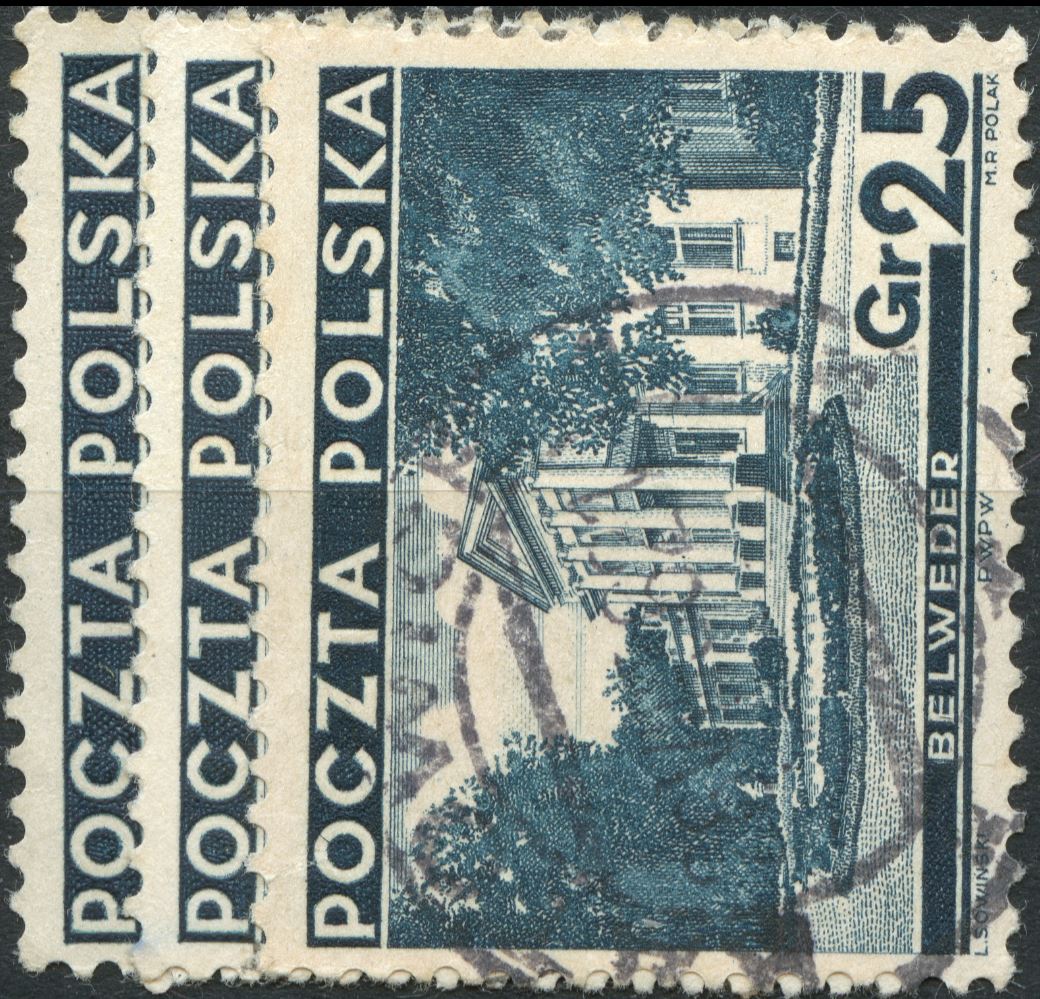 |
|
Send note to Staff
|
| Edited by Galeoptix - 06/13/2016 07:27 am |
|
|
Rest in Peace
Netherlands
963 Posts |
|
|
Florian, the same 3 stamps [other than in the previous posting!] in different arrangememts! The differences in horizontal size are negligeable! The smallest ones are probably sheet-fed on the Nadherny. The medium sized ones have NOT been described in Polish literature! 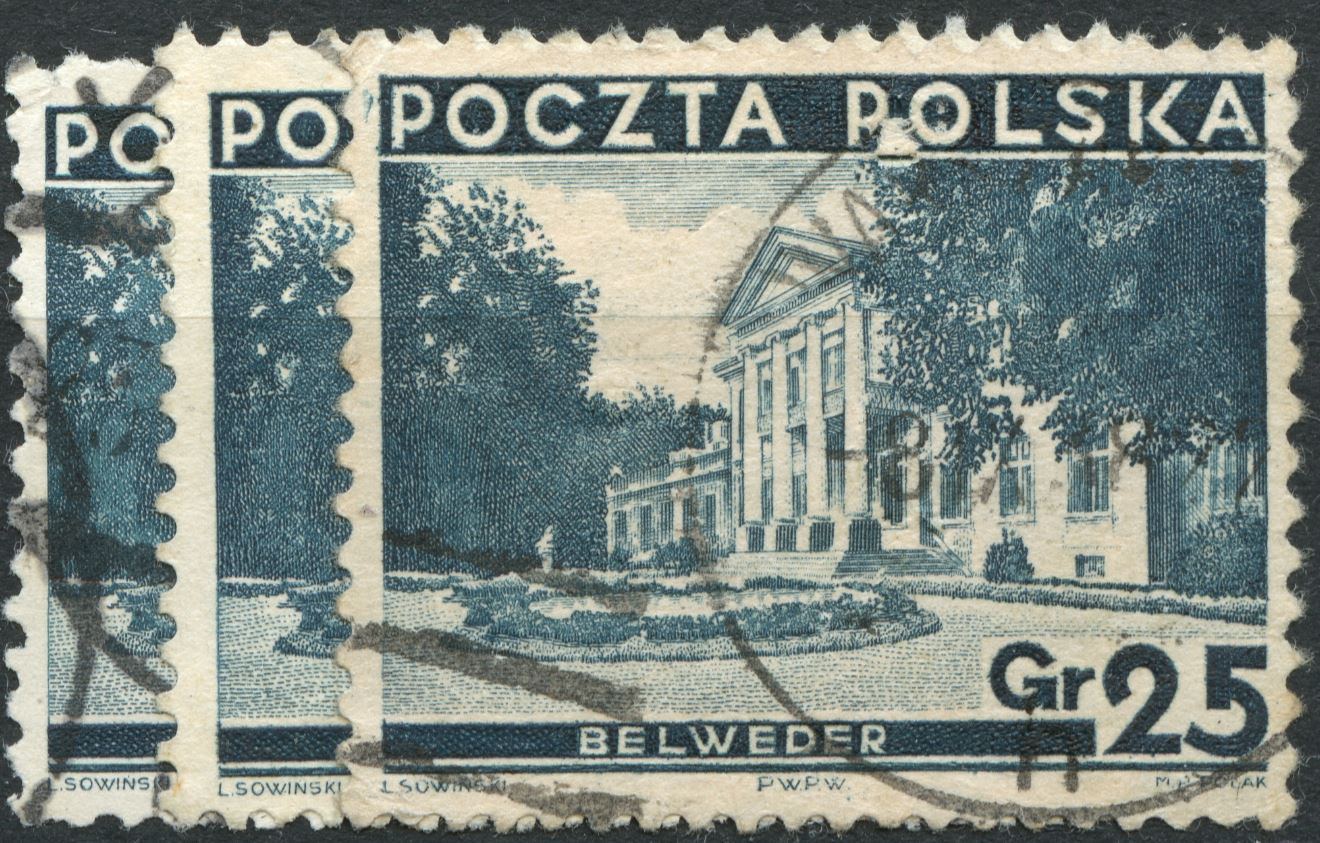 |
|
Send note to Staff
|
|
|
Replies: 97 / Views: 13,667 |
|
|
To participate in the forum you must log in or register. | |
 Cover Calendar For Month And Day -Pics Postmarks.day By Day What Did You Do Philatelically: Today Or Recently? The Stamps Of Indo-China. Who Was The Upper Keswick, N.b. Postmaster In 1941 Going Ape Jerusalem Views On Stamps 1851-57 12c Washington China Classic Stamps Forgeries: Help Needed Pre-WWII Dutch Indies W Kobe, Japan Cancel China: An Out Of The Question Fake Need Help With Japan Ekcs Japan Scott #51 Or #53 - Your Thoughts On The Road Again - Eye To Eye With The Local Postal Authority Newfoundland Caribou Issue - Prussian Blue? Pottery, Ceramics, Porcelain, And Other Clayware Value Question: Full Sheet, Austria Scott # 840A-H, Issued 5'24'1969. Modern Industrial Art And Design Art & Paintings On Stamps Help Center For Japanese Stamps Cartoon & Comic Characters On Stamps! Indypex 2026, September 18, 19, And 20, 2026 New South Wales Numeral Cancels Nashville Philatelic Society-Your Invitation To Our Meeting Monday, September 14, 2026 Big Blue Album - How Far Along Is Everyone? Cover Calendar For Month And Day -Pics Postmarks.day By Day What Did You Do Philatelically: Today Or Recently? The Stamps Of Indo-China. Who Was The Upper Keswick, N.b. Postmaster In 1941 Going Ape Jerusalem Views On Stamps 1851-57 12c Washington China Classic Stamps Forgeries: Help Needed Pre-WWII Dutch Indies W Kobe, Japan Cancel China: An Out Of The Question Fake Need Help With Japan Ekcs Japan Scott #51 Or #53 - Your Thoughts On The Road Again - Eye To Eye With The Local Postal Authority Newfoundland Caribou Issue - Prussian Blue? Pottery, Ceramics, Porcelain, And Other Clayware Value Question: Full Sheet, Austria Scott # 840A-H, Issued 5'24'1969. Modern Industrial Art And Design Art & Paintings On Stamps Help Center For Japanese Stamps Cartoon & Comic Characters On Stamps! Indypex 2026, September 18, 19, And 20, 2026 New South Wales Numeral Cancels Nashville Philatelic Society-Your Invitation To Our Meeting Monday, September 14, 2026 Big Blue Album - How Far Along Is Everyone?
Disclaimer: While a tremendous amount of effort goes into ensuring the accuracy of the information contained in this site, Stamp Community assumes no liability for errors. Copyright 2005 - 2026 Stamp Community Family - All rights reserved worldwide. Use of any images or content on this website without prior written permission of Stamp Community or the original lender is strictly prohibited.
Privacy Policy / Terms of Use Advertise Here |
| Stamp Community Forum |
© 2007 - 2026 Stamp Community Forums |
| It took 0.3 seconds to lick this stamp. |
 |
|
|
|


 Posted 05/16/2016 07:29 am


