| Author |
 Replies: 17 / Views: 3,916 Replies: 17 / Views: 3,916 |
|
Valued Member
276 Posts |
|
|
|
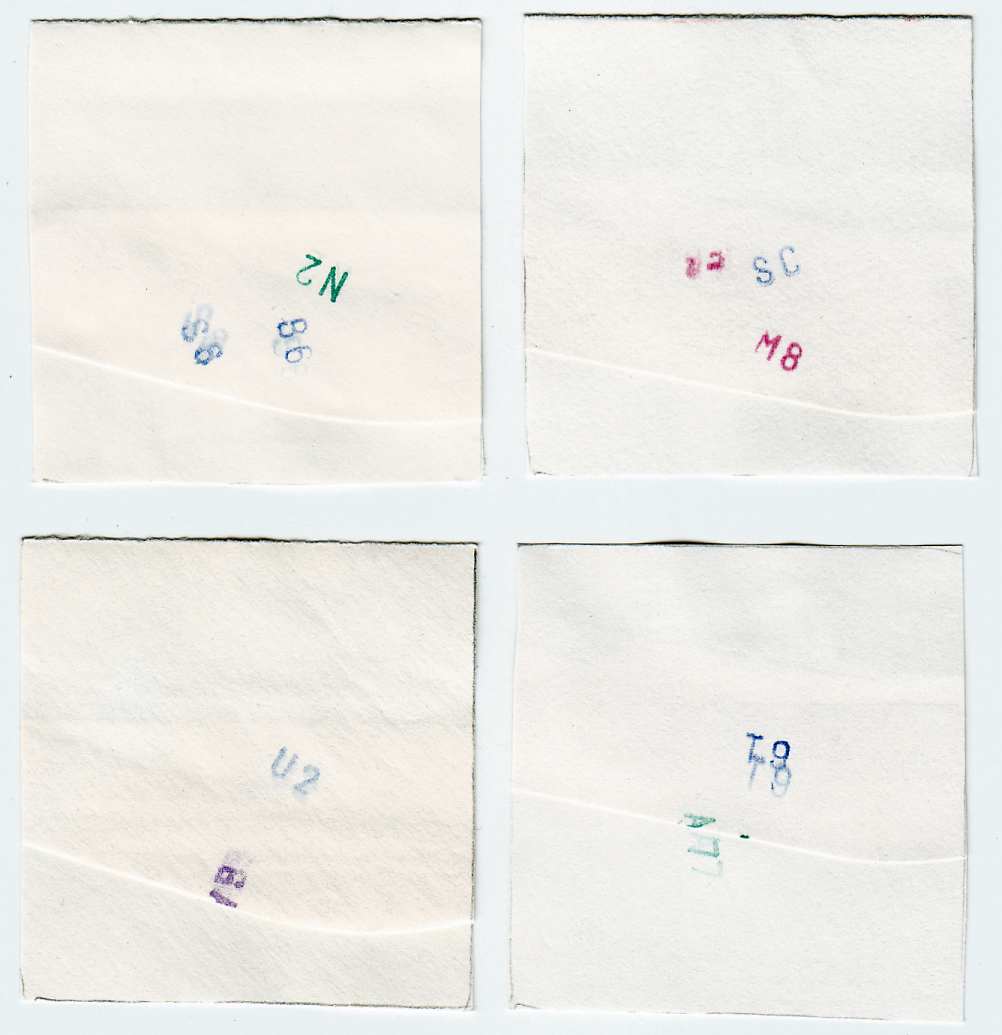
The non-address side of many 1970s US covers have printed upon them one or more two character codes, each usually a letter and digit, such as T3 of L9, in various colors. I've assumed these codes indicate which USPS automated sorting machine(s) the cover passed through during its trip from sender to recipient, but I've never known for sure.
Do these codes have a name? Is there online a list of what the codes mean? Some codes are probably less common than others.
|
|
Send note to Staff
|
|
|
|
|
Rest in Peace
United States
4052 Posts |
|
|
Valued Member
276 Posts |
|
|
Pillar Of The Community
United States
8956 Posts |
|
|
Perf10, did you try and contact the folks at IkeyPikey's suggestion?
Peter |
Send note to Staff 
|
|
|
Valued Member
276 Posts |
|
|
I don't have enough experience in their specialty to contribute to a postal markings group. I'm not a member there, so inquiring would amount to joining or emailing just to pick their brain on this issue, and that did not feel polite. I did look around their site but found nothing about these 2-character codes. |
|
Send note to Staff
|
|
|
Pillar Of The Community
United States
8956 Posts |
|
|
Perf10, why not go ahead and ask them. I am a member of several specialty groups, and I give out info about these specialties. I am sure that someone in the group is happy to answer your request. If you don't try you might never find out!
Peter |
|
Send note to Staff
|
|
|
Valued Member
United States
344 Posts |
|
|
You will find that the vast majority of specialized collecting groups welcome and encourage questions. Best case scenario is that you become interested enough to benefit from a membership; not really any downside to helping out a fellow collector. Worked on me woth the Universal Ship Cancellation Society. |
|
Send note to Staff
|
|
|
Bedrock Of The Community
United States
12128 Posts |
|
|
I think they are LSM (letter sorting machine) codes. This may be helpful: Quote:
LSM
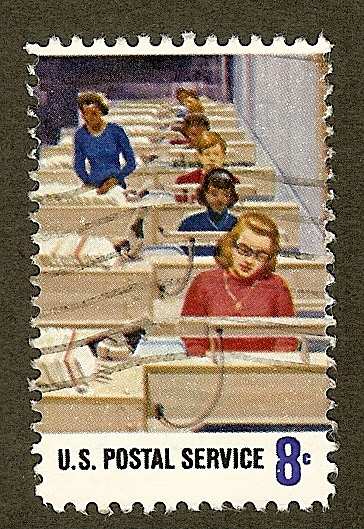
The Letter Sorting Machine (LSM) was first used by the USPS in the late 1950s.
The huge semiautomatic beast requires a group of operators to sit in front of
twelve consoles while letters are zipping by at a rate of one per second. The
machine automatically positions a letter in front of an operator, who then has
one second to key in the first three digits of the ZIP code. The letter is then
whisked away to one of several hundred bins according to the keys that were
depressed. If an operator fails to key in anything then the letter will go to a
reject bin and will eventually be fed back into the LSM. If an operator happens
to key in the wrong code, then a slight possibility exists that the misguided
letter will be caught by a clerk before it is shipped. Otherwise, the letter
will be delivered to that location, wherever it may be, and will eventually be
delivered back again.
LSM places a marker on the back of every letter that is processed. The marker
consists of two alphanumeric symbols. The first symbol is always a letter
ranging from A to Z. The second symbol is either a letter ranging from A to C,
or a number ranging from 1 to 9. The marker can therefore be one of 319
possibilities. The marker may also be one of several different colors, although
the color does not indicate any useful information. According to USPS LSM
operators, the marker indicates which console processed the letter. However,
this information is fairly useless because we still do not know which specific
LSM processed the letter. The USPS uses hundreds of LSMs nationwide, and each
of those LSMs has twelve consoles. I am uncertain how to translate a specific
marker into a specific console, nor do I understand why the marker can be one
of 319 possibilities if there are only twelve consoles. |
|
Send note to Staff
|
|
|
Valued Member
276 Posts |
|
|
wt1 - yes, that LSM description fits, great to learn about, I'd wondered about those codes for many years, thanks for that info. If LSMs began in the 1950s and were phased out during the 1990s, their use and thus number of pieces with the codes likely would have peaked during the 1970s, which is the decade of the samples I scanned above. |
|
Send note to Staff
|
|
|
Bedrock Of The Community
United States
12128 Posts |
|
|
I used to service my own FDCs back when I was in my teens in the 1970s. The FDCs always came back serviced but with those pesky LSM codes on the back. It proved, however, that the FDC went through the mailstream and was not simply one of hundreds of covers serviced in bulk by a dealer. |
|
Send note to Staff
|
| Edited by wt1 - 06/04/2016 10:39 pm |
|
|
Pillar Of The Community
6359 Posts |
|
|
wt1, Could you supply the reference to your quote source? One of the earliest letter sorting machines was the Dutch-made Transorma installed experimentally in the mid 1950s at the Blair Station in Silver Spring, MD. It's marks are on the front. Though philatelic, this cover went through the mail and got the "AW" sorting mark above the cancel, which I believe identifies the individual machine operator. There are no marks on the reverse side. 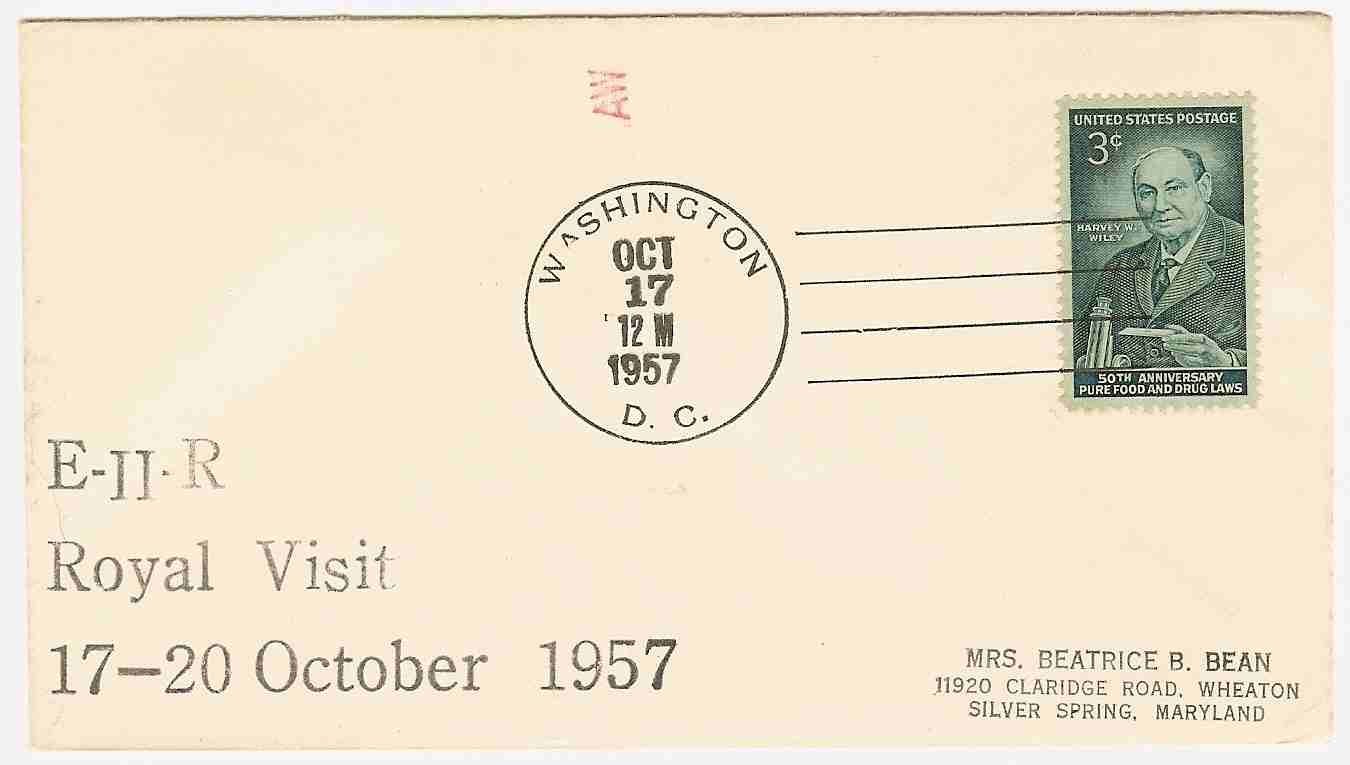 |
|
Send note to Staff
|
|
|
Bedrock Of The Community
United States
12128 Posts |
|
|
Rest in Peace
United States
4052 Posts |
|
|
Google ...
Multi-Position Letter Sorting Machine (MPLSM) site:usps.gov
Multi-Position Letter Sorting Machine (MPLSM) site:postalmuseum.si.edu
... for authoritative information.
Cheers,
/s/ ikeyPikey
|
|
Send note to Staff
|
|
|
Pillar Of The Community
6359 Posts |
|
|
Pillar Of The Community
United States
797 Posts |
|
|
wt1 is correct in his identification. Letter sorting machines (MPLS-multi-position letter sorting machine) was a 12 position sorter with positions for 12 clerks. there were 4-6 relief clerks working the front as loaders or back as pullers & trayers. For purposes of quality control, small alpha-numeric inking stamps in the pick up arm would imprint a machine letter & operator position number. A 60 letter sample was taken at random times for each operator each shift worked. The operator was sorting at rates from 55 letters per minute to 60 letters per minute and was required to err in no more than 2 pieces. Operators were expected to sort on average 1500 - 1600 letters per hour for 45 minutes sorting, 15 minutes support (load or tray as relief). Machine breaks (total crew) were every 2-hours for 15 minutes (with a 30 lunch break after 4-6 hours). Machine complements ranged from 19-22 clerks in the beginning of the machine deployment, and was weaned down to 17-18. With the introduction of more technology with optical character readers, OCR complements were 3-4 operators. Technology brought the main Boston MPLSM complement of 22 machines working 2-shifts (average 19 clerks) & 1-shift of 6 machines to zero MPLSMs to 20 OCRs. |
|
Send note to Staff
|
|
|
Bedrock Of The Community
United States
12128 Posts |
|
|
It might be interesting to sort out the earliest and latest examples of these things. Do we have any estimated dates as to when these examples started and stopped appearing? |
|
Send note to Staff
|
|
|
Replies: 17 / Views: 3,916 |
|



 Posted 06/03/2016 4:09 pm