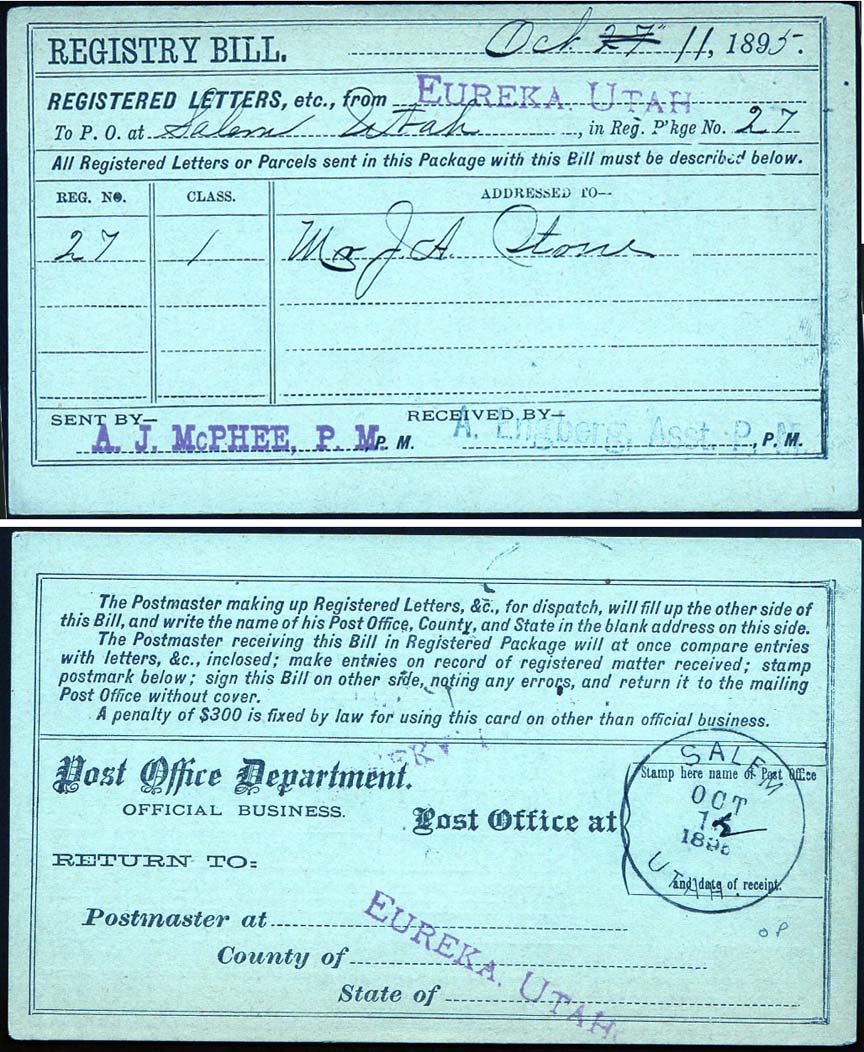
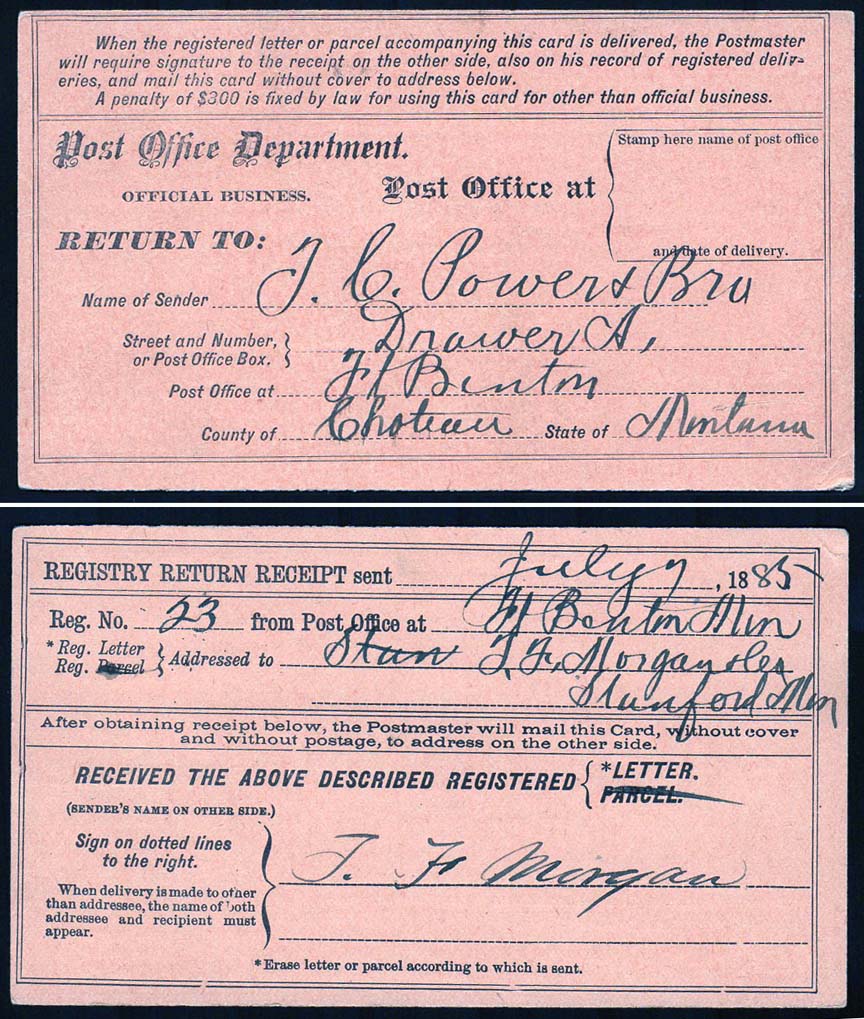
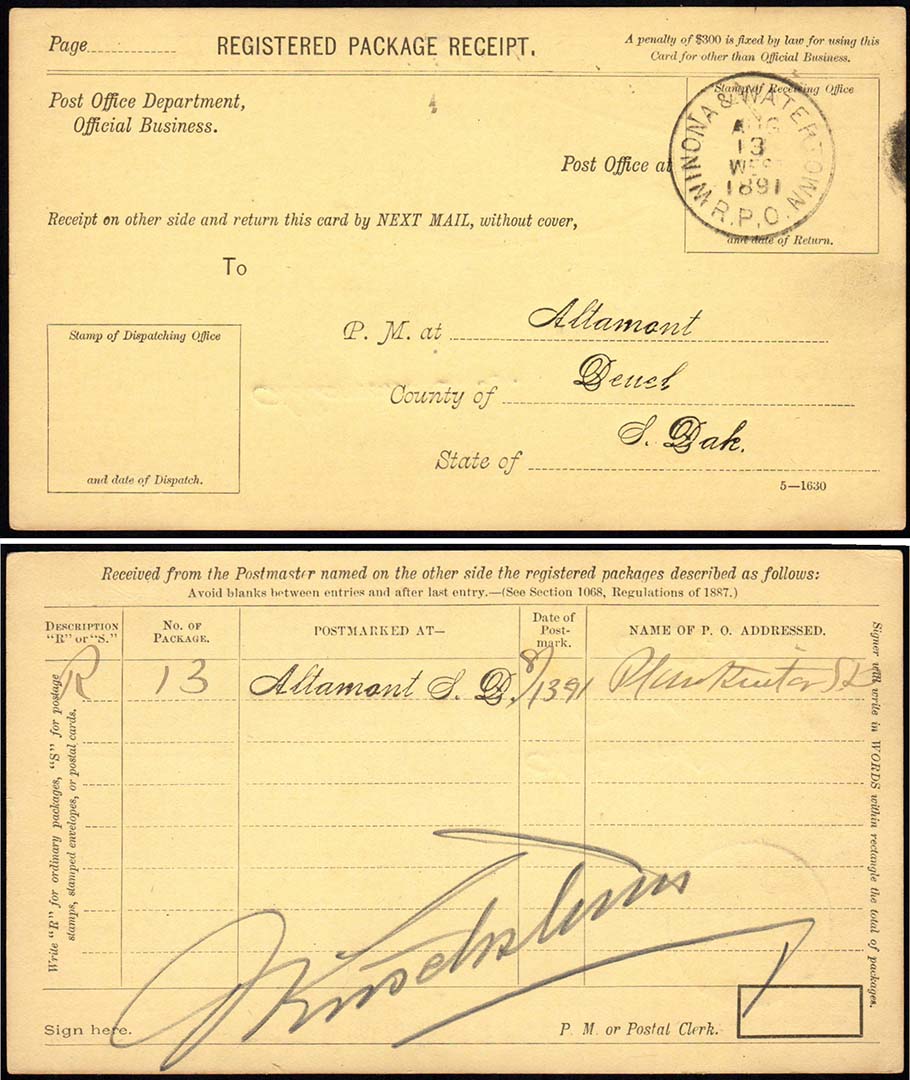
Large volumes of these cards were created. IN GENERAL they are not particularly special. HOWEVER some are important postal history for being about the only way to collect certain post office cancels. Also what throws these out of balance is that there have been some large holding discovered in some small post offices (think in the walls), thus DPOs live on through these. For example I own the only known strike of a fancy shield style cancel used in Bodie, California which is on one of these PO to PO reply cards (not reply card to sender). It did not surface until after the publications which list such things so it is "unlisted."
There are two general early types. Those tracking registered shipments from postmaster to post master and registry reply cards which go back to the customer which mailed the item.
As to the reply cards for the senders they first were for registry then in 1913, registered and insured, then registered, insured and certified. Domestic is the most common, US to a foreign destination return receipts are uncommon.
As with most items, value is driven by interest. These cards had little interest for stamp collectors because, well they did not have stamps. Same goes for many postal history collectors, no stamps, no interest.
Quote:
Registry Bill
Registered Package Receipt
Registry Return Receipt
Registry Dispatch Receipt Card
Can anyone explain the purposes of these items? Are considered postal stationery?
They all represent the movement of one or more registered pieces of mail for part of the delivery trip or the entire delivery trip (Edit: a better phrase is "verification of movement").
They are not really considered postal stationery as there is no prepaid stamp. They are better considered as part of penalty mail postal history of the USPOD.





 Posted 06/16/2016 02:50 am