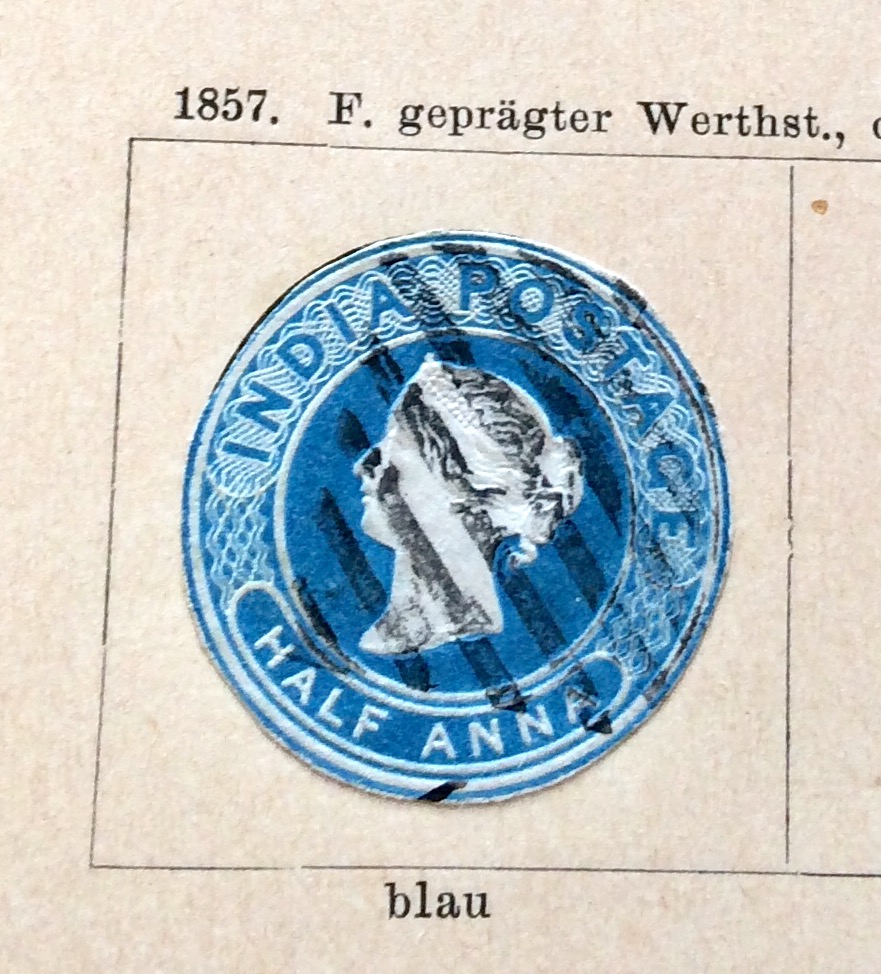
area66 do yourself a favor. Don't show your ignorance on public forum on the subject of Indian philately.
I like busting these balloons.
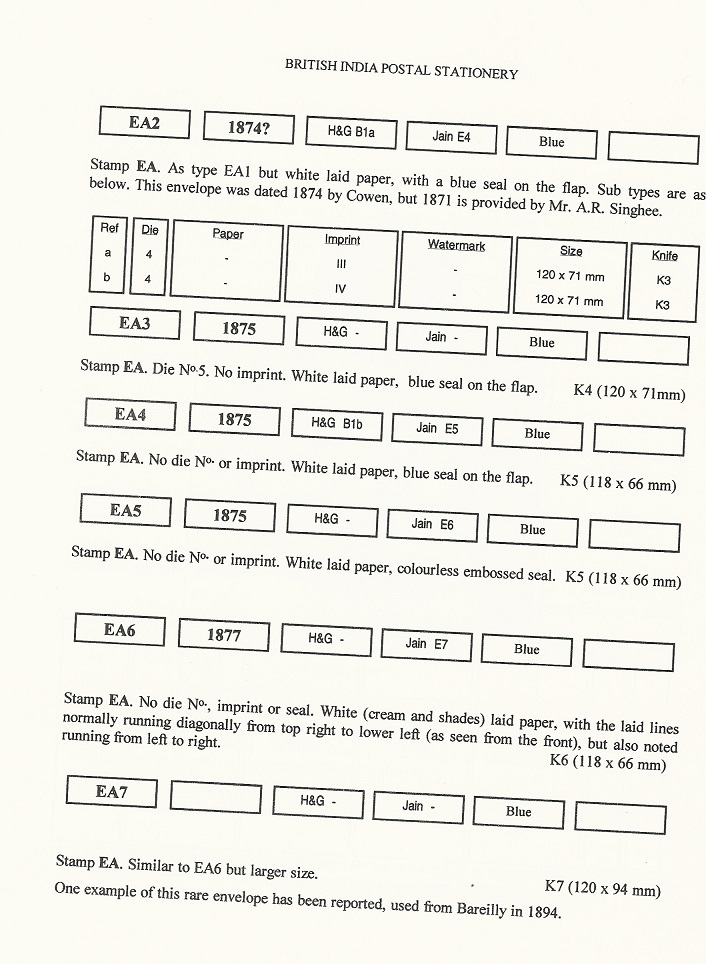
Now what is written along the line of EA2 numbering? I had seen for myself
H&G B1a in Lang which I wrote but before learning the name Lang and getting it, the nitpicker did not know that.
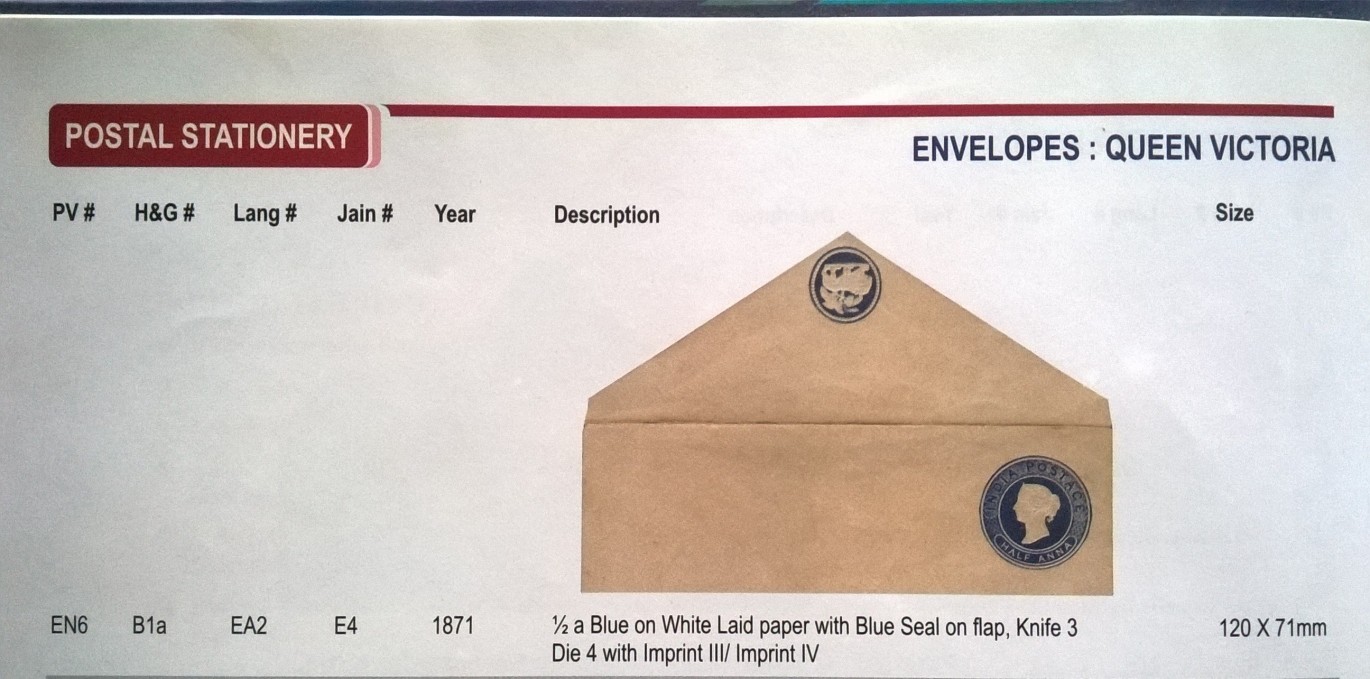
Ref. Postal Stationery of British India 1856-1947.
Pratisad Neurgãokar.
private, Pune 2009
Chapter I: Envelopes; p.12
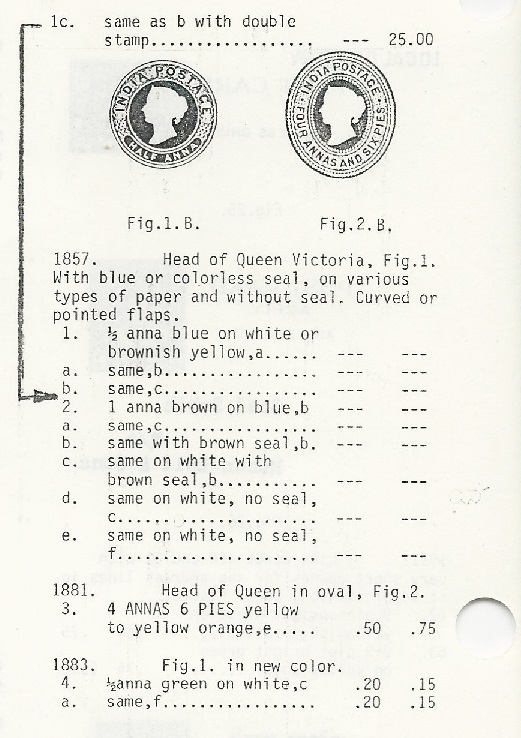
Higgins and Gage is
absolutely incorrect to list H&G B1a as 1857 issue which was corrected by Lang thouh he got the date wrong as 1874 instead of 1871.
Cowen, Jain and Lang all erroneously recorded H&G B1a envelopes being issued in 1874 and now Ajitraj Singhi's date is accepted by all which is again why I wrote 1871.
Now to enlighten the nitpicker, Ajitraj Singhi is an expert of Br. India, Indian Convention states and feudatory states postal stationeries. He was elected President of the Philatelic Congress of India last year which is the national federation of philatelic societies in India and the representative body from India to FIP.
I see the nitpicker's knowledge has improved from "1857" to "from 1857 to 1877". The 1877 Lang EA6 issue is not even recorded by H&G.
The nitpicker again shows his/her super-glossy ignorance. Cooper type 33 cancels were gone by 1875 when type 32 prevailed at all post offices. So it is impossible to have a Cooper type 33 cancel on an 1877 Lang EA6 envelope.
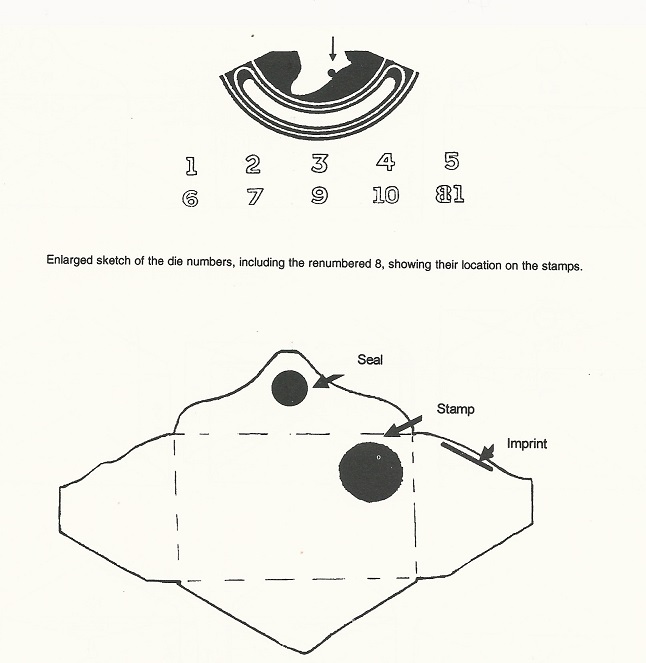
Now it is clear that this nitpicker did not even know that die numbers existed in the imprint itself before reading my post and now is lecturing us showing die number page from Lang.
It may be difficult to read but I have no problem in seeing it from the scan.
Even if no one can see it, there is an identifying feature of die 4 which is the slight "v" formation of the horiaontal stroke of the first
A of
ANNA which is clearly visible here but not to the presbyopic nitpicker (what can I expect when the nitpicker sees
1874? as
1974?).
It is evident that the nitpicker never handled an 1857 H&G B1 envelope in reality.
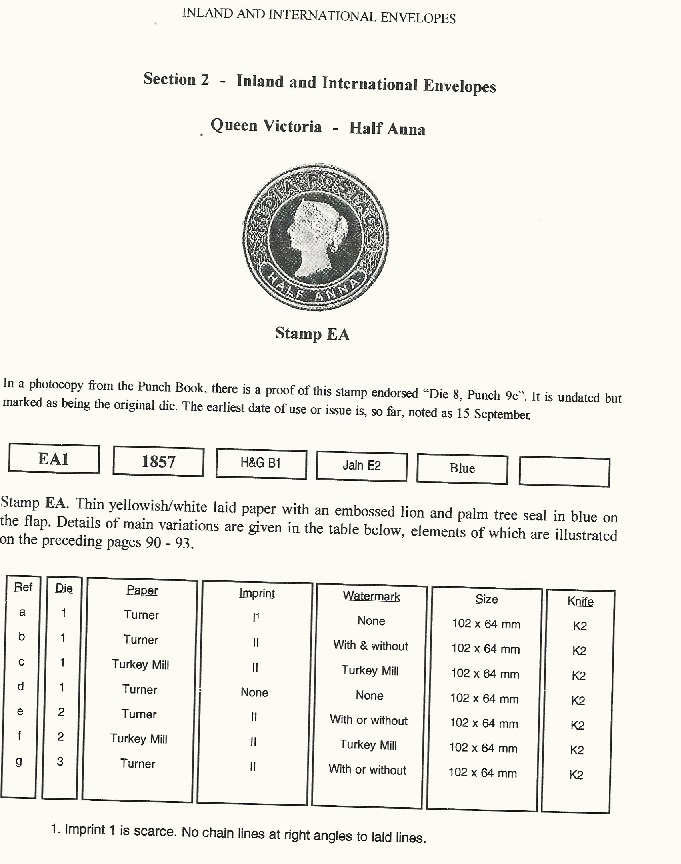
The paper of H&G B1 is quite flimsy yellowish/white laid
tranparent paper which was the same as that used later for letter sheets.
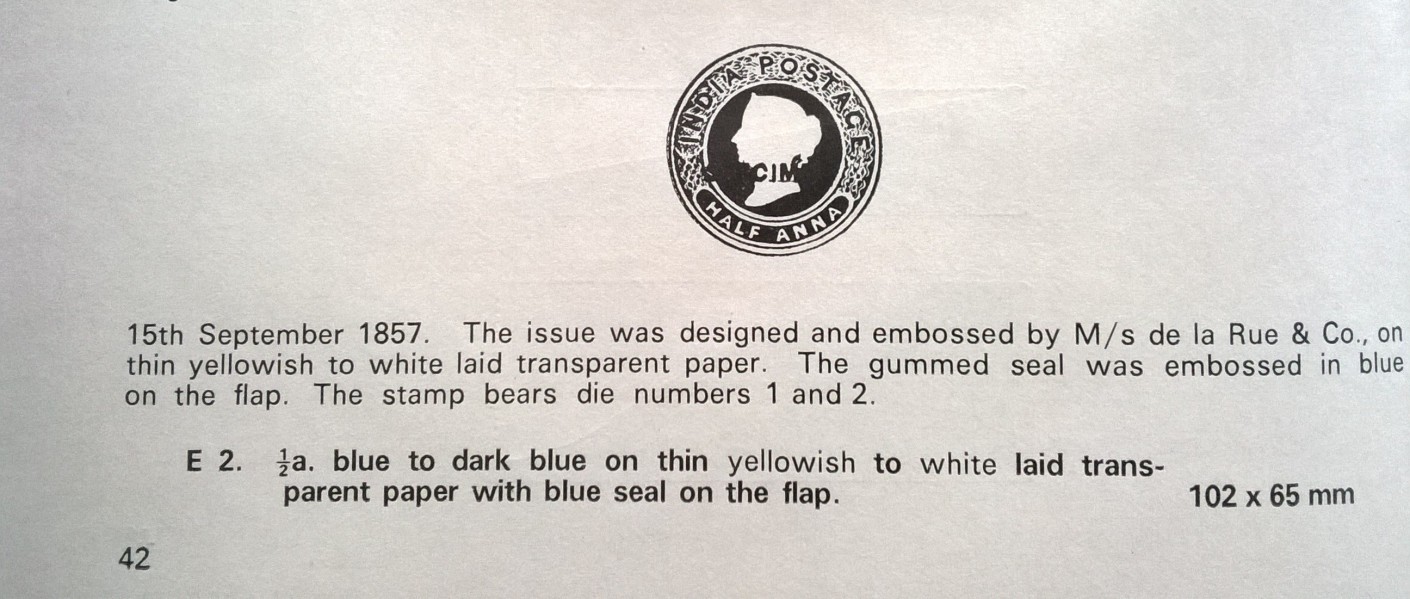
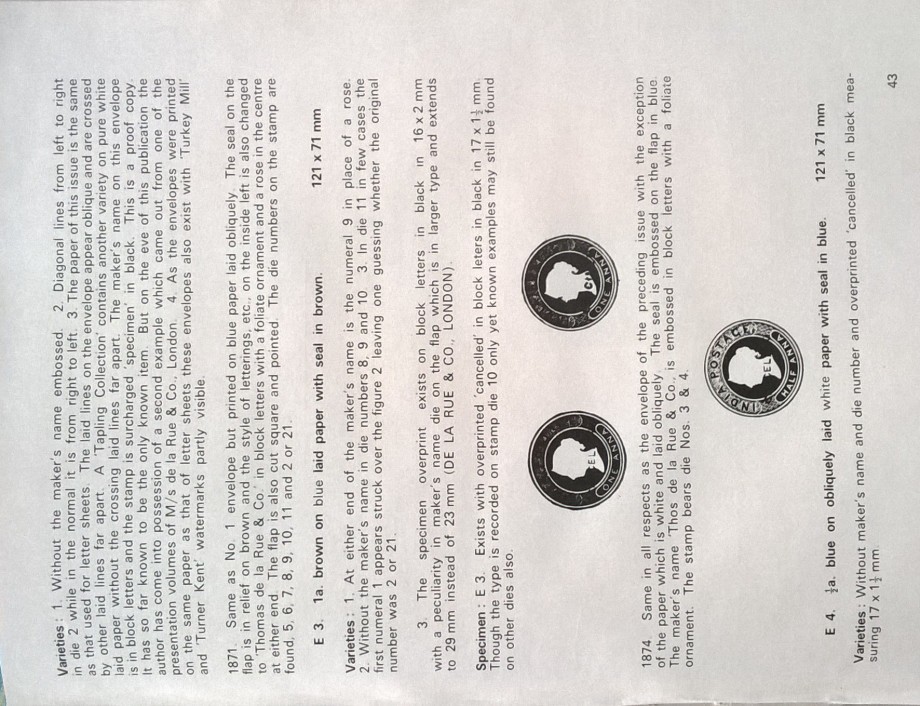
Ref. Encyclopedia of Indian Postal Stationery.
Manik Jain.
Philatelia, Kolkata 1973
Envelopes; pp.42-3
Anyone who has seen both H&G B1 and H&G B1a envelopes will find no problem to identify that the stationery cutout is not from H&G B1 from the white paper area visible in the Vic. bust. And I repeat H&G B1 envelopes on white laid papers are scarcer than yellowish laid paper.
There is no need to check for laid lines because both 1857 H&G B1 and 1871 H&G B1a envelopes were printed on laid papers but the nitpicker cannot distinguish between the 2 unless the laid lines are seen. I wonder if anyone else sane in the world would take this as an identifying feature to distinguish H&G B1 and H&G B1a.
The clincher is no doubt the
A.
H&G B1 envelopes were printed from 3 different dies in different printings.
Die 1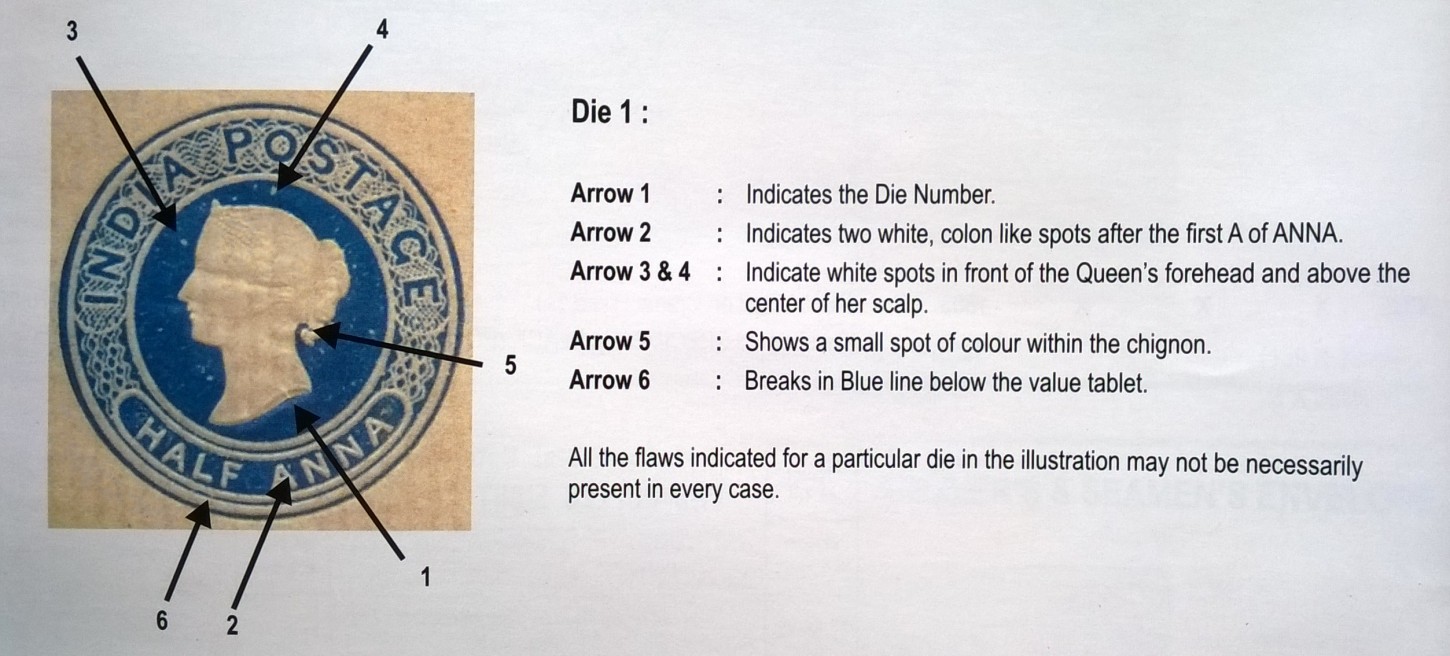 Die 2
Die 2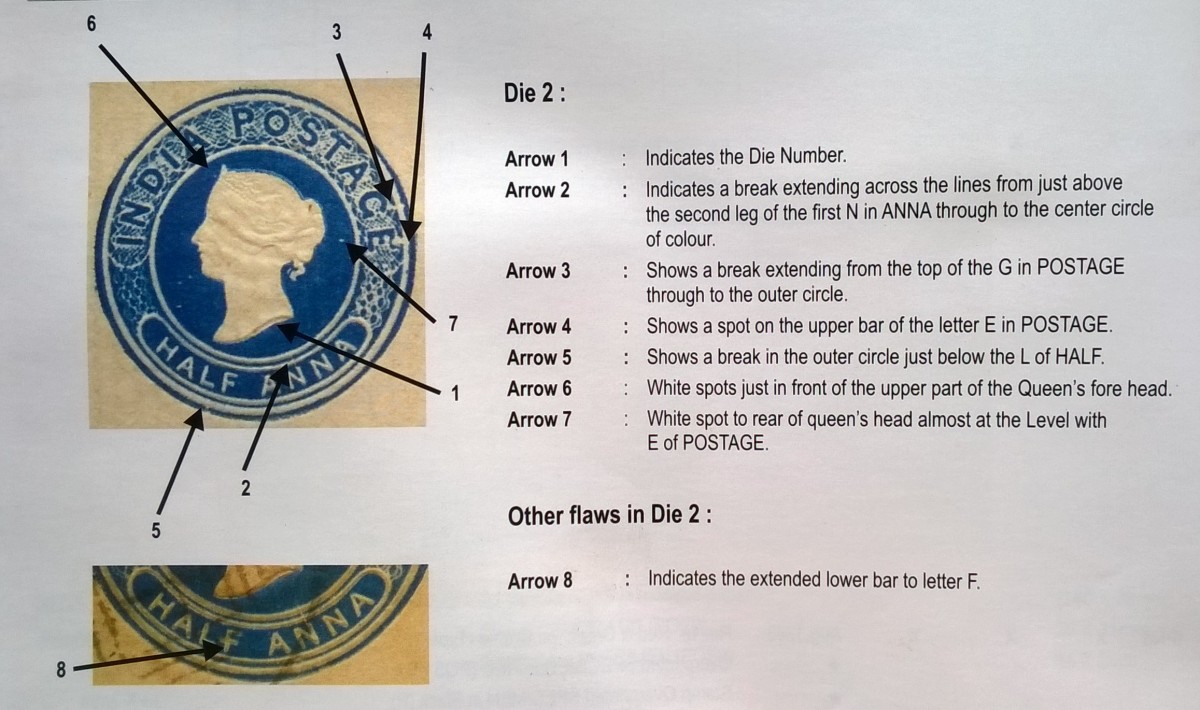 Die 3
Die 3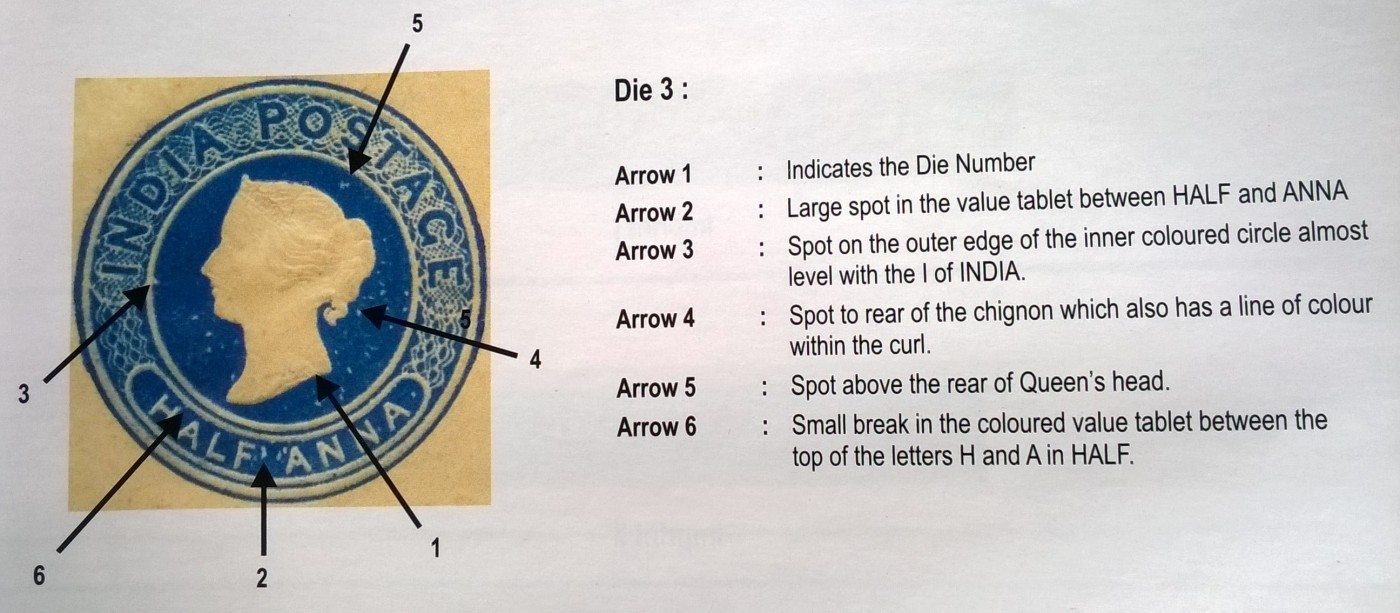
Now see all for yourseleves which die features and faws corroborate to the cutout shown here. None does. I can bet the nitpicker does not have an iota of idea to identify H&G B1 imprints from dies which is evident from the posts, not to mention Cooper type 33 being used on an 1857 envelope.
So it is (and will remain) of course "speculation" to people like this nitpicker having half-baked (should I say quarter or less) knowledge to identify cutouts.
I have been in quite a few stamp discussuon sites incl. Aussie Stampboards and I must admit I have never encountered such b***hiness.
Quote:
very professional.
Quote:
actually not at all; it's pure speculation.





 Posted 10/02/2016 4:32 pm