| Author |
 Replies: 8 / Views: 1,787 Replies: 8 / Views: 1,787 |
|
|
Valued Member
United States
252 Posts |
|
|
Mr. Clarence Hennan of Chicago had formed the best specialized collection of the 1881 Small Quetzal issue of Guatemala. His collection was sold by Robson, Lowe in 1975 after he passed away. One of the highlight in his collection was a SHIP cover franked with a 20c and a 5c small quetzal stamps sent to New York. This cover was illustrated on the front cover of the catalog and it realized 2100 SF, which back in 1975 was a very high sum for a cover from Guatemala. 20c value on cover is extremely scarce. There are 7 or 8 known. The cover surfaced last month in a public auction. I was determined to get it for my collection. I was so happy and excited after I won the cover, which did not last long. How in the world is possible that an Ex Hennan item could turn out to be a forgery?! Well, yes, it is a forged cover. So, is provenance really should be respected? 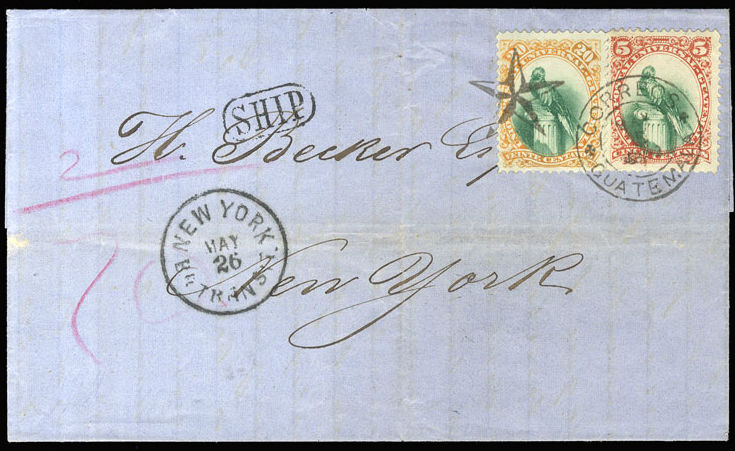 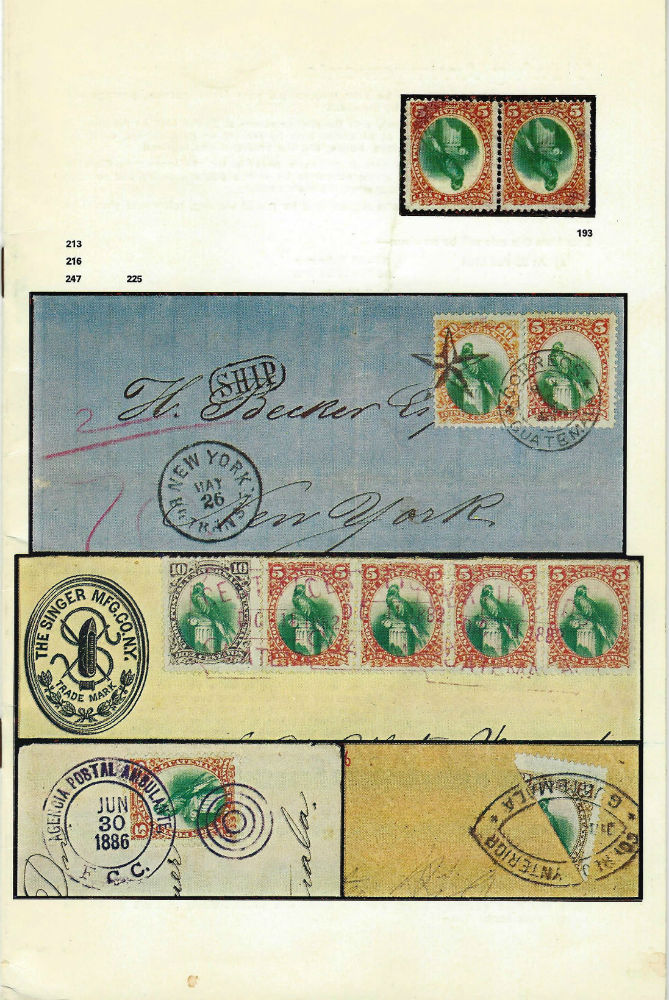 |
|
Send note to Staff
|
| Edited by fotofila - 10/03/2016 03:23 am |
|
|
|
|
Rest in Peace
United States
4052 Posts |
|
|
Q/ Could it be that the cover in his collection was genuine, and your item is a forgery of that?
Q/ Does your detection of the forgery depend on information developed after 1975?
Cheers,
/s/ ikeyPikey |
Send note to Staff 
|
|
|
Valued Member
United States
252 Posts |
|
|
I have illustrated the actual cover at top and the catalog that presenting the cover below. Thay are identical and the same cover. The criteria used to authenticate this cover would be the same in 1975 as today. |
|
Send note to Staff
|
|
|
Pillar Of The Community
6354 Posts |
|
|
Stamp/postal history knowledge and forensic methods have advanced greatly since 1975. The general criteria may be similar, but the knowledge base and analytic tools are so much better today. Many items once though "good" have been exposed as faked, altered, repaired, etc. |
|
Send note to Staff
|
|
|
Pillar Of The Community
1515 Posts |
|
|
I find it curious that a cover illustrated on the front cover of a catalog would not have been exposed as a fake at the time of auction. Perhaps a second opinion should be sought? |
|
Send note to Staff
|
|
|
Rest in Peace
720 Posts |
|
|
You have left out some critical information: (1) who originally expertise the cover in 1975. (2) how do you know that it's forged? Have you gotten another opinion? and if so, from whom? |
|
Send note to Staff
|
|
|
Pillar Of The Community
6354 Posts |
|
|
A quick look in the American Stampless Cover Catalog (4th ed, v2, p107) notes the New York mark is (at that time) reported known only in 1870. The stamps are from 1881. This should raise a red flag for much deeper digging. Is there a letter remaining inside? |
|
Send note to Staff
|
|
|
Pillar Of The Community
1213 Posts |
|
|
The points already raised above are excellent, but one needs to understand and believe that every collection of high value and rare stamps and covers is almost certain to have forgeries in it unless each item goes through some rigorous authentification by independent experts who can hold the cover and examine it closely. And this is doubly likely when an item looks too crisp and sharp and good to be true such as this particular cover. Given the size of many collections of well known collectors such rigorous independent authentification of every item should not be expected, and if anything, the bigger the name of the collector the less likely they will see a need to have independent authentification since they tend to see themselves as the expert. I see this in all sorts of collectibles. You can even find big name art museums that are continuously working to filter out the forgeries that have hung on their walls for very long times. If one relies solely on an item coming from the collection of a well known collector as being provenance then one should expect to get burned on occasion. Trust but verify. |
|
Send note to Staff
|
| Edited by Kimo - 10/06/2016 10:49 am |
|
|
Valued Member
United States
252 Posts |
|
|
I have written an article published in El Quetzal, September 2016 issue, titled "20 Centavos Small Quetzal on Covers". I have described 8 covers, of which two are fakes. Unfortunately, those 2 fake covers came from the Hennan Collection. On this particular cover that I bought, I have described the inconsistencies of the cover that identify it as highly questionable. I did not, however, say it is a forgery in order to avoid embarrassment to the auction company, which has earned my highest respect in honesty and integrity. If you like to read about the article, it is available at web site of International Society of Guatemala Collectors. |
|
Send note to Staff
|
|
| |
Replies: 8 / Views: 1,787 |
|




 Posted 10/03/2016 03:18 am


