| Author |
 Replies: 22 / Views: 3,730 Replies: 22 / Views: 3,730 |
|
Pillar Of The Community
United States
1342 Posts |
|
|
I spotted something odd on a Canada 43a stamp. It appears to be something behind the lettering. Take a look and let me know what you guys think. The image is not in good focus as it is slightly enlarged. 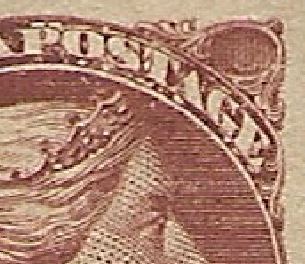 |
|
Send note to Staff
|
|
|
|
|
Pillar Of The Community
United States
1342 Posts |
|
|
Here is the full image of the stamps. There is sign of overprint at the bottom as well. She has a booger in her nose and eye has extra dots. A large white spot at lower right "6". It is so much nicer with a second stamp attached.  |
Send note to Staff 
|
|
|
Rest in Peace
7742 Posts |
|
|
jaxom100...The right stamp has all he characteristics of a stamp that is under inked...A good close up of the areas you have concern with (scan) will help identify the differences..
Very nice pair of stamps.
Robert
|
|
Send note to Staff
|
|
|
Pillar Of The Community
United States
8956 Posts |
|
|
I agree with Wert - the right stamp looks under inked. It is not an error though. Probably not a re-entry either.
Peter |
|
Send note to Staff
|
|
|
Pillar Of The Community
United States
728 Posts |
|
|
This appears to be a dry printing on the right stamp. The areas that are white should be solid color just like the left stamp. Interesting pair showing this type of printing problem well.
Mike |
|
Send note to Staff
|
|
|
Pillar Of The Community
United States
1342 Posts |
|
|
I will post high res scans when the pair arrives.
Would this type of error have any value?
|
|
Send note to Staff
|
|
|
Pillar Of The Community
United States
8956 Posts |
|
|
Jaxom, it is not an error. Just a freak or maybe an oddity. There may be some value to a specialist collector but not much more than a dollar or two.
Peter |
|
Send note to Staff
|
|
|
Rest in Peace
7742 Posts |
|
|
jaxom100..Think of it this way...a painter paints your house but not using enough paint to cover it..Would that type of paint job add value to your house...?
But still very nice pair of stamps.
Robert |
|
Send note to Staff
|
| Edited by wert - 11/02/2016 09:51 am |
|
|
Rest in Peace
Canada
5701 Posts |
|
|
I also believe the missing ink is a result of an (unintentional) dry print. Up until the admiral issues all Canadian stamps were printed on dampened paper for better ink adhesion. As mentioned in a recent perforation thread, climatic conditions were not easily controlled at the time, so it was difficult to maintain constant paper conditions. Since the stamps were printed on wet paper, when they dry, it is natural that they would shrink a little. However, if printing was done on paper that was dryer than normal due to certain conditions, the shrinkage should be less, and perhaps the ink would not adhere as well. I don't have any examples of the 6c, but I showed these two 3c small queens in a previous thread. The one on the right shows what the majority of any 3c would measure, approximately 21.5mm high, while the one on the left is close to 22mm high. The one on the left shows definate missing patches of ink, though not as pronounced as the 6c. Jaxom, it would be interesting if you can measure the design height of you 6c, and compare it with another, and see if it is actually taller.  |
|
Send note to Staff
|
|
|
|
Pillar Of The Community
Canada
730 Posts |
|
|
Nice pair of 6c in the Red Brown shade. Very popular stamp as there are many plate flaws and re-entries on the 6c. Clear example of the Dry Print. Check re-entries.com web page describing re-entry terms for an excellent description on Dry Print and other types of printing errors. http://re-entries.com/terms.html |
|
Send note to Staff
|
|
|
Pillar Of The Community
United States
1342 Posts |
|
|
I have looked at the re-entries website. My first thought was that they are concerned about very minor lines on the stamps that can only be seen with 50x magnification. My guess is that he is a Canadian stamp collector that only collects stamps from his country, so he got bored and started looking for the most minor variations possible. No other countries that I have ever collected have been concerned with such minor variations. If it was a plating method, it might be worth the effort if all the stamps could be plated. He has some neat varieties and some that I see and think "so what". But I will check for some of the variations as I get the stamps.
I was hoping to receive the stamps by this weekend so I could get a good closeup of the stamps and check height for BeeSee.
|
|
Send note to Staff
|
|
|
Rest in Peace
7742 Posts |
|
|
Quote:
No other countries that I have ever collected have been concerned with such minor variations. Check out American stamps Scott 405 to Scott 535....haha Robert |
|
Send note to Staff
|
|
|
Pillar Of The Community
United States
1342 Posts |
|
|
I finally received the stamps. Here are some closeups. I need to figure out a way to measure the stamp height. 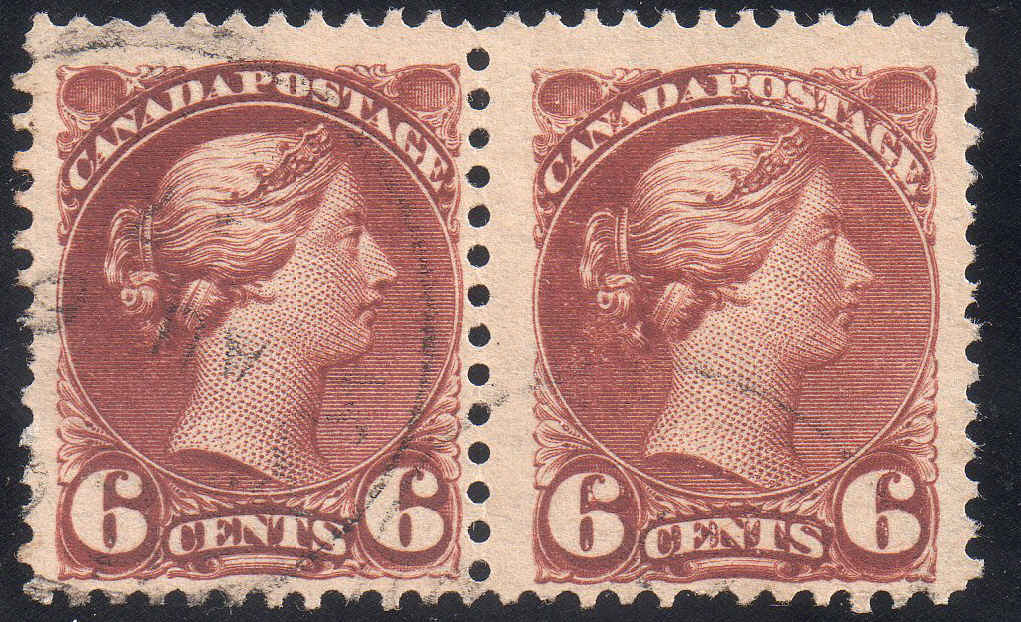 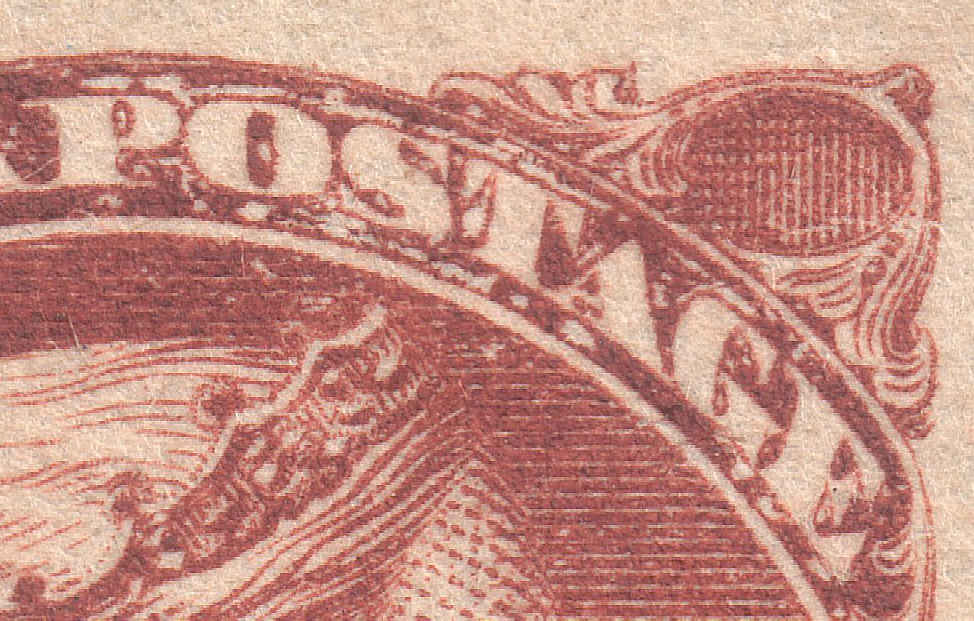 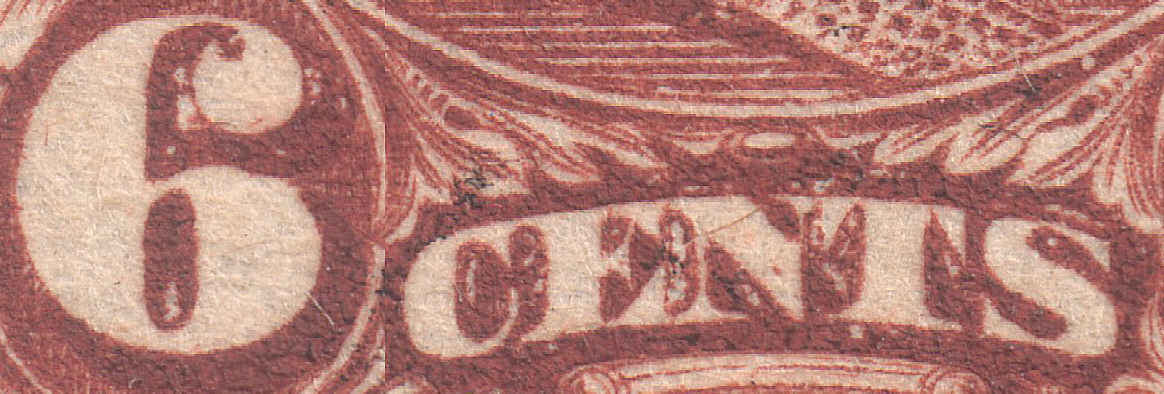 |
|
Send note to Staff
|
|
|
Pillar Of The Community
United States
1342 Posts |
|
|
Here is the image with half of the one of the other stamps superimposed over it. There is very little difference in height. 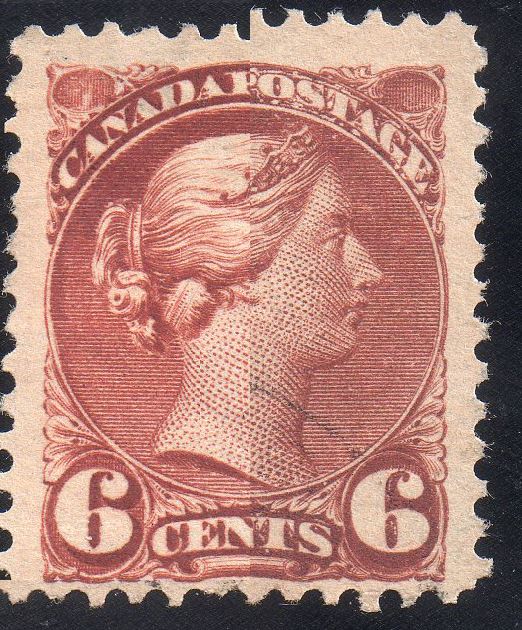 |
|
Send note to Staff
|
| Edited by jaxom100 - 11/08/2016 03:19 am |
|
|
Pillar Of The Community
United States
3532 Posts |
|
|
First off - I don't know a lot specifically about Canadian stamp varieties. That said, I have a lot of experience with early US plating and production varieties. I agree that this has all of the earmarks of a dry-printing.
What you have is a really neat item, in particular, since its in a pair, where the left stamp is sufficiently inked, and the right is not. That is a good illustration of non-uniform inking, which happens a lot, and often requires multiples of a stamp to properly illustrate it. I defer to others on the value of this, but for pure intellectual interest, what you have is quite neat and collectible - by someone. |
|
Send note to Staff
|
|
|
Rest in Peace
Canada
5701 Posts |
|
|
Replies: 22 / Views: 3,730 |
|




 Posted 11/01/2016 11:08 pm


