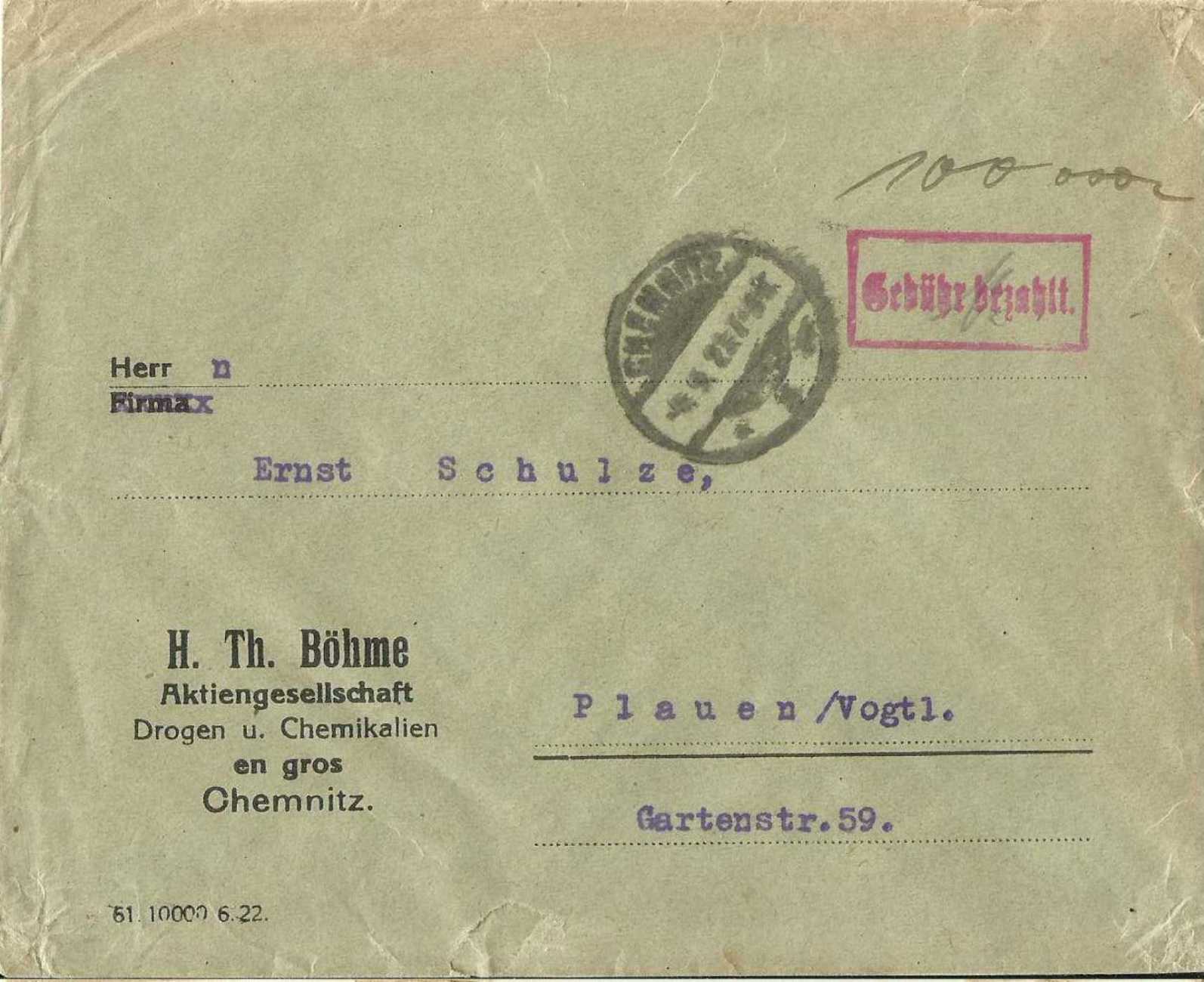
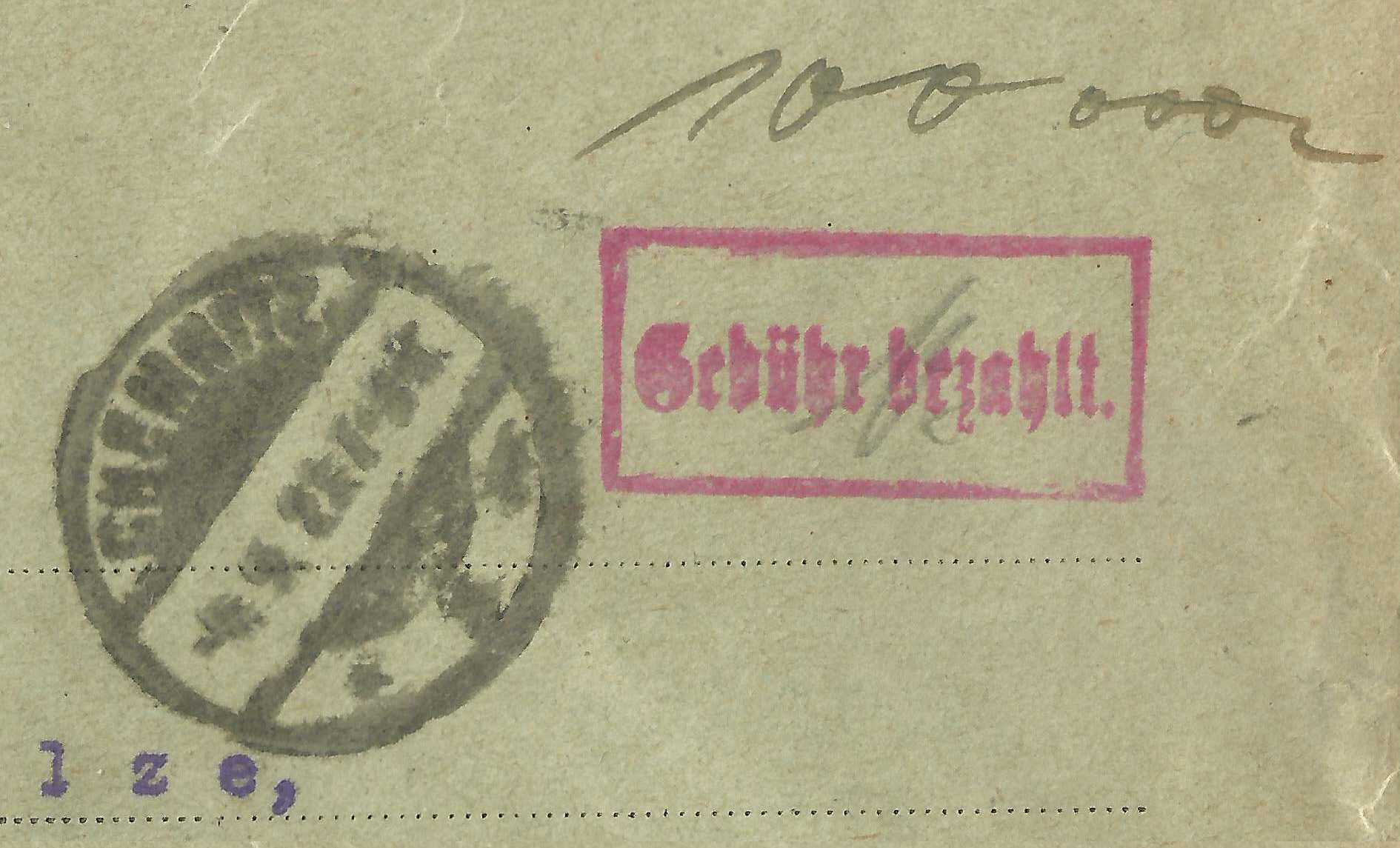
The "Gebühr bezahlt" (fee paid) stamp indicates that postage was paid, and the handwritten notation is the postage amount, 100,000 Marks. This was common during the hyperinflation period (1923), since the postage rate was changing very rapidly.
Unfortunatly the Chemnitz cancel is rather blurred looks like 4.9.1923. from 1.9.1923 until 20.09.1923 100.000 was the postage for a letter(20/100 gr). 100.000 was also postal rate for printed matters between 20.09.1923 and 01.10.1923 but I believe this to be a letter not a printed matter.(source Michel Postal rates catalogue)Also I would guess that the scrible in the words Gebuhr Bezahlt are from the postmaster to indicate that the amount was payed. Johan.
Thanks for replies! I think that was a printed matter rather than letter. However, it still could be a business letter.
I was curious about small signature in "Gebühr bezahlt"... probably it was added by Postmaster just as Johan Buvelot said. A lot of local stamps (listed in Michel Spez.) was made just as the same way ("Gebühr bezahlt" + handwritten rate + Postmaster signature), but on separete papers added on covers.
For a town that large, the initials would be far more likely to be a clerk than the postmaster. Otherwise, I agree, a rate mark and initials in the box below.
I agree with John, this is much more likely to be a simple clerk initialing the payment certification unless it would have been in a tiny post office where the postmaster was also the clerk. Chemintz was not a tiny one-person post office of course - it is the third largest city in Saxony.
Disclaimer: While a tremendous amount of effort goes into ensuring the accuracy of the information contained in this site, Stamp Community assumes no liability for errors. Copyright 2005 - 2026 Stamp Community Family - All rights reserved worldwide. Use of any images or content on this website without prior written permission of Stamp Community or the original lender is strictly prohibited. Privacy Policy / Terms of UseAdvertise Here





 Posted 11/25/2016 09:07 am