| Author |
 Replies: 23 / Views: 17,431 Replies: 23 / Views: 17,431 |
|
Valued Member
Egypt
372 Posts |
|
|
|
|
Pillar Of The Community
Germany
1714 Posts |
|
|
We really need Idhaber (Larry) to look at this one but I'll give it a go and try to narrow it down a little as I don't have the plating guide books.
The check letters look typical of plates 27 up to 68. Possibly could be narrowed down again to plates 56 up to 68. There looks like a break in the right frame one third up from bottom that could be important
I'll go for a C10 plate 58 but subject to confirmation.
|
Send note to Staff 
|
|
|
Valued Member
Egypt
372 Posts |
|
|
Bedrock Of The Community
Australia
38679 Posts |
|
|
Would you gentlemen, assist me with a "ID 101" with the penny red please?
How do I go about it?
Guessing:
1. ID the die (I see this stamp as Die 1) ?
2. choose the Alphabet used (I see this as Alphabet 3)
3 wmk
4.Perforation.
5.shade
That should narrow it down to a series of plate numbers ?
Is that the correct routine?
Any advice welcomed.
|
|
Send note to Staff
|
|
|
Pillar Of The Community
Germany
1714 Posts |
|
|
"How do I go about it?"
You need reference sources. Having the plating guide books (notice the plural) helps. It can be done with a minimum of having the Stanley Gibbons Specialised but for certainty (a relative term occasionally) the plating guide books are best.
The stamp in question would be Die 2
|
|
Send note to Staff
|
|
|
Bedrock Of The Community
Australia
38679 Posts |
|
|
Can any members suggest why this stamp is easily seen as Die 2?
To me, the scan image is poor to identify.
The pearls in the diadem seem round to me, not diamond,
and a number of other ID features are hidden by the Pmk.
What am I missing?
|
|
Send note to Staff
|
|
|
Pillar Of The Community
Germany
1714 Posts |
|
|
Research is the key... correctly identifying the alphabet as 3 means Die 2 |
|
Send note to Staff
|
|
|
Bedrock Of The Community
Australia
38679 Posts |
|
|
Yay! success from endeavor. Tips for Platers: http://www.pennyreds.co.uk/Tips-for-platersYour C10 Plate 58 with "frame break" is identified with image. The hair lines was a great tip. Guessing: Your 1 o'clock ray North East (short) is also an identifier ? |
|
Send note to Staff
|
| Edited by rod222 - 12/14/2016 4:44 pm |
|
|
Valued Member
United States
428 Posts |
|
|
Hi, I think I like plate 43 better. Not positive, but better. This is plate 43: 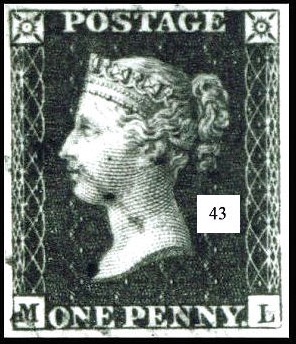 and, I think a better fit than plate 58.  I have not checked my other references and could be in error. WRT to Die I or Die II. The diagrams in the SG catalog is designed to drive people crazy and I don't think they are easy for people and tends to confuse more than to help. A quick hint, look for 2 clear, heavy lines in the hair of the Queen, middle of her hair. Pls see this example: 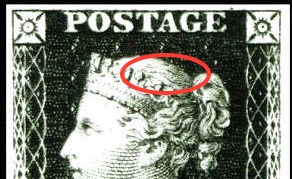 these are the "Williams" lines, named after Mike Williams, who pointed them out. IMHO, if you look for these lines, your ability to distinguish between Die I and II should be enhanced. Lastly, if plate 43, it is then a C10. Hope this helps, Larry |
|
Send note to Staff
|
|
|
Bedrock Of The Community
Australia
38679 Posts |
|
|
Thanks Larry, It's like learning a new language, I have the plating book for the imperforates replete with little transparent guage and pages of code. 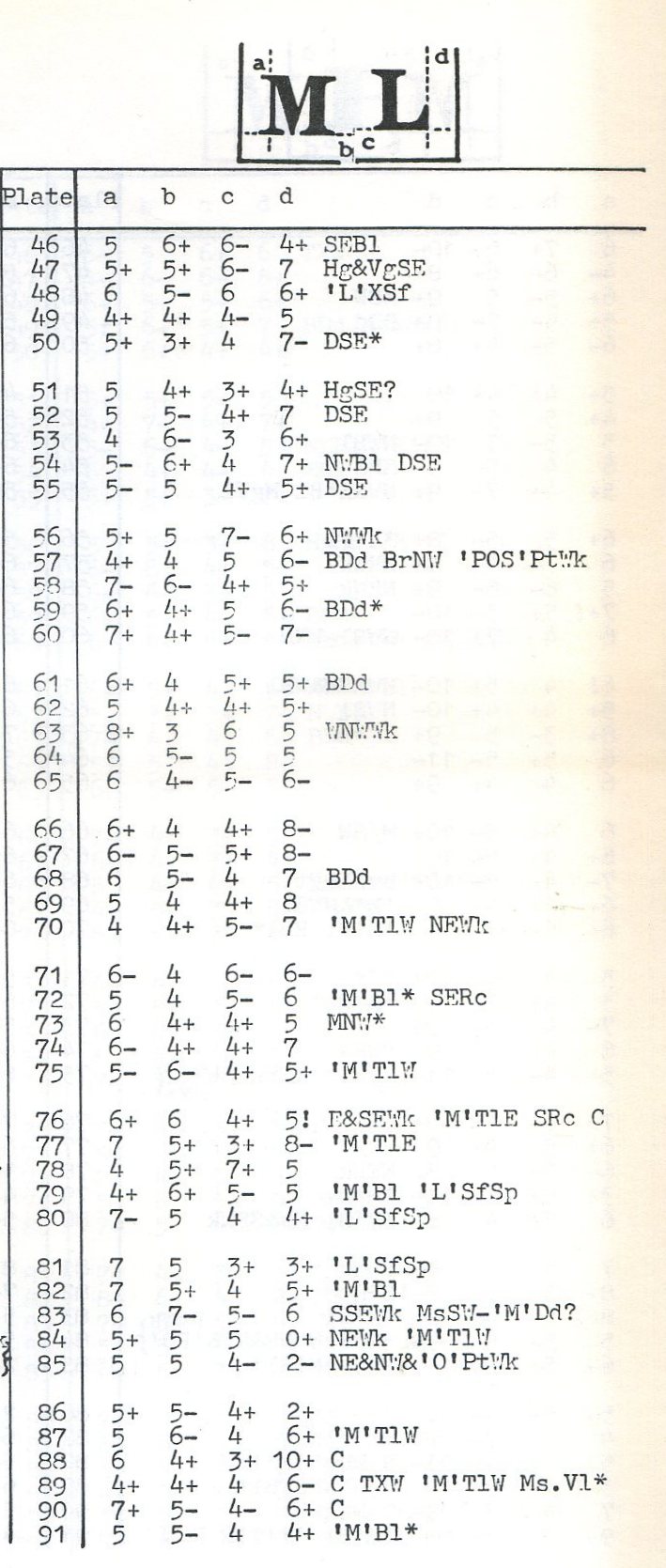 |
|
Send note to Staff
|
|
|
Pillar Of The Community
United Kingdom
8628 Posts |
|
|
Valued Member
United States
428 Posts |
|
|
Rod, You've excerpted a portion of a page from the Fisher Brown plating books, wherein you use a transparent gauge to measure the vertical and horizontal "displacement " of each check letter from the side and bottom frame lines. I have these as well as the gauge and I'd suggest trying to use the gauge is a recipe for madness. If you scan the stamp at 800 dpi you can use an electric version of the gauge on your pc. More on that here http://www.gbps.org.uk/plating//history.phpPersonally, I prefer to use scans of the stamps themselves (at 800 dpi so I can also resort to the Fisher Brown tools) and then "eyeball" the letter placements, with use of the plating books for further details, such as open frame lines, frame line extensions and so on. The eye, once, accustomed to this purpose, is a marvelously accurate device. Others disagree and prefer to use the Fisher Brown approach and these measurements are still be updated and refined YMMV, Larry |
|
Send note to Staff
|
|
|
Bedrock Of The Community
Australia
38679 Posts |
|
|
Geoff / Larry. Quote:
I'd suggest trying to use the gauge is a recipe for madness.  Thanks for the commentary and link, helpful. I'll take your advice. |
|
Send note to Staff
|
|
|
Pillar Of The Community
Germany
1714 Posts |
|
|
Just ordered three of the five volumes of this plating guide. Still some available on ebay.uk at three pounds each. Only 3 volumes available for the following check letters... EA to HL IA to LL QA to TL 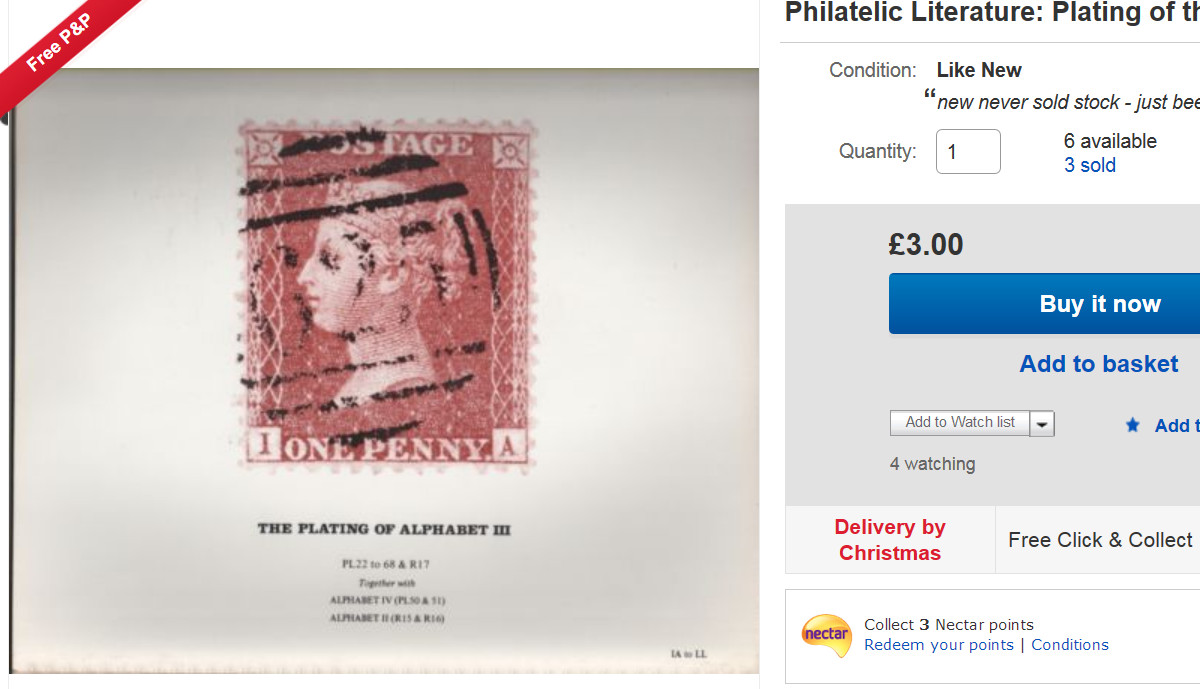 Missing are the AA to DL and the MA to PL volumes. For some reason those two are very scarce but I have seen complete sets available for huge sums of money (especially in the USA) but are occasionally offered in the UK/Europe for around 30-50 pounds. |
|
Send note to Staff
|
|
|
Pillar Of The Community
United Kingdom
3218 Posts |
|
|
Pillar Of The Community
Germany
1714 Posts |
|
|
Lesson to be learned... grab when available! Found volume AA to DL on a book website and put into basket. Had a look to see if any other goodies were there. During that look someone else bought the one I wanted. Needless to say it was the one and only on there. Bah! 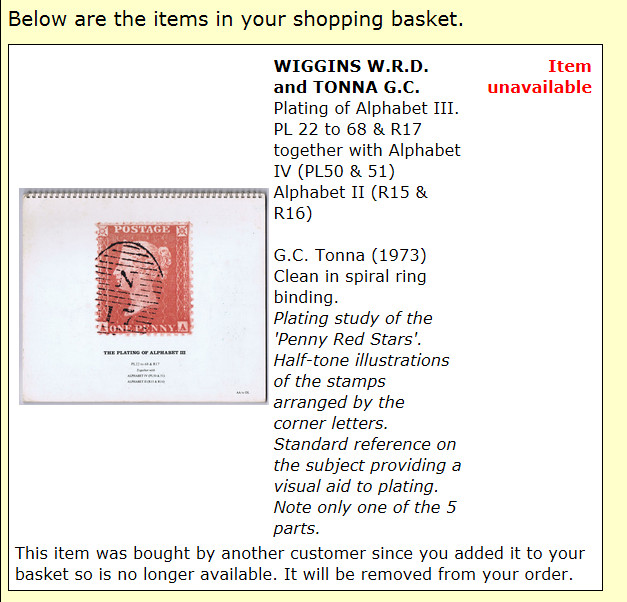 |
|
Send note to Staff
|
|
|
Replies: 23 / Views: 17,431 |
|




 Posted 12/13/2016 7:45 pm


