| Author |
 Replies: 13 / Views: 1,792 Replies: 13 / Views: 1,792 |
|
|
Pillar Of The Community
United States
6473 Posts |
|
|
I normally don't do much with 20th century U.S. revenues, but I had an opportunity to purchase an accumulation of unused wine stamps originating from a winery in Ohio. No high-cat items, just lots of quantity, which provides an opprtunity to view a cross section of color shades and papers. Scott states the following: "Nos. RE32·RE55 exist in many shades." Well, it's not just shades, but there is also a difference in papers as well. Most were printed on a low quality paper roughly the consistency of a paper grocery bag (just not as thick), ranging from cream to tan in color. Awful stuff. Occasionally though, you'll see some from that era printed on a brighter and smoother white paper, although in my (admittedly limited) experience, while you start to see brighter papers approaching off-white in the printings of the 1930s, you don't start to see truly white papers become the norm until the printings of the 1940s. Below are some high-resolution images of some of the color differences I found on a few of the denominations (click to enlarge). You can also see some variance in the rouletting; while they may gauge the same, there is definitely some difference in the thickness of the roulettes. On the last image, I've overlaid one of the 1933 rouletted 7 versions for comparison with the rouletted 3.5 underneath. 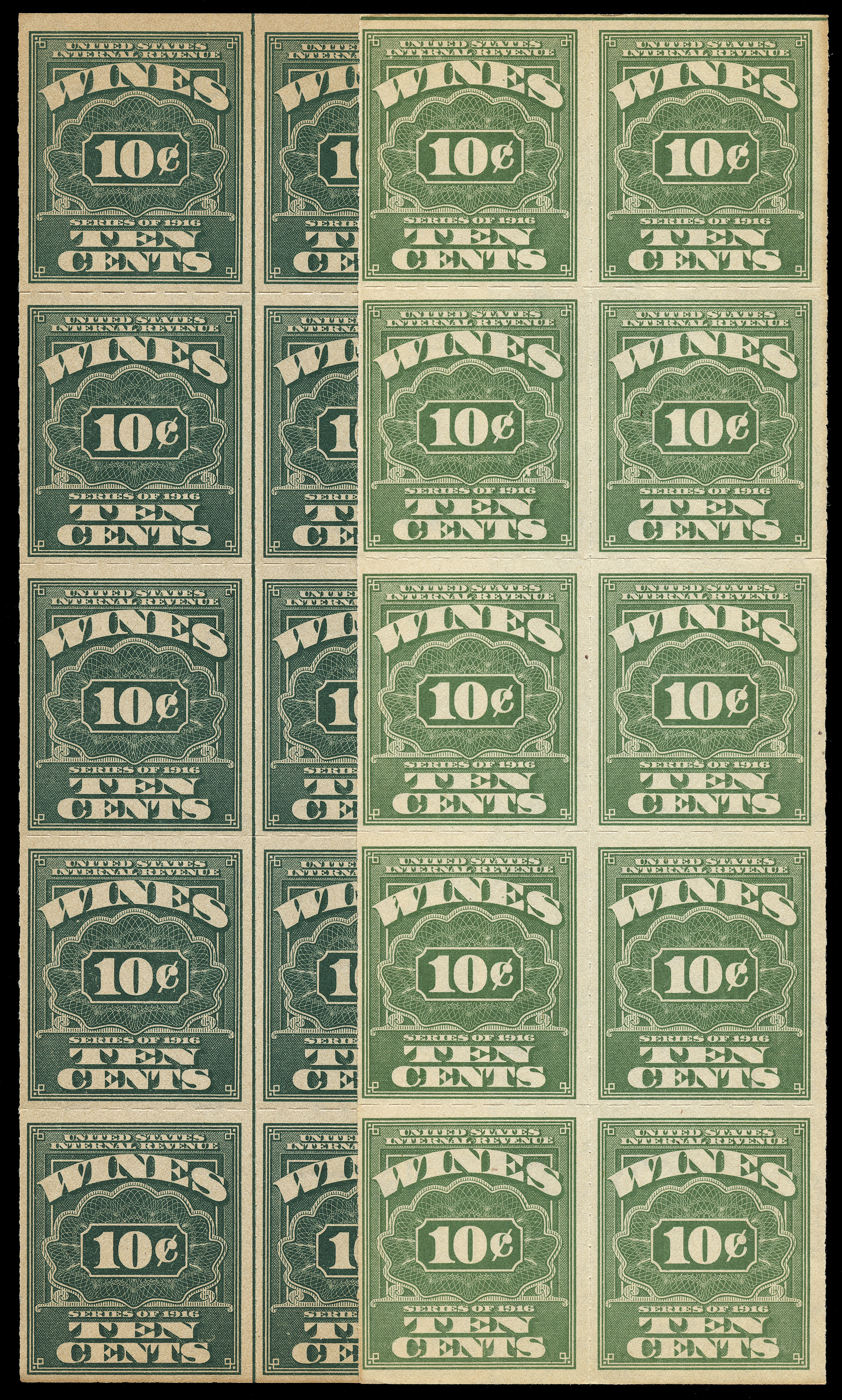 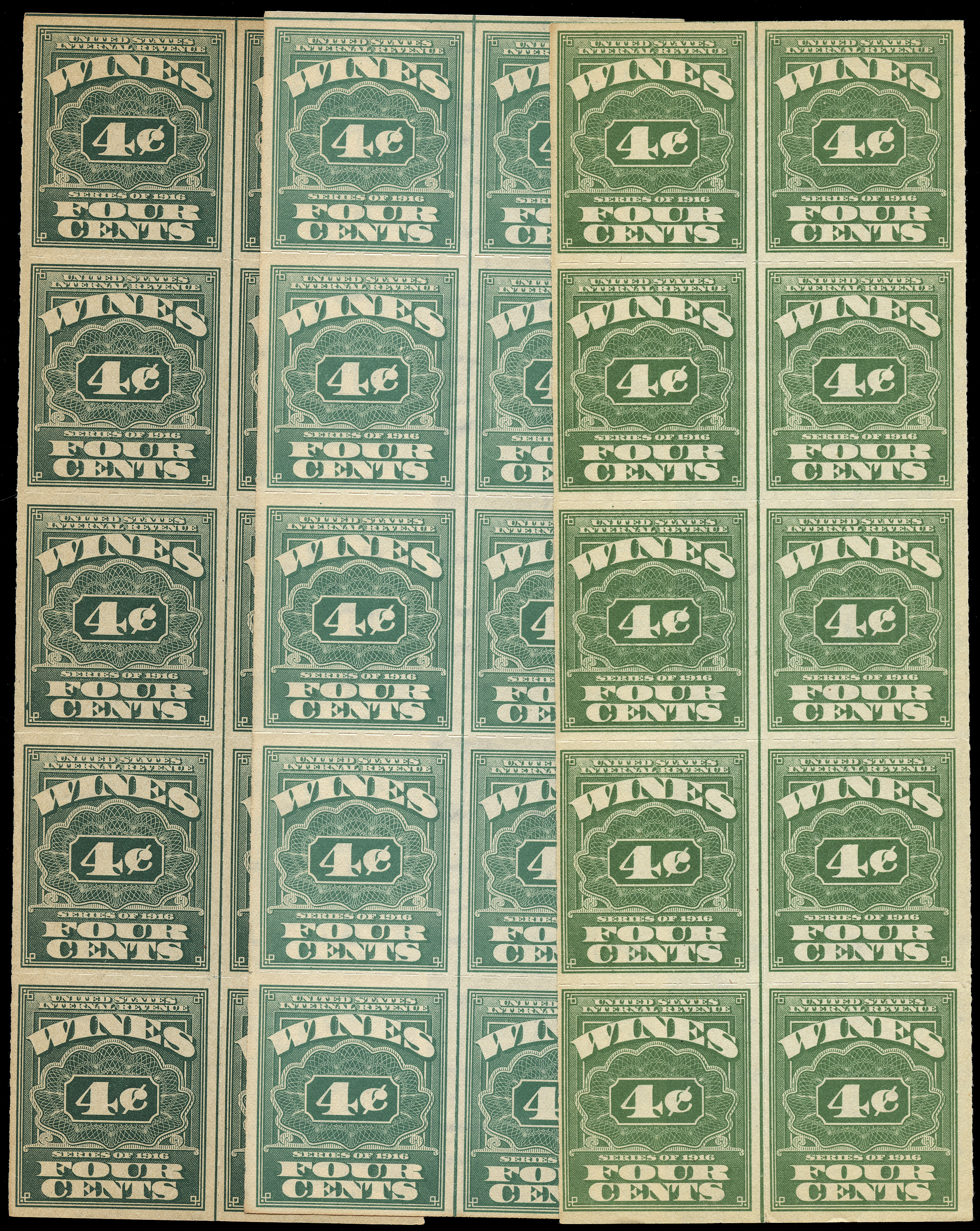 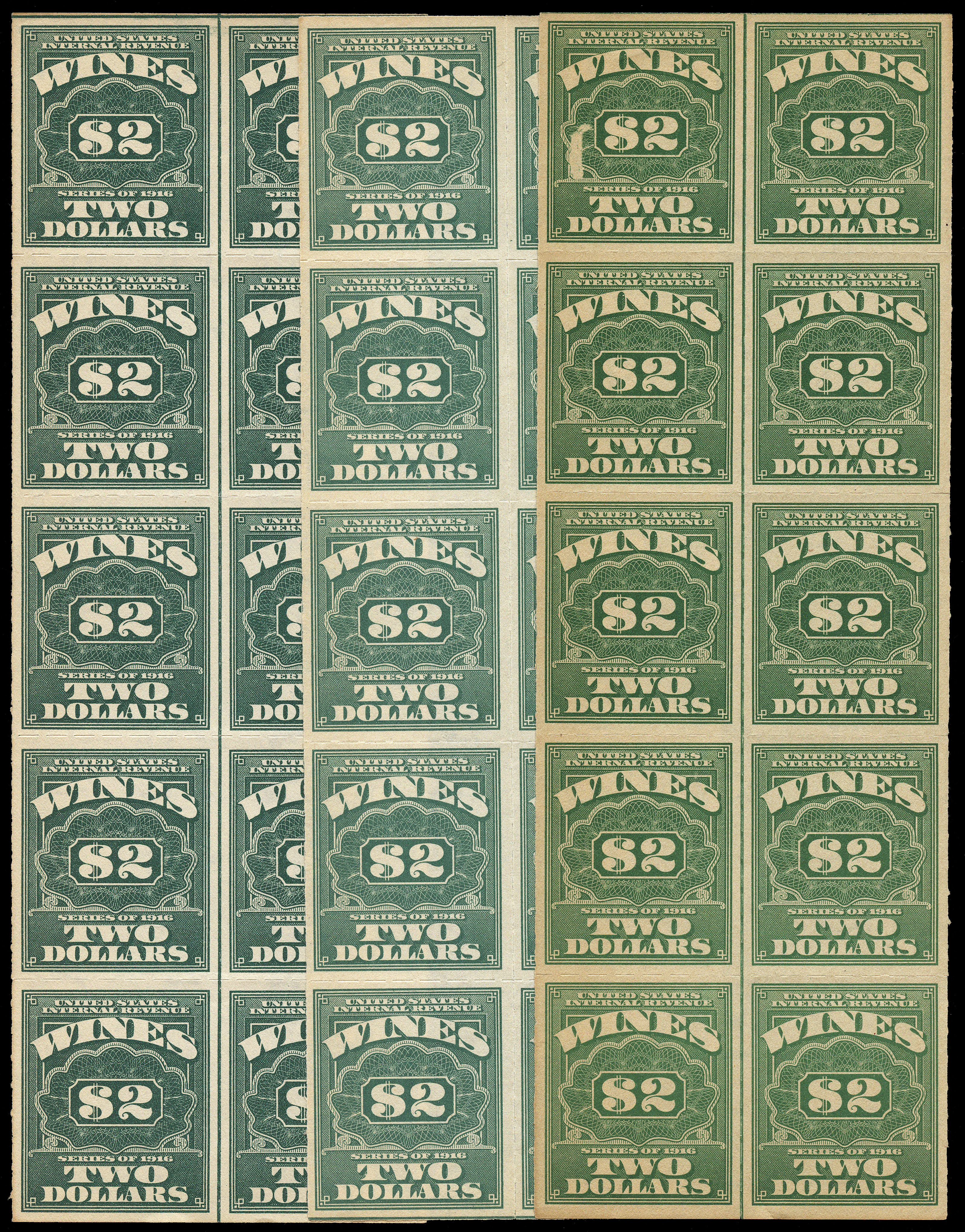 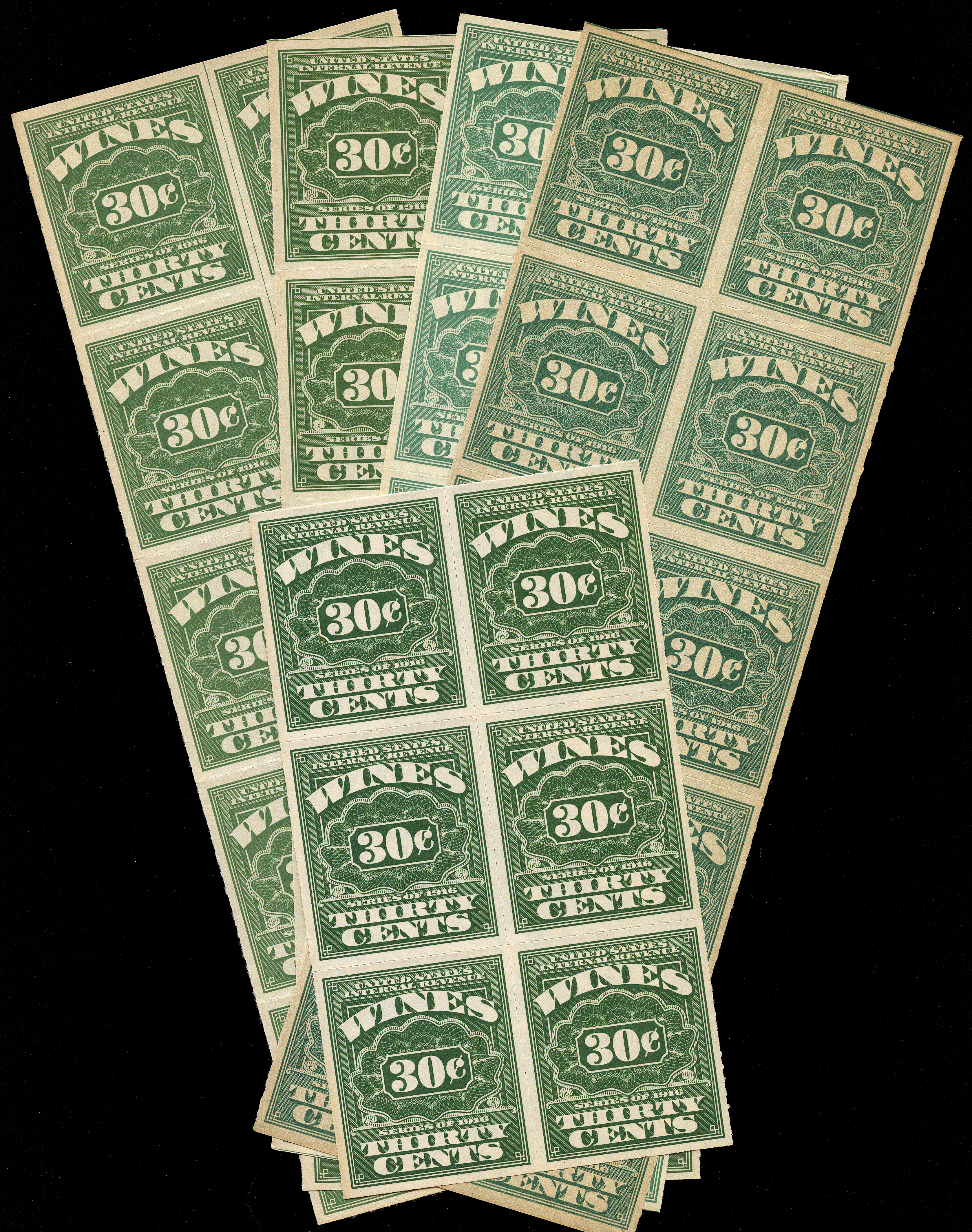 |
|
Send note to Staff
|
|
| Edited by revenuecollector - 12/20/2016 3:22 pm |
|
|
|
|
Bedrock Of The Community
United States
10866 Posts |
|
|
I think a few of those stamps are toned, rather then actually on different paper. |
Send note to Staff 
|
|
|
Pillar Of The Community
United States
6473 Posts |
|
|
Bedrock Of The Community
United States
10866 Posts |
|
|
Also the leftmost 10, leftmost 4, and rightmost 30. This is far from unknown on these issues, alas. |
|
Send note to Staff
|
|
|
Pillar Of The Community
United States
868 Posts |
|
|
There is more to look for amongst the rouletted 3 ½ wine stamps. Compare the vertical heights of the stamps, especially on those used in the late 1920's and whose color is more "yellowish." These are the so-called in-between issue. New plates were made and the vertical height is about a millimeter shorter. In my long retired exhibit of the wine stamps I documented plate 3504 on the one cent stamp (plate numbers were normally trimmed off, but partial plate numbers do exist for some of the Series of 1916 wines when the cutting was not well centered. I also showed plate number 8604 on the 20¢ stamp. Eight denominations have been documented on this so-called in-between issue: 1¢, 15¢, 20¢, 30¢, 50¢, 80¢, $1.20, and $2.00. Several of us are trying to document the earlier date of use on these stamps and I would be eager to hear from you if you have dated cancels on these in-between issues. |
|
Send note to Staff
|
Ron Lesher |
|
|
Pillar Of The Community
United States
6473 Posts |
|
|
Hi Ron,
Unfortunately for your purposes, the entire accumulation is unused inventory. No used stamps at all. |
|
Send note to Staff
|
|
|
|
Pillar Of The Community
United States
791 Posts |
|
|
Ron,
Durland lists 3-digit, 4-digit and 5-digit plate numbers for these issues.
Except for the 15¢ and 80¢ which does not list any 4 or 5 digit numbers, I would almost certainly bet that the 3-digit numbers were the first plates and the 4- and 5-digit numbers were the "in-between" plates. |
|
Send note to Staff
|
|
|
Pillar Of The Community
United States
6473 Posts |
|
|
I don't have a current Durland catalog, but my 2012 edition states the following with respect to the 1916 issue: The only plate numbers known on this issue are top plate singles of #RE32 with plate 3504, #RE37 with PL822, #RE52 showing PL777, and a bottom block with plate 860r on #RE41. The following plate numbers of 100-subject plates made for this issue come from Bureau records; later plates were also made but we do not have a record of them.So there are only 4 actual confirmed plate numbers for the entire series; everything else is theoretical at this point. I post the above and draw your attention to the block of RE36 below. That sure looks like a single-digit "2" in the top margin. A single-digit plate number certainly doesn't fit the pattern indicated in Durland... or is that some sort of marking other than a plate number? 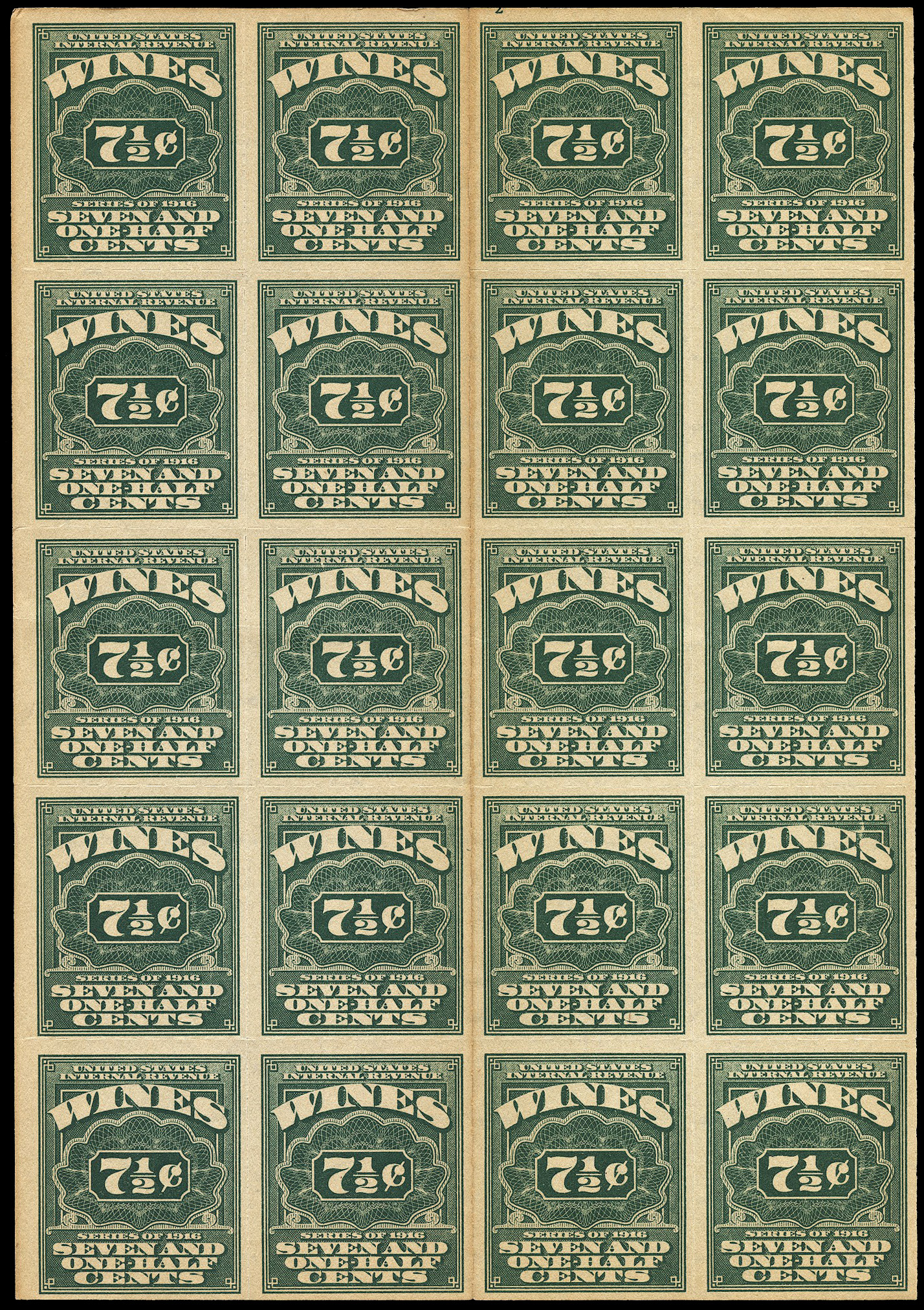 |
|
Send note to Staff
|
|
| Edited by revenuecollector - 12/21/2016 3:22 pm |
|
|
Pillar Of The Community
United States
791 Posts |
|
|
This is purely speculation, but plate number 821 was assigned to RE36. It's possible that this is the 2 from the plate number that got dropped down below the baseline which sometimes happens on the 1914 issues. See the image of RE13 in Durland and you can see the numbers do not align along a baseline. |
|
Send note to Staff
|
|
|
Pillar Of The Community
United States
868 Posts |
|
|
My speculation on the dropped 2 is that this is from the denominator of ½ and that this was part of the denomination imprint for that value. This, of course would be answerable from the certified plate proof if they are in the National Numismatic collection. I do not recall if the surface printed stamps are in that collection. Another project for me to explore. |
|
Send note to Staff
|
Ron Lesher |
|
|
Pillar Of The Community
United States
868 Posts |
|
|
The plate numbers listed in Durland are from BEP records. Stamps were produced from those plates. "Theoretical" may be the wrong description for this situation. Let's say we have not yet confirmed an example in collector hands.
As I stated earlier, I have examples of partial plate numbers of 3504 on the 1¢ and 8604 on the 20¢, both of which are the shorter height in-between issue. I do recall seeing the PL777, but do not own an example. |
|
Send note to Staff
|
Ron Lesher |
|
|
Pillar Of The Community
United States
6473 Posts |
|
|
Yeah, "unconfirmed" is probably a better term.
As I was doing my initial runthrough of the lot, I didn't see any plate number captures, but there were a few bottom/side inscription captures, but in all candor I wasn't looking that closely.
On a related note, on #RE15 and #RE30 multiples in the lot, there are several margin/corner blocks with numbers in the margin, but they appear to be handstamped in colors other than the stamp color, so my assumption is that they are not plate numbers, but rather inventory or counting numbers. Richard has a few on his site and mentions the numbers, asking a premium for them, but I'm not sure just how scarce they actually are. |
|
Send note to Staff
|
|
|
|
Pillar Of The Community
United States
868 Posts |
|
|
I agree that those are counting or inventory numbers. They come in several different heights over a long period of time. We do not know if they were applied at BEP, at the IRS office in Washington, or at a regional collector's office. I favor those three choices over a dreaded end user (a winery!). Since those numbers are also occasionally seen on the proprietary and documentary stamps, I think that is sufficient evidence to point to a governmental source. |
|
Send note to Staff
|
Ron Lesher |
| Edited by revenuermd - 12/21/2016 4:41 pm |
|
|
Bedrock Of The Community
United States
10866 Posts |
|
|
I have an RE52 with a part imprint $2.00 WINE STAMP(top half), but no plate number. |
|
Send note to Staff
|
|
| |
Replies: 13 / Views: 1,792 |
|




 Posted 12/20/2016 3:21 pm





