| Author |
 Replies: 258 / Views: 36,712 Replies: 258 / Views: 36,712 |
|
|
|
Valued Member
Romania
8 Posts |
|
|
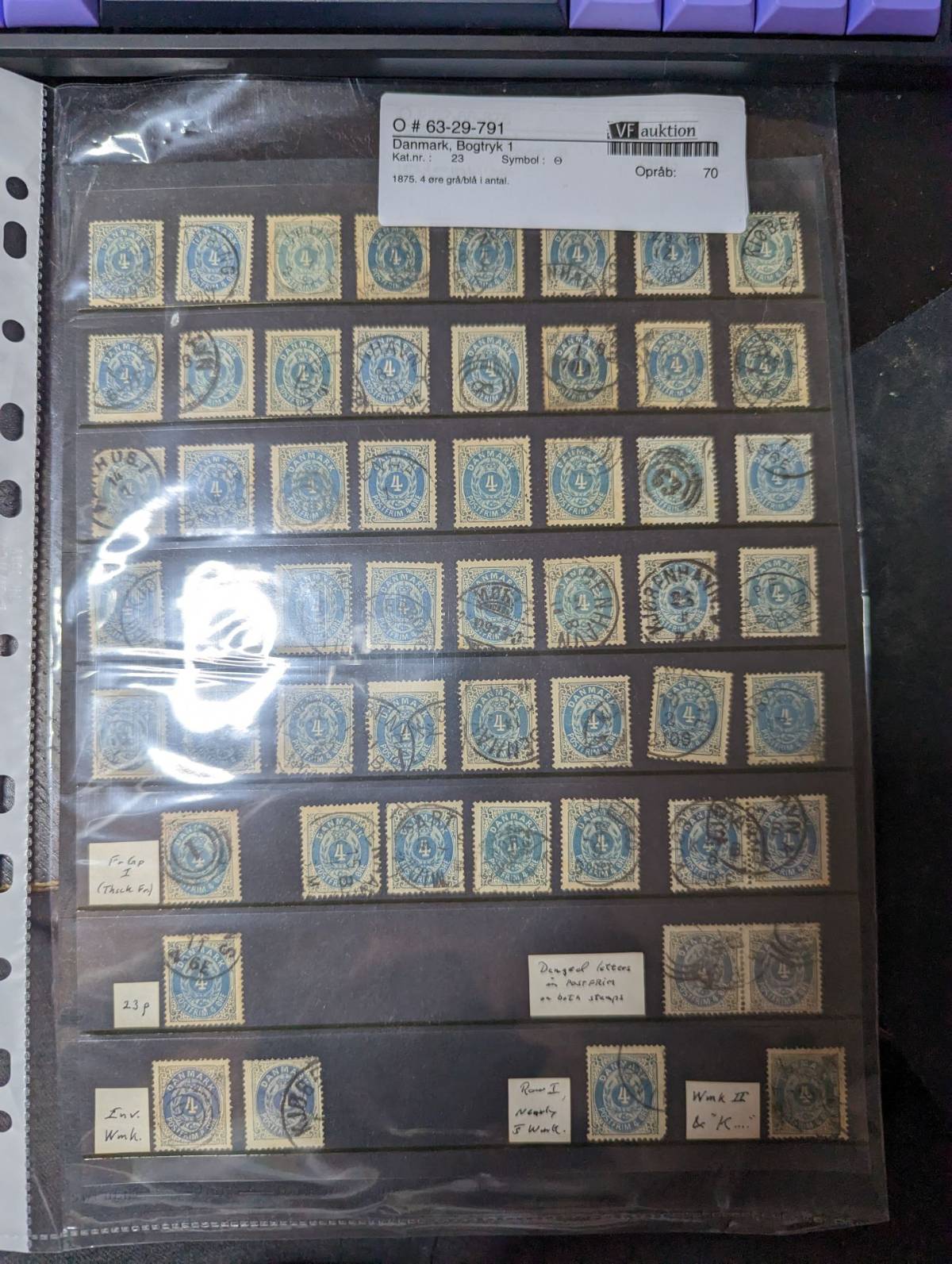
And finally the 4 Ore inverted frame plate. Top rows, perforation A; Bottom rows, perforation B. I'll wait for your opinions before moving on to other values. Thank you!  [/URL] |
Send note to Staff 
|
|
|
Pillar Of The Community
559 Posts |
|
|
Yes, i'm still around - lurking in the background.
The brown quadrants 4RBS are both Thiele Ia, in the danish catalogue, not sure what they are in other ones.
redbrown, thiele 1st printing.
the other ones are a mix of wavy lines with or without roulette perforations. |
|
Send note to Staff
|
|
|
Pillar Of The Community
559 Posts |
|
|
@FinlandPassion
3 øres are 2 perf 13 and 1 perf 14, all are very common and both perforations exist with inverted frame.
4 øres they come in a myriad of shades, 75 printings in perforation 14, each printing can vary in shades a little as well, a total of 130 printings were made of 4 øre over a period of 30 years, so they exist in many millions. 2nd stamp in 4th row is a typical stamp from 75th printing, these exist in both perforation 14 (80%) and the rest in perforation 12 3/4. the stamp above it is a typical stamp from print 71 (very pretty shade I think)
the 3 cut outs are either from stationaries or wrappers.
and the odd shade you mention could be slightly off color, but they do come in lightblue/greenish oval color. The stamp doesn't have any apparent plate flaws, but perforation is 5th row in the sheet so I could probably plate if with some effort. the cancel is numeral so it's prior to april 1884 which limits the prints.
while you have no extremely rare stamps they're always a pleasure to behold, continue collecting these and you'll never run out of things to examine.. bicolored stamps are a life's work.
|
|
Send note to Staff
|
|
|
Pillar Of The Community
559 Posts |
|
|
here's some random prints, all print and positioned. showing the difference of colors. 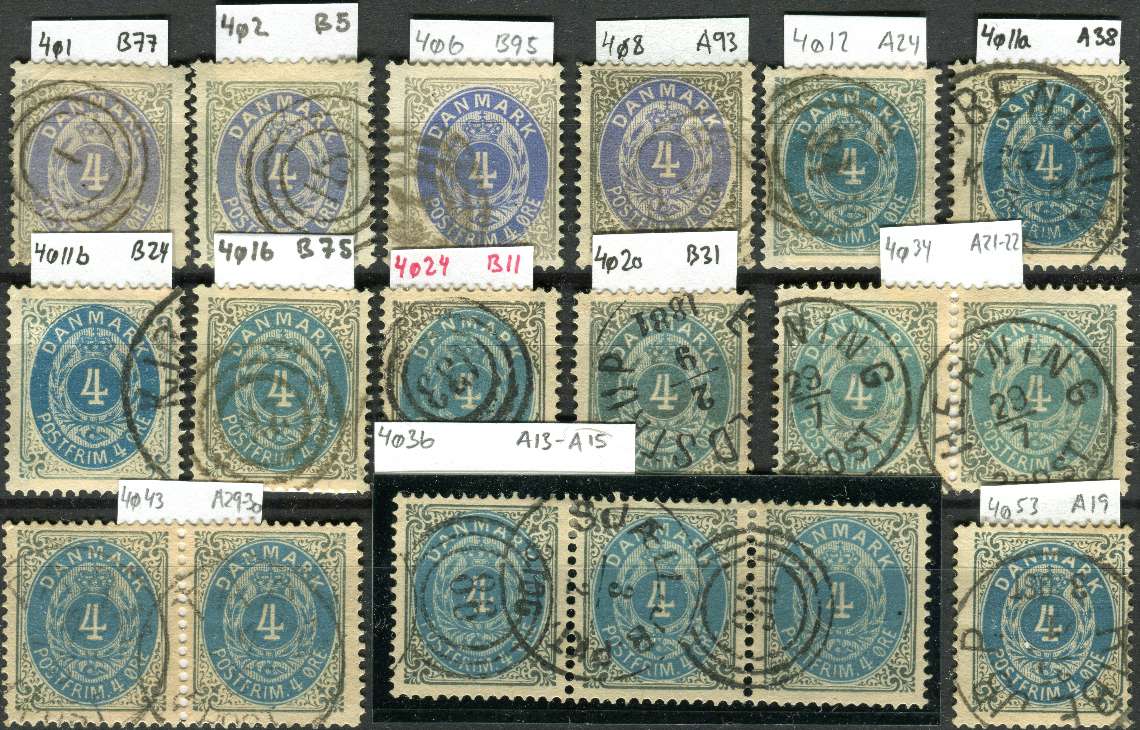 |
|
Send note to Staff
|
|
|
Pillar Of The Community
559 Posts |
|
|
and you should always try to get a hold of these. pairs with normal and inverted frames, some are fairly normal while others are extremely rare. 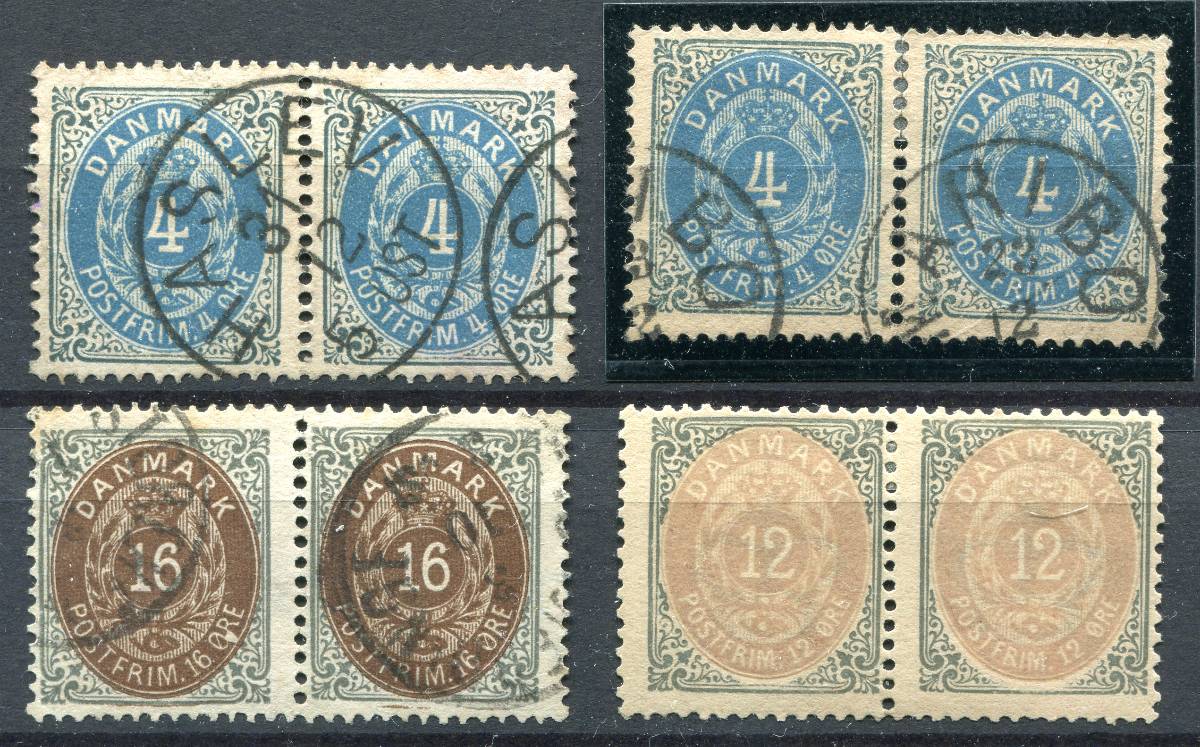 |
|
Send note to Staff
|
|
|
Valued Member
Romania
8 Posts |
|
|
Sorsh, thank you very much for your thoughts as well as for the other examples.
I collect Finland (and very targeted Romania), so for the rest, which I am doing now, I only have Michel. It only gives two colors, so seeing the true variety of their spectrum of blues / greens is fascinating.
I'm always open to trades - that is actually the point of my exercise: going through the piles, country by country, learning about the specific specialty stamps and stories they have, like the bicolored, and if anyone sees anything of interest, exchanging for Finland (mostly), perhaps later on selling the rest in large batch-collections.
In any case, I will return with the other ore values I have, if nothing else because as you say they are intricate and beautiful.
PS: my wife (who used to work producing stamps (she was my country's stamp research editor for a while) had an interesting social network idea: "plate neighbors". Everyone who owns bicoloreds joins a website, scans and plates their stamps, and connects with the owners of neighborings plate-places. Sounded fun to share. |
|
Send note to Staff
|
|
|
Pillar Of The Community
559 Posts |
|
|
we already have a huge network on the bicolored front.
www.tofarvet.dk
mainly used to get assistance and show recent discoveries (plating news, changes)
once a year we meet up in denmark and people come from many different countries for a weekend with nothing but bicolored and lots of beer.
besides this, there are 4 areas in denmark where people meet up once a month for some hours of nothing but bicolored and... beeer I guess.
and between these meets people work in small groups on specific areas trying to complete plates, shed light on mysteries and such.... while drinking beer I guess.
Like this saturday 5 of us meet up with one of the greatest european experts Lasse Nielsen at his house to have a day with bicolored and talk about recent work, and a few beers I guess.
there's also a facebook group. (which you have to message me about)
sadly I sold off most of my finland recently. |
|
Send note to Staff
|
|
|
Valued Member
Romania
8 Posts |
|
|
@Sorsh, Thank you very much for this interesting info. I've noted to contact you by pm. In the meantime, here are the last plates of what I have in terms of bicoloreds: 1. 8 Ore plate, divided as follows: Top row through first 4 of third row: normal frame, perforation A Third row last 4: inverted frame perforation B  [/URL] 2. 8 Ore plate, divided as follows: Top row and second row: inverted frame, perforation A Third row: normal frame perforation B Third row last: two 4 Ore overprints  [/URL] 3. Other values plate, normal frame, divided as follows: Top two rows: perforation A Bottom row: perforation B  [/URL] 4. Other values plate, inverted frame, divided as follows: Top two rows: perforation A Bottom row: perforation B  [/URL] |
|
Send note to Staff
|
|
|
Pillar Of The Community
559 Posts |
|
|
@Finlandpassion
There's a small pearlflaw in 8 øre 2nd row 7th stamp. The stamp is in "wreck" condition, but for comparison it'll do.
1st row 4th stamp is print 43, aniline shade, with a nice cancel, such a stamp (if without tears/thins) would fetch a nice price if sold as a single, would expect a price of $10-20.
in general, you're spot on when separating in perforation and normal/inv frames, but there are a some errors on these pictures, so you might want to go through them again :)
picture 3, 16 øre placed under normal frame, is actually 3rd print, thick inverted frame (in this print only 1 stamp is normal frame and 99 inverted) Reason I pull this exact stamp out is because of the thick frame, these are much harder to determine norm/inv frame on, and a lot of danish people have a hard time as well.
this setting (thick frames 99 inv/1 norm) includes following prints. 3 øre print 3, 16 øre print 3 20 øre print 1 and 50 øre print 2.
thank you for taking your time to share pictures, and I hope you'll continue looking at these. :) |
|
Send note to Staff
|
|
|
Valued Member
Romania
8 Posts |
|
|
Thank you so much! This is quite fascinating.
To be very open: last week was the first time I laid eyes on Danish bicoloreds. I work out of a several cubic meters accumulation of stamps, which I vacuumed up from estates sales in the past 18 years without ever having the time to go through them, but keeping an eye to have a proportion of 2/3 pre-1940s.
The pandemic (and some time off I took to mourn someone close) allowed me to finally dig into it. I just finished my complete (at a basic catalog-number level, with study collections for the definitives) Finland, with some interesting discoveries. Then I separated everything by country and now am working through each. Denmark is the first.
So, after we started our conversations I did have a second look (actually using the scans I made for you because I could see much better my mistakes), and re-sorted. I'm definitely keeping these - they are lovely to look at and also I respect so many collectors' interest in them. |
|
Send note to Staff
|
|
|
Valued Member
United States
11 Posts |
|
|
Valued Member
Denmark
89 Posts |
|
|
Service stamps It is a test stamp page I made for fun, If you look at the top row all the service stamps have flaws, the flawless service stamps is in another album.  |
|
Send note to Staff
|
|
|
Pillar Of The Community
559 Posts |
|
|
@Viking123
You should put that 16sk on a perforation gauge again, it's actually lineperforated! |
|
Send note to Staff
|
|
|
Valued Member
Denmark
89 Posts |
|
|
@Sorsh
Well as I wrote this a test page, I just use stamps I find and place them at the page to see what it would look like, but I think I do what you sugest afterall it's friday, see what I can do :-) It is not unusual to after perforated stamps.
Well Think it it easier to cut all the perf of .)
|
|
Send note to Staff
|
|
|
Pillar Of The Community
559 Posts |
|
|
@Viking123
well you've written on the page that it's 14*13½, and it's 12½ line perforated and I see no signs of reperforation on this stamp. I can't however tell if top row has been cut off, or if there's actually paper on the back... the height of the stamp alone suggests lineperforation - not that comb perforated stamps can't be "tall" as well - it's just not as common.
if you decide to cut off all the perfs I won't stop you, as long as you don't later try and sell it as imperforated :) |
|
Send note to Staff
|
|
|
Replies: 258 / Views: 36,712 |
|



 Posted 05/25/2021 08:53 am