| Author |
 Replies: 286 / Views: 51,670 Replies: 286 / Views: 51,670 |
|
|
|
Pillar Of The Community
United States
2555 Posts |
|
|
Very sad. In the thread about philatelic butchery I will tell of another. |
Send note to Staff 
|
|
|
Valued Member
United States
299 Posts |
|
|
Got my Type 4 for $30 today. Visually very appealing to me. Not minding the re-cuts... Am I missing anything hidden in this stamp ? 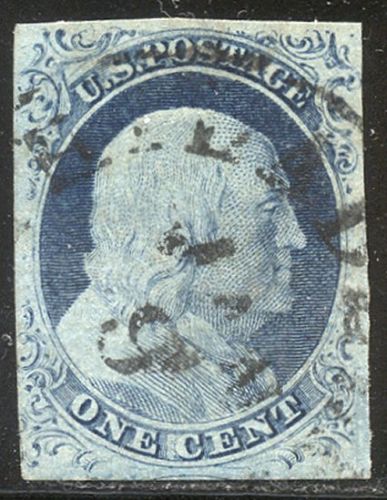 |
|
Send note to Staff
|
|
|
Pillar Of The Community
United States
3532 Posts |
|
|
Hi, your stamp is Position 2R1L.
It is recut twice at bottom and not recut at top.
It is a Scott #9 from Plate One-Late, Position 2 from the Right Pane.
Its a very interesting position in that it shows a very nice double transfer, which is evident in many areas of the stamp. This would be a good addition to the double transfer thread, instead of here, actually.
|
|
Send note to Staff
|
| Edited by txstamp - 04/30/2017 12:39 pm |
|
|
Valued Member
97 Posts |
|
|
As far as I know I've only had one plate 3 stamp pass through my hands: 28R. 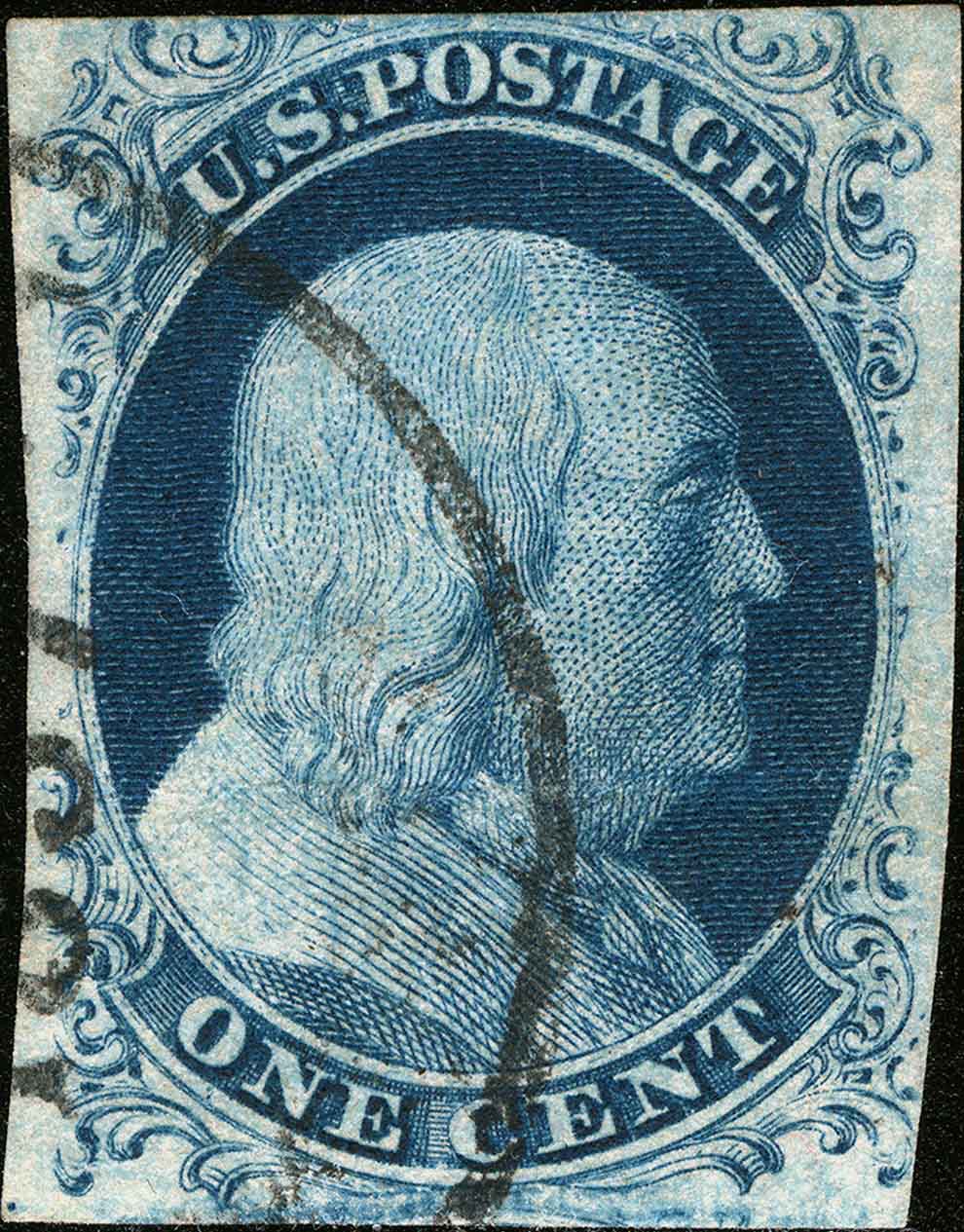 |
|
Send note to Staff
|
|
|
Pillar Of The Community
United States
3532 Posts |
|
|
ttreen - thanks for posting. That's a nice stamp. It certainly passes the smell test for being plate 3 - ink film/color - and another characteristic I've noticed, but not seen mentioned anywhere else - 'square guide dots'. Many body of plate B reliefs have much squarer guide dots on plate 3 than on other plates. Not a 100% sure method, but, when combined with other characteristics, its a good indicator.
It does appear to be a pretty good match for 28R3, I agree.
If I appear sceptical when initially handed a plate 3 stamp, its only because I've seen so many that were incorrectly identified. Even the mighty ones declared "plate 3" by a PFC, but unplated. Sometimes they are right, sometimes not. Congrats, yours looks good. |
|
Send note to Staff
|
|
|
Valued Member
97 Posts |
|
|
There's no doubt about this one. I wasn't able to plate it, so sold it on ebay. The well known plater who bought it pointed out the faint crack halfway down the right margin as noted on the Neinken mat and the two dots below the o of ONE that barely show in the photo of the "Armitage block". That photo also shows the short diagonal line on Ben's shoulder above the n of ONE. |
|
Send note to Staff
|
|
|
Pillar Of The Community
United States
3532 Posts |
|
|
stallzer: from earlier in this thread, I'm quite sure that your strip is 12-14R2, as you guys figured.
Ornament G shows the dot on your 13R. I also found an unused block of 4 at Siegel, pos 3-14R2, and the 13R2 is the easy stamp to compare. Its a definite match IMO. The faint lines between stamps in Neinken - sometimes you see 'em sometimes not. Those are useful plating aids, quite useful actually, for these positions, as they are pretty strong. But ..don't assume too many things in Neinken are absolutely 100% consistent. The side ornament completeness and everything else is, essentially a perfect match. You have it plated correctly. |
|
Send note to Staff
|
|
|
Pillar Of The Community
United States
6668 Posts |
|
|
Thanks txstamp, for the confirmation, now all that's left is the last stamp (4th) on the cover.  |
|
Send note to Staff
|
|
|
Pillar Of The Community
United States
3532 Posts |
|
|
I'll save that for a rainy day, like I did with your strip. Obvious guess would be somewhere nearby on the plate.  |
|
Send note to Staff
|
|
|
Pillar Of The Community
United States
3532 Posts |
|
|
Pertaining to the topic of this thread, its actually quite useful to be able to plate stamps from plate 2 fairly well, in order to study plate 3. When studying a potential stamp from plate 3, you will spend much of your time trying to prove its not plate 2, so it pays to know a fair amount about what plate 2 stamps look like. I may have mentioned earlier in this thread (I forget), but I had a friend, who re-constructed plate 2 completely, with the express purpose of having that allow him to better plate plate 3 stamps. Although he kind of came and went from the plating community, I always felt that he was one of the strongest 1c platers I've known.
Things like average degree of side ornament completeness, the square guide dot trick I mentioned earlier, and so on ... lots of things can help one better sort a stack of #7's into plate 2 vs plate 3 stacks.
I'll only briefly mention that the real trick is when you get a very dark blue stamp that just has to be plate 3, and in fact, turns out to be the rare Plate 1E dark blue shade from April 1852. I had one of those that I thought was plate 3 for years, until I finally figured it out. The average side ornament completeness is much more on Plate 1E than Plate 3. That is sometimes a clue for this kind of case, and finally helped me nail that patient. |
|
Send note to Staff
|
|
|
Pillar Of The Community
United States
6668 Posts |
|
|
Thanks again Txstamp. I also have it as a rainy day project and had always hoped the cover would turn out to be 4 plate 3 stamps but seeing the color difference between mine and the posted plate 3 examples here it is rather obvious. The 4th stamp I posted is too similar in overall appearance to the strip of 3 so I'll research more on the plate 2 aspect for mine. |
|
Send note to Staff
|
|
|
Valued Member
157 Posts |
|
|
Pillar Of The Community
United States
3532 Posts |
|
|
jmt - Thanks very much for posting.
I will take a good look at it in the upcoming weeks ... I've got a lot of non-stamp stuff going on at the moment. |
|
Send note to Staff
|
|
|
Valued Member
157 Posts |
|
|
Pillar Of The Community
United States
2230 Posts |
|
|
Replies: 286 / Views: 51,670 |
|



 Posted 04/27/2017 7:25 pm