Salute all,
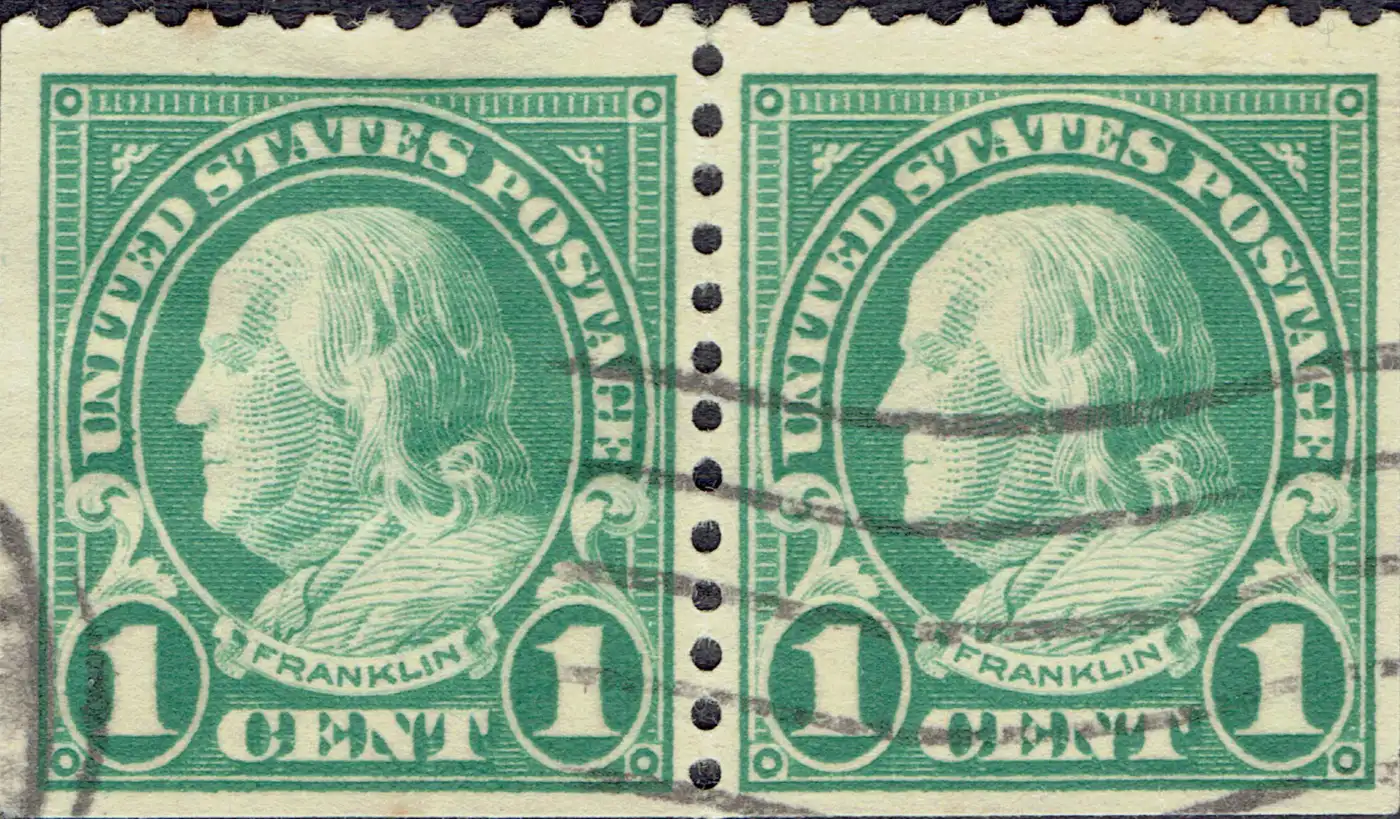
I could not post on past topic Scott 552 Frame Height Variance? I was asked to add pictures, the pictures here now are for the booklet stamps against a flat and a rotary stamp, I will add the ones of the other stamp and I will put here what I wrote to Clarkphilatelics asking him for more information. Looking for more responses.
Salute All, Clarkphilatelics,
I did read your explanations, yes, other factors are also important, I am asking for sizes for now, and I have some questions, parts of your explanations:
Flat plate stamps shrink after printing across the paper grain. Low denomination Bureau flat plate stamps were printed on 400-subject plates. Variable shrinkage in the horizontal direction should be expected. Flat plate booklet pane singles were printed on "special paper" with horizontal grain to minimize errors when cutting sheets into booklet panes. Except for AEF booklet pane stamps, all booklet pane stamps have one side or one side and the bottom imperforate. Booklet pane singles are noticeably wider or shorter than sheet stamps. Comparison with a reference stamp is faster and more effective than attempting to measure in millimeters.
The most notable is use of "special paper" to print higher denomination Fourth Bureau (1922 issue) flat plate stamps after booklet pane production transitioned to rotary presses.
For a limited period of time in 1928 the Bureau of Engraving and Printing produced eleven stamps on "special" booklet paper, being sheets of paper specifically ordered and purchased for booklet pane production. A significant inventory of this paper remained when the BEP stopped printing booklets on the flat plate press and began printing all booklets on rotary presses. The "special" booklet paper had the grain running horizontally rather than the vertical grain paper normally used for sheet stamps. After being produced on moistened paper, stamps shrank four times more across the grain than with the grain.
1- In earlier posts I did show a single booklet pane 1c Franklin which measure 22.06V and 19.57H which I did measure digitally. I followed your instructions and compare them to examples I have 552 and rotary ones. Like you said it is noticeably wider but the list you mentioned of the 11 stamps printed on special paper does not include the 1c Franklin, is it from the exceptions that was occurring that some 1c Franklin booklet was rotary printed on the remaining special paper stock or not, or something else, and why it wasn't denominated differently.
2- I have also a 1c franklin which measure 22.36V and 19.30H which also I did measure digitally and did compare with 552 and rotary ones. It is like shorter half line vertically than the rotary ones and bigger half line from the 552. Horizontally it is wider kind of a line than the 552 and kind of similar match to the rotary. Also, what is the explanation of that, is it like TaylorHealey mentioned from coil issues.







 Posted 03/07/2026 3:06 pm