| Author |
 Replies: 12 / Views: 2,175 Replies: 12 / Views: 2,175 |
|
|
Pillar Of The Community
3860 Posts |
|
|
Does anyone have any Canada 67, 68 and 69 that have a shorter (squat) vertical design length? This usualy happens when the paper grain is horizontal rather than vertical on wet printed stamps. 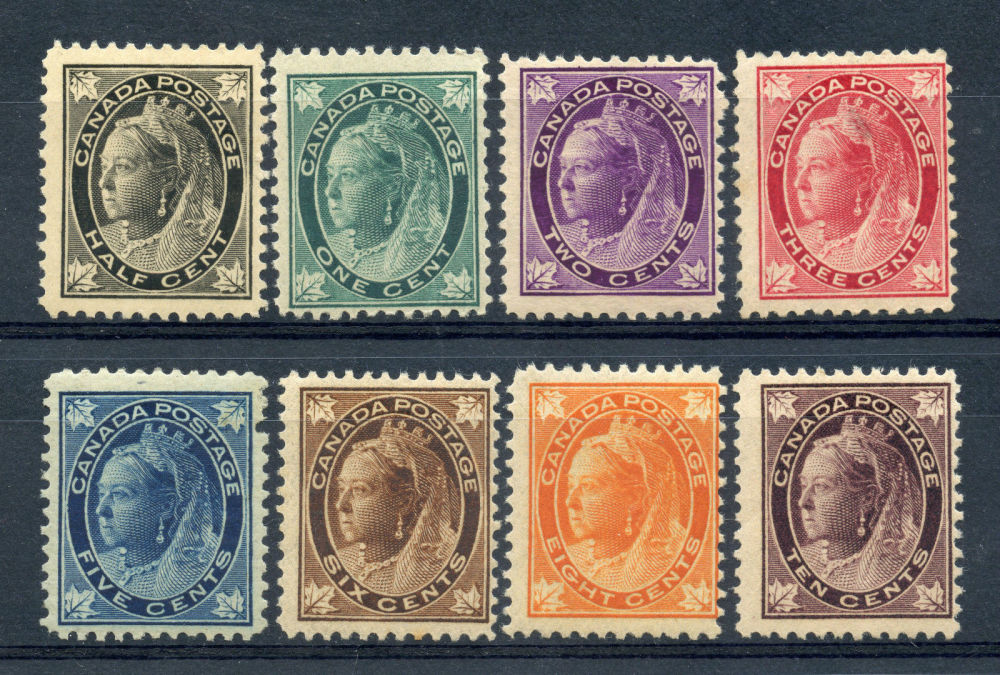 The 2 cents (68) is shorter in vertical design frame length than all of the other stamps. 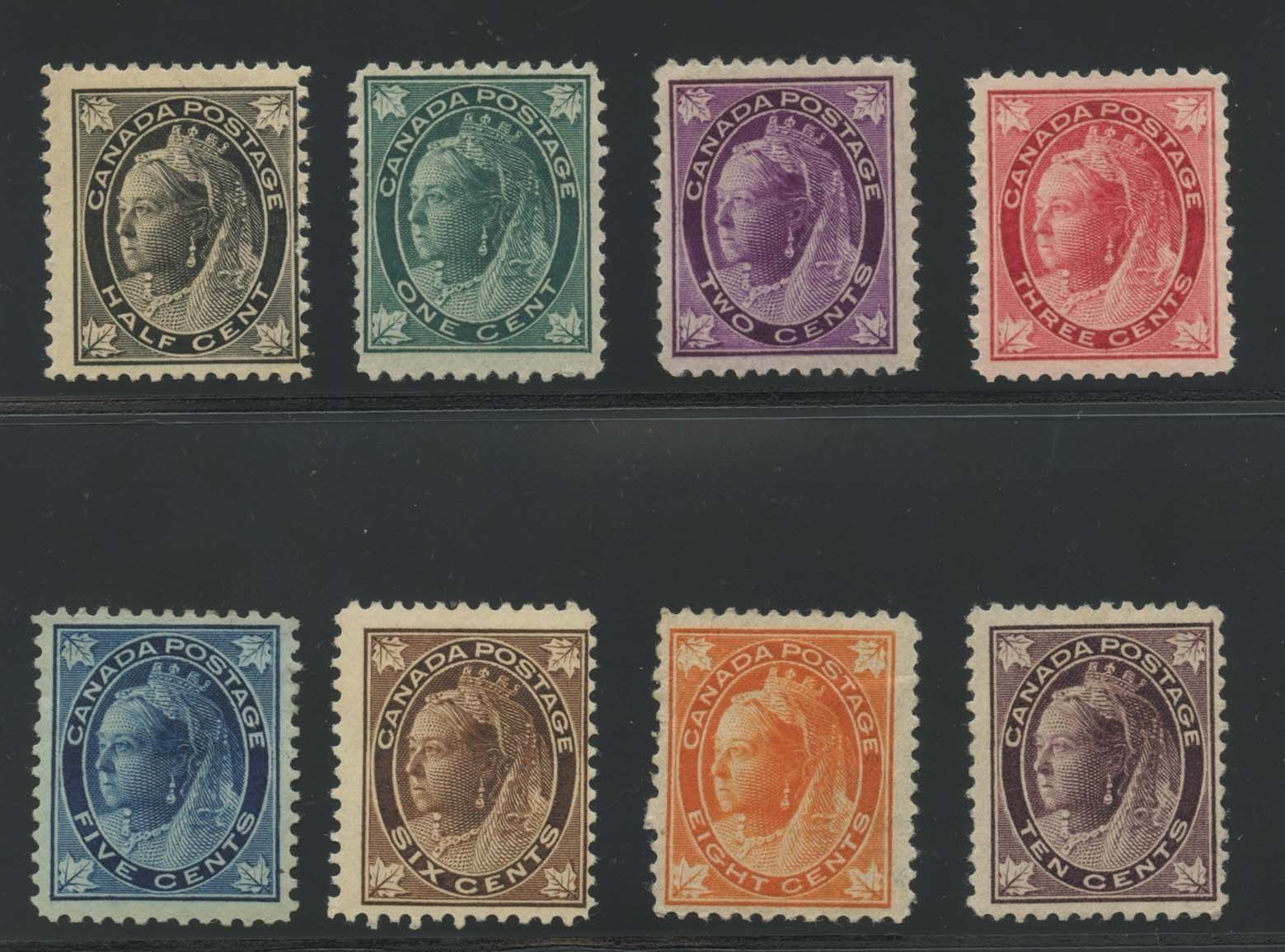 The 3 cents (69) is shorter in vertical design frame length than all of the other stamps. |
|
Send note to Staff
|
| Edited by jogil - 02/15/2017 07:49 am |
|
|
|
|
Pillar Of The Community
United States
3288 Posts |
|
|
Pillar Of The Community
923 Posts |
|
|
Yes - I have a pair of #69 3¢ carmine VR leaf's. One is shorter, though not wider. 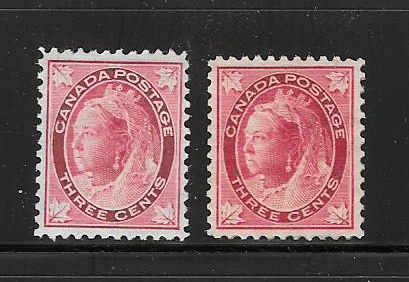 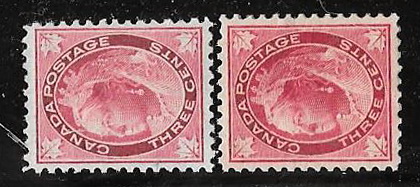 |
Send note to Staff 
|
|
|
Pillar Of The Community
3860 Posts |
|
|
They are much shorter and very slightly wider.
Maybe they are from horizontal vs vertical wet
paper grains or flat vs curved printing plates.
If consistency can be found between all short and
all tall stamp measurements, then it is a variety.
If the stamps are usually on wet paper with vertical
grain then on drying there would be some paper shrinkage
horizontally across the paper grain. These different
stamps show shrinkage instead in the vertical direction.
This might be from either having a horizontal
paper grain or from having a flat printing plate.
The three postage stamps with the most printing plates and
numbers received in the Maple Leaves Issue are as follows:
Scott/Unitrade 67 1 cent with plates 1, 2, 3, 4 of
200 subjects each and 34,000,000 stamps received,
Scott/Unitrade 68 2 cents with plates 1, 2, 3, 4 of
200 subjects each and 12,000,000 stamps received,
Scott/Unitrade 69 3 ents with plates 1, 2, 3, 4, 5, 6
of 200 subjects each and 44,000,000 stamps received.
All of the other denominations in this issue each
only had one printing plate and less stamps received.
It may also be possible that some printing plates
had their subject impressions made slightly shorter. |
|
Send note to Staff
|
| Edited by jogil - 02/15/2017 07:57 am |
|
|
Pillar Of The Community
3860 Posts |
|
|
Here is an example of a squat (short) Admiral booklet stamp variety compared to a regular booklet stamp. Scott/Unitrade 104as (left) and 104aivs (right). 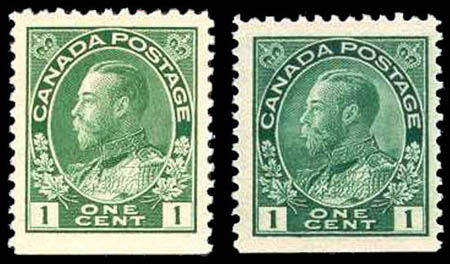 |
|
Send note to Staff
|
| Edited by jogil - 02/15/2017 07:48 am |
|
|
Moderator

United States
12330 Posts |
|
|
jogil,
Have you tried wetting some stamps (soak thoroughly) and then measuring and seeing which direction they shrink/grow?
Don |
|
Send note to Staff
|
|
|
Pillar Of The Community
3860 Posts |
|
|
Rest in Peace
Canada
5701 Posts |
|
|
Those different heights of the design have been noted also on the horizontal and vertical grain paper of the Small Queen stamps. |
|
Send note to Staff
|
|
|
|
Pillar Of The Community
3860 Posts |
|
|
Then it all depended on the direction that the wet paper sheet was put on the flat printing plate. |
|
Send note to Staff
|
| Edited by jogil - 02/15/2017 11:48 pm |
|
|
Pillar Of The Community
3860 Posts |
|
|
Pillar Of The Community
3860 Posts |
|
|
Valued Member
Canada
209 Posts |
|
|
Hi - I was wondering if the delta between measurements is significant enough to warrant the extra effort to study? It seems that the 17.5 mm to 18 mm difference (2.5%) is not really enough of a production deviation to consider. Couple the .5 mm difference from the accepted "norm" (is there a production +/- acceptance) ...are we going down rabbit holes? I wonder about this from a SQ perspective, as well. Fascinating stuff though |
|
Send note to Staff
|
|
|
Pillar Of The Community
3860 Posts |
|
|
As a precedent, Canada wet Admiral stamps are 0.5 mm narrower than dry Admiral stamps. 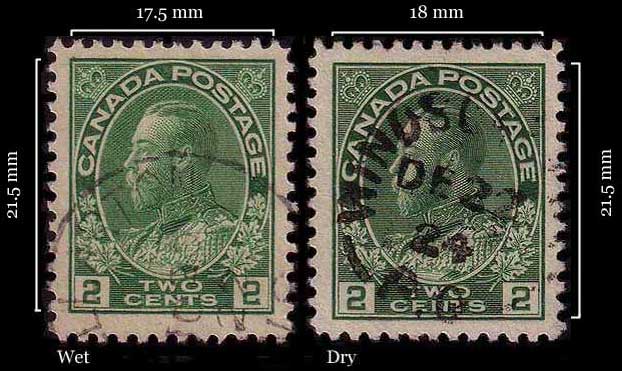 |
|
Send note to Staff
|
|
| |
Replies: 12 / Views: 2,175 |
|




 Posted 02/14/2017 8:02 pm


