| Author |
 Replies: 29 / Views: 6,069 Replies: 29 / Views: 6,069 |
|
|
|
Valued Member
United States
466 Posts |
|
|
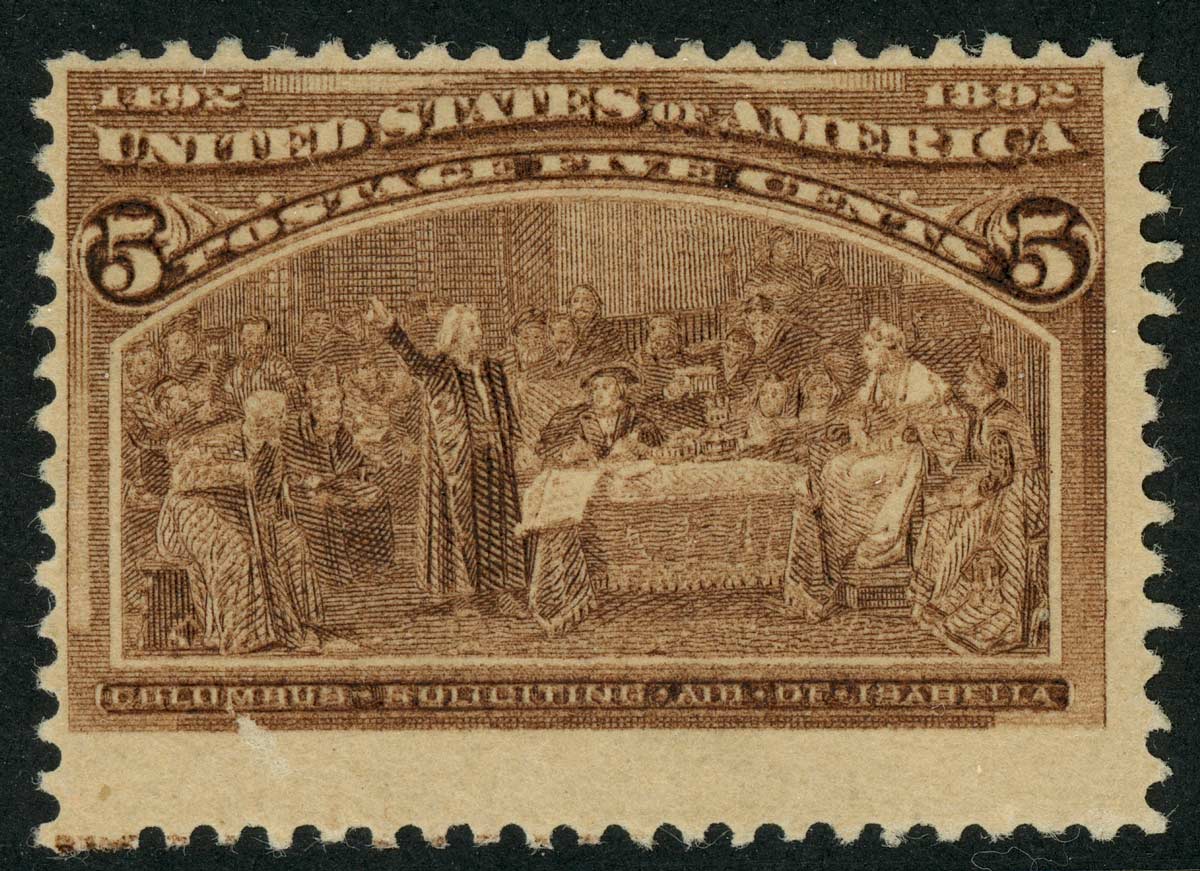
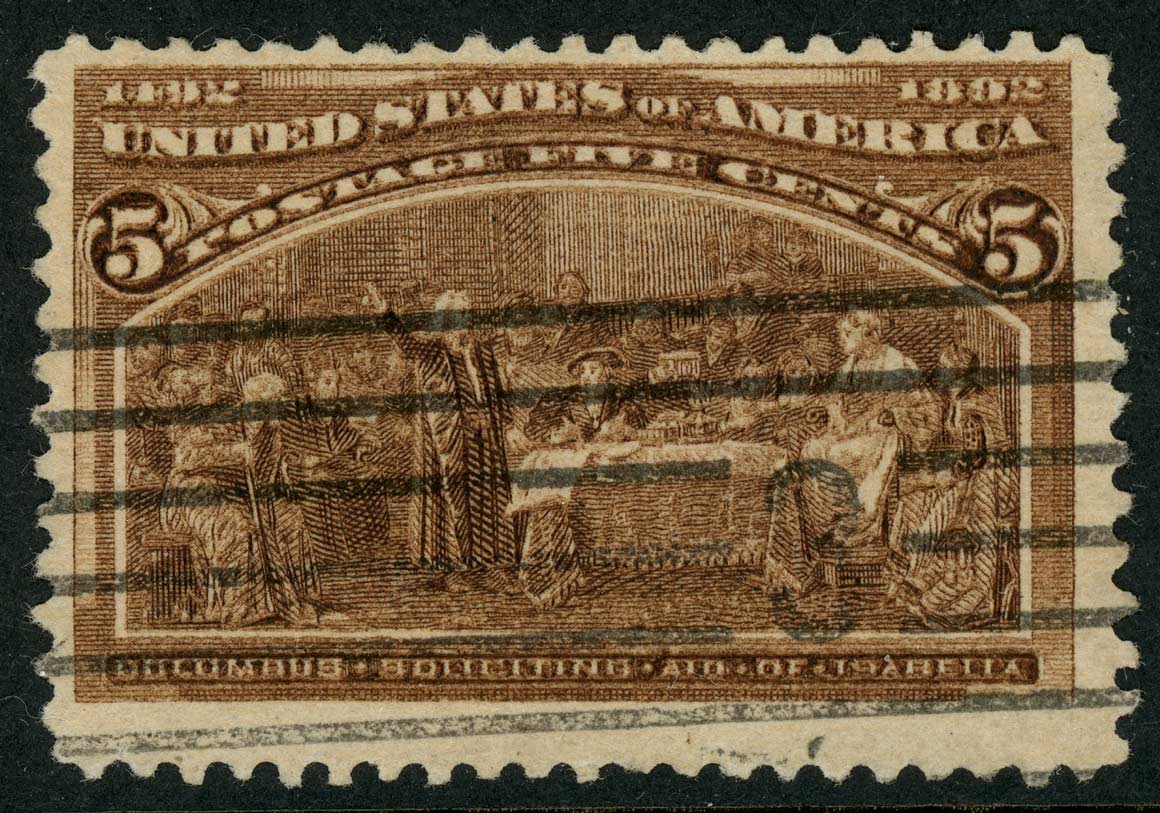
Wow, I did not expect to see so many comments on this. Srailkb makes a good observation and Shannon7692 as well. The stamp was certified by the PF as a "kiss print" in the 1980's. If I understand rightly, a kiss print would absolutely have to be unique as nature is highly unlikely (impossible?) to reproduce an identical second example. I think this might be the conservative way expertizing services grade absent any other example. A double transfer must have identical examples in order to be a true variety, as it is then a plate factor and not an inking or multiple presses aspect. I do have a second example that is used and I believe identical to this example. Because there are two I believe both to be either double transfers, or a double printing with one of the two impressions being nearly dry or underinked. I am not sure if a double printing can happen this way, but it does not seem impossible. The stamp is not dark enough to be a true double printing. To help figure it out I need to get a scan of the used example. However, it will be a week or two before I can get to it. It's possible with studying scans of both we can determine are they truely the same. But it's possible there is a difference and both are therefore amazingly-fully-kissed but in different ways. I found a scan of the PF cert from 1985. Sending both examples to the PF for reconsideration together, should they perfectly match, has been on my long term to do list.  |
Send note to Staff 
|
| Edited by Crouse27 - 03/24/2017 5:05 pm |
|
|
Pillar Of The Community
United States
2555 Posts |
|
|
It is possible to have two stamps with double impressions that are identical or nearly so. You need more. I am repeating myself here, but since your stamp shows part of the imprint which is also doubled, there is no other reasonable conclusion. Going a step further, the appearance of the inking of the doubled areas is not consistent with a DT. Engravings are three dimensional and DT's have a way of ironing out all but the deepest parts of the engraving. This results in DT's that basically never produce doubling of the entire design. |
|
Send note to Staff
|
|
|
Pillar Of The Community
United States
2555 Posts |
|
|
Exhibit A - an early impression of the famous 92L1L double transfer. See how only the central circle of the rosettes survived?  |
|
Send note to Staff
|
|
|
Pillar Of The Community
United States
578 Posts |
|
|
Crouse27, I would like to see a higher resolution scan of both this stamp & your used example w/ doubling. sinclair2010 has pretty thoroughly explained why this is unlikely to be a DT, but debating kiss print vs. double impression could be a more interesting topic anyway. There's some gray area there, even among experts. FWIW, I'm pretty sure yours is a kiss print (90%+) but a high-resolution image would help (min 600 dpi optical, 1200 if possible). |
|
Send note to Staff
|
|
|
Bedrock Of The Community
United States
10862 Posts |
|
|
There are double transfers that cover much larger areas of the design then this one does. The major DT of Scott 307 comes to mind. However most are just in the lettering or framelines. |
|
Send note to Staff
|
|
|
Pillar Of The Community
United States
2555 Posts |
|
|
Yes, I have others that show more doubling than the 92L1L but they would have been less effective as a visual aid. |
|
Send note to Staff
|
|
|
Moderator

United States
12330 Posts |
|
|
Valued Member
United States
466 Posts |
|
|
Valued Member
United States
466 Posts |
|
|
Here is an even more dramatic kiss print courtesy of Siegel auctions. Notice the similarities! This one also described by Siegel as such.  |
|
Send note to Staff
|
| Edited by Crouse27 - 12/10/2017 11:29 am |
|
|
Valued Member
United States
6 Posts |
|
|
Here is my copy of the 5 cent Columbian with what I believe to be a kiss print. It has a top straight edge, so it is a different position than the other examples shown here. A true double transfer this major would be rare and not on multiple positions.  |
|
Send note to Staff
|
|
|
Valued Member
United States
466 Posts |
|
|
Thanks megawat that is a good posting. Also your stamp coming from top displays the kiss less intense than the two examples I posted looking at the bottom lettering. Your point is very useful to show the positions are very different. You have a true straight edge at a top position. One of my stamps shows a trace of a bottom marginal imprint letter. So when the sheet flapped back up to be kissed it was the bottom that touched a bit stronger? |
|
Send note to Staff
|
|
|
Pillar Of The Community
United States
2555 Posts |
|
|
There is no reason to assume that all of these examples came from the same sheet. |
|
Send note to Staff
|
|
|
Pillar Of The Community
United States
578 Posts |
|
|
sinclair2010, I told Crouse27 that (IMO) there was a very good chance both of his examples came from the bottom row of the same sheet. I based that on the shade, centering, margins, and consistences in the direction and degree of offset of the second impression. I don't think the stamp posted by megawat is necessarily from the same pane/sheet. |
|
Send note to Staff
|
|
|
Pillar Of The Community
United States
2555 Posts |
|
|
Ken, I would be more inclined to agree with you if the size of the bottom margins of the Crouse stamps weren't so much different. On the other hand, the perfs do have a bit of a skew, so it is possible that at the extreme edge of the sheet, the perfs finally wander enough to account for two very different bottom margins. |
|
Send note to Staff
|
|
|
Replies: 29 / Views: 6,069 |
|




 Posted 03/23/2017 10:45 pm