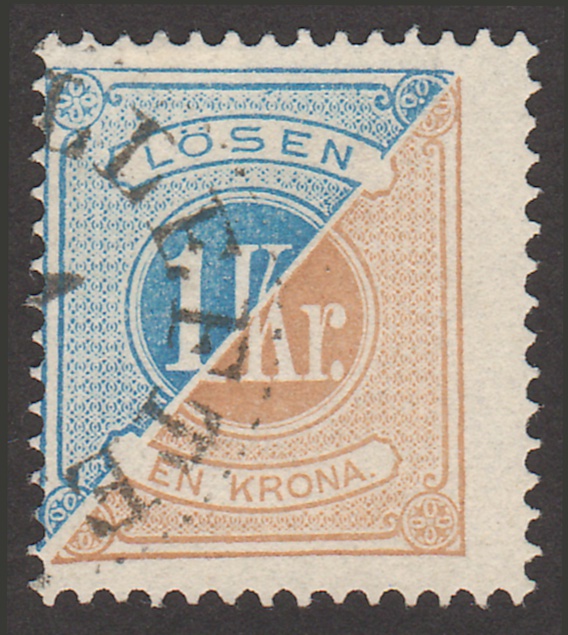
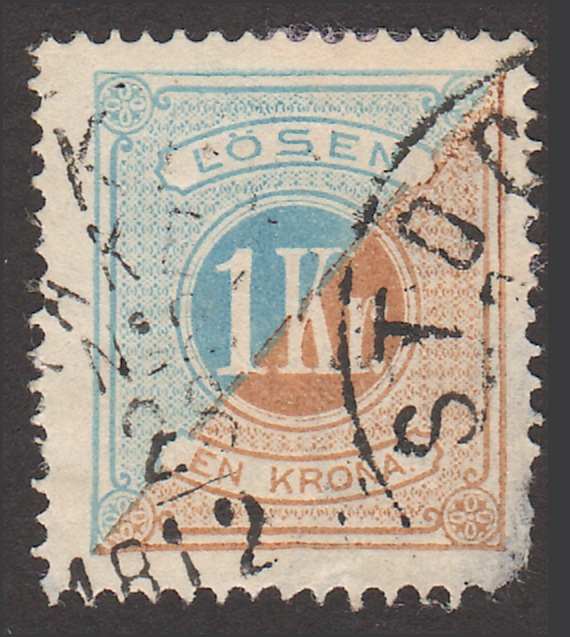
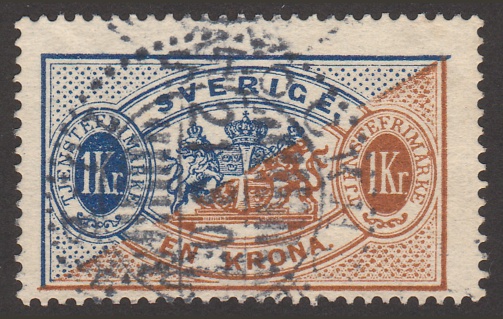
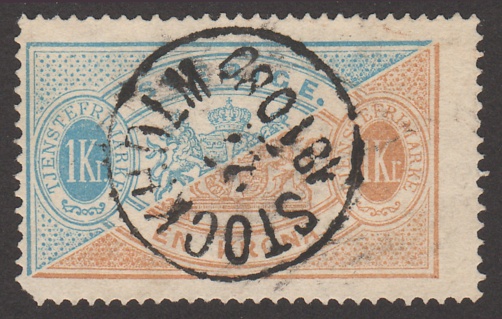
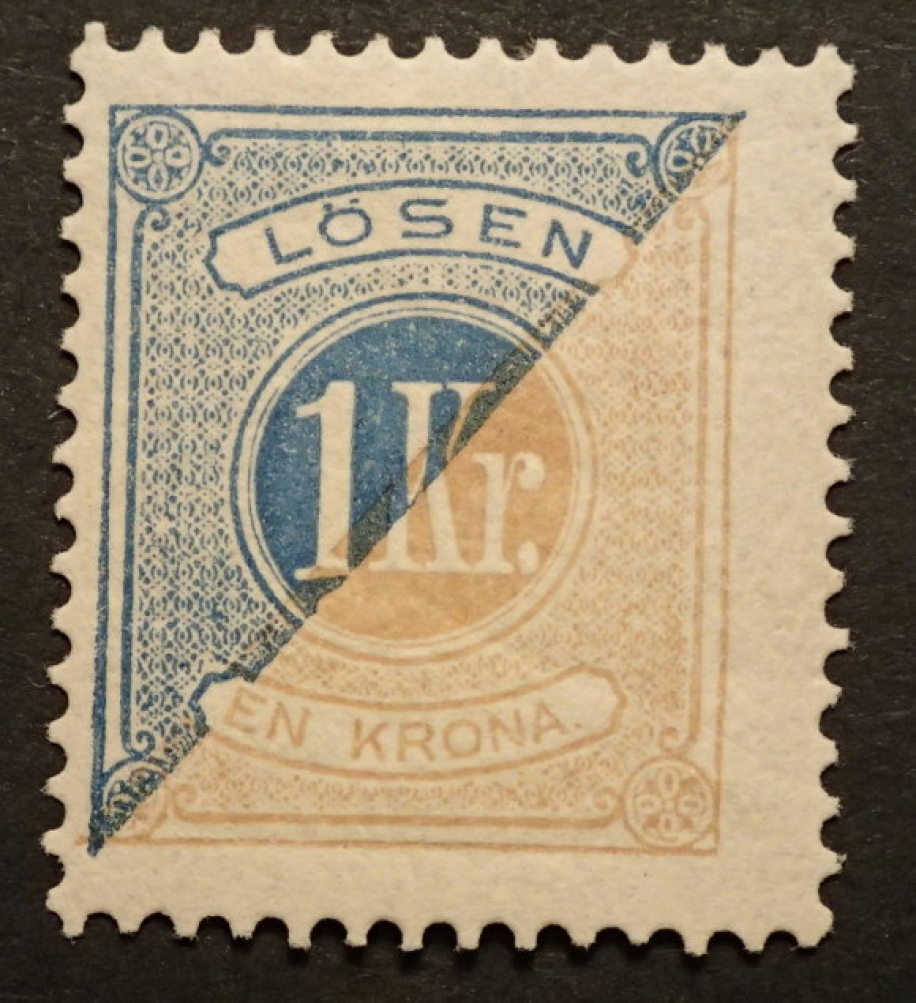
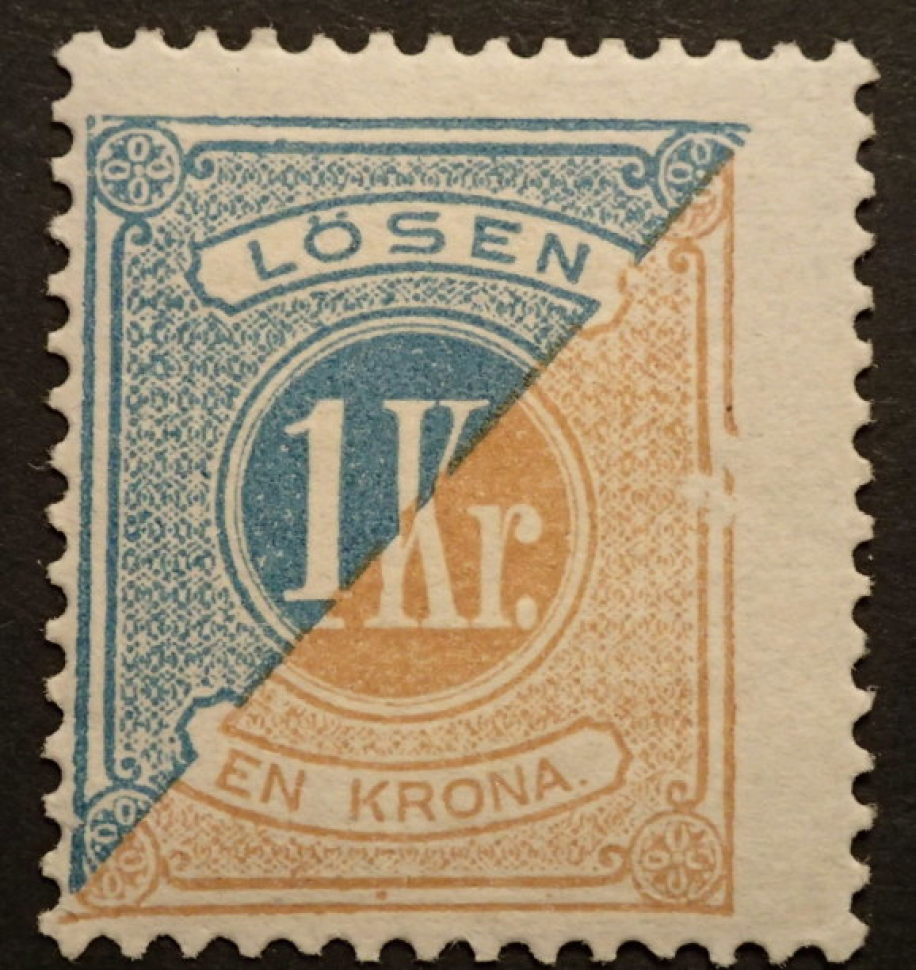
Okey, seems it's time for a printing technique illustration.
Firstly, EDW your confidence in the forum is a little hurtful :)
secondly, the confidence in Jay smith is a little overrated.
there are 100's of people with far more expertice to be found in the origin countries, but for a "local" fella he's probably fine.
now.... the printing technique i'll try and illustrate is how danish stamps of this era were made, I doubt swedish are much different.
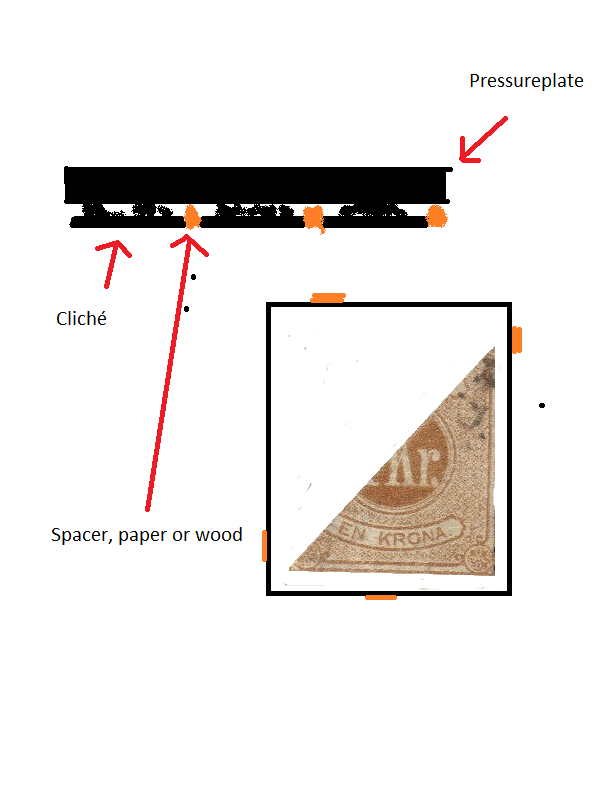
each cliché was fastened with lead on the pressure plate (frame) Lead meant you could exchanged damaged clichés.
while it hardened you would fill the spacings with folded paper or splinters of wood. sometimes they forgot to take them out, and this would cause "spies" to appear on the print (don't know the english word for it... I can show examples if needed.
naturally not all was perfectly straight so if you have large blocks, you can see the misplacing from stamp to stamp, some futher apart, some tilted slightly.
since the stamp in question is bicoloured 2 steps had to be performed, first you'd have to print one "triangle" let it dry, exchange frame to do the other triangle.
have it dry again, do the gum, have it dry again, put it in press and finally through the perforation machine.
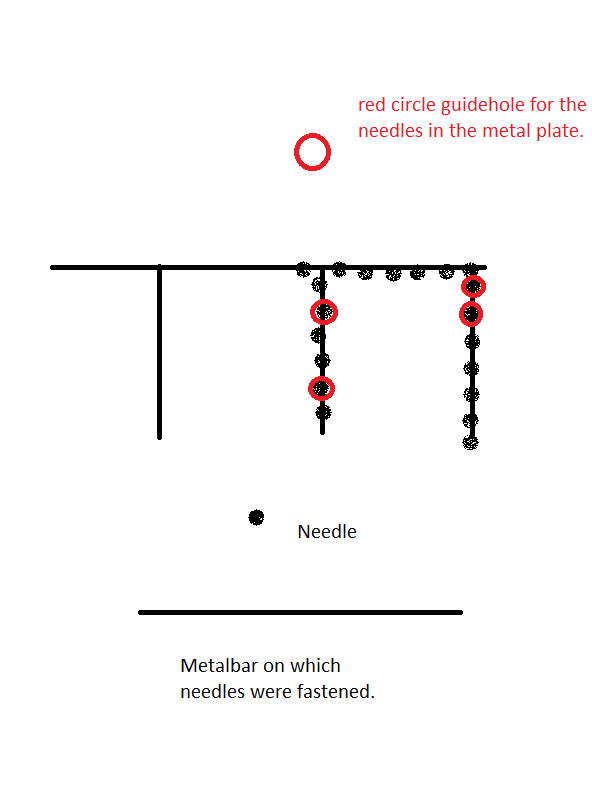
at this time, comb perforation machines were used, and at least 3 different were in use in Sweden, in denmark at least 8 different machines were used.
a set of needles placed like a comb, as I so crudely tried to illustrate. that would be pushed down through the sheets of paper.
gears would move the paper forward and the needles went down again.
naturally there had to be holes in the metal plate for the needles to be able to go through, these are extremely originally called guiding holes.
and again, the craftmanship and tools at their disposal at the time weren't too accurate so guiding holes could wary a little and so could the needles, causing shifts in the perforation, short, wide, long, broad perfs.
a needle that didn't quite fit the guiding holes would wear and eventually break off.
a worn needle would make wholes that weren't quite round, or smaller (wide perfs)
broken needles would be exchanged, but not uncommonly on swedish coat of arms you have alot of blind perfs... I can illustrate these as well.
these usually appear in a certain period/print.
so worn needles could fool you to think the perforation is slightly off.
for ALL skandinavian stamps the perforation listed in the catalogue is the one... if you think you have something else it doesn't matter at all... it's either a minor irregularity, or an attempt to reperforate.
ALL bicoloured stamps in the world at this time could have these irregularities... the technique to print 2 colours at the same time was simply not invented.





 Posted 04/03/2017 01:42 am