| Author |
 Replies: 166 / Views: 35,592 Replies: 166 / Views: 35,592 |
|
|
|
Pillar Of The Community
Norway
1661 Posts |
|
|
Pillar Of The Community
United States
7113 Posts |
|
|
Impressive effort.  I use Afinsa for the star positions, but I'll have to circle back, because I think you've identified many more than Afinsa lists? Or my memory is fuzzy. (Or both.) |
Send note to Staff 
|
|
|
Pillar Of The Community
Canada
1449 Posts |
|
|
You are doing big work in preparation for those Macao (Macau) stamps - Obrigado for sharing and cannot wait to see your stamps when the project is completed !
Rene |
|
Send note to Staff
|
|
|
Pillar Of The Community
Norway
1661 Posts |
|
|
Thanks guys! Quote:
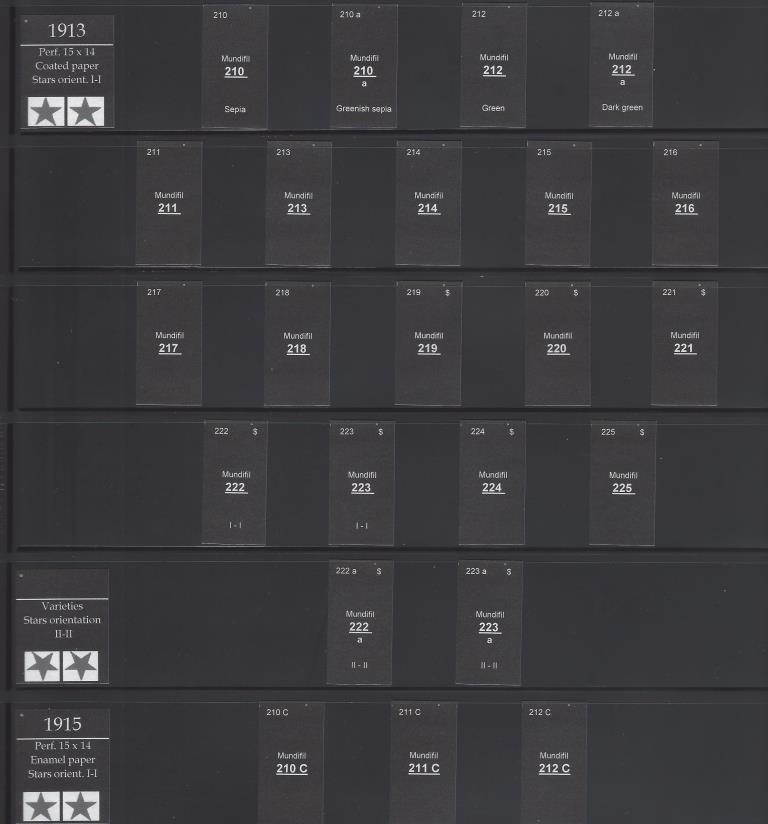
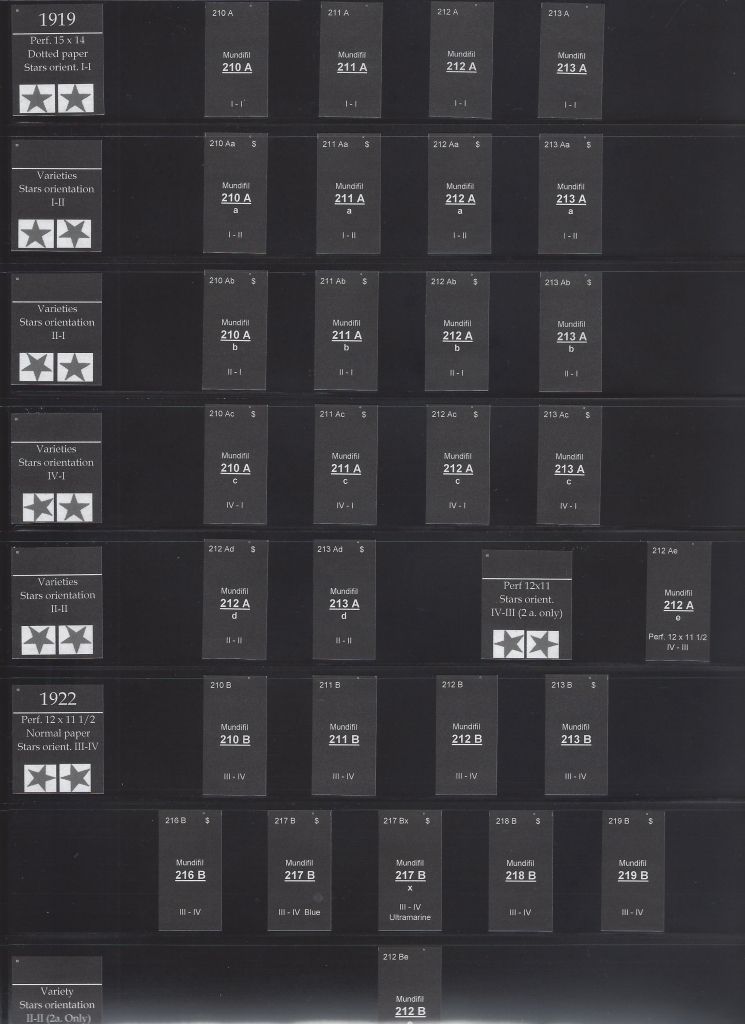
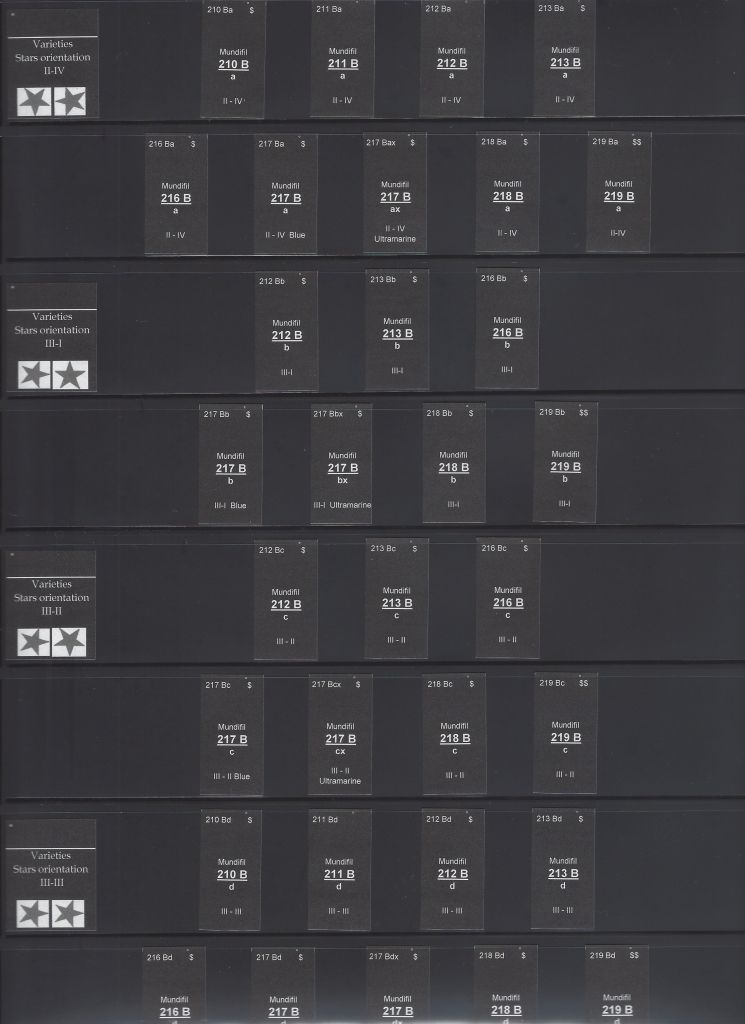
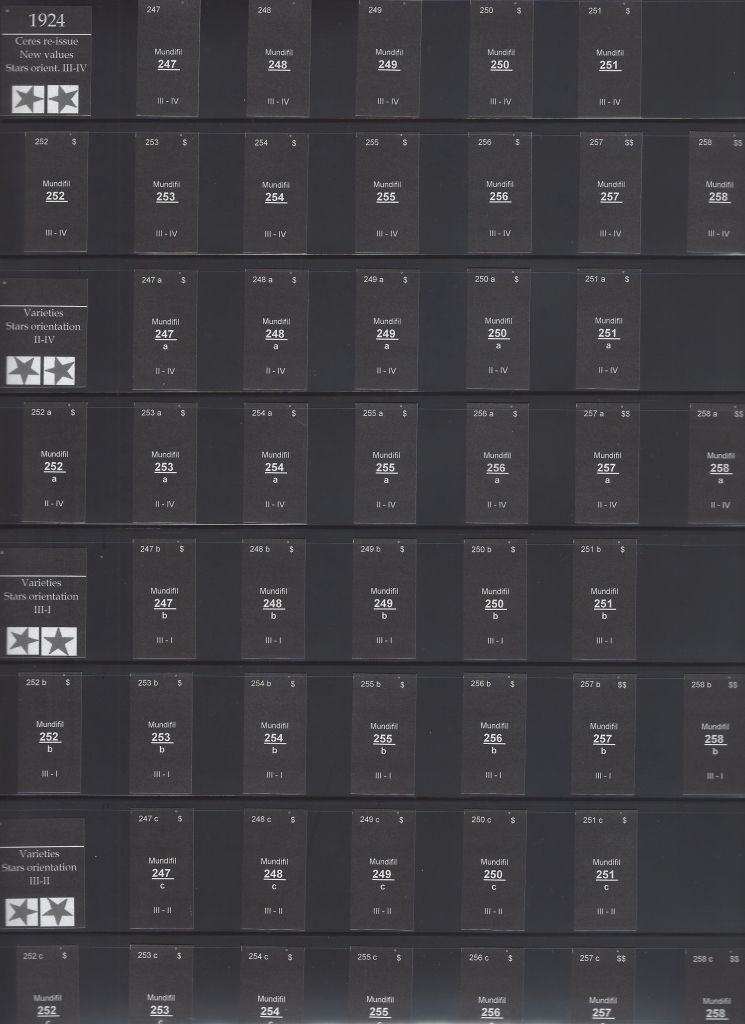
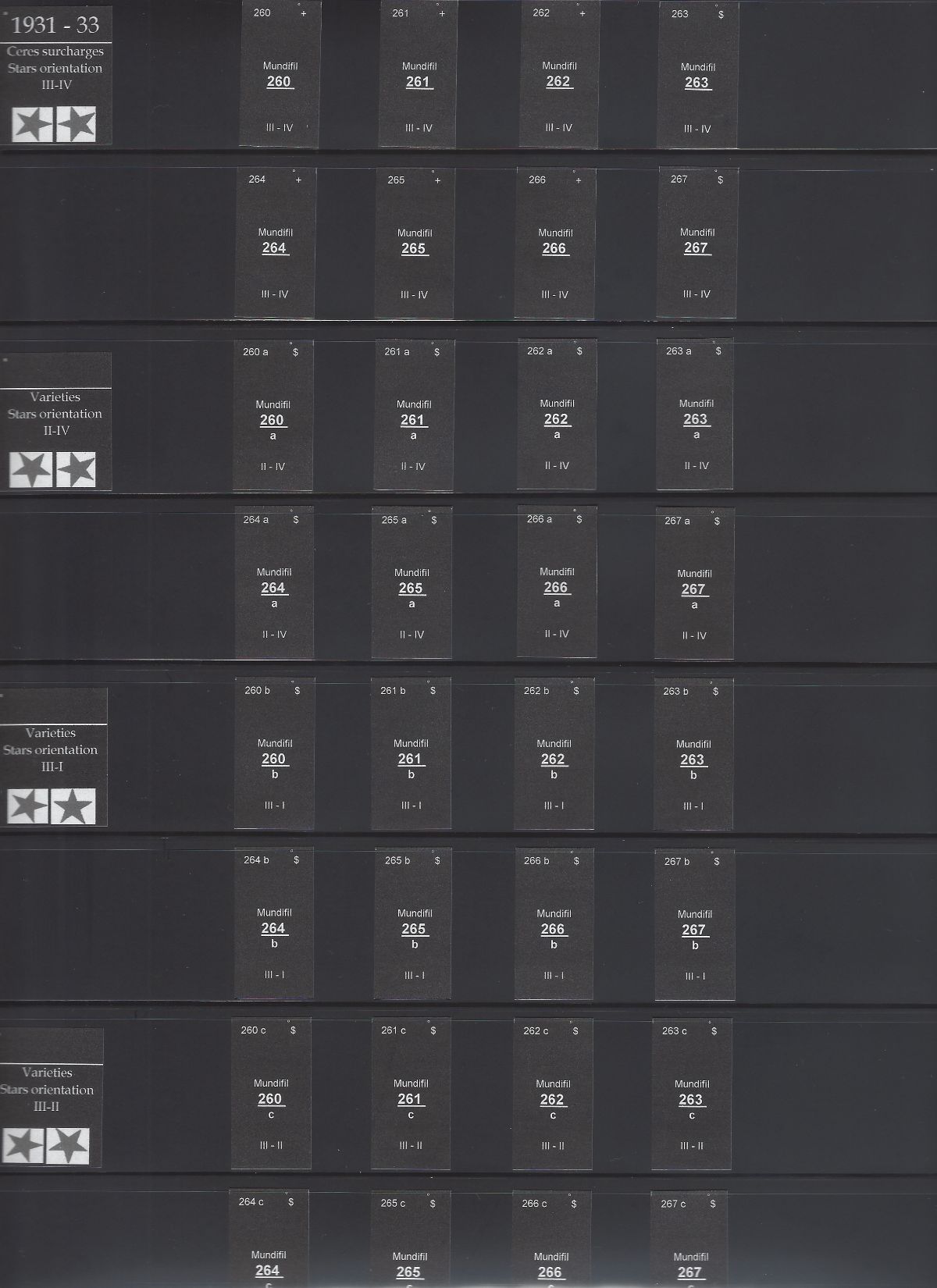
I think you've identified many more than Afinsa lists? That's odd. I didn't even show all varieties in the selected sample pages above, but they are all defined in Mundifil. I don't have a Afinsa, but as far as I know the Mundifil is based on Afinsa (?). My catalog is from 2015, maybe they've added more varieties since your catalog was issued? I can send you a full list of the Macau Ceres varieties (from my database) if your curious to compare. Quote:
You are doing big work in preparation for those Macao stamps ...cannot wait to see your stamps when the project is completed Yeah, the preparations took far longer time than actually transferring the stamps! Used 3-4 nights for establishing the database (which generates the ID tags), plotting the set-up and inserting ID tags. However the limited amount of stamps I actually have was transferred in a few hours....so I'm afraid my sparsely populated pages are not much to look at  That doesn't bother me much though, as completion or filling the pages is not my goal in it self, but rather the satisfaction of having a working system for housing all those varieties. |
|
Send note to Staff
|
|
|
Pillar Of The Community
United States
772 Posts |
|
|
Quote:
..completion or filling the pages is not my goal in it self, but rather the satisfaction of having a working system for housing all those varieties. Exactly my thought process. I may not ever fill every space but at least I will have space should fortune shine on me. Working on my Australia database (using Stampmate 2015) and I have finished data entry up to the end of George VI reign, based on listings in Gibbons "Australia" and the Brusden-White "Australian Commonwealth Specialist Catalog" Summary of Listings : Kangaroo & Map Defins : 261 Kangaroo & Map Officials : 285 King George V "Sideface" Defins : 472  King George V "Sideface" Officials : 333 King George V era commemoratives/airmails : 55 King George VI era defins : 194 King George VI era commemoratives/airmails : 70 Postage Dues (includes Elizabeth II era) : 332 Here's sample of listings for the 1/2d Orange (Scott #20, Gibbons #56, Michel # 29, ASCS #66) 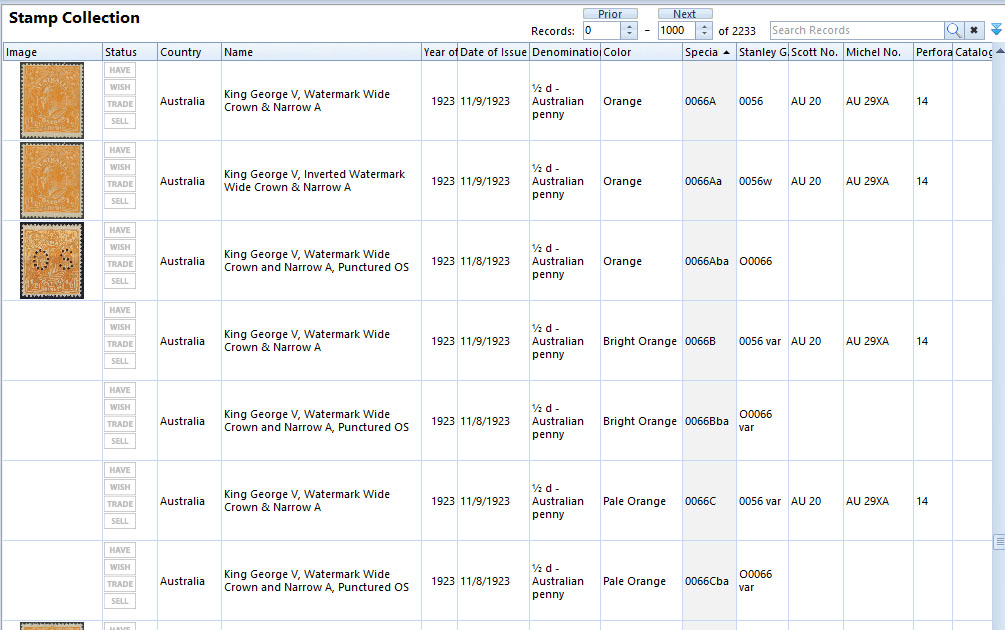 currently I'm working on filling in the info for Michel and Scott numbers for these issues, then its on to pre-decimal currency Elizabeth II. |
|
Send note to Staff
|
APS #173088
|
|
|
Pillar Of The Community
Norway
1661 Posts |
|
|
Wow, what a large number of varieties of those early Aussies! It seems like an enormous undertaking to get that registered, including cross-reference to all those cats. Well done.
I am not familiar with Stampmate - I wonder if its possible for others to benefit from that huge work you've accomplished? Or do each user need to register stamps varieties manually (beyond what is available to import from the web)
|
|
Send note to Staff
|
| Edited by Blaamand - 01/02/2018 4:41 pm |
|
|
Pillar Of The Community
United States
7113 Posts |
|
|
There are more "star" varieties referenced in Afinsa than I recalled, at least for Macau. Many of the lines in the catalogue combine as many as four varieties onto one line.
Some of the other colonies have a fraction of Macau's total. Tete, for instance, only lists about 32 varieties? |
|
Send note to Staff
|
|
|
Pillar Of The Community
United States
772 Posts |
|
|
Blaamand - I could probably send you the base files then you would load them in the file where Stamp Mate saves created databases. I don't *think* a database file is tied only to one user, but would have to test that to know for certain. But check out Stamp Mate, it really is a wonderful, very flexible program. (My last blog post on my blog has a lot of info on it.) And yes it has been a lot of work, but I learn a lot about what is out there to collect beyond just the basic catalogs. So far I have done mainly French areas : Morocco Algeria Tunisia Senegal Ivory Coast Benin/Dahomey Australia is the current project, and much bigger than these French colonial-post colonial ones were. But I want to get the collections I inherited from my father finally organized so working on those areas next (Australia, New Zealand, Malaysia, Singapore, Brunei, Papua New Guinea, and Canada & USA). I figure if I can get all that done this year, I will be doing well. |
|
Send note to Staff
|
APS #173088
|
| Edited by DJCMHOH - 01/02/2018 7:40 pm |
|
|
Pillar Of The Community
United States
772 Posts |
|
|
Quote:
There are more "star" varieties referenced in Afinsa than I recalled, at least for Macau. Many of the lines in the catalogue combine as many as four varieties onto one line.
Some of the other colonies have a fraction of Macau's total. Tete, for instance, only lists about 32 varieties? I think part of the reason some colonies have more varieties than others is due to number of printings each value had. So for Macao, with a larger demand for postage stamps, values had to be reprinted a few times, and that results in the differing positions of the stars. A small colony like Tete with little postal traffic would have less reprinting of values, so less opportunities for the different varieties of star alignments to come about. At least, that is my theory |
|
Send note to Staff
|
APS #173088
|
|
|
Pillar Of The Community
Norway
1661 Posts |
|
|
Yeah you're right cjd, very different number of varieties for each colony - luckily - or unfortunately - however one want to look at it... Portuguese India seems to be the worst in the lot! I agree in your theory DJCMHOH I don't have Mundifil cat for Portugal proper yet so I don't know exactly the situation for Portugal, but would presume they have lots of these varieties at well (?). Quote:
I could probably send you the base files Thanks for the generous offer DJCMHOH, but I do not think I have capacity/time to dive that deep into details on these as you do. I am trying to limit myself 'somewhat'  I was more interested in the possibilities of Stamp mate program itself. If the data you have entered is only stored on your PC - or if your data gets stored in a public database, so other users could access directly without needing to import data sent from the person that made them ? |
|
Send note to Staff
|
|
|
Pillar Of The Community
United States
772 Posts |
|
|
Blaamand - I believe data is just stored on my PC. as I note in my blog you can import data directly from Col_nect and that can serve as a base from which you can add more listings in your own personal Stamp Mate file. |
|
Send note to Staff
|
APS #173088
|
|
|
Pillar Of The Community
Norway
1661 Posts |
|
|
Thanks, I was afraid so. So all the work you done would need re-done by anyone else interested in the same data. I believe these sites would benefit big time - and stamp collectors WW - if anyone's data could be imported to a common database - and made available for all. Guess it's the catalog issuers copyright issues that are blocking this. Would probably be a much too common-sense solution  |
|
Send note to Staff
|
|
|
Valued Member
Thailand
87 Posts |
|
|
@Blaamand: I really like your Vario page layout and labeling. Very well done good sir. If it is not too much trouble, would you please kindly share the cell height and width that you are generally using to make your labels in Excel for the 6, 7, and 8-pocket stock pages. Thank you and respects. Blaamand posted 04/15/2017 3:32 pm ( https://goscf.com/t/53933&whichpage=2#469999) Quote:
I simply print on white 'safe' paper.
For my previous tags I used borders/frames around each tag to assist with cutting, using scissors. However I have learned that using borders or frames simply makes things more complicated than doing without the borders. So instead of having borders and cutting with a pair of scissors - I do not use borders anymore and do not use scissors anymore either. I cut the entire sheet in one operation by using a breakaway razor knife guided by a metal straightedge (metal ruler).
Click to see a Larger Image!
To facilitate this I have equipped the sheets (tags-printout) with some small 'guiding lines' at each left and right margin - and some very small 'guide dots' vertically. Then I place the straightedge according to these and cut through the entire sheet, but keeping the outer white frame intact to keep everything in place until I have cut both vertically and horizontally.
This goes much quicker than using scissors - and the results get much more precise. And finally there are no borders, so the tags will also be more forgiving if one should happen to be imprecise, as there are no borders to indicate if the centering was not that good... |
|
Send note to Staff
|
| Edited by BattleshipRB23 - 02/25/2019 01:29 am |
|
|
Pillar Of The Community
United States
1179 Posts |
|
|
I use Vario pages to organize and layout a page, prior to printing a page. I saves wasted a load of wasted paper and permits easy shifting of material. It also helps if I am undecided on how complex I want to make a page. Again, it permits easy layout and shifting or material, especially where Stampless[ds are being interspersed with covers or other related postal history; i.e, documents, letters; photos, and so on.
They also help immensely in the layout, organization and arrangement of perforation studies and color studies. It allows for the insertion of notes, diagrams and art prior to the first page being printed. It saves much much wasted paper.
|
|
Send note to Staff
|
|
|
Moderator

United States
12330 Posts |
|
|
Replies: 166 / Views: 35,592 |
|




 Posted 01/01/2018 3:34 pm