| Author |
 Replies: 15 / Views: 2,923 Replies: 15 / Views: 2,923 |
|
|
Valued Member
235 Posts |
|
|
is the stamp in the upload (the infamous) australia 1914 scott#19a emerald variety thin"1/2" at the right? who knows australia stamps? (this stamp wmk 9 reverse)see images. 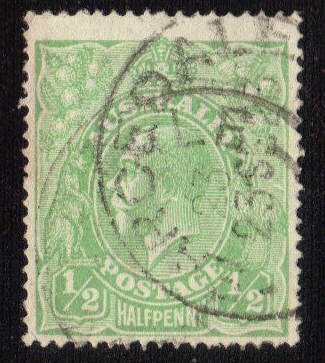 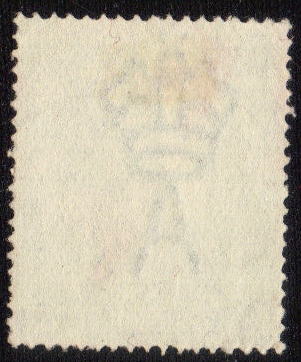 |
|
Send note to Staff
|
|
|
|
|
Pillar Of The Community
United States
6756 Posts |
|
|
Sorry, it is not. The thinner part is the "1" of the right "1/2". Both your left "1" and right "1" are the same width. For Scott Australia #19a, the right "1" will be noticeably thinner -- I would say very roughly 25% thinner. |
Send note to Staff 
|
|
|
Valued Member
235 Posts |
|
|
Pillar Of The Community
United States
6756 Posts |
|
|
Here is an example that I pilfered borrowed from Tooler. The left stamp is the thin 1 variety. 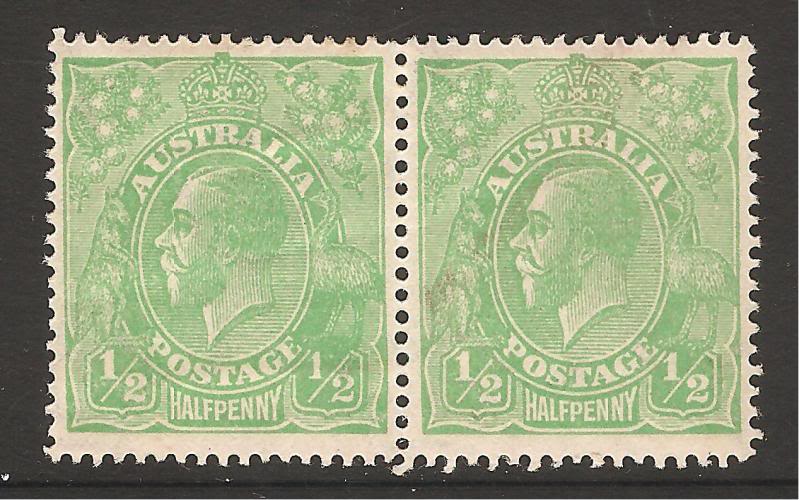 |
|
Send note to Staff
|
|
|
Valued Member
235 Posts |
|
|
my litle green stamp ,the 1/2 on the right tends to be a "wee bit" smaller , than the 1/2 on the left..would you say? |
|
Send note to Staff
|
|
|
Valued Member
United States
222 Posts |
|
|
It certainly does appear to be slightly smaller edw_kim, but I am no expert. |
|
Send note to Staff
|
|
|
Pillar Of The Community
United States
8956 Posts |
|
|
I think the cancel is playing tricks on us. If we could get a larger picture of the stamp we could just measure it.
Peter |
|
Send note to Staff
|
|
|
Pillar Of The Community
United States
6756 Posts |
|
|
Quote:
my litle green stamp ,the 1/2 on the right tends to be a "wee bit" smaller , than the 1/2 on the left..would you say? Not an expert on Australia, either. But as far as I know, the narrower "2" at the right "1/2" is typical for this stamp. The determining factor is the whether the right "1" is narrower. If you don't trust your eyes, you can always overlay the 1's to convince yourself they are the same width. As Peter mentioned, the cancel can play tricks. This is one of those stamps, where if you have to wonder if you have the thin "1/2" variety, then you don't have it. |
|
Send note to Staff
|
| Edited by khj - 06/01/2017 10:29 am |
|
|
Pillar Of The Community
United States
3224 Posts |
|
|
I find it very clear to see the difference when blown up like this or under a 10x magnifier.
|
|
Send note to Staff
|
|
|
Valued Member
235 Posts |
|
|
another way .is to have it expertized by APS..my little green stamp.. it can be certified by stamps.org..as to find out (if my little green auzy stamp "is infact" a variety).. the original image has been resized 250% 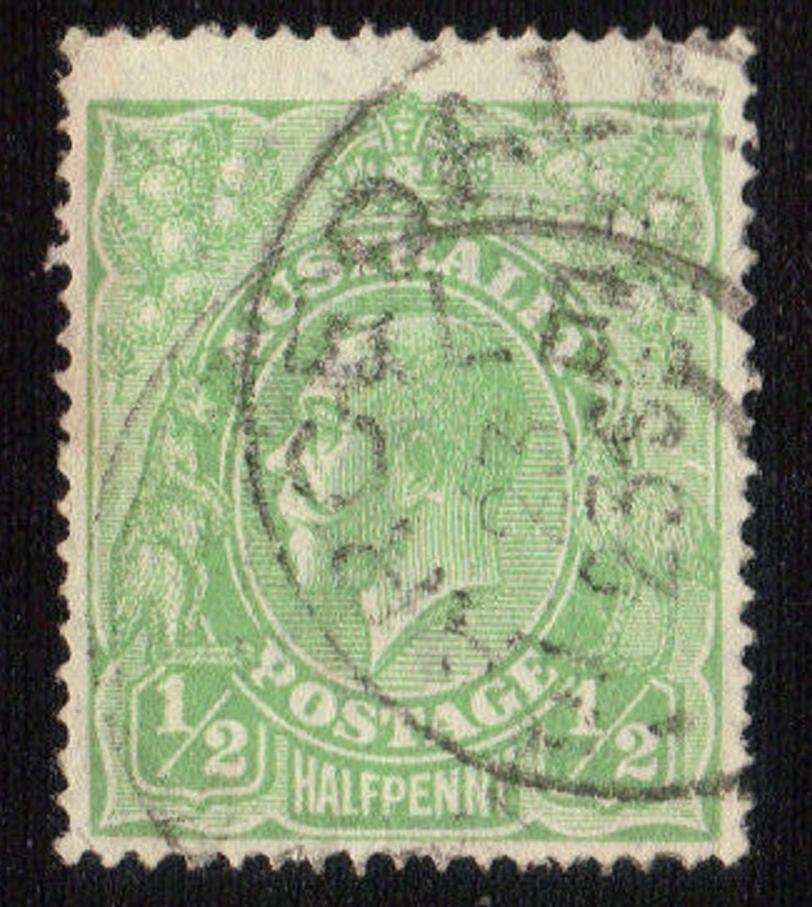 |
|
Send note to Staff
|
| Edited by edw_kim - 06/02/2017 8:44 pm |
|
|
Pillar Of The Community
United States
8956 Posts |
|
|
Looks like the normal stamp to me. Both !'s are the same size as far as I can tell, but if you'd like to support the APS please send it to them.
Peter |
|
Send note to Staff
|
|
|
Pillar Of The Community
United States
3288 Posts |
|
|
I copied both images and opened them with IrfanView 32bit viewer which has a measure tool. Although I didn't know what dpi the images were, the tool indicates that both numerals are the same width. 7 and 20 pixels in this case. I know it can't be precise, but it's closer than eyeballing them.
I think the right numeral looks narrower because of the bits of cancellation which also make it look crooked. |
|
Send note to Staff
|
|
|
Moderator

United States
12330 Posts |
|
|
They are the same width. 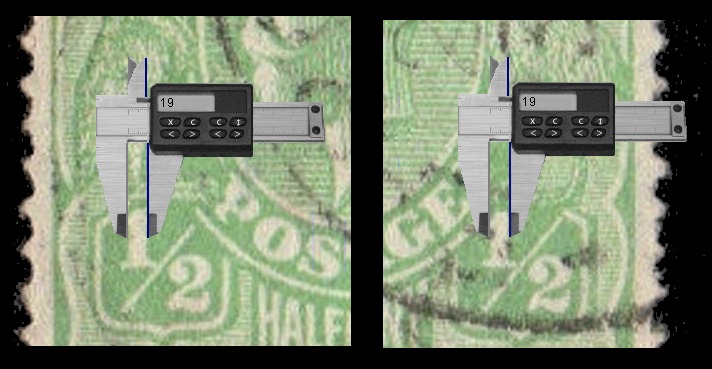 Please feel free to use the 'Donate' button to give back to the community. Don  |
|
Send note to Staff
|
|
|
Valued Member
235 Posts |
|
|
Moderator
United States
12330 Posts |
|
|
Pillar Of The Community
United States
6756 Posts |
|
|
The Scott catalog does a disservice by listing the variety as 'Thin "½" at right'. Other catalogs have it as 'thin 1'. The only thing to look at is the "1". |
|
Send note to Staff
|
|
| |
Replies: 15 / Views: 2,923 |
|




 Posted 06/01/2017 04:10 am


