|
This page may contain links that result in small commissions to keep this free site up and running.

Welcome Guest! Registering and/or logging in will remove the anchor (bottom) ads. It's Free!
To participate in the forum you must log in or register.
| Author |
 Replies: 154 / Views: 50,866 Replies: 154 / Views: 50,866 |
|
|
|
Rest in Peace
United States
1189 Posts |
|
|
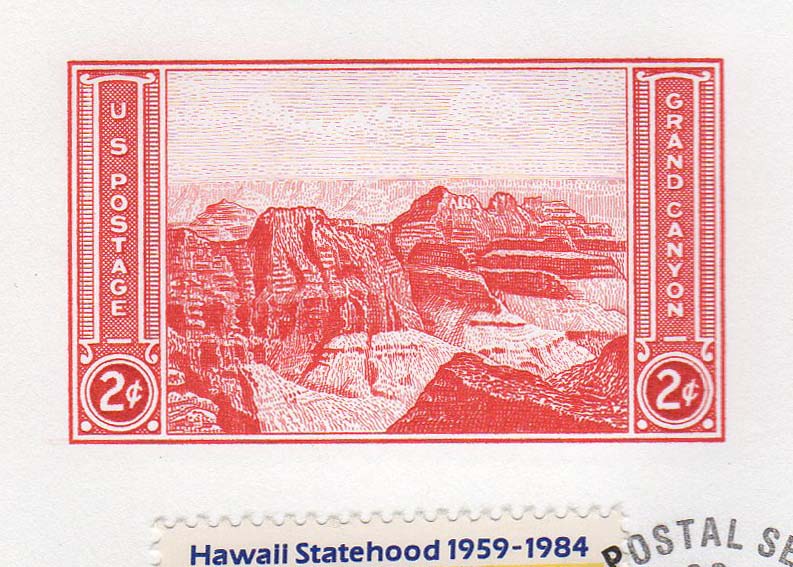
Scott 757As with all of the Farley Reprints, the two cent value of the National Parks series was issued March 15, 1935. The stamp, like its predecessor, depicts Grand Canyon National Park. This is the imperforate version, shown below. 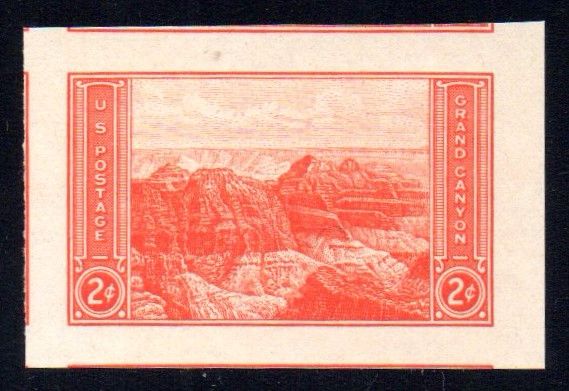 While a nicely centered set of singles is how many collectors prefer to showcase this series, I like larger multiples. Here's a block of nine: 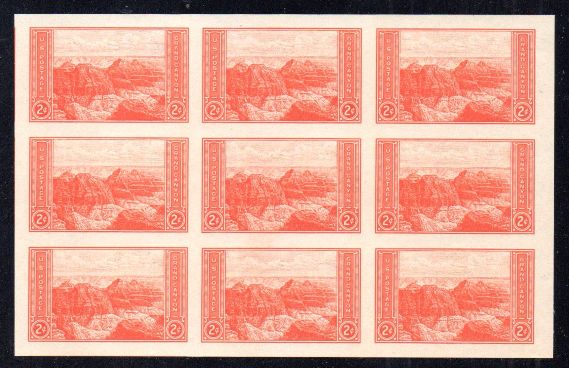 The key position piece for any of the Farley Reprints is the centerline block. There is only one per sheet where the four panes all meet. Here's a block of sixteen with the centerlines: 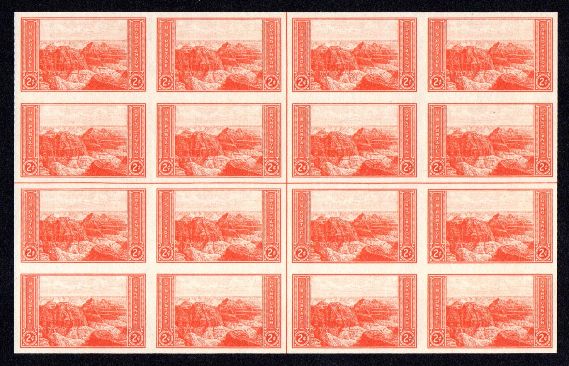 The next type of position pieces many collectors desire are the arrow blocks. These occur in the margin between the panes. They occur at the top, both sides and the bottom of the uncut sheet. There are only four of these per sheet. Here's the set of arrow blocks: 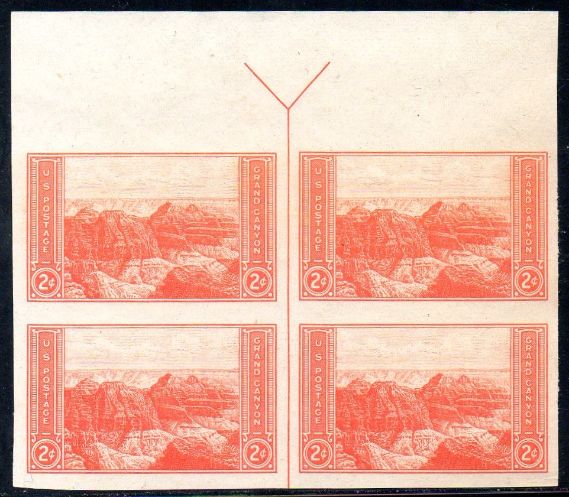 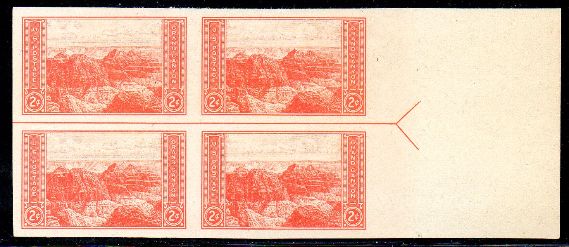 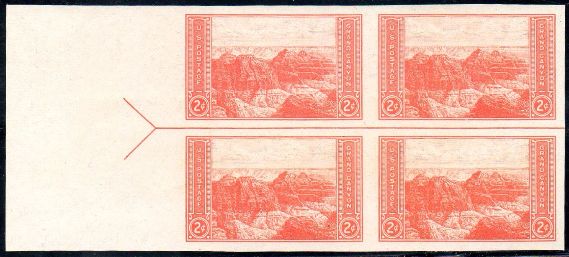 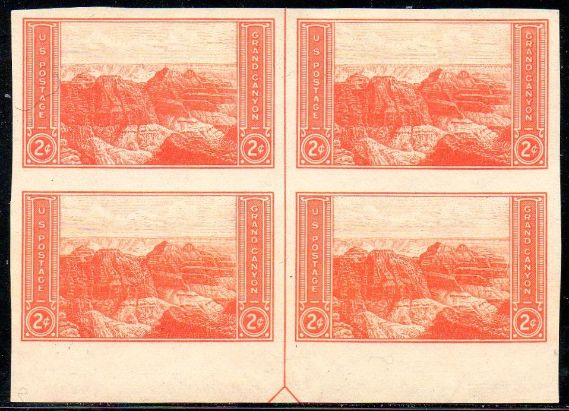 There were four plates used to print these stamps. As with the previous issue, Scott 756, there are the same three types/positions of plate blocks for each plate. Here are the complete types/positions for plate 21257. Note the large margins on the top blocks. Unfortunately, some collectors have trimmed the margins to fit mounts rather than get the size mount needed. If you want to collect these plate blocks, make sure the margins are all there! 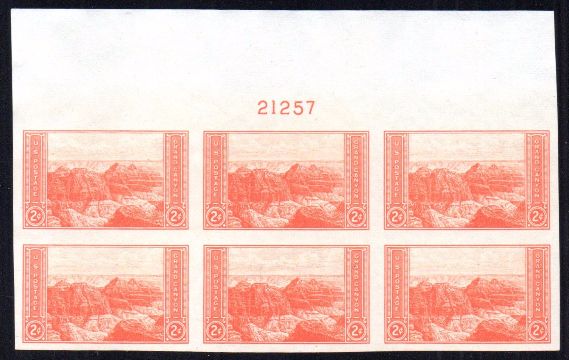 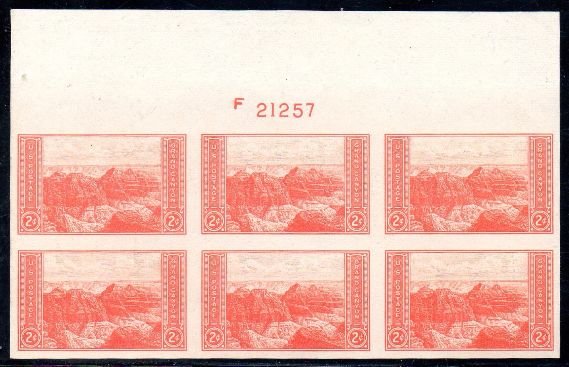 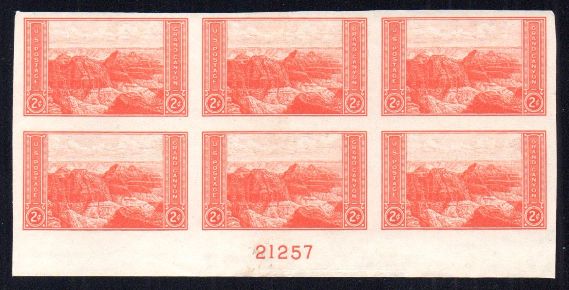 You will note that the last plate block, the bottom position has a much smaller margin than the top plate blocks. This is normal for the horizontally oriented stamps. First Day Covers were prepared by a variety of cachet makers. Ralph Dyer prepared the following cachet. It is Planty-Mellone 757-8. 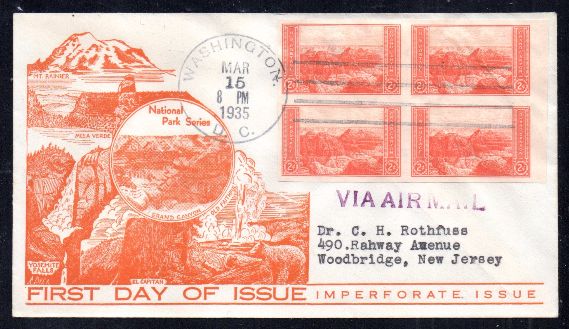 Sometimes, one cachet maker uses and modifies the design of another. The next FDC is clearly a take on the Ralph Dyer design, but sufficiently modified to be different. This is by an unknown maker and is Planty-Mellone 757-8a because it is still so close to the Dyer cachet. 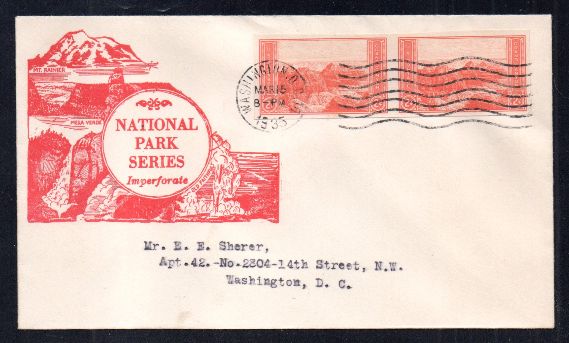 Individuals sometimes created their own cachets. The following FDC is not listed in Planty-Mellone yet, and is likely to have been an individual creation of one. 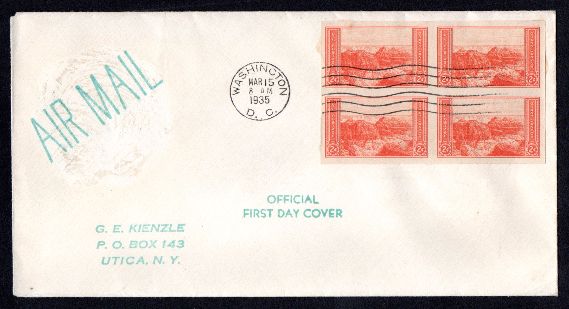 Finally, here's a non-FDC use. I'm not sure whether this was a philatelic creation or if it was used as a stamp which was available. If anyone can shed some more light on this cover, I'd love to hear about it. 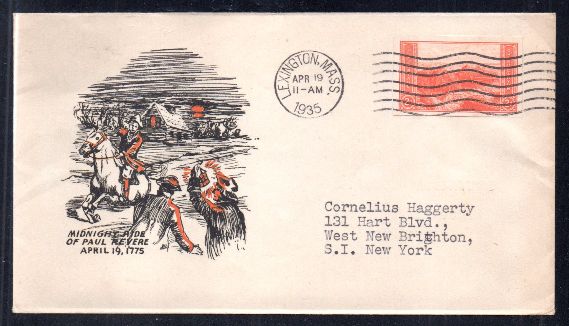 As you can see, this is not a First Day cancel as those were March 15, 1935. While it definitely connects the date with the cachet for the Midnight Ride of Paul Revere, there doesn't seem to be any significant connection to the stamp I can find. Next up will be the three cent stamp, Scott 758. |
Send note to Staff 
|
|
|
Rest in Peace
United States
1189 Posts |
|
|
Scott 758The three cent reissue, using the same design as the perforated stamp, was issued March 15, 1935. Here's an example with nice wide margins. 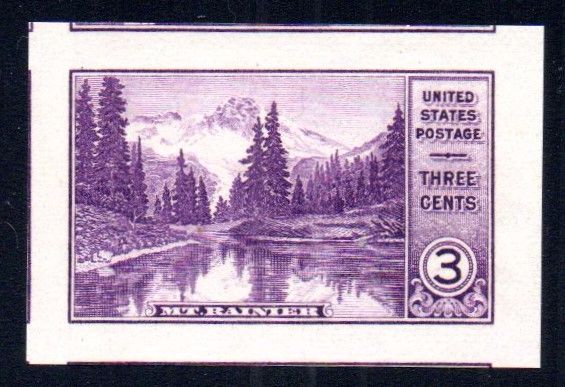 As I've mentioned before, I like the look of larger blocks. Here's a block of nine. 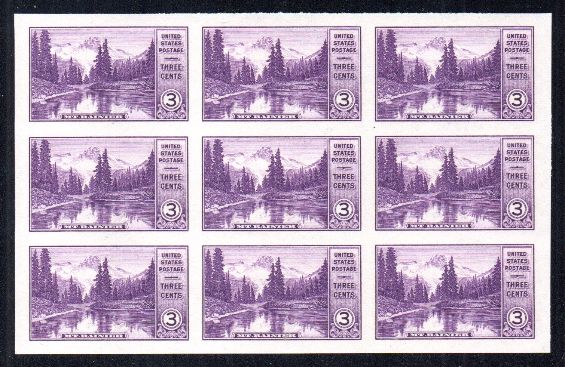 One way to collect the Farley Reissues I've not previously discussed would be to add line pairs to your collection. These come with both horizontal and vertical lines, which in the perforated stamps were the guidelines used to separate the panes into the sheets of fifty stamp subject that were sent to the post offices for sale to the public. Here is a vertical pair with a horizontal line and a horizontal pair with a vertical line: 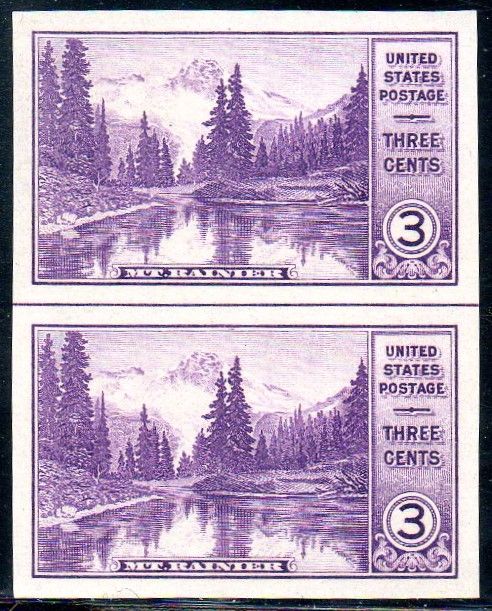 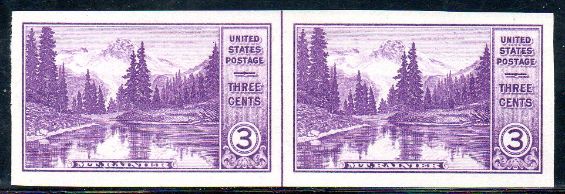 If you prefer blocks of four, which some collectors do, these are also available. Here are the blocks showing the same dividing lines: 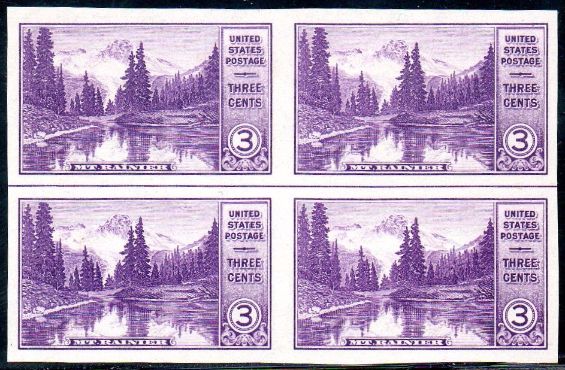 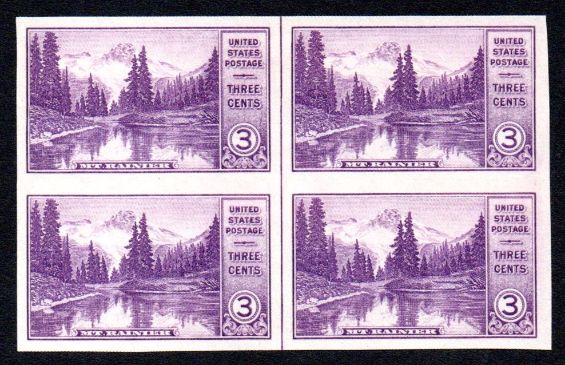 The key position, as with all of the National Parks series, is the centerline block. This is where the two dividing lines cross. Here's a centerline block of four: 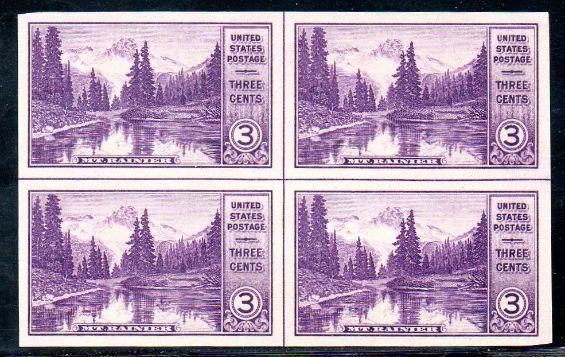 Or perhaps you prefer the larger blocks, as I do. Here a centerline block of sixteen: 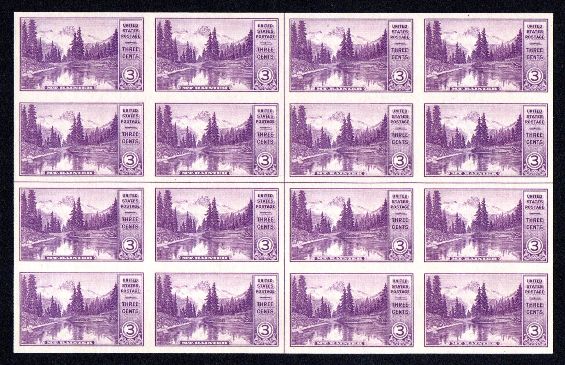 There are four positions which have the arrows. They are the margin blocks at top, left, right and bottom on each sheet. These are shown below: 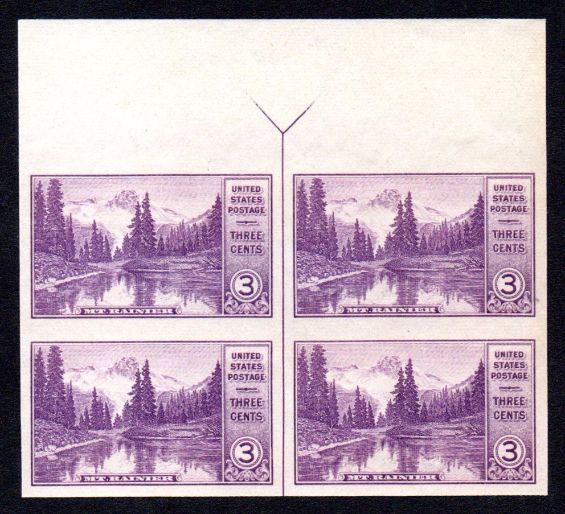 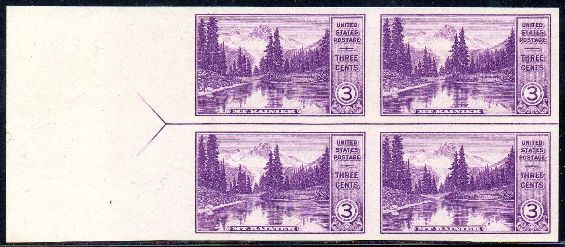 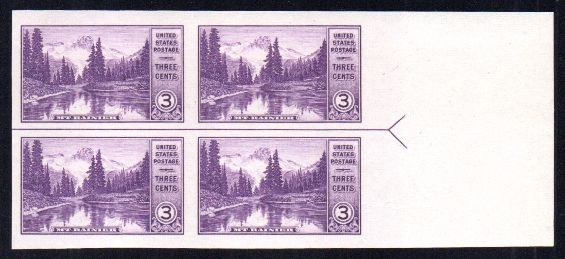 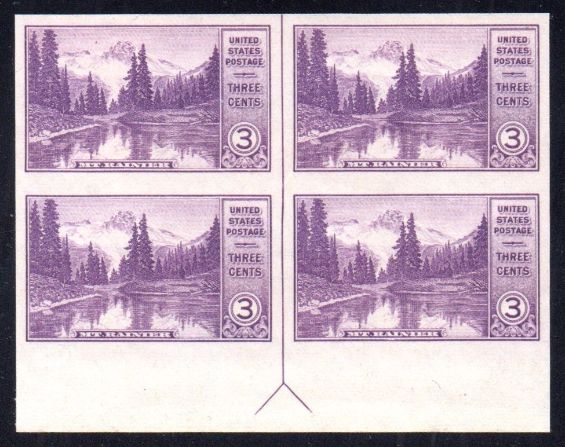 There were four plates used in the production of the three cent National Parks Reissue stamps. The full set for plate number 21264 is shown below: 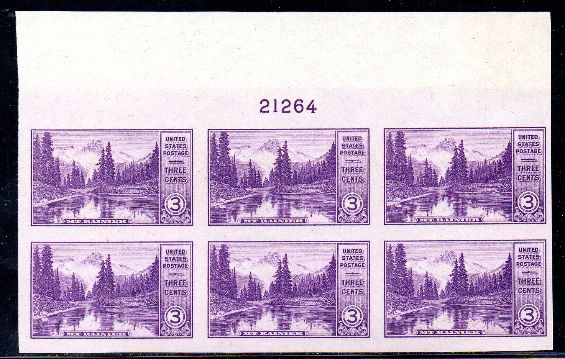 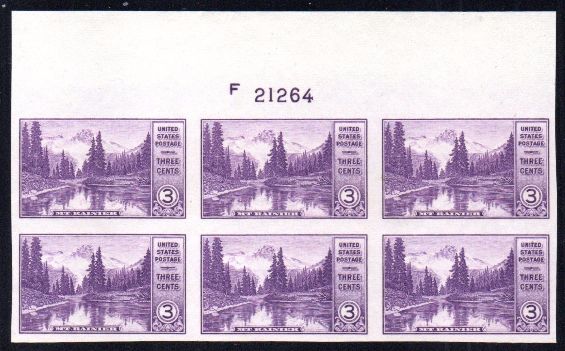 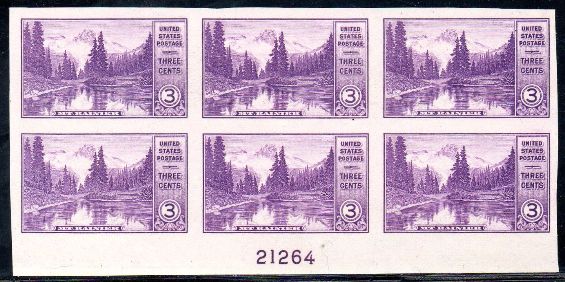 First Day Covers include a series which is unique to this stamp, prepared by Dr. John H. Selby on legal size envelopes. These are listed as Planty-Mellone 758-43, 758-43a and 758-43b. 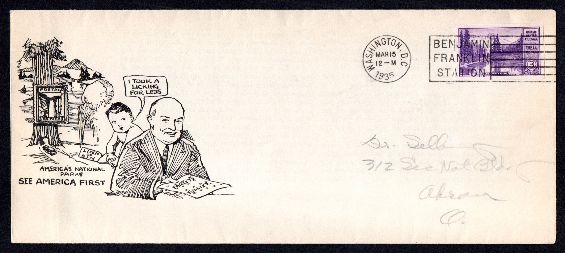 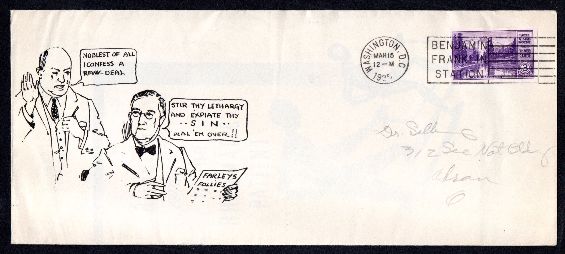 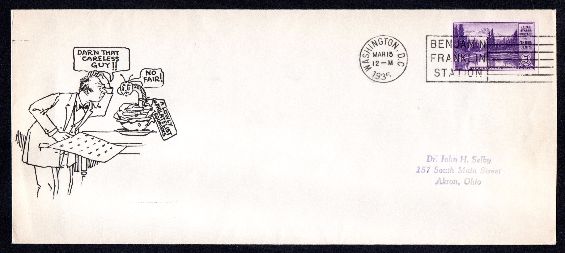 The Pennsylvania Philatelic Co. of Reading, PA created a cachet of their own for this stamp, or perhaps just used existing advertising envelope stock. I've not seen this used as a regular envelope yet. If anyone has an example, used with any stamp other than the three cent National Park Reissue, I would very much like to see it. Here's their FDC: 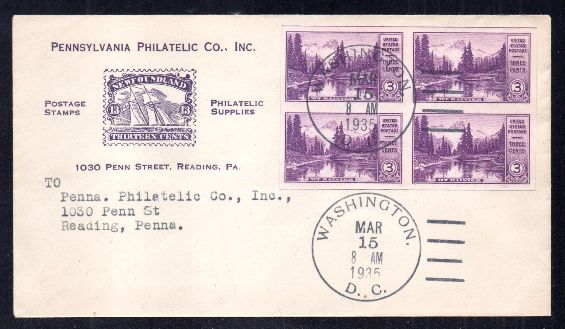 Finally, here's a non-FDC use. It is still philatelic in nature as it shows a horizontal pair with left margin on an AM-77 First Flight cover, sent December 1, 1936. Given that the stamps used had been around over a year and a half, this was a deliberate usage which is tied to the area of the cover. 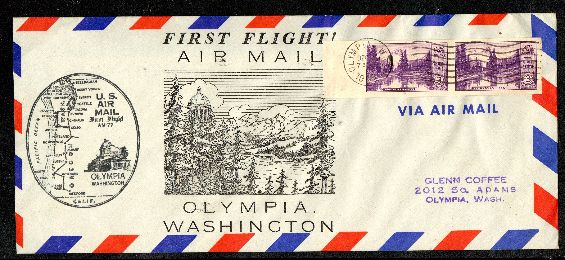 The next installment will be for Scott 759, the four cent issue. As always, comments and questions are welcome. |
|
Send note to Staff
|
|
|
Rest in Peace
United States
1189 Posts |
|
|
Scott 759Scott 759 is the four cent Farley Reprint of the Mesa Verde National Parks issue. It was issued in brown, just as the perforated 1934 issue. An example of a single is presented here: 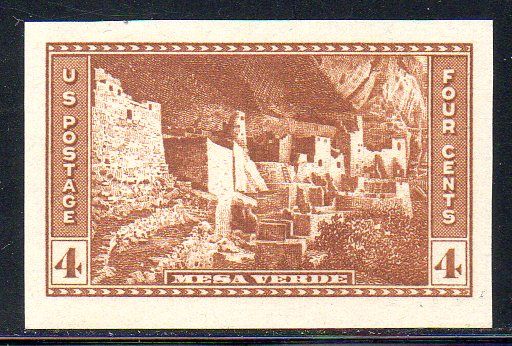 The distinguishing position pieces in the National Parks series are those with guidelines between the stamps. They can be collected in pairs and blocks. Below are the pairs with horizontal and vertical guidelines, followed by blocks. 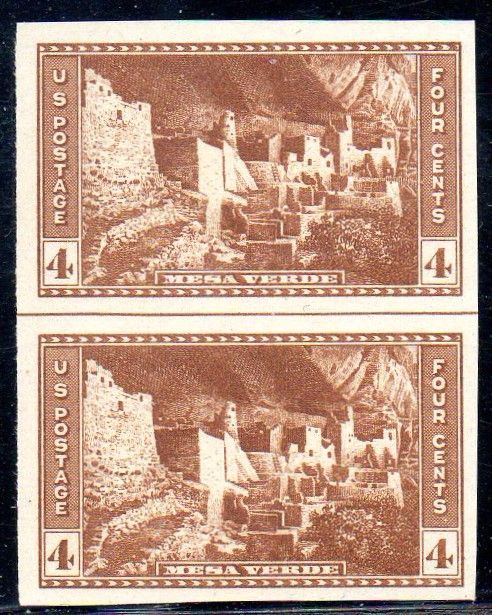 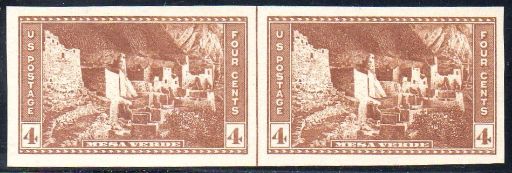 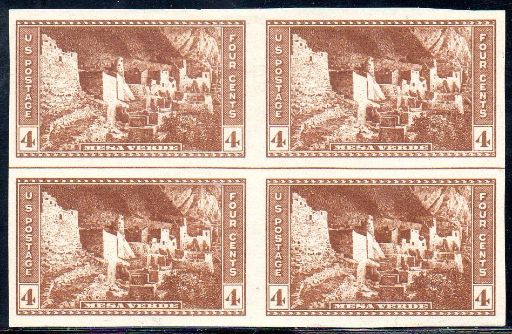 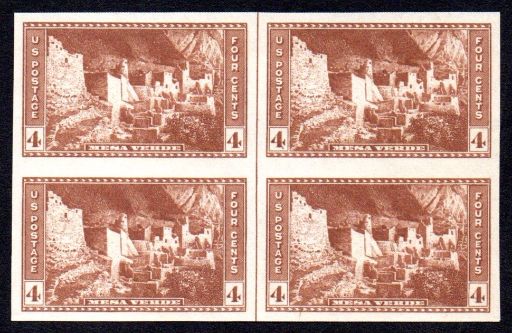 The key piece for any of the issues is the centerline block. It occurs only once per sheet of 200 and is the point where the four panes of fifty come together. Below is the centerline block of four: 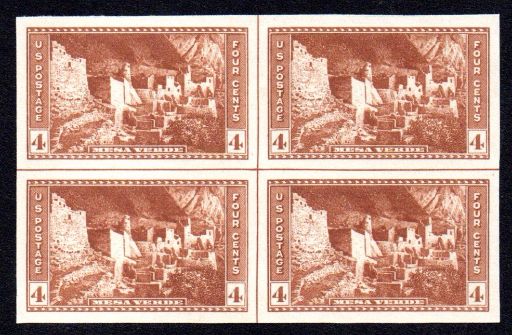 As I've mentioned before, I really like larger blocks of stamps as I feel they show the beauty of the issue better. Here's a centerline block of sixteen: 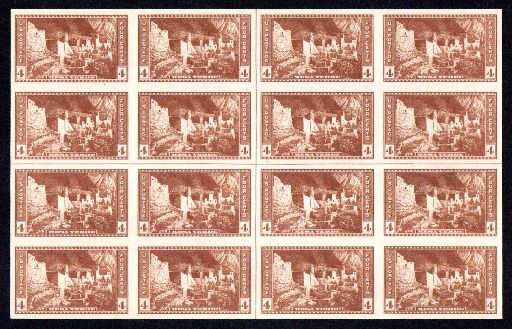 Next up are the arrow blocks. These occur on the margin of the sheet. They are located at the top, both sides and the bottom. Here are the arrow blocks for this issue: 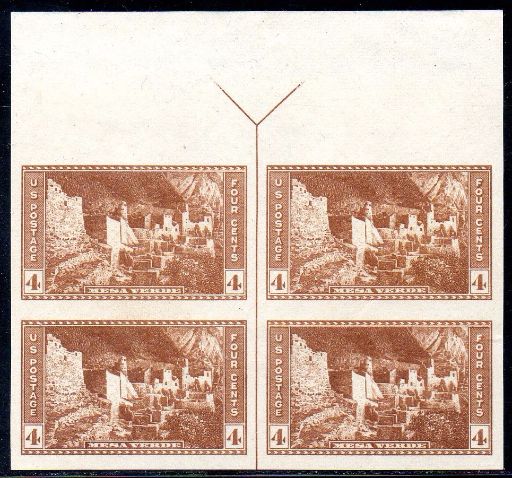 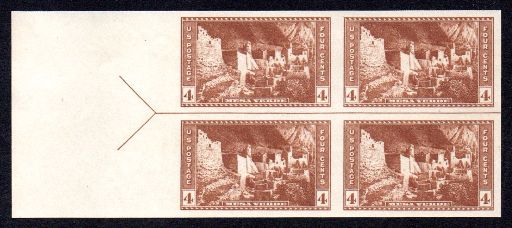 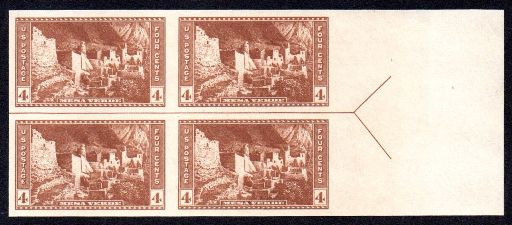 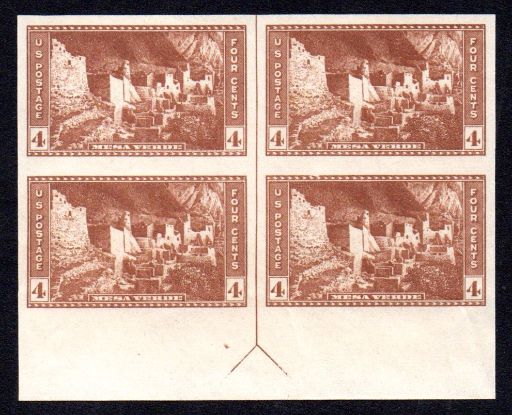 When building a collection of the position pieces, it is important to pay close attention to the selvage. Unfortunately, many of the pieces which require selvage as part of them have been trimmed. For this issue, it is the bottom margin which will be the smallest. The other position pieces usually sought are the plate blocks. There were four plates used in the production of the four cent stamp. Here is the full set of plate positions for the Mesa Verde issue: 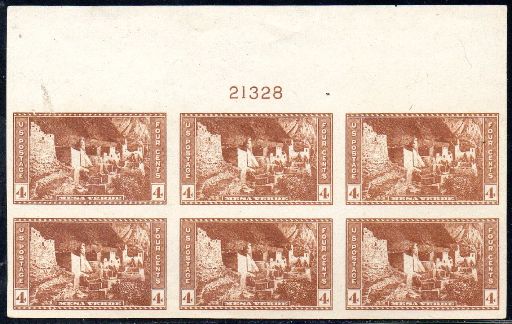 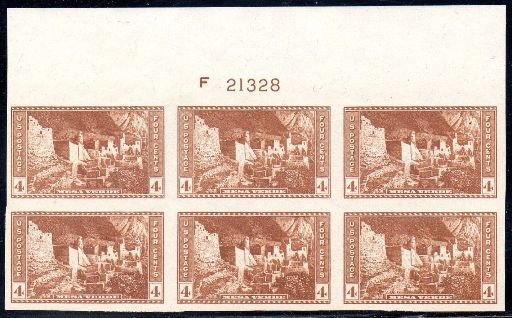 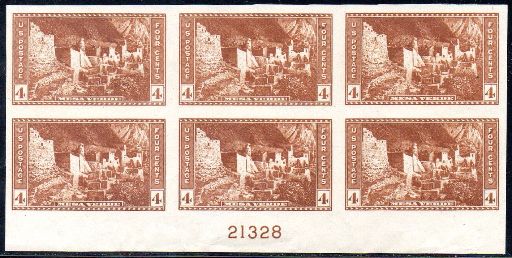 Looking at the First Day Covers, there are many from the known cachet makers. These are usually listed in Planty-Mellone's catalog for the series. What is not listed are the color varieties. The next two items show two different colors used by the same cachet maker. These are the Ralph Dyer cachets, listed as matching the stamp color in Planty-Mellone, as Planty-Mellone 759-8. You'll note that the second cover clearly does not match the stamp! 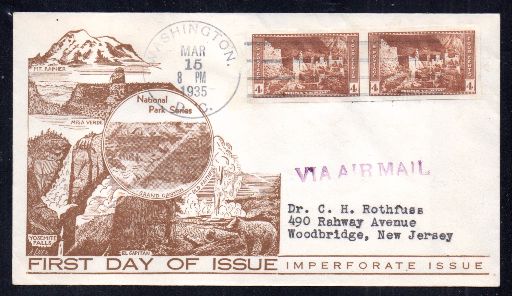 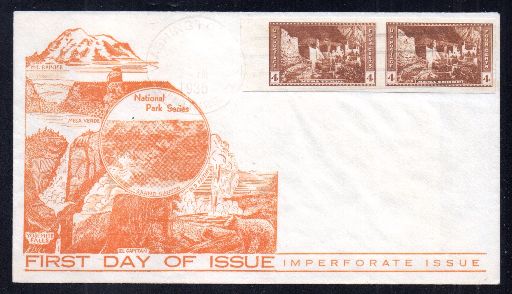 A generic type of cachet is sometimes used. One such cachet which was used on all issues of the National Parks Reprints was this one, showing an open stamp album. This is Planty-Mellone 759-15. 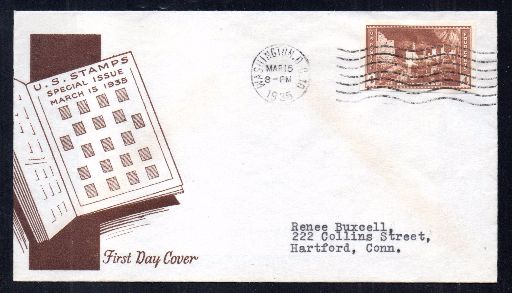 The final cover offered for your consideration shows the work of what is believed to be an individual collector as a simple cachet. There are many different types, as each collectors created their own. Virtually none are listed in Planty-Mellone. Here is the cover. 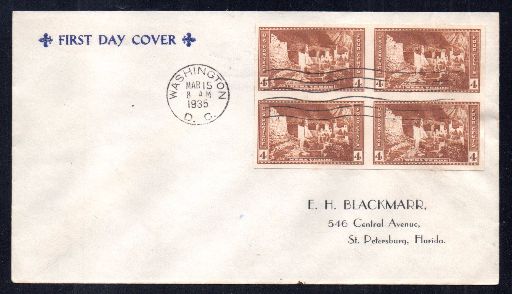 The next installment will discuss Scott 760, the five cent Yellowstone National Park Reissue. As always, comments and postings of covers or collateral material related to these series is greatly appreciated. |
|
Send note to Staff
|
|
|
Rest in Peace
United States
1189 Posts |
|
|
Scott 760This addition to the thread will cover Scott 760, the five cent blue Farley Reissue, depicting "Old Faithful" in Yellowstone National Park. The design is the same as the perforated 1934 stamp. Here is a single, the format most collectors will have: 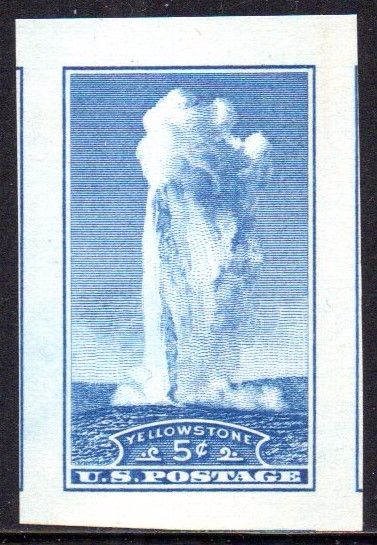 The fact these were printed in panes of two hundred (four sheets of fifty each) and issued imperforate allowed collectors to create line pairs and blocks. These are the horizontal pair with a vertical line and vertical pair with a horizontal line: 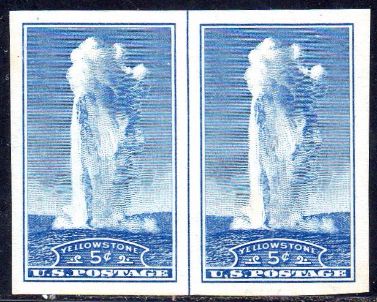 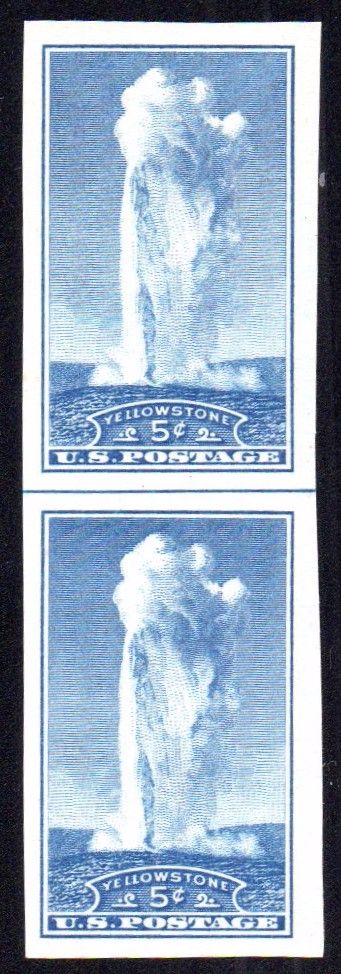 Using the same positions, blocks were created. These are the blocks of four with a horizontal line and a vertical line: 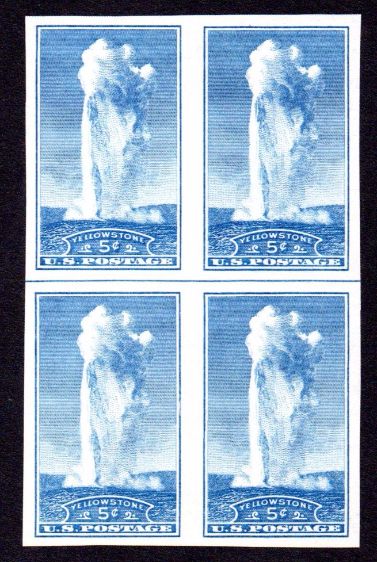 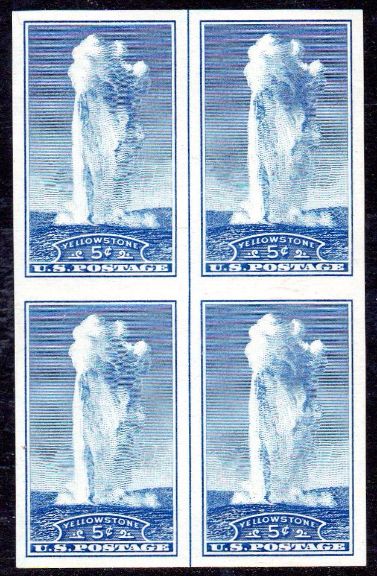 The ultimate position piece is the centerline block, where all four sheets meet. Here is the centerline block of four: 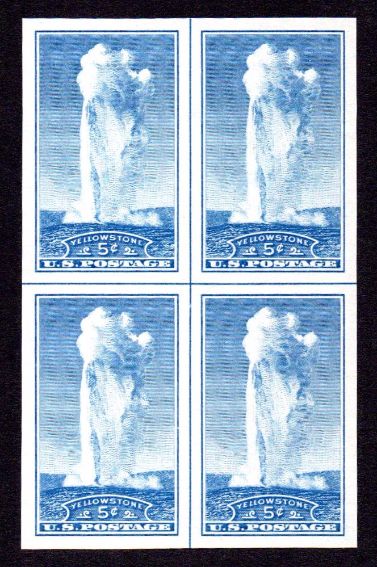 As anyone who has been following this thread knows by now, I like larger blocks. Here's a centerline block of sixteen: 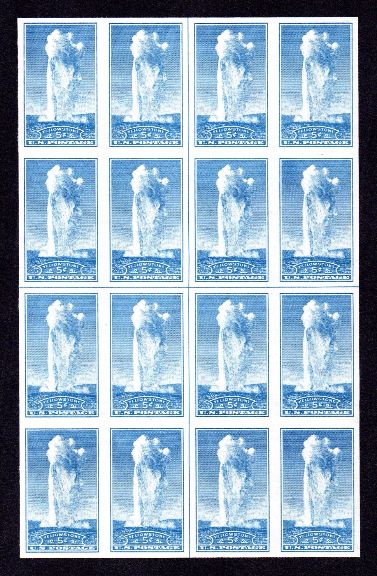 Another anomaly with the imperforate sheets are the arrow blocks of four. I suppose you could have a pair with the arrow, but I don't know anyone who collects these position pieces in that format. These are found on the imperforate sheets, at the top, bottom, right and left margins where two sheets adjoin. In the normal printing process, these are the guidelines to help cut the sheets apart evenly, which is why they are not found on perforated sheets, except at the edges. You would only be able to have half the arrow; the other half would have been on the sheet which had adjoined it prior to cutting into panes for distribution to the post offices. Here are the four arrow blocks of four: 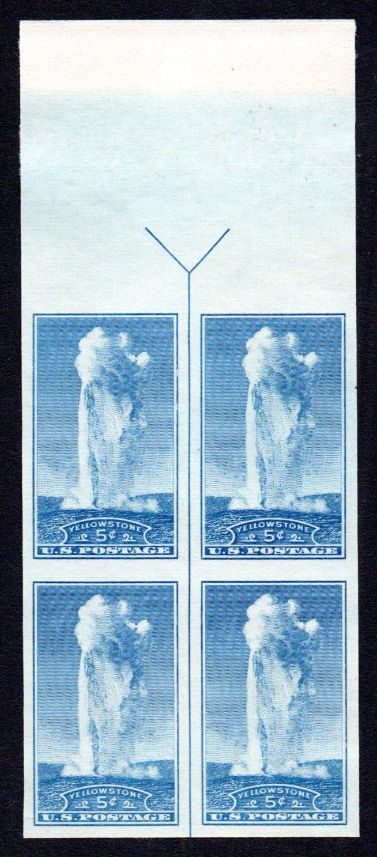 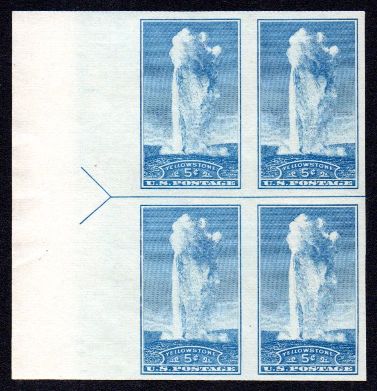 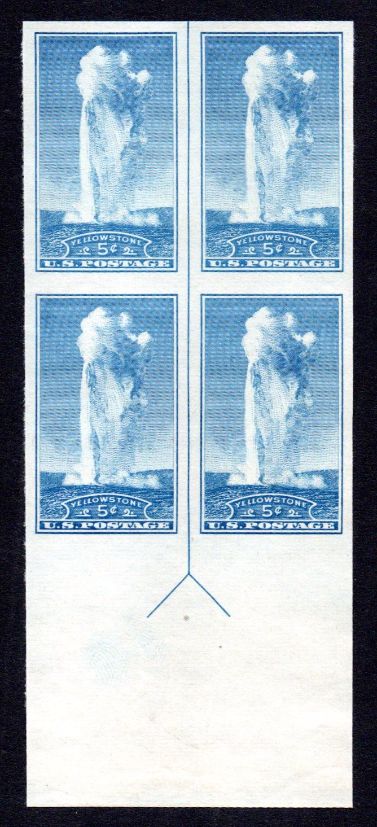 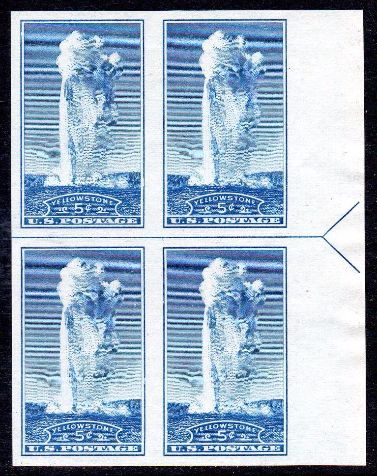 The other collectible position is the plate block. There were only four plates used in the printing of the Farley Reissues for each design in the series. This means a complete set of plate blocks for each design would consist of twelve plate blocks. The bottom margin on the horizontal plate blocks and arrow blocks is usually very small. On the vertical issues, the smallest margin is on the side, meaning that all plate blocks should have large margins. Be wary of any plate block with a smaller margin as it has been trimmed. The following is the complete set of plate blocks for plate number 21279. Note the full margins. 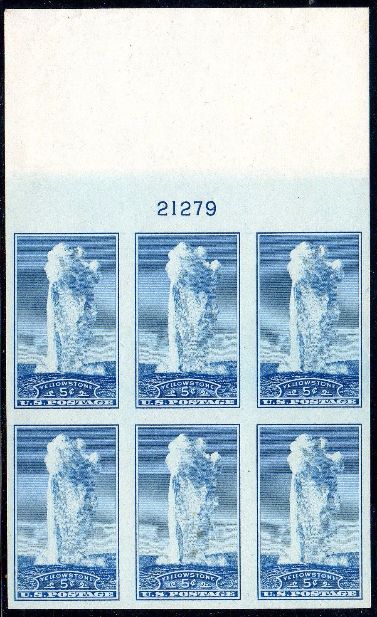 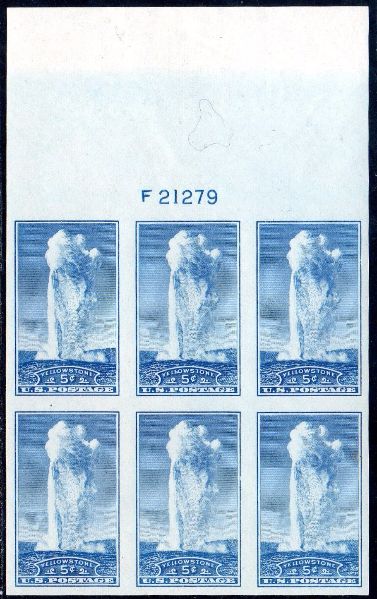 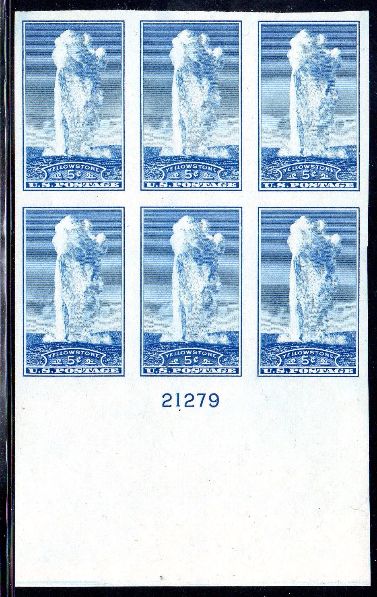 The "similarity" of some cachet designs has been mentioned before. Here's a pair which again illustrate this practice. The first cachet is a Ralph Dyer cachet, Planty-Mellone 760-8. The second uses the same basic design, with a few modifications and reduced size. It is Planty-Mellone 760-8a. 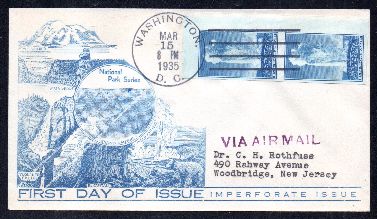 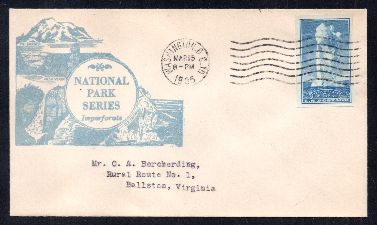 The next two covers illustrate another practice. Some cachet makers used the same cachet, but printed them in different colors. These were used most often for different stamps in the series, with the color of the cachet matching that of the stamp. Others, as in this case, just made cachets in different colors for the same stamp. These are both Kapner cachets, both Planty-Mellone 760-20. As both have blocks of four, each would have more than paid the air mail rate in 1934. 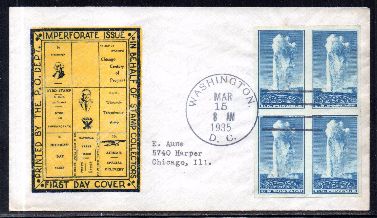 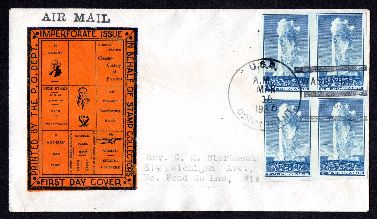 As always, comments and questions are welcome, as is material you may have to complement this thread. One note: The moire effect is due to my scanner and is not part of the stamps. The next installment on this thread will discuss the six cent issue, Scott 761. |
|
Send note to Staff
|
| Edited by Stampman2002 - 09/17/2017 4:55 pm |
|
|
Pillar Of The Community
United States
3276 Posts |
|
|
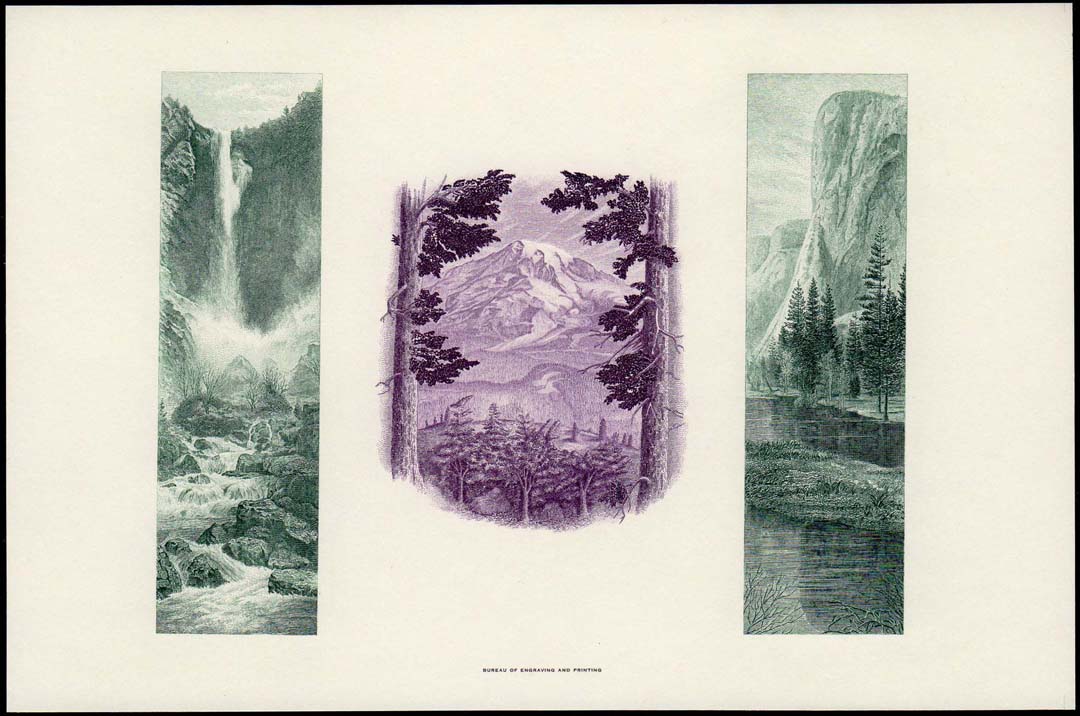
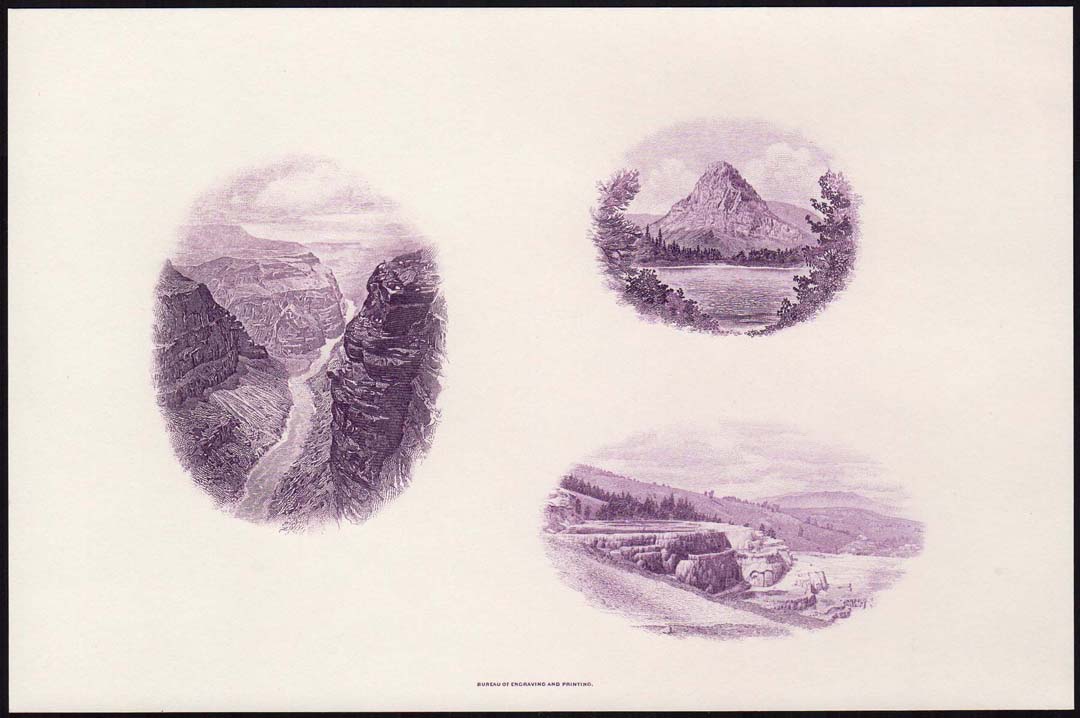
Five more issues to yet see, and I've used all my superlatives, and am down to just Wow!  Beautiful material. Those position pieces start getting large! Odd effect! Makes them look like essays. |
|
Send note to Staff
|
|
|
Pillar Of The Community
United States
1866 Posts |
|
|
Rest in Peace
United States
1189 Posts |
|
|
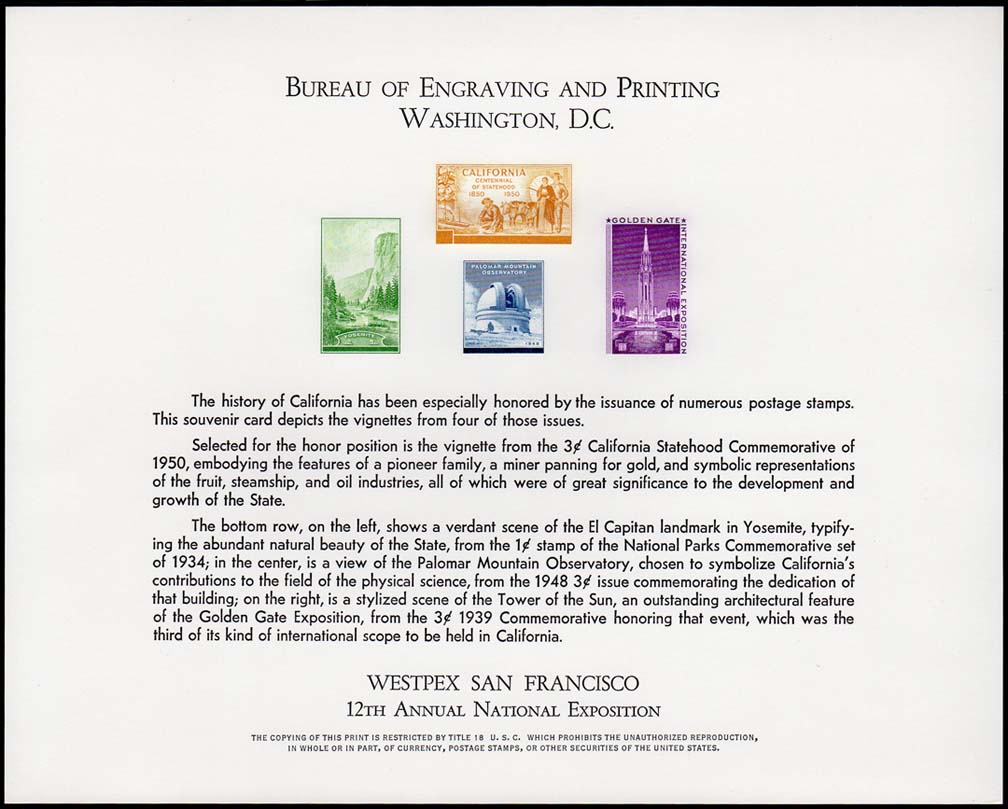
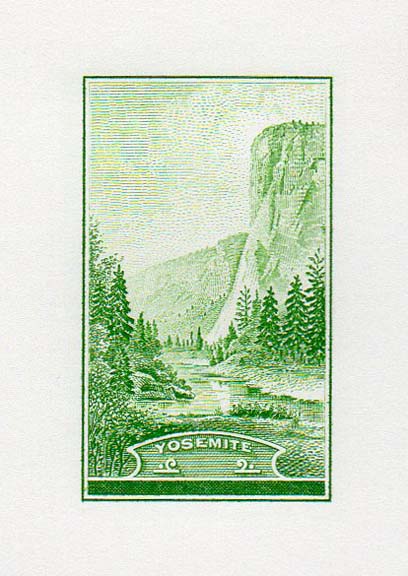
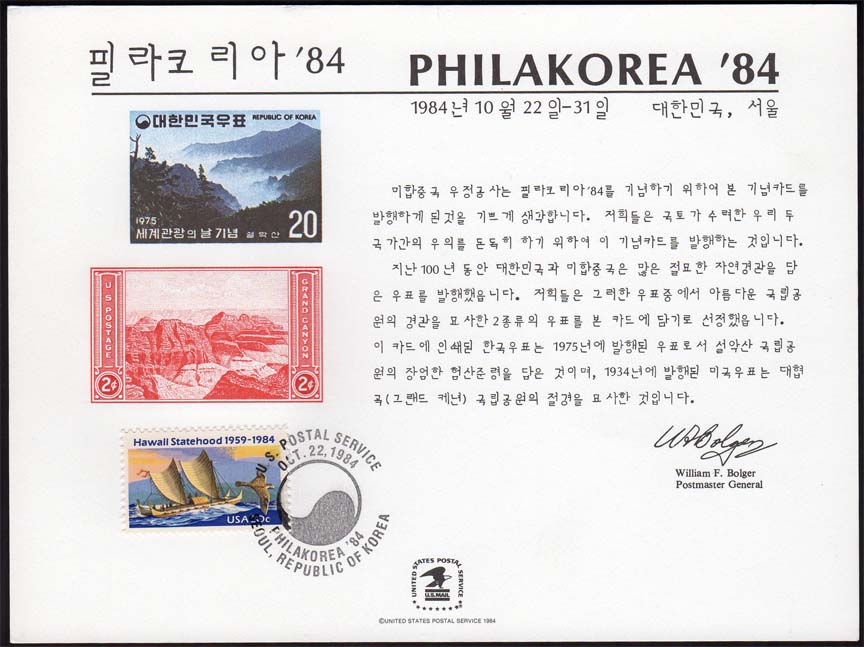
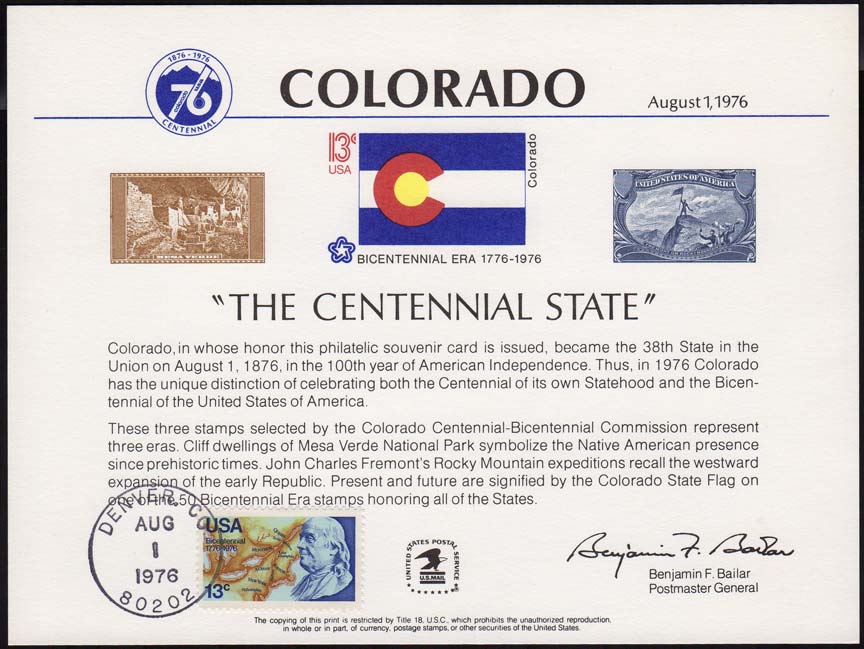
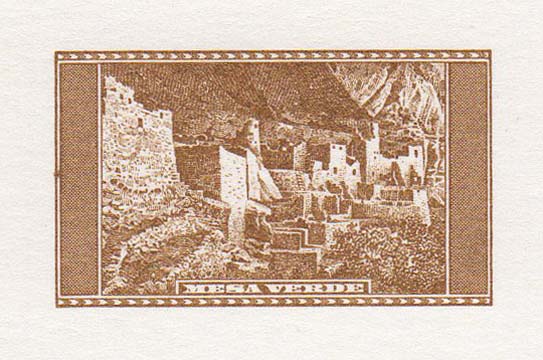
GregAlex, thanks for sharing the souvenir cards! I had not thought to look for collateral material related to the 1934 National Parks series in the souvenir cards. I'll be looking to add those to the collection as I find them. |
|
Send note to Staff
|
|
|
New Member
United States
4 Posts |
|
|
As someone that collects Earth's physical features on stamps, I really enjoyed this topic. Thanks to all for sharing! |
|
Send note to Staff
|
|
|
Rest in Peace
United States
1189 Posts |
|
|
jahayward, Welcome to the Forum! Glad to hear you are enjoying this thread. There will still be another eleven installments as I go through the Farley Reissues (Scott 752-771), so keep coming back for more insights and material. |
|
Send note to Staff
|
|
|
Moderator

United States
4788 Posts |
|
|
Pillar Of The Community
United States
568 Posts |
|
|
Rest in Peace
United States
1189 Posts |
|
|
Scott 761The six cent National Parks reprint uses the same image for the 1934 six cent stamp, showing Crater Lake. Below is a single of the issue: 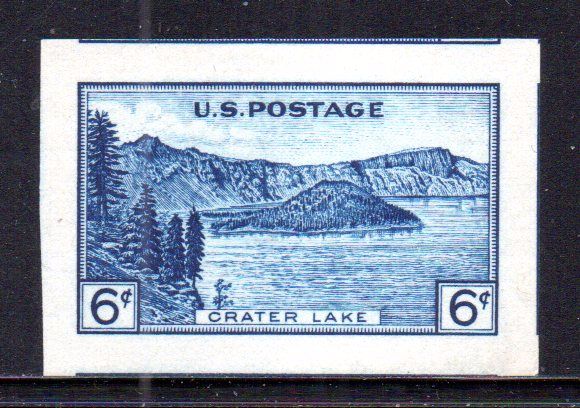 To continue with the position pieces, the adjoining panes with their guidelines allowed collectors to create pairs and blocks showing these guidelines. The following are horizontal pairs with vertical lines and vertical pairs with horizontal lines, followed by the same in block formats: 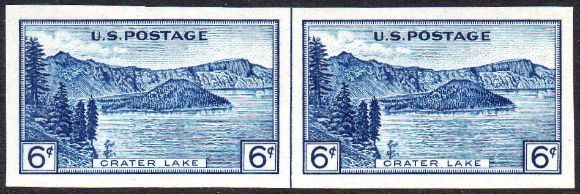 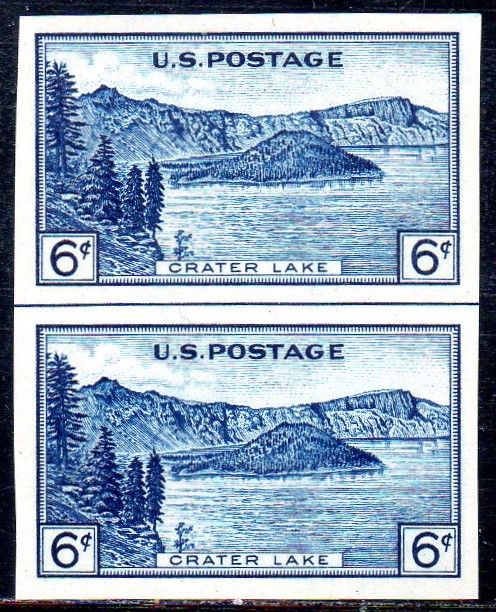 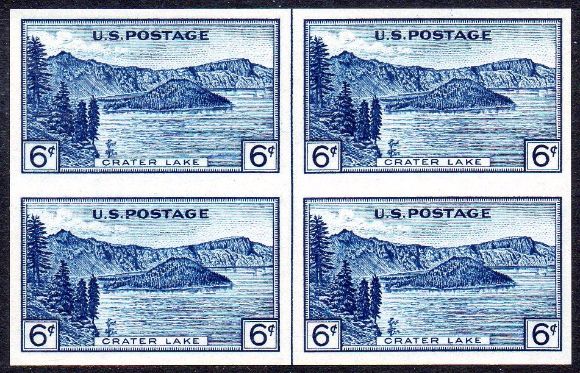 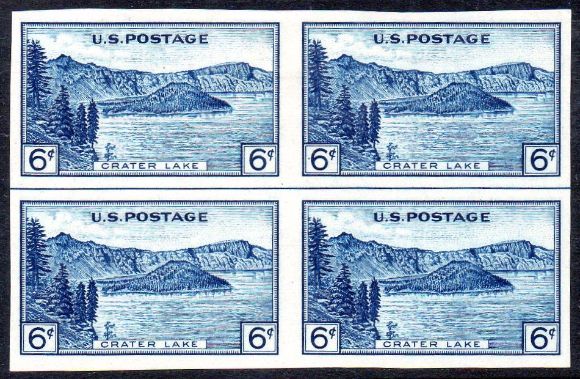 The ultimate line item is the centerline block. Here's a centerline block of four: 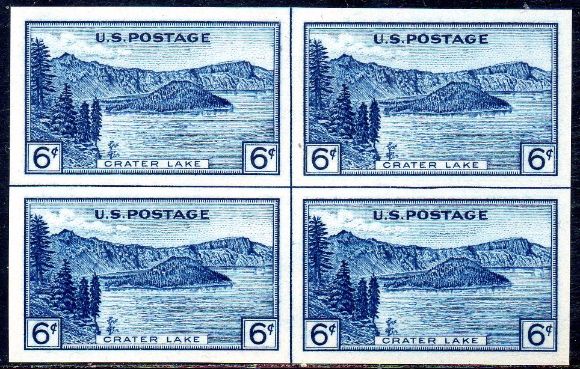 As with the other issues shown, my preference for larger blocks is demonstrated by this centerline block of sixteen: 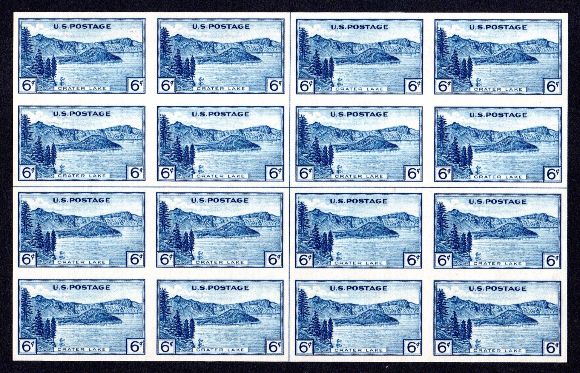 The four arrow blocks, where adjoining panes meet in the sheet, were created by collectors as well. One exists on each side of the sheet (top, bottom, left and right). Here are the arrow blocks. As noted in the discussion of the five cent Yellowstone stamp, the bottom margin is the one with the smallest margin on the horizontally oriented stamps. 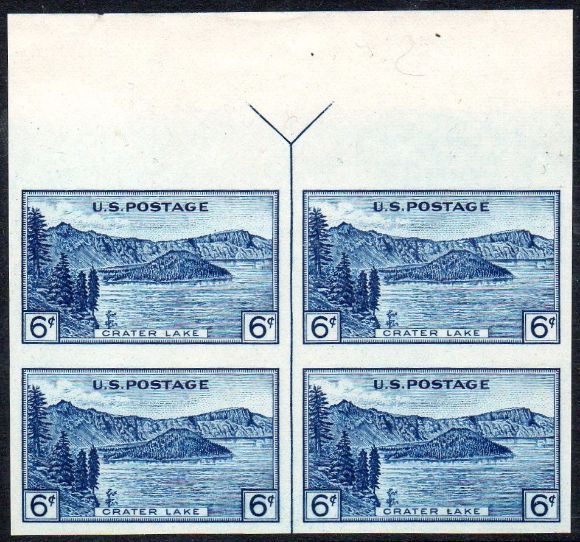 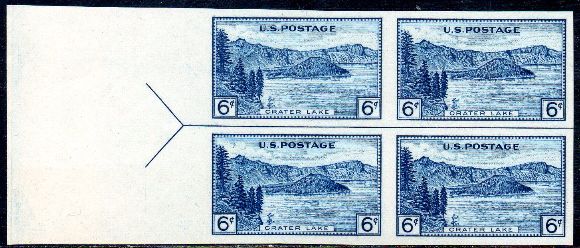 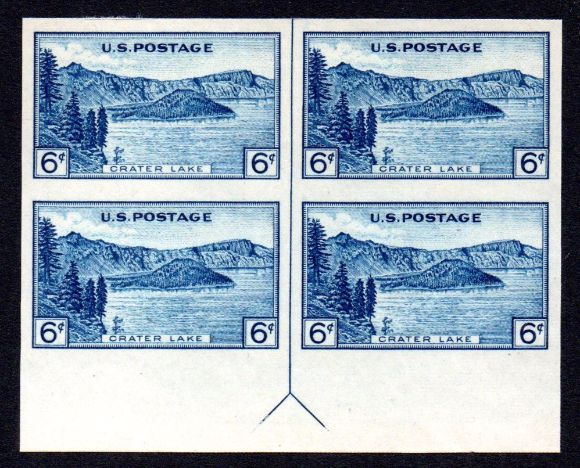 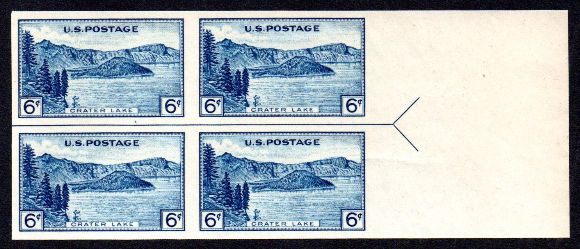 There were four plates used in the production of the six cent issue. The following is a complete set of plates for plate number 21320. 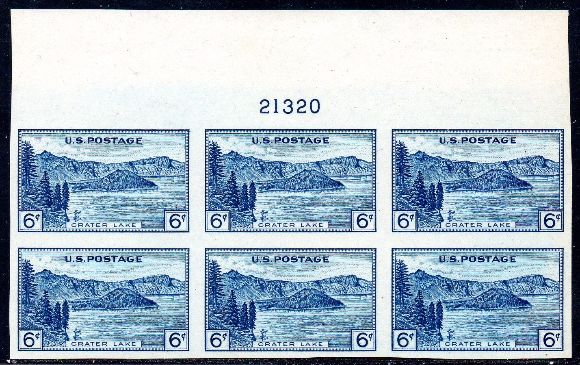 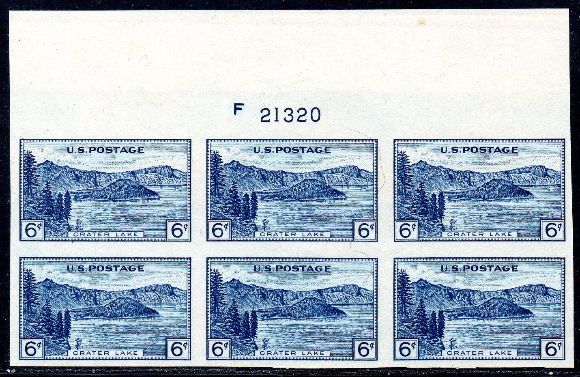 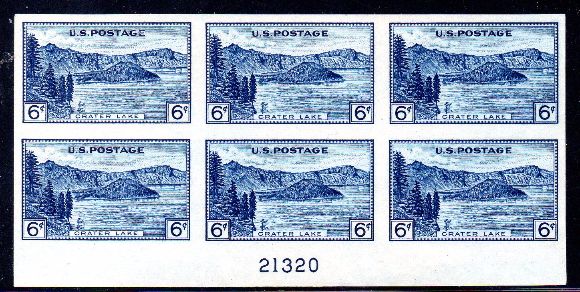 Cacheted First Day Covers for this issue are the same as for others in the Reissue series of the National Parks. The following are some examples of these cachets: The first cachet shown is an A.C. Roessler cachet. This cachet is known for all the Farley Reprints. It is listed in Planty-Mellone as 761-7. 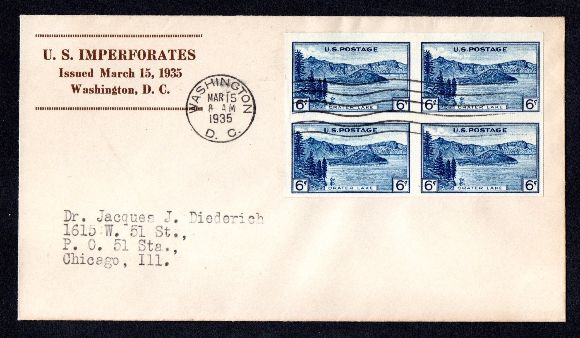 The next cachet is a Fairway cachet. The colors generally match the stamp's color on these cachets, although variations do exist. This is listed in Planty-Mellone as 761-12. 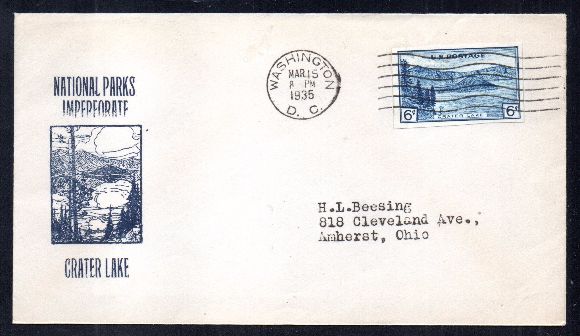 The final cover I'll share is the F. R. Rice cachet, Planty-Mellone 761-32. 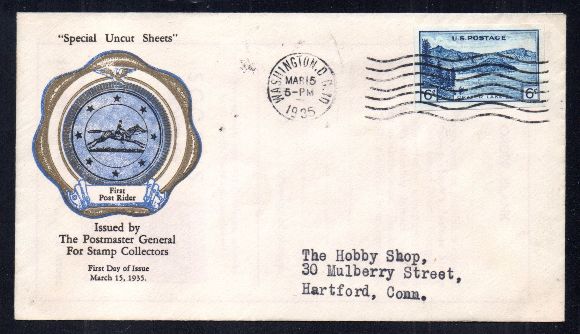 The next issue to be discussed will be the seven cent Acadia National Park Reprint. As always, your questions and comments are welcome. If you have any material which relates to the thread, please share it with us! |
|
Send note to Staff
|
|
|
Valued Member
United States
258 Posts |
|
|
Rest in Peace
United States
1189 Posts |
|
|
Scott 762The seven cent issue, featuring Acadia National Park, mirrors the design used for Scott 746, the perforated version issued in 1934. Below is an example of a single, the format most commonly collected. 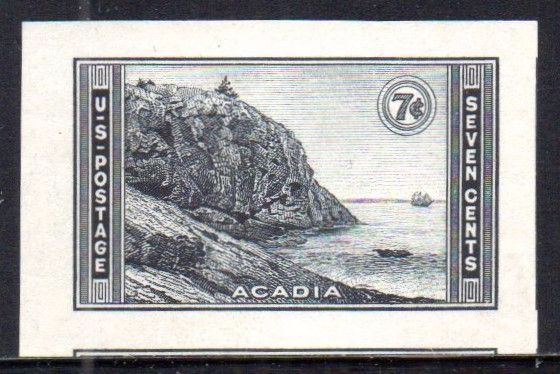 The same types of position pieces exist for this issue as do for the other issues of the National Parks Reprints. These include the horizontal pair with vertical line, the vertical pair with horizontal line and the blocks of four with vertical lines and horizontal lines. These are shown next: 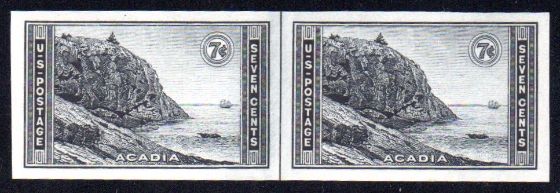 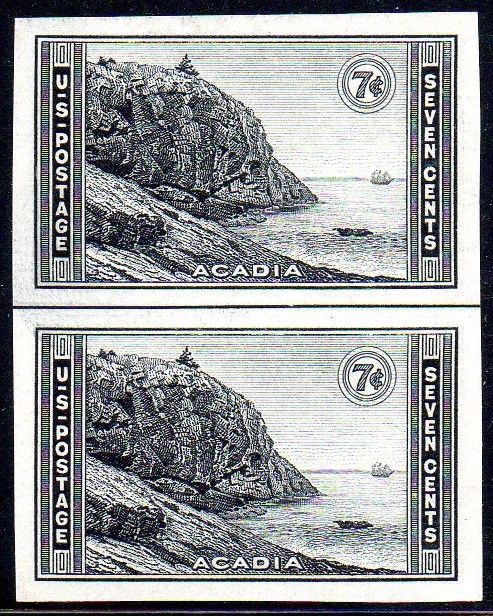 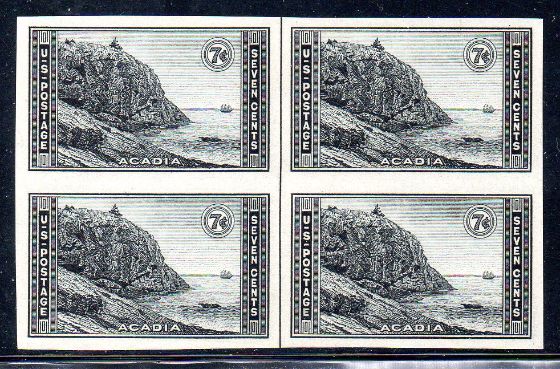 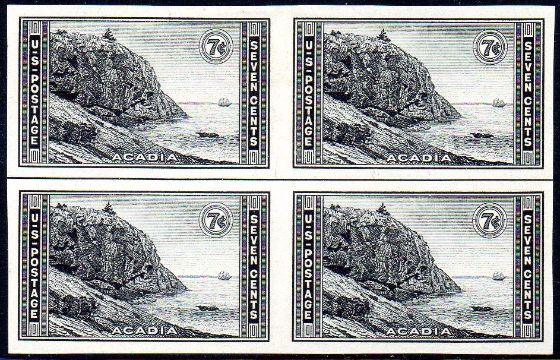 The ultimate position piece, which only appears once per sheet, is the centerline block. These are the point where all four panes of the sheet meet in the middle of the sheet. Here is a block of four, the size most collectors look to acquire: 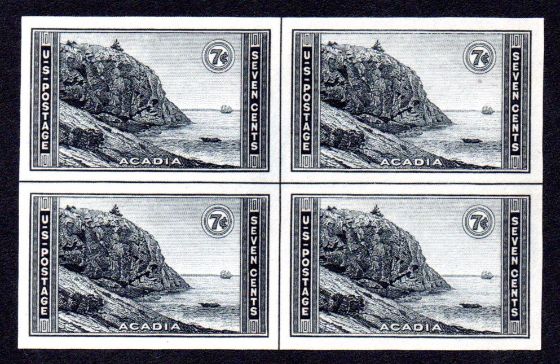 My preference is to find larger blocks of stamps. Here's the same centerline block in a configuration of sixteen: 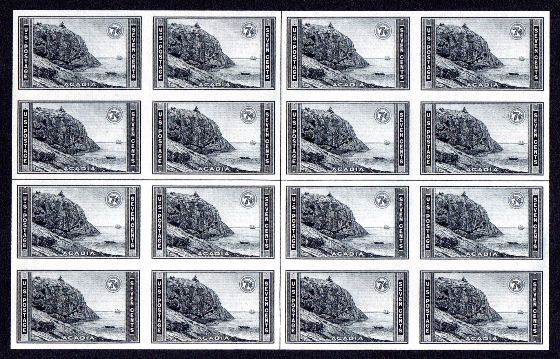 The arrow blocks come from the outside margins of the sheet, and are the beginning point of the lines which appeared on the previous blocks. There are four positions: top, right, bottom and left, going in a clockwise movement around the sheet. These are shown below: 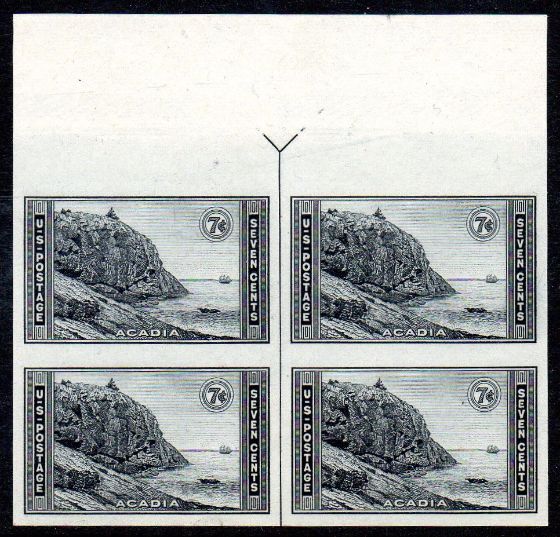 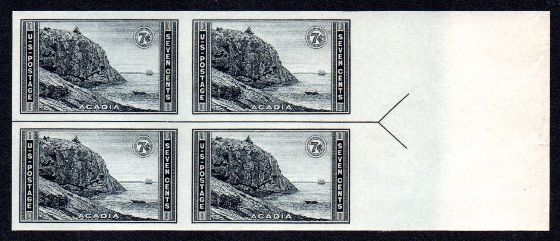 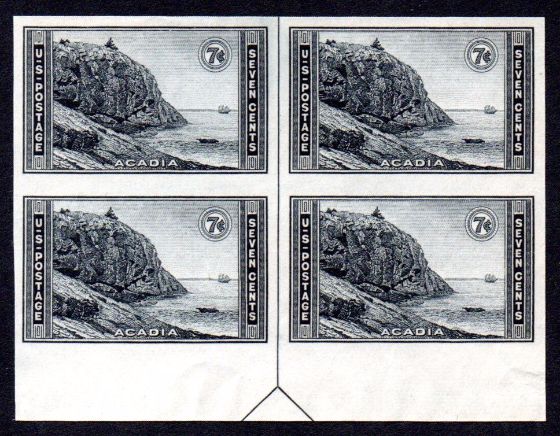 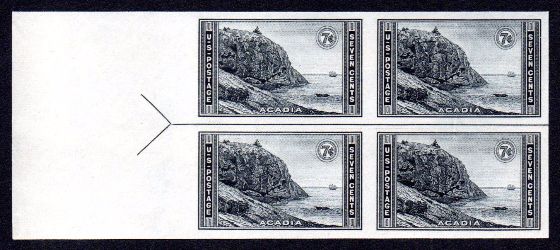 The last important position pieces are the plate blocks. There were four plates used in the production of the Farley Reprints for each issue. The complete set for plate number 21333 is shown below. Note the size of the bottom margin for the bottom plate block; this is unusually large as that is the side of the sheet which almost always is smallest on the horizontally oriented stamps in this series. Here are the plate blocks: 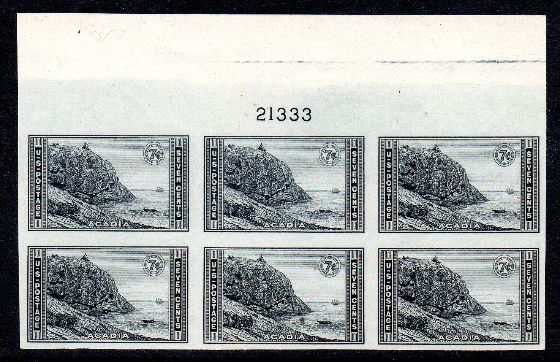 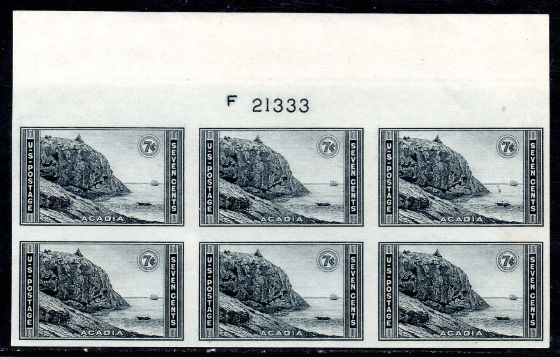 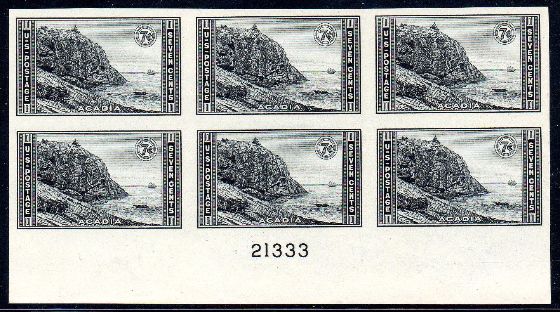 I've been showing the copycat First Day Cover cachets and have three using the basic Ralph Dyer design for this issue. The first is the Ralph Dyer design, Planty-Mellone 762-8. A very similar design was used in the second one, listed in Planty-Mellone as 762-8a. The last one is separately listed design. This is the first recorded cachet by R. L. Hubbard (used on all of the National Parks Reprints with colors matching the stamp). 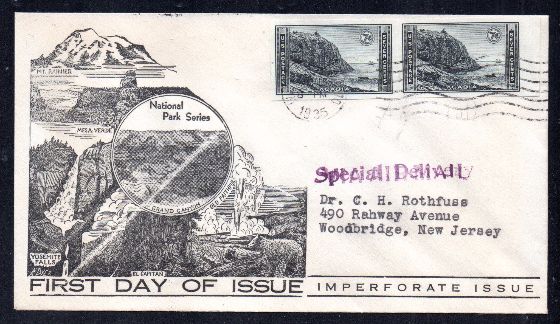 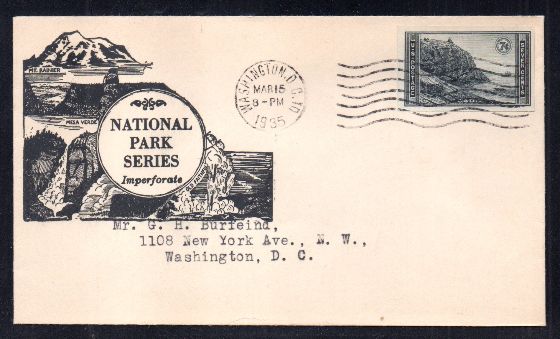 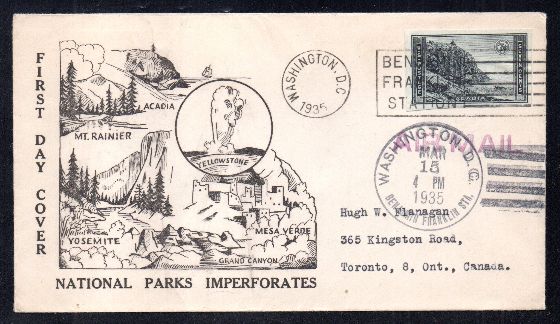 The next cachet is the Clara H. Fawcett design. These were first used on the 1934 National Parks series and reused on the Reprints of the National Parks only. None are known on the other issues of the Farley Reprints. This is listed in Planty-Mellone as 762-26. 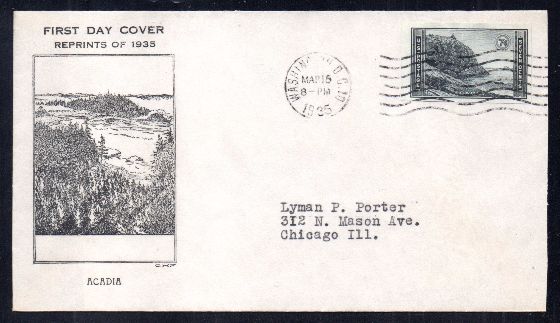 The final item is a non-first day cover use of the stamp, albeit with a philatelic use. This is the AM-77 First Flight cover for the route from Olympia, Washington to Portland, Oregon on December 5, 1948. I have to say this is a rather late usage! 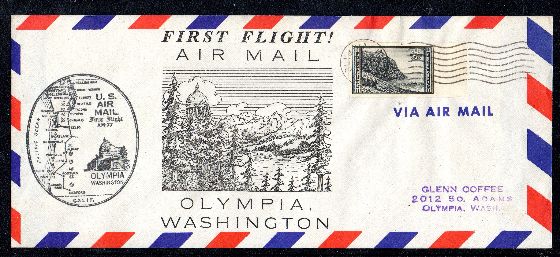 The next installment on this thread will discuss the eight cent Zion National Park issue in the Farley Reprint series. As always, comments and questions are encouraged. If you have collateral material which fits this thread, please share it. |
|
Send note to Staff
|
|
|
Rest in Peace
United States
1189 Posts |
|
|
Scott 763The eight cent stamp of the Farley Reprints National Parks series depicts the same vignette from Zion National Parks as had appeared on the perforated stamp issued in 1934, Scott 747. The color is an unusual choice, sage green. Below is a single, the most common format for collectors: 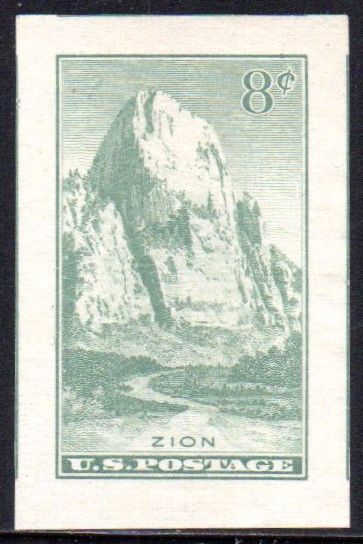 The same types of position pieces exist for this issue as do for the other issues of the National Parks Reprints. These include the horizontal pair with vertical line, the vertical pair with horizontal line and the blocks of four with vertical lines and horizontal lines. These are shown next: 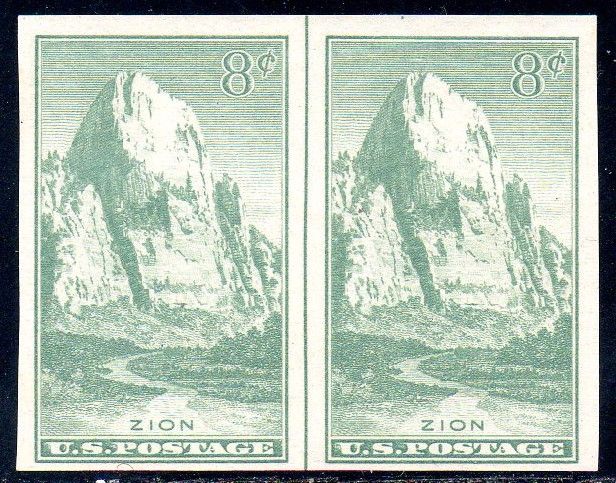 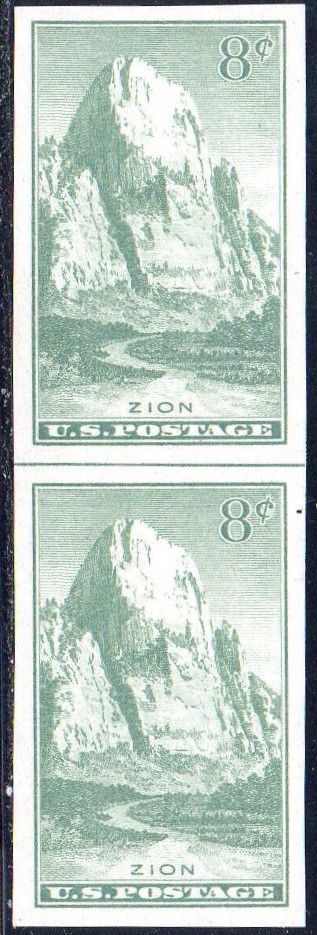 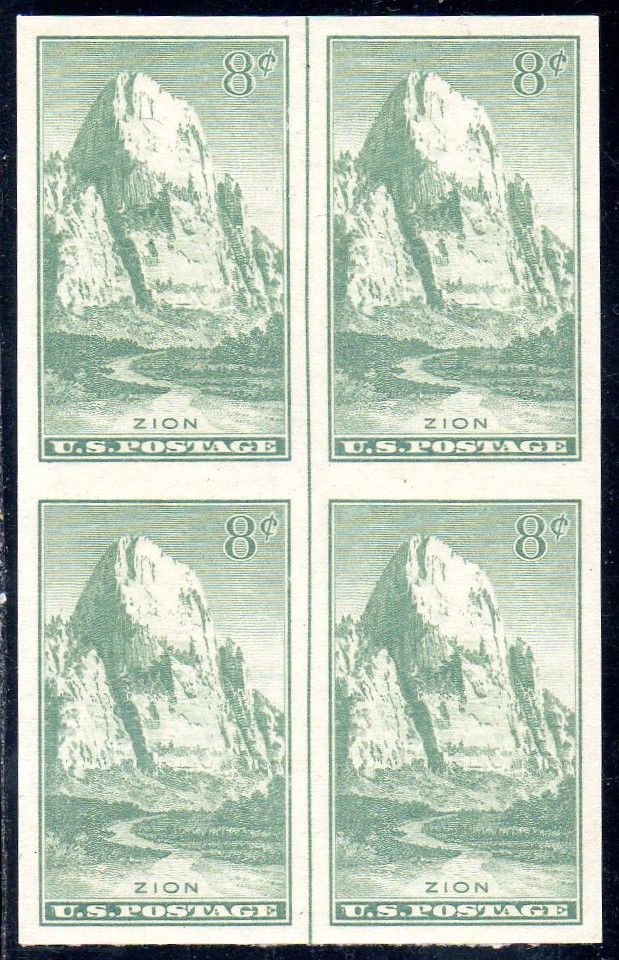 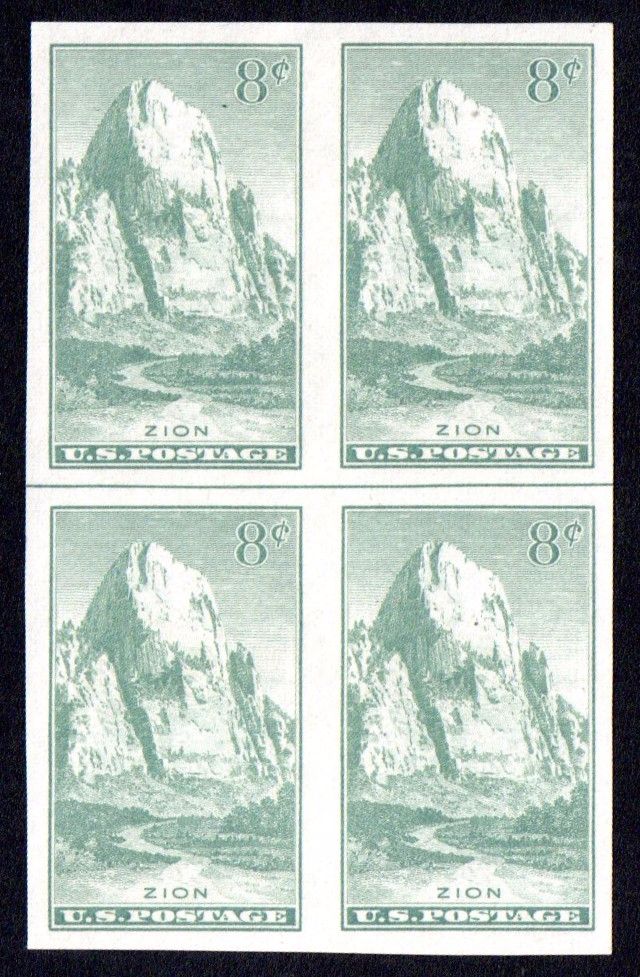 The ultimate position piece, which only appears once per sheet, is the centerline block. These are the point where all four panes of the sheet meet in the middle of the sheet. Here is a block of four, the size most collectors look to acquire: 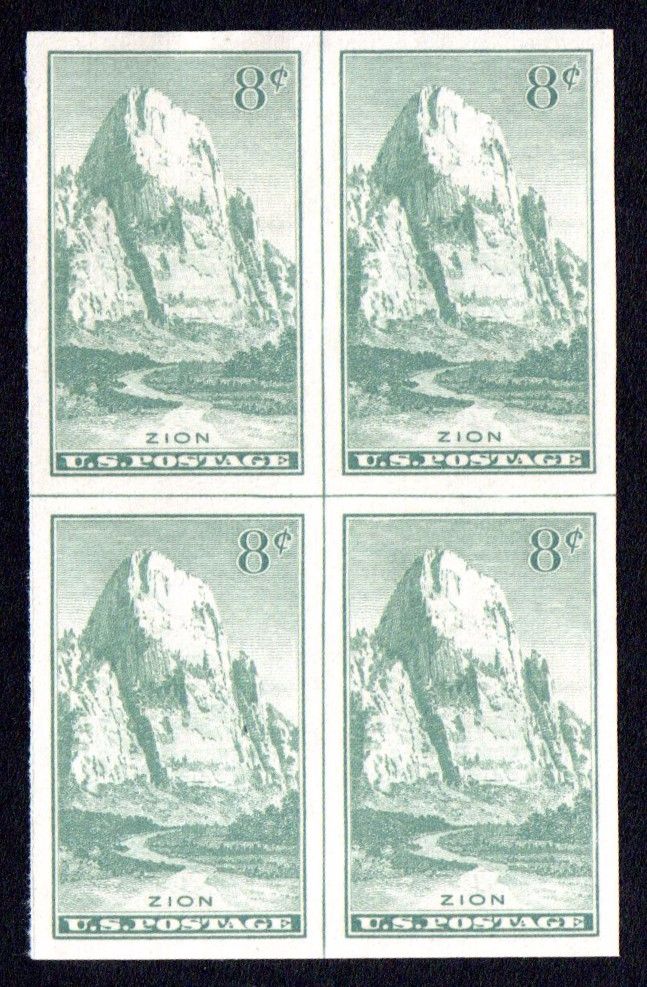 Keeping with my penchant for larger multiples, the following is a centerline block of sixteen: 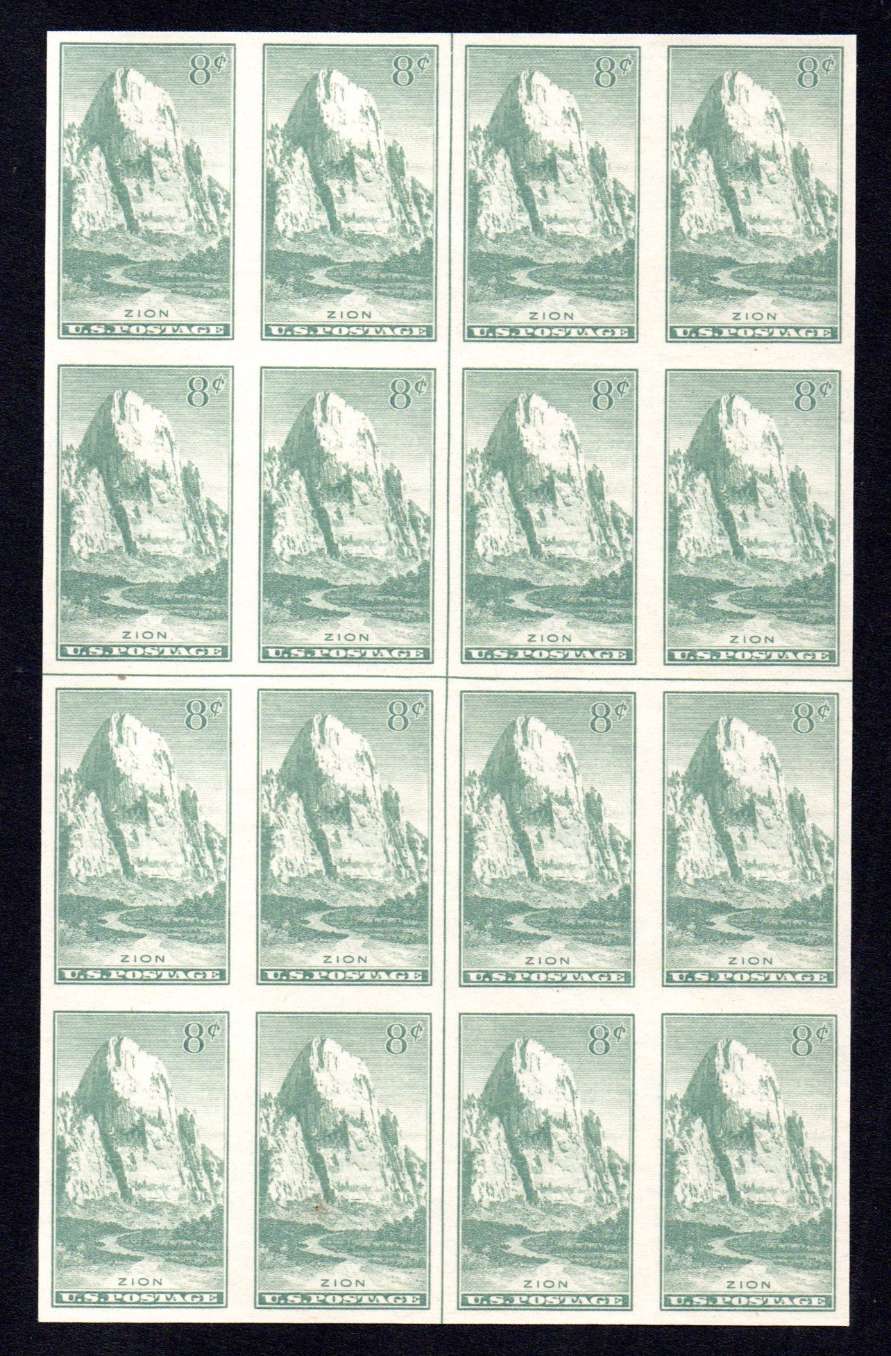 he arrow blocks come from the outside margins of the sheet, and are the beginning point of the lines which appeared on the previous blocks. There are four positions: top, right, bottom and left, going in a clockwise movement around the sheet. These are shown below: 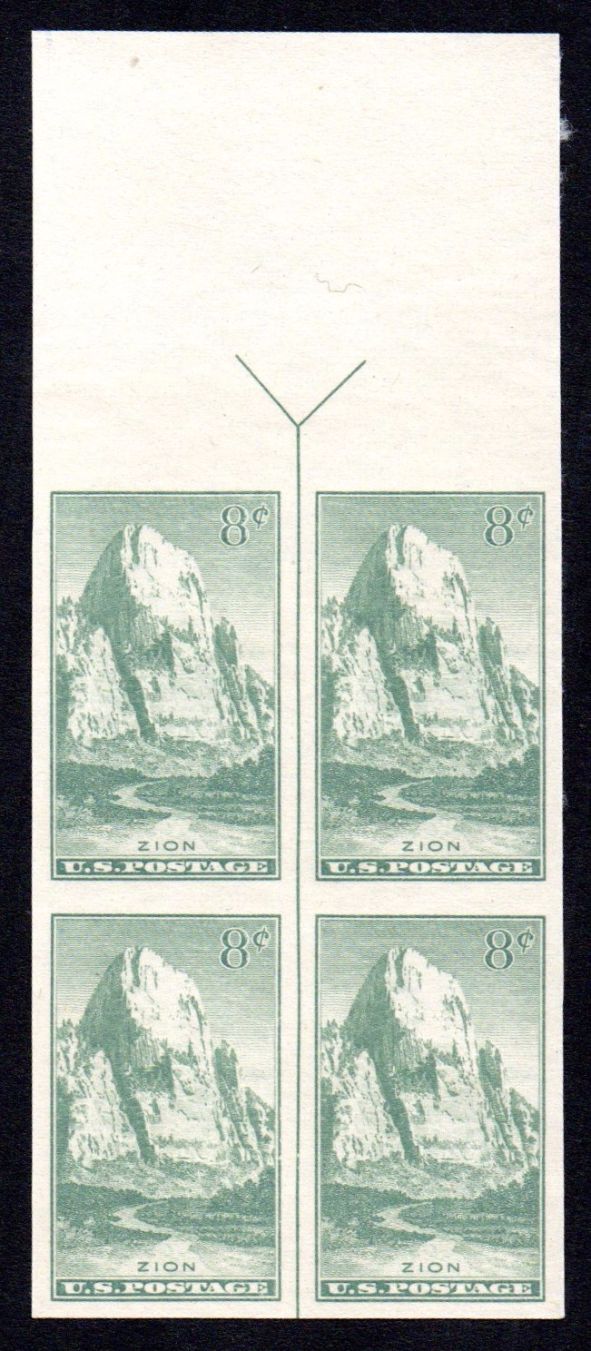 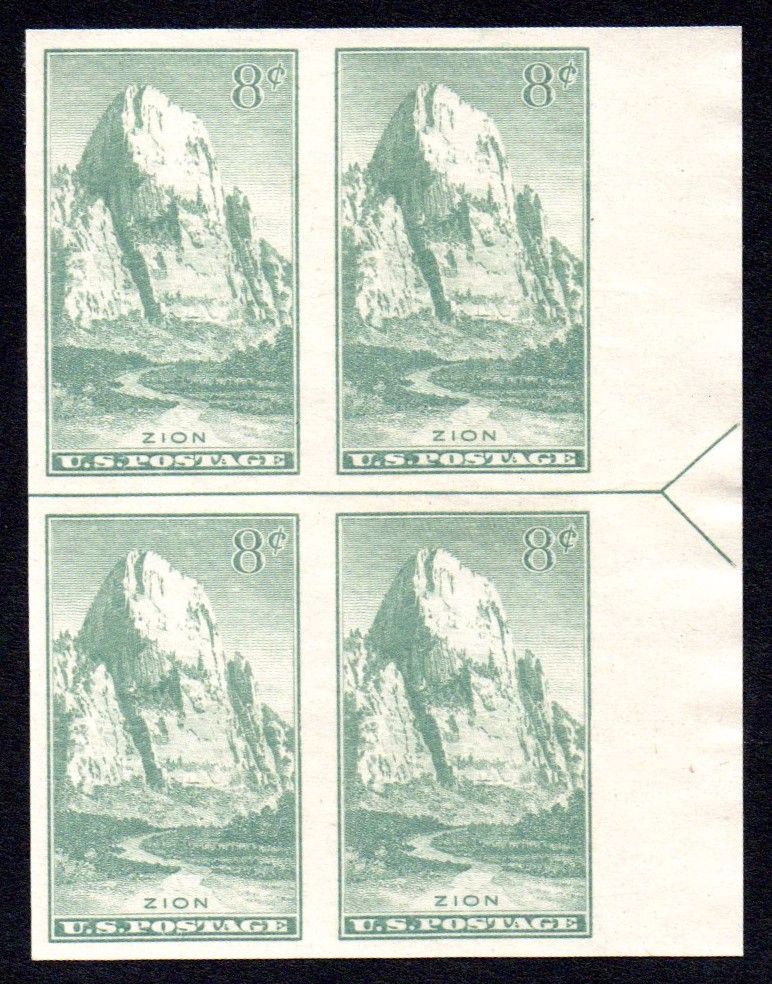 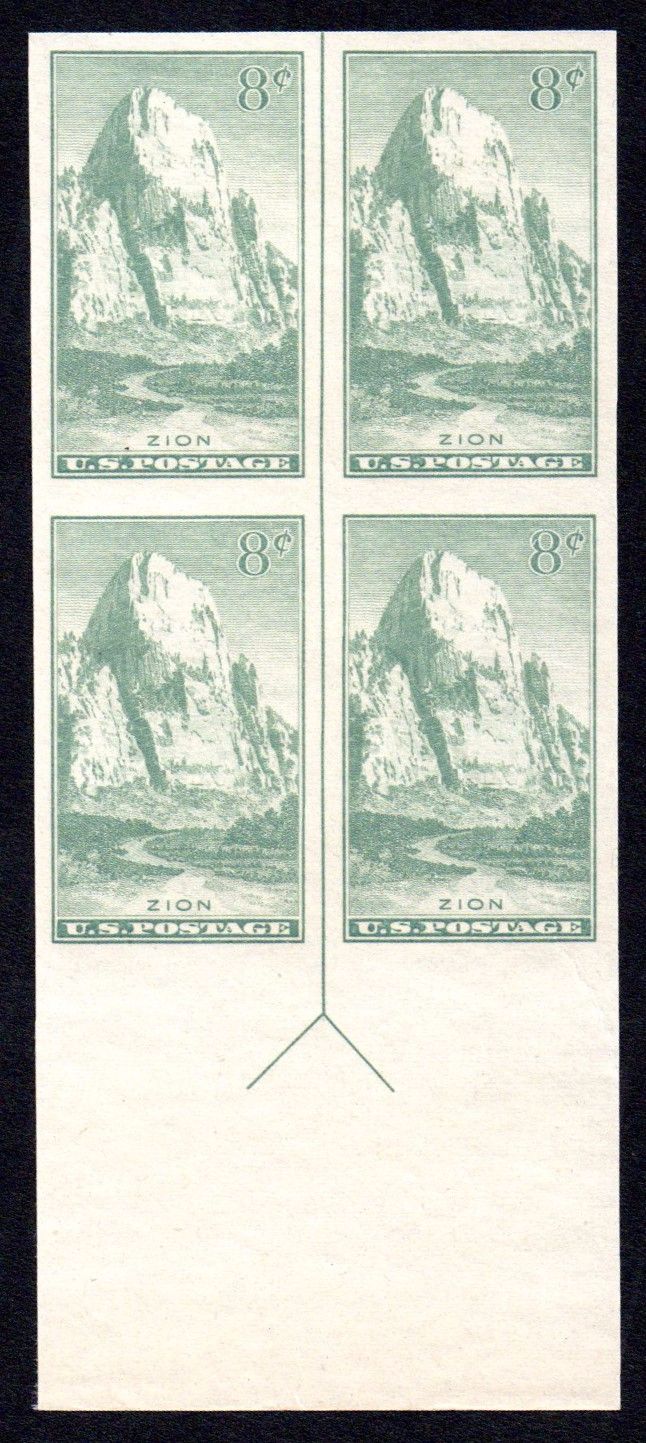 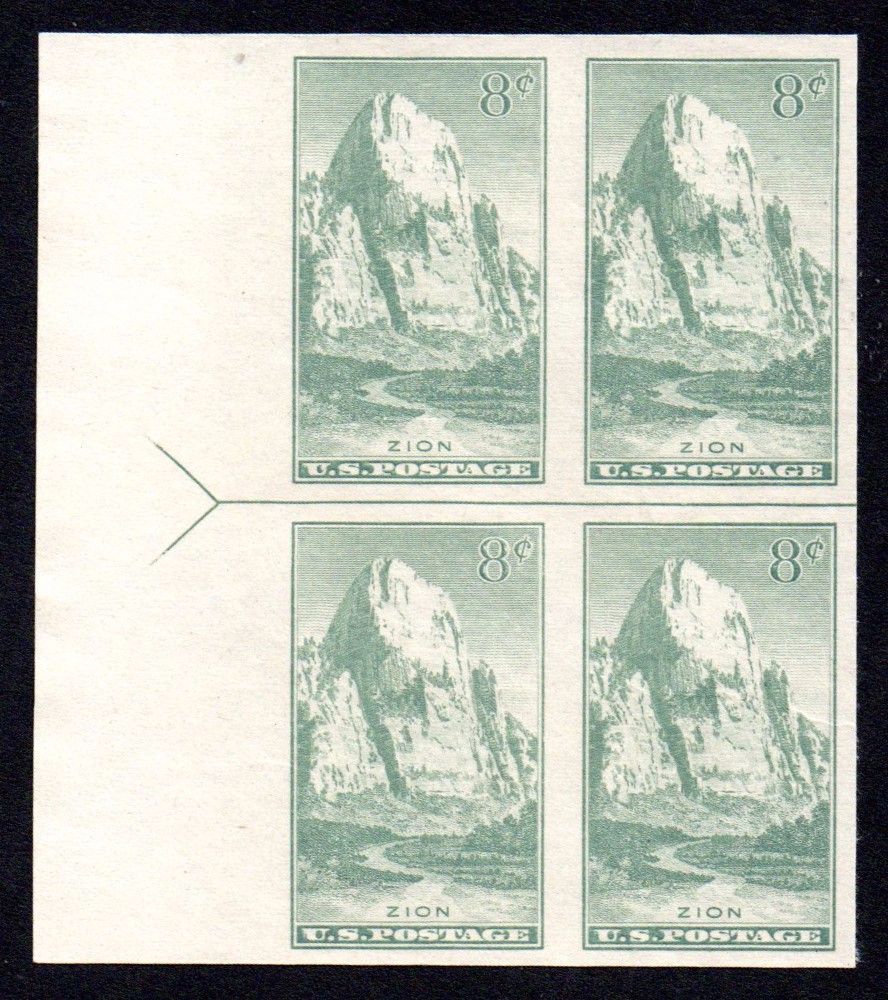 As you can see from the above images, the shortest side of the sheet for this issue appears to have been the right side. The last important position pieces are the plate blocks. Four plates were used in this printing, the same as all the other stamps in the Farley Reprint National Parks series. The following is a complete set of plate blocks for plate 21327. 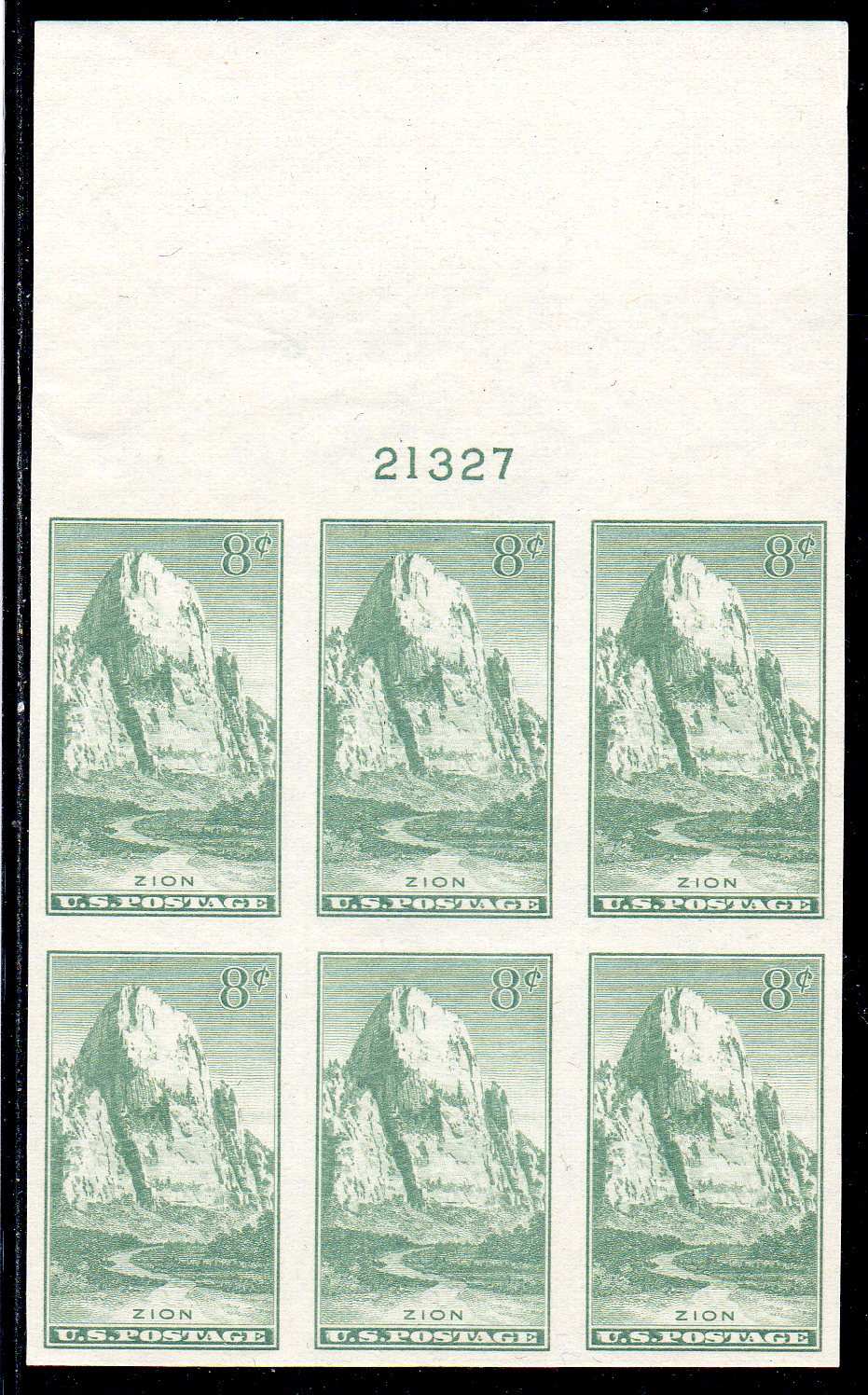 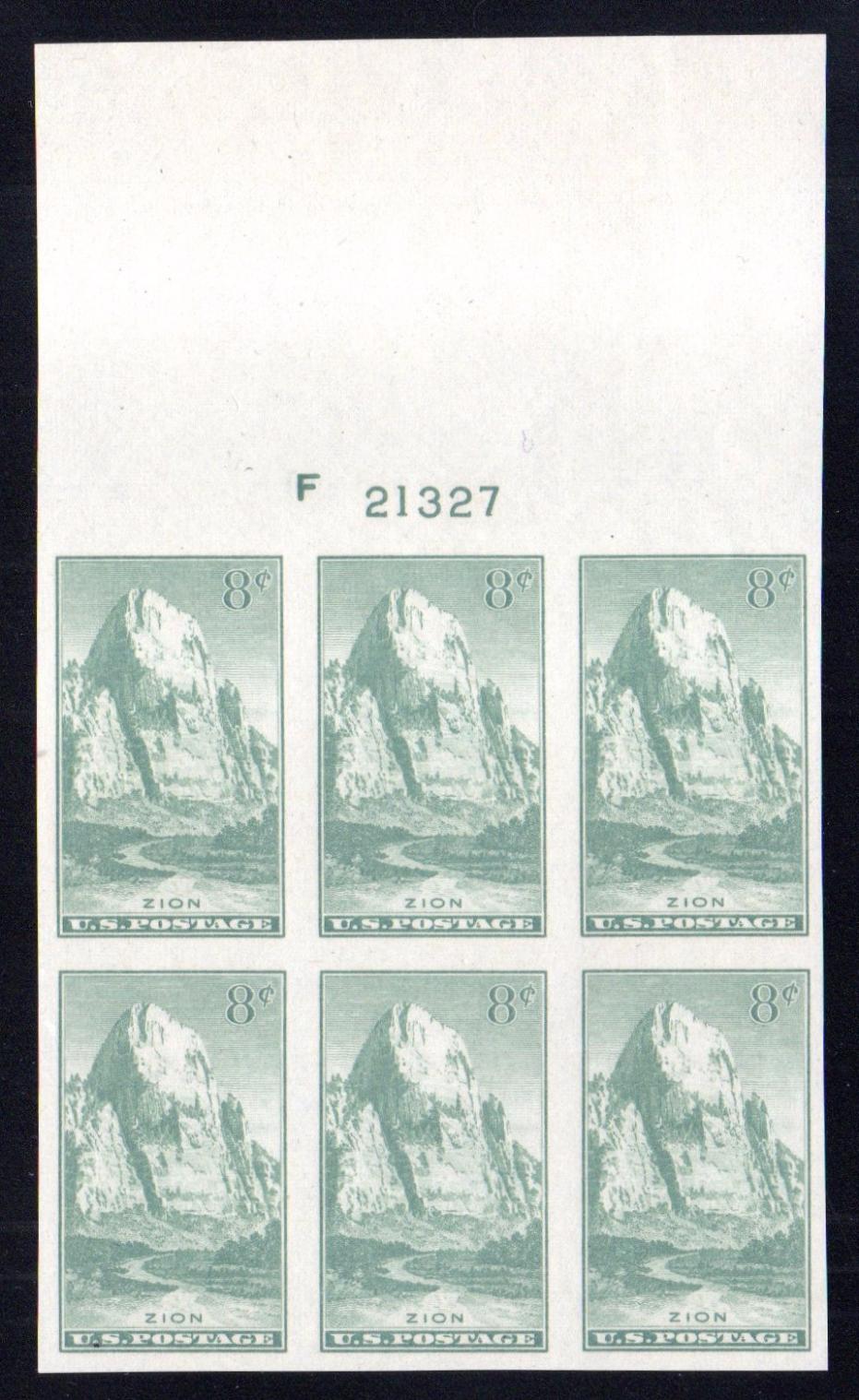 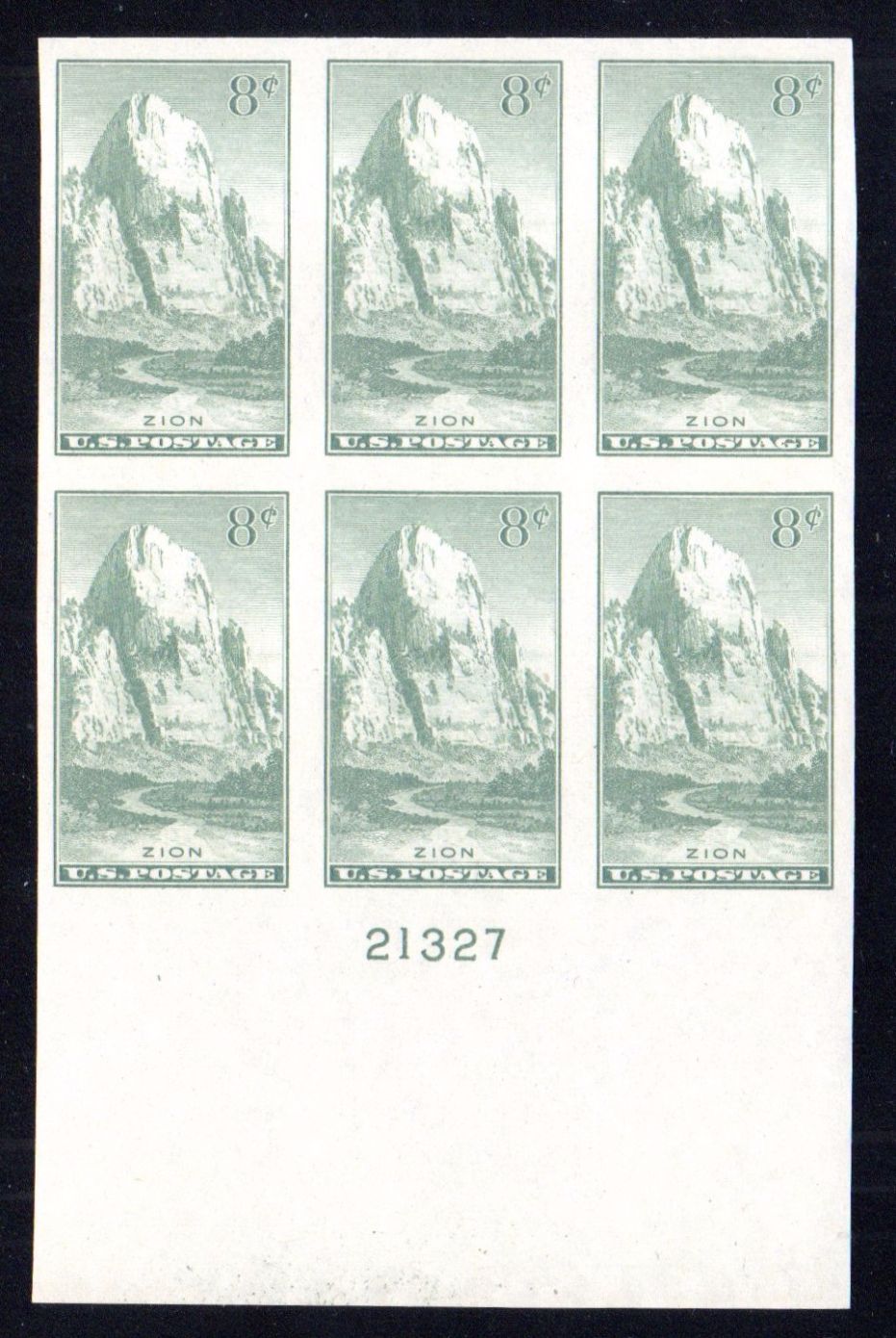 Last, we come to the First Day Covers. The first two covers are from the same cachet maker, Harry Ioor, but in different colors. Both of these were meant for the issue which appears on them. There is a visible difference on these two - can you tell what it is? These are both Planty-Mellone 763-2. 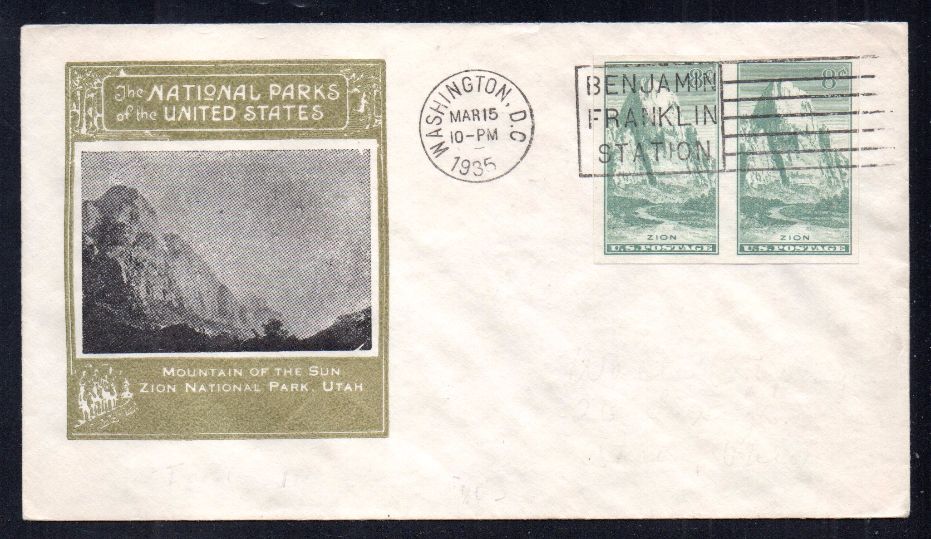 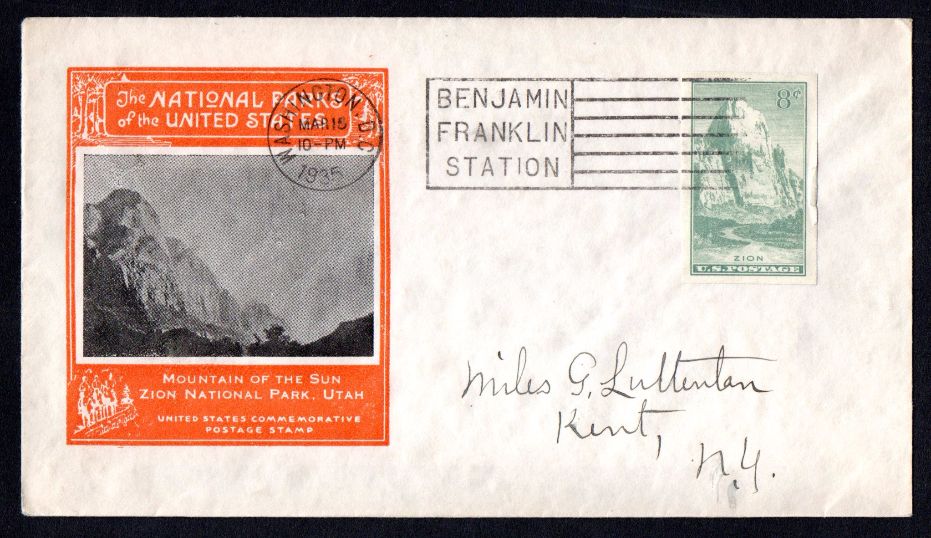 (One the second cover, in orange, there is a second line of text in the bottom tablet.) The last cover I'll share is one which is tough to find for the Farley Reprint National Parks Series. This is the Kapner cachet, Planty-Mellone 763-20. 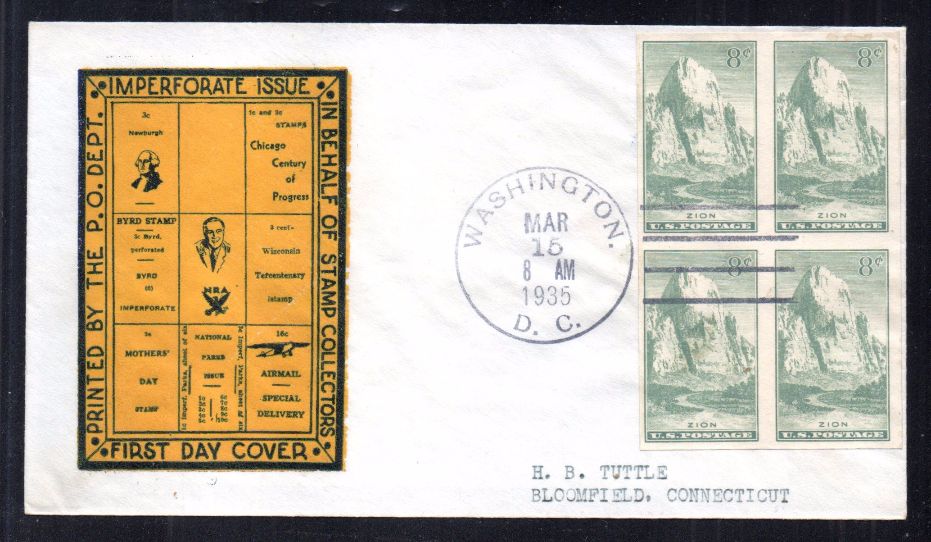 The next installment on this thread will discuss the nine-cent Glacier National Park issue in the Farley Reprint series. As always, comments and questions are encouraged. If you have collateral material which fits this thread, please share it. |
|
Send note to Staff
|
|
|
Replies: 154 / Views: 50,866 |
|
|
To participate in the forum you must log in or register. | |
 New South Wales Numeral Cancels Value Question: Full Sheet, Austria Scott # 840A-H, Issued 5'24'1969. Who Was The Upper Keswick, N.b. Postmaster In 1941 Big Blue Album - How Far Along Is Everyone? Pushing 330,000 All Different Worldwide Stamps In One Collection . History And Usage Of Usir "silver Tax" Stamps What Did You Do Philatelically: Today Or Recently? Indypex 2026, September 18, 19, And 20, 2026 Cover Calendar For Month And Day -Pics Show Me Your Sports Stamps! Fruits Anyone? Food On Stamps! Chile Casa De Moneda De Chile Philatelic Souvenir Cards Of The 50's And 60's Postmarks.day By Day Minkus Supreme Global Albums (The Big Red Thread) Wanted: On-Cover Solo Uses Of United States 14¢ American Indian Stamp Extinction Of Non-Spray Cancels, Minneapolis Lacks The Year Germany Michel #110 Color Computers, Electronic Devices, Software, Information Technology, And Internet On Stamps Portuguese 1910 Overprinted "republica" Forgeries Show Your US 1851-57 Imperforate Stamps Coffee, Tea, And Other Hot Brews! The Stamps Of Indo-China. 1851-57 12c Washington Thematic Group On Freemasonry New South Wales Numeral Cancels Value Question: Full Sheet, Austria Scott # 840A-H, Issued 5'24'1969. Who Was The Upper Keswick, N.b. Postmaster In 1941 Big Blue Album - How Far Along Is Everyone? Pushing 330,000 All Different Worldwide Stamps In One Collection . History And Usage Of Usir "silver Tax" Stamps What Did You Do Philatelically: Today Or Recently? Indypex 2026, September 18, 19, And 20, 2026 Cover Calendar For Month And Day -Pics Show Me Your Sports Stamps! Fruits Anyone? Food On Stamps! Chile Casa De Moneda De Chile Philatelic Souvenir Cards Of The 50's And 60's Postmarks.day By Day Minkus Supreme Global Albums (The Big Red Thread) Wanted: On-Cover Solo Uses Of United States 14¢ American Indian Stamp Extinction Of Non-Spray Cancels, Minneapolis Lacks The Year Germany Michel #110 Color Computers, Electronic Devices, Software, Information Technology, And Internet On Stamps Portuguese 1910 Overprinted "republica" Forgeries Show Your US 1851-57 Imperforate Stamps Coffee, Tea, And Other Hot Brews! The Stamps Of Indo-China. 1851-57 12c Washington Thematic Group On Freemasonry
Disclaimer: While a tremendous amount of effort goes into ensuring the accuracy of the information contained in this site, Stamp Community assumes no liability for errors. Copyright 2005 - 2026 Stamp Community Family - All rights reserved worldwide. Use of any images or content on this website without prior written permission of Stamp Community or the original lender is strictly prohibited.
Privacy Policy / Terms of Use Advertise Here |
| Stamp Community Forum |
© 2007 - 2026 Stamp Community Forums |
| It took 0.25 seconds to lick this stamp. |
 |
|
|
|


 Posted 08/29/2017 9:33 pm