Stamp Community Family of Web Sites
Thousands of stamps, consistently graded, competitively priced and hundreds of in-depth blog posts to read


Stamp Community Forum
 
Username:
Password:
Save Password
Forgot your Password?

This page may contain links that result in small commissions to keep this free site up and running.

Welcome Guest! Registering and/or logging in will remove the anchor (bottom) ads. It's Free!

Some Wine? Sure! Make Mine A Double.

Next Page    
 
To participate in the forum you must log in or register.
Author Previous TopicReplies: 46 / Views: 9,079Next Topic
Page: of 4
Pillar Of The Community
United States
6433 Posts
Posted 07/08/2017   12:24 am  Show Profile Check revenuecollector's eBay Listings Bookmark this topic Add revenuecollector to your friends list Get a Link to this Message
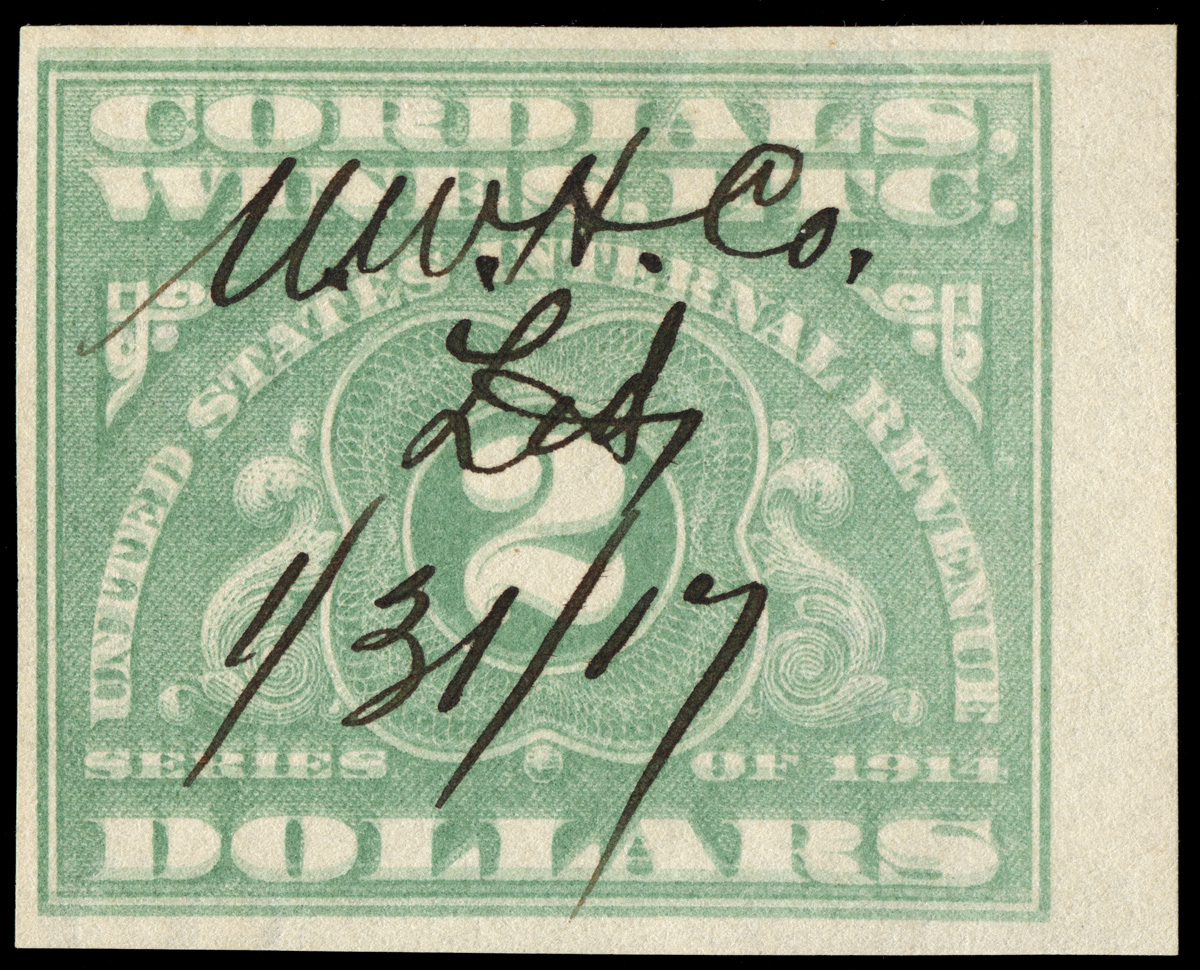
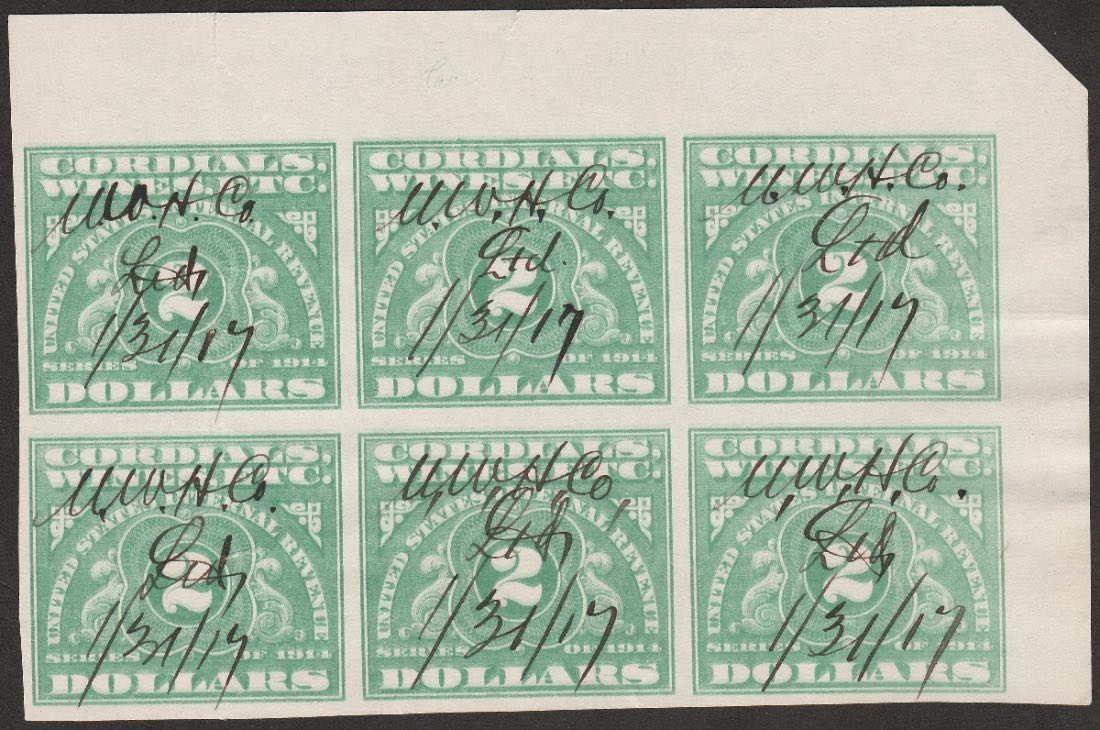
Just picked this one up on the Bay. I already had an example, but Scott RE15a, double impression, isn't one I mind having duplicates of. It's one of those stamps that comes on the market considerbly less frequently than its catalog value ($125) would imply. It's not a rare stamp by any stretch of the imagination, but it's not exactly common either.

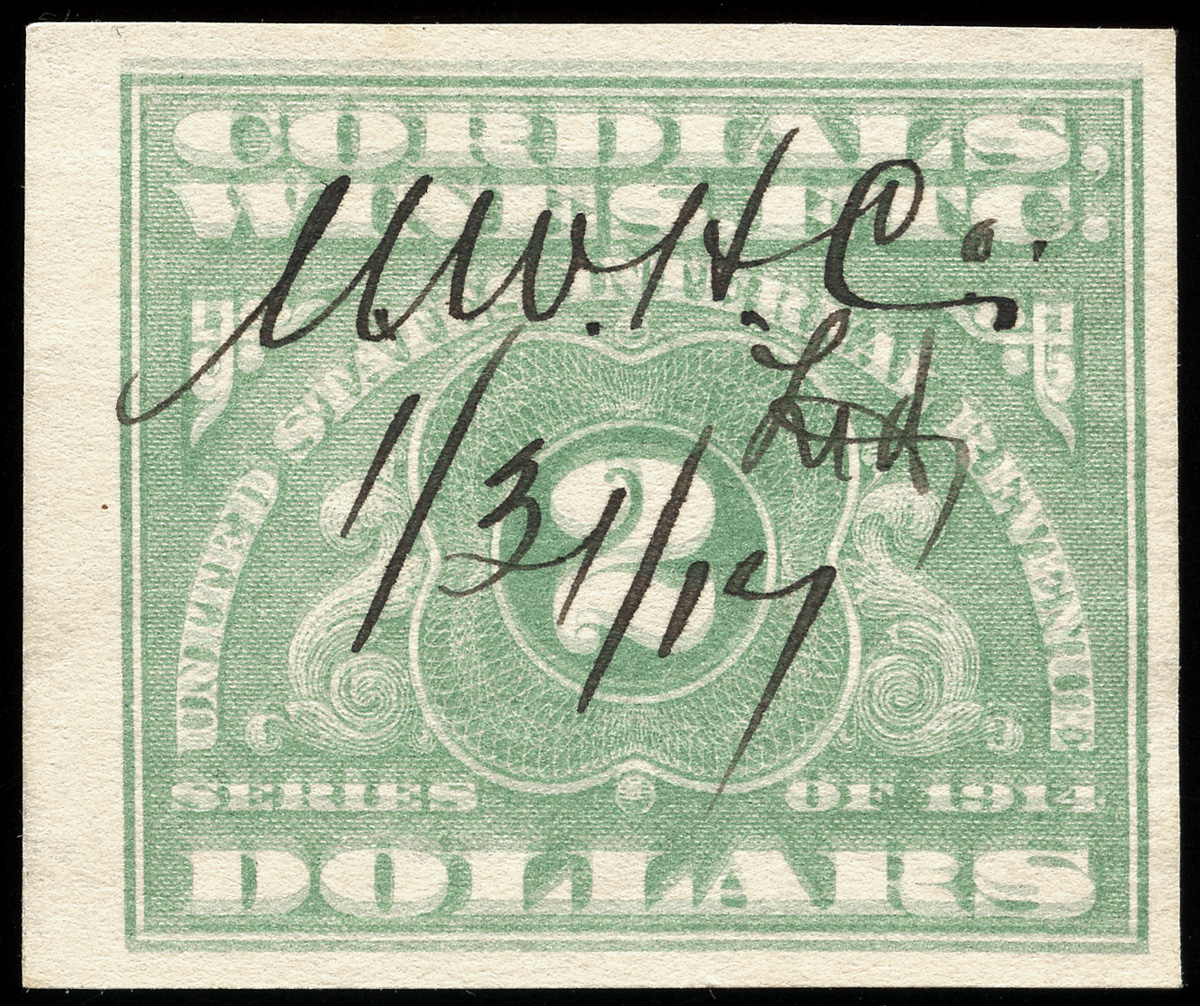
You can always tell these at a glance, not only because of the doubling, but every example known (that I have seen images of anyway, including ancient auction catalogs) has the same company manuscript cancel.

Based on previous discussions here, presumably some would call this a "kiss impression" rather than a true double impression, but Scott and the marketplace do not differentiate between the two when it comes to 20th century revenue stamps. No matter the hairs to be split, for all intents and purposes, it is a double impression.

The second image is my other example.


Send note to Staff

Rest in Peace
United States
1738 Posts
Posted 07/08/2017   12:47 am  Show Profile Bookmark this reply Add James Drummond to your friends list  Get a Link to this Reply
Those are some nice smooch impressions.

Heh heh.

I see two impressions on each stamp, so, based on my limited knowledge of the English language, I'd call them double impressions, too.

Jim
Send note to Staff  Go to Top of Page
Bedrock Of The Community
United States
10633 Posts
Posted 07/08/2017   07:38 am  Show Profile Bookmark this reply Add revcollector to your friends list  Get a Link to this Reply
"Based on previous discussions here, presumably some would call this a "kiss impression" rather than a true double impression, but Scott and the marketplace do not differentiate between the two when it comes to 20th century revenue stamps. No matter the hairs to be split, for all intents and purposes, it is a double impression".

So whether you call it "reperforating" or "added perforations", it's the same thing.
Send note to Staff  Go to Top of Page
Pillar Of The Community
United States
2555 Posts
Posted 07/08/2017   08:20 am  Show Profile Check sinclair2010's eBay Listings Bookmark this reply Add sinclair2010 to your friends list  Get a Link to this Reply
A purist would probably call this a slip print. The term "double impression" should be reserved for stamps that have either intentionally or by error received two fully inked impressions. True double impressions are rare, slip prints, as a group, are not.
Send note to Staff  Go to Top of Page
Bedrock Of The Community
United States
10633 Posts
Posted 07/08/2017   09:03 am  Show Profile Bookmark this reply Add revcollector to your friends list  Get a Link to this Reply
These could well be actual double impressions, with the light one being the first one. They would not want to waste the paper, and the attitude would almost certainly have been "it's only going on cartons of wine anyway, so who cares".
Send note to Staff  Go to Top of Page
Pillar Of The Community
United States
6433 Posts
Posted 07/08/2017   09:25 am  Show Profile Check revenuecollector's eBay Listings Bookmark this reply Add revenuecollector to your friends list  Get a Link to this Reply
[WARNING: PET PEEVE ALERT!]

Purists make my teeth itch.

Yes, in technical terms the differentiation is correct, in the same way that Jim objects to the use of the term "sewing machine perforations" when in fact they were not performed using sewing machines.

Where purists get hung up is not realiizing there's a difference between a technical term and a descriptive term. Despite the technical destinctions between kiss impression and double impression or sewing machine perf and pin perf, the catalog makers, collector base, dealer base, and auction houses have embraced certain terms to describe a certain appearance or effect.

"Sewing machine perfs" has been adopted as a way to describe a certain manner of perforation and the way they appear. The use of the term goes way beyond just 2nd issue revenues; it is used to describe a style of perforations on stamps from any number of countries and eras.

"Double impression" has been adopted to describe a doubling of the stamps impression, regardless of whether that is because the sheet went through the press twice, or it slapped against the plate twice. The marketplace as a whole puts the emphasis on what the end result looks like, not the process the stamp went through to get there.

Is the impression doubled? Then it's a double impression. EOD.

The discussion/argument over which doubled impressions are "real" doubled impression really doesn't accomplish anything when the marketplace doesn't make that distinction anyway. It comes off as pedantic: "well your stamp isn't really a double impression..."
Send note to Staff  Go to Top of Page
Pillar Of The Community
United States
867 Posts
Posted 07/08/2017   10:21 am  Show Profile Bookmark this reply Add revenuermd to your friends list  Get a Link to this Reply
The whole discussion of double impressions and kiss impressions (or whatever one wishes to call them) started with intaglio printing. But the RE15a is from an offset press and a lithographic plate. Ink is first transferred from the plate to a roller (I think called the blanket) and subsequently is transferred to the paper. An examination of the philatelic literature would reveal that there would be two ways to get a double impression on an offset press. The first has been suggested in this thread, i.e., a first light impression is once again fed through the press a second time to receive the second bolder impression. But there is a second way is if a previous impression is not wiped from the blanket and that when the next impression is transferred to the blanket it is not aligned with the previous impression. In this second way, two images are transferred in a single pass through the press.

My question to the printing authorities out there is how does the double impression, kiss impression terminology from the intaglio world of printing applied to the offset world?

Oh, and somewhere in my holdings is a RE15a that has two equally bold impressions just off by a fraction of a millimeter. This example was found by the late Ernest Wilkens, my philatelic mentor. When it floats to the surface, I will try to get an image to share.
Send note to Staff  Go to Top of Page
Ron Lesher
Rest in Peace
United States
1738 Posts
Posted 07/08/2017   1:20 pm  Show Profile Bookmark this reply Add James Drummond to your friends list  Get a Link to this Reply

Quote:
The term "double impression" should be reserved for stamps that have either intentionally or by error received two fully inked impressions


If that is the defining criteria for this Scott-listed variety, then Amos Press will be delighted to know that their catalogs will soon be 20% smaller and lighter, as the vast majority of listed "double impressions," in all countries and in all groups, will have to be eliminated. Almost all of the "double impressions" in the U.S. revenue section alone will have to go.

I know this, as this is an area that I specialize in, and almost all of the double impressions that I have don't have 100% inking on impression one and 100% inking on impression two. Yes, those that do are extremely rare, but they are the exceptions.

As Dan said, the commonly-accepted understanding of this particular terminology is for examples that have one solid impression and one with somewhat less than 100% inking of the other impression. All the way down to zero ink. I have a Scott-unlisted first issue revenue stamp with one fully inked impression and the second impression is albino. This was purchased from the Joyce sale. It is shown on Dan's website.

Should this understanding change in the future to more accurately refine the differences between two complete inkings versus one fully inked and one a bit less inked, and then to call that variety something else, then yes the terminology will have caught up with reality.

But this distinction will create nothing but complications and a ton of unwanted work for all of stamp collecting, as every single double impression that is (or ever was) listed in any catalog for any country since day one will have to be re-examined to see whether it stays in the "double" listing, or moves to a new "kiss" or "slip" listing.

It's unlikely (or, in my opinion, impossible) for this to ever happen. Which makes all discussion regarding "slip" versus "kiss" versus "double" (and, sadly, "sewing machine" versus "pin perf") basically, well, a complete waste of time.

Sort of reminds me of the phrase, "tilting at windmills."

I think that the on-going discussion/argument regarding the "slip" versus "double," not just here but elsewhere, is a natural reaction from the perceived denigration of a certain shown example. The collector, in most cases, is asking for confirmation that their example is in column A, "not a double," or in column B, "a double." The response sometimes is column C, "not a double but not a true double either, it's in a category that doesn't currently exist in the catalog, and may never exist."

Lastly, remember that we are of a group that, in 2017, continues to use the descriptor "pigeon blood pink" to refer to a certain shade. Explain that one to a non-philatelist.

Jim


Send note to Staff  Go to Top of Page
Valued Member
United States
118 Posts
Posted 07/08/2017   1:58 pm  Show Profile Bookmark this reply Add RevHound to your friends list  Get a Link to this Reply
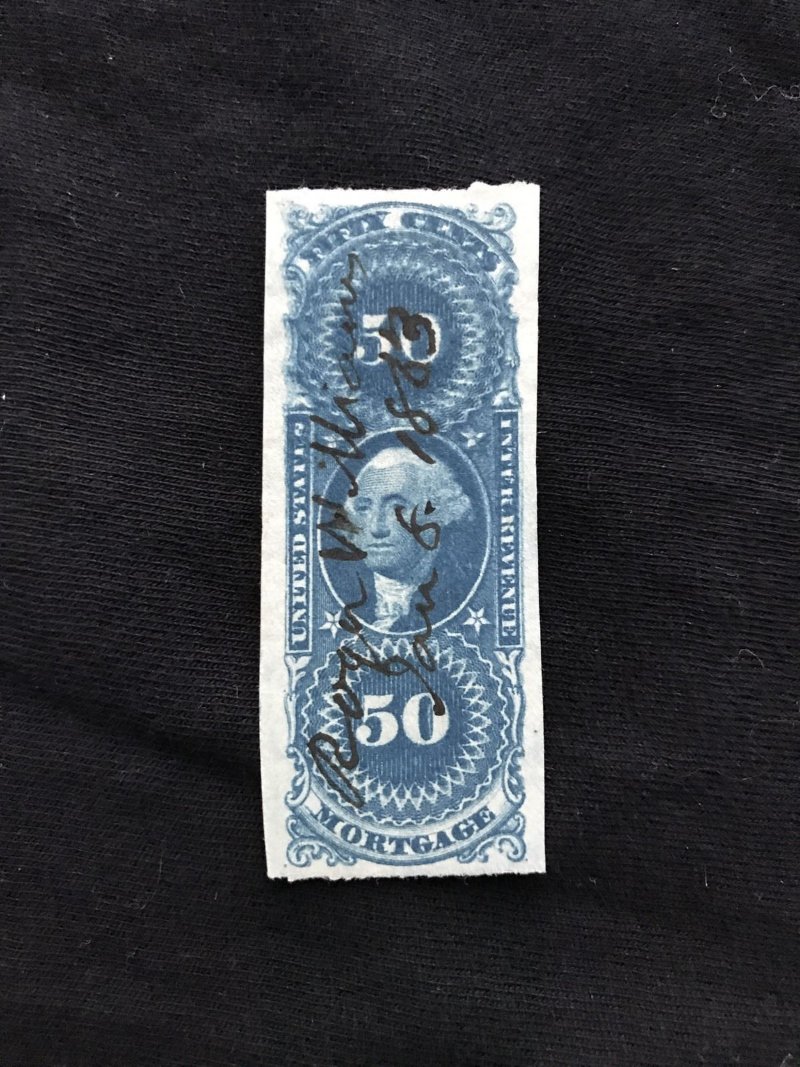
How would you classify this stamp, then? Kiss Impression (as listed), Double Impression or Double Transfer?

Send note to Staff  Go to Top of Page
Rest in Peace
United States
1738 Posts
Posted 07/08/2017   2:02 pm  Show Profile Bookmark this reply Add James Drummond to your friends list  Get a Link to this Reply
Partial double impression at the top.

Jim
Send note to Staff  Go to Top of Page
Valued Member
United States
118 Posts
Posted 07/08/2017   2:15 pm  Show Profile Bookmark this reply Add RevHound to your friends list  Get a Link to this Reply
Would this be an example of the Scott listed R59ae or would it take doubling on the entire stamp for it to be considered as such.
Send note to Staff  Go to Top of Page
Rest in Peace
United States
1738 Posts
Posted 07/08/2017   2:20 pm  Show Profile Bookmark this reply Add James Drummond to your friends list  Get a Link to this Reply
In my opinion, a partial double doesn't equate to a full double, for catalog number or value purposes.

It's an EFO (Error Freak Odditity).

Jim
Send note to Staff  Go to Top of Page
Pillar Of The Community
United States
867 Posts
Posted 07/08/2017   3:56 pm  Show Profile Bookmark this reply Add revenuermd to your friends list  Get a Link to this Reply


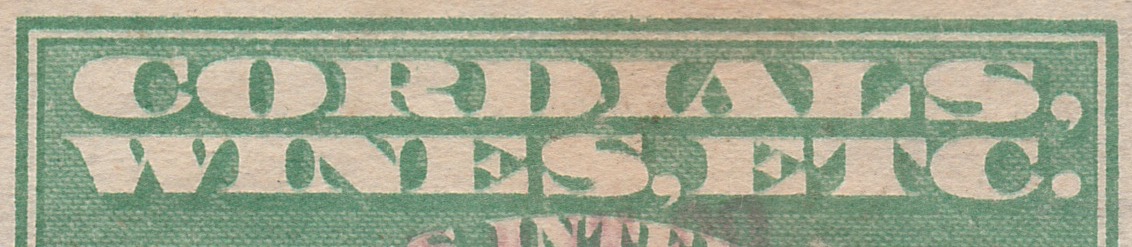
Here is a detail of a different double impression (RE15a) than the one pictured at the beginning of this thread. The doubling is a tad lower than the first impression. this is the one I referred to that was originally found by the late Ernest Wilkens.
Send note to Staff  Go to Top of Page
Ron Lesher
Pillar Of The Community
United States
867 Posts
Posted 07/08/2017   4:04 pm  Show Profile Bookmark this reply Add revenuermd to your friends list  Get a Link to this Reply


Not as sharp an image as what started this thread, but undoubtedly from the same sheet and user as Dan's two examples and as far as I am aware this is the largest recorded multiple of RE15a.
Send note to Staff  Go to Top of Page
Ron Lesher
Pillar Of The Community
United States
6433 Posts
Posted 07/08/2017   6:33 pm  Show Profile Check revenuecollector's eBay Listings Bookmark this reply Add revenuecollector to your friends list  Get a Link to this Reply
Ron, now THAT is a superb item. Love it!
Send note to Staff  Go to Top of Page
Pillar Of The Community
United States
2555 Posts
Posted 07/08/2017   6:50 pm  Show Profile Check sinclair2010's eBay Listings Bookmark this reply Add sinclair2010 to your friends list  Get a Link to this Reply
All I am saying is that it is better to call something what it is or at least what you think it is and be right most of the time rather than call it what it isn't and be wrong most of the time. That shouldn't be controversial...

Send note to Staff  Go to Top of Page
Page: of 4 Previous TopicReplies: 46 / Views: 9,079Next Topic  
Next Page
 
To participate in the forum you must log in or register.

Go to Top of Page

Disclaimer: While a tremendous amount of effort goes into ensuring the accuracy of the information contained in this site, Stamp Community assumes no liability for errors. Copyright 2005 - 2026 Stamp Community Family - All rights reserved worldwide. Use of any images or content on this website without prior written permission of Stamp Community or the original lender is strictly prohibited.
Privacy Policy / Terms of Use    Advertise Here
Stamp Community Forum © 2007 - 2026 Stamp Community Forums
It took 0.23 seconds to lick this stamp. Powered By: Snitz Forums 2000 Version 3.4.05