| Author |
 Replies: 46 / Views: 9,349 Replies: 46 / Views: 9,349 |
|
|
|
Pillar Of The Community
United States
6470 Posts |
|
|
Quote:
All I am saying is that it is better to call something what it is or at least what you think it is and be right most of the time rather than call it what it isn't and be wrong most of the time. That shouldn't be controversial... The problem with that approach is that unless you get all catalogs, dealers, and auction houses on the same page with respect to terminology and the differentiation between a kiss impression and a double impression, you are adding confusion... perhaps not in your mind, but for the vast majority of affected parties. For example, using some of the 20th century documentaries where the double impressions are likely kiss impressions, if a dealer says to a collector "that's a kiss impression, not a true double impression", the implication is that the stamp is somehow NOT what Scott lists and therefore worth less, when in fact it absolutely is what Scott is listing, precise terminology notwithstanding. The cure is worse than the disease, in my opinion. Some of these issues could be mitigated, in my opinion, by adding some verbage to the definitions section of the Scott Catalog. Something along the lines of: Quote:
Depending on the printing methods used, double impressions could be a result of the sheet passing through the press more than once ("double impression"), or because the sheet bounced against the plate more than once ("kiss impression"). The term "double impression" in this catalog is used to describe both cases. |
Send note to Staff 
|
|
| Edited by revenuecollector - 07/08/2017 8:39 pm |
|
|
Bedrock Of The Community
United States
10866 Posts |
|
|
The problem with that is that the first is FAR scarcer then the second. Dealers would love it because they can charge big bucks regardless of the reason. |
|
Send note to Staff
|
|
|
Rest in Peace
United States
1738 Posts |
|
|
But how do you determine the threshold of the second impression?
Ok, 100% inking of both impressions is a true "double impression."
What about the second being 98%? 82.5%? 78%? At what magic number does it suddenly become a slip and not a true double?
And under what official authority does one organization get to declare that threshold?
Jim |
|
Send note to Staff
|
|
|
Pillar Of The Community
United States
6470 Posts |
|
|
Quote:
The problem with that is that the first is FAR scarcer then the second. Dealers would love it because they can charge big bucks regardless of the reason. This assumes there are many cases where both double and kiss impressions exist for the same stamp and one could be misrepresented as the other. But how often does that really occur? I would posit that 80%+ of the time, if someone encounters a revenue doubled impression, it's the one that Scott lists, not something else. We're never going to get to a perfect solution. |
|
Send note to Staff
|
|
|
|
Pillar Of The Community
United States
6470 Posts |
|
|
Jim, it's more than just the level of the second impression. The angle of offset also comes into play. I've heard it posited that if the doubling is only in one direction (as in the wine stamps I posted), that is the earmark of a slip impression, whereas most true double impressions will be offset in both the X and Y direction to a certain extent.
The 1st issue double impressions bear this out. |
|
Send note to Staff
|
|
|
|
Rest in Peace
United States
1738 Posts |
|
|
Quote:
We're never going to get to a perfect solution. But it is sometimes fun (and exhausting) to chat about. Jim |
|
Send note to Staff
|
|
|
Rest in Peace
United States
1738 Posts |
|
|
Quote:
offset in both the X and Y direction to a certain extent. Great, bring up geometry now. I'm out.  Jim |
|
Send note to Staff
|
|
|
Bedrock Of The Community
United States
10866 Posts |
|
|
To me, a true double impression has to be the complete design, or at least as much of it as is possible based on the centering involved. Unless one can show that something blocked part of the impression (a foldover, or a foreign object) then the design must be complete. |
|
Send note to Staff
|
|
|
Rest in Peace
United States
1738 Posts |
|
|
I agree with that, but I don't understand the criteria of the inking intensity, the offset (x or y, thanks Dan), or any other, somewhat arbitrary, "threshold," that makes this example a 'double' and this one, well, something less.
Jim
|
|
Send note to Staff
|
|
|
Rest in Peace
United States
1738 Posts |
|
|
Quote:
The angle of offset also comes into play. Guy makes an impression. -Oops, made a slip impression. Guy makes an impression, sneezes (slightly ruffling the paper). -Oops, made a double impression. Jim |
|
Send note to Staff
|
| Edited by James Drummond - 07/08/2017 11:43 pm |
|
|
Bedrock Of The Community
United States
10866 Posts |
|
|
Inking intensity comes into play because double impressions tend to occur when a print is very light, so it gets run through again. |
|
Send note to Staff
|
|
|
Pillar Of The Community
United States
868 Posts |
|
|
This whole discussion focuses on intaglio printing. I would like someone with experience in offset printing apply this to offset. Until proven otherwise, I am not sure that a double impression cannot occur on a single pass through an offset press.
Has anyone considered the question of how many angels one can put on the head of a pin (in an offset press, of course!)?
I think I am done with this discussion unless a new voice of experience in the printing trades can chime in! |
|
Send note to Staff
|
Ron Lesher |
|
|
Pillar Of The Community
United States
791 Posts |
|
|
Ron is correct. A double impression or kiss impression or whatever terminology you want to apply to it cannot occur in a single pass through the offset press. Your double impressions I would say most certainly occur when the pressman is "setting up" the press and the ink is not "up to color". To save money on the paper, the pressman then takes these underinked sheets and puts them back in the feeder to continue setting up the press until the registration and color is done.
These "setup sheets" are then supposed to be trashed once the job is finished, but as we see a lot of times they get mixed in with the finished job.
One notable example of the way the paper was reused for setting up the press occurred on the first issue $3 Charter Party number R85 which has an impression of RS208 on the back. This happened by taking the setup sheets from the RS208 plates and using them to set up the press for R85. |
|
Send note to Staff
|
| Edited by 1typesetter - 07/09/2017 09:05 am |
|
|
Pillar Of The Community
703 Posts |
|
|
Apologies in advance for flogging the dead horse  OK print gurus - what is it? Kiss, double, overinking, other? I do note the lack of both X and Y axis missing, so it is most likely not a double. I immediately was able to pick it out on the page due to the look of the "1". 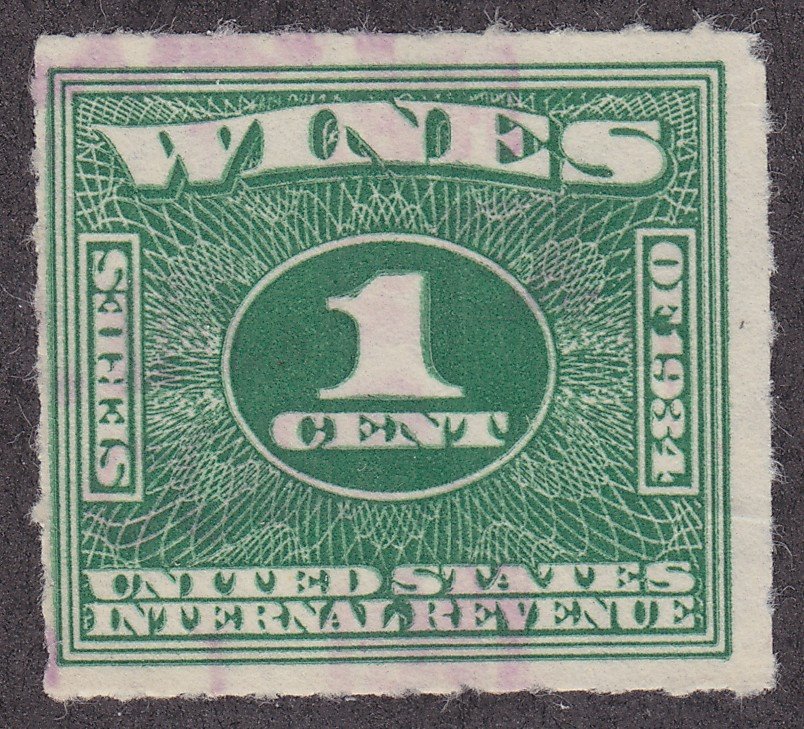 So I went to make a comparison scan to show "normal" and discovered in my decent dupes I have three copies with the almost exact kiss and one normal copy. Other denoms don't seem to have this. Anyone have any ideas as to why? 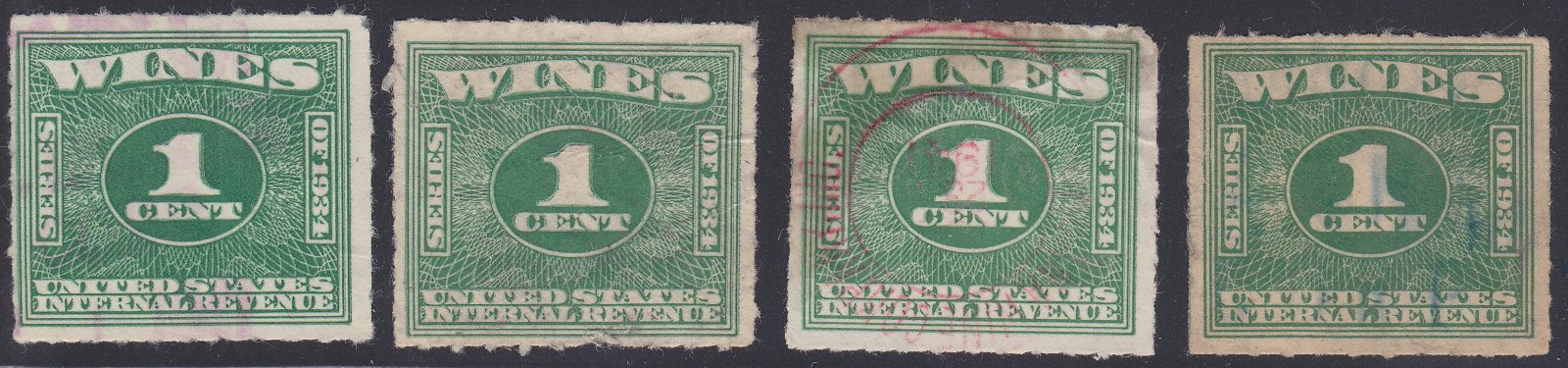 |
|
Send note to Staff
|
|
|
Pillar Of The Community
United States
6470 Posts |
|
|
Overinking, IMO. The symptoms are more of a spreading than doubling, and radiate in more than one direction. With a double or kiss impression, there would be uniformity in direction across the entire stamp. |
|
Send note to Staff
|
|
| Edited by revenuecollector - 10/29/2017 12:38 pm |
|
|
Replies: 46 / Views: 9,349 |
|




 Posted 07/08/2017 8:34 pm





