| Author |
 Replies: 46 / Views: 9,350 Replies: 46 / Views: 9,350 |
|
|
|
Pillar Of The Community
703 Posts |
|
|
Seems reasonable to me.
I own 7 copies; 4 overinked and 3 "normal".
Those numbers appear to be a weird ratio... |
Send note to Staff 
|
|
|
Rest in Peace
United States
1738 Posts |
|
|
Staterevs,
I agree, the examples you show are just the combination of a bit too much ink and a bit too much pressure in the printing press.
Sort of like the end result of stepping down hard on a peanut butter sandwich.
Jim |
|
Send note to Staff
|
|
|
Pillar Of The Community
703 Posts |
|
|
Hi Jim,
Any idea why the 1 cent seems to have so many?
Perhaps that run was done just before or after lunch. Goober anyone?
I looked through my other 1934 series and don't seem to see any other dominations with the same look.
I would not expect to see 4 of 7 copies this way. My stock page is years of filing copies away as they show up and aren't from any one sheet or collection.
|
|
Send note to Staff
|
|
|
Rest in Peace
United States
1738 Posts |
|
|
Not sure why the wine one centers have this particular inking issue. Here's another example of an offset press printed stamp with excess ink squirting out from all directions. Jim 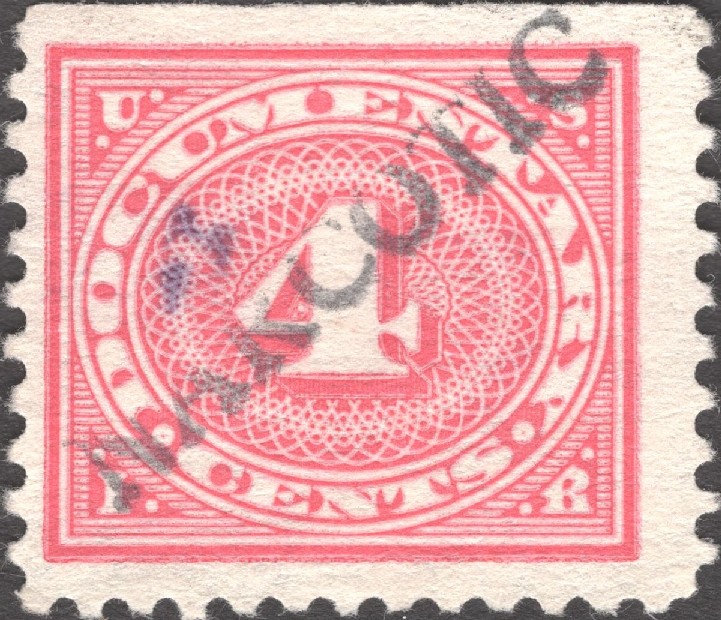 |
|
Send note to Staff
|
|
|
Bedrock Of The Community
United States
10866 Posts |
|
|
Alas, I am a purist who does not think there is such a thing as a "partial double impression" except if there was extraneous paper on the sheet when printed which took part of the second impression and was lost. |
|
Send note to Staff
|
|
|
Pillar Of The Community
703 Posts |
|
|
Quote:
Alas, I am a purist who does not think there is such a thing as a "partial double impression" Who used the term "partial double impression"? |
|
Send note to Staff
|
|
|
Pillar Of The Community
United States
868 Posts |
|
|
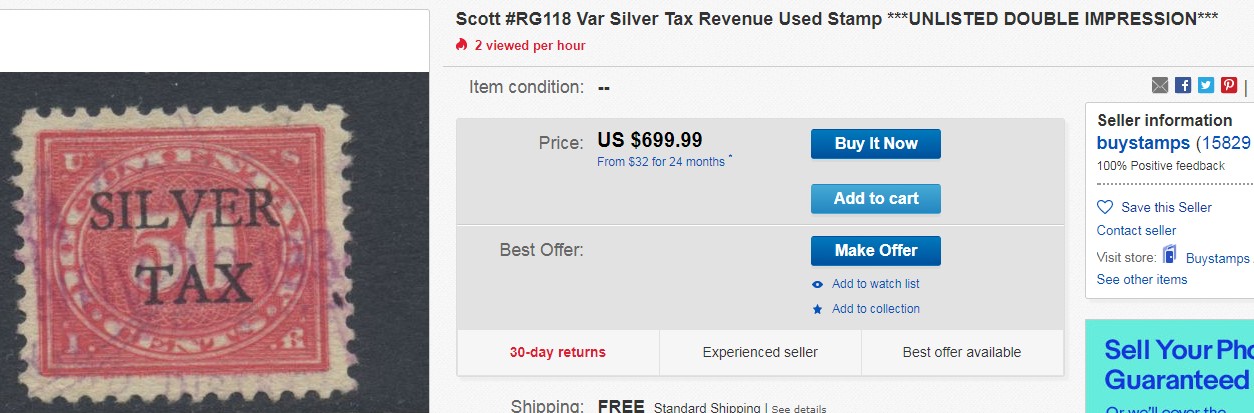
These are all examples of using high etch plates (a practice pioneered at BEP beginning in 1924) on the offset presses. The late George Brett at times described these printings as letterset (combination of letter press and offset). When too much pressure is applied the result is the "squeeze" exhibited in the illustrated examples, a ridge of ink forced into large otherwise unprinted spaces. these are NOT double impressions. The high etch plates were adopted for all the cents denominations after 1924, i.e., the reprinted Series of 1916 wines (also called the Series of 1933), the small Series of 1934 wines, the Series of 1917 documentary with all their overprinted versions. Interestingly the 25¢ Series of 1917 documentary and especially the overprinted versions seem very late in going to letterset printings. For example, I have never seen a 25¢ Tobacco Sale Tax or 25¢ Silver Tax on anything but the earlier traditional offset printed documentary stamp. And all the 50¢ silver tax exhibit this so-called squeeze. At one time Scott listed this as a double impression, but we got them to remove that variety many years ago.
To StateRevs - look at your examples RE75, the 72¢ wine. It was years before I found an example without what Brett called squeeze from the high etch plates. |
|
Send note to Staff
|
Ron Lesher |
| Edited by revenuermd - 10/29/2017 5:45 pm |
|
|
Pillar Of The Community
United States
868 Posts |
|
|
To Jim - so your narcotic example was hand stamped on a documentary stamp that could not have been produced before 1924, almost a dead giveaway that it is a philatelic forgery! The handstamps were produced in 1919, although a few did see use a little later. |
|
Send note to Staff
|
Ron Lesher |
|
|
Pillar Of The Community
703 Posts |
|
|
Quote:
look at your examples RE75, the 72¢ wine. It was years before I found an example without what Brett called squeeze from the high etch plates. Hi Ron - zero for nine! Any other denoms we should look at? |
|
Send note to Staff
|
|
|
Rest in Peace
United States
1738 Posts |
|
|
These are all supposed to be double impressions. Hopefully there can be some agreement about that, but I have my doubts... Personally, I look specifically at the short vertical lines above the "series of 1916" text. If there are two lines next to each other instead of the normal one, I consider it a double impression. As Ron described, the outer frame lines can be deceptive. Jim 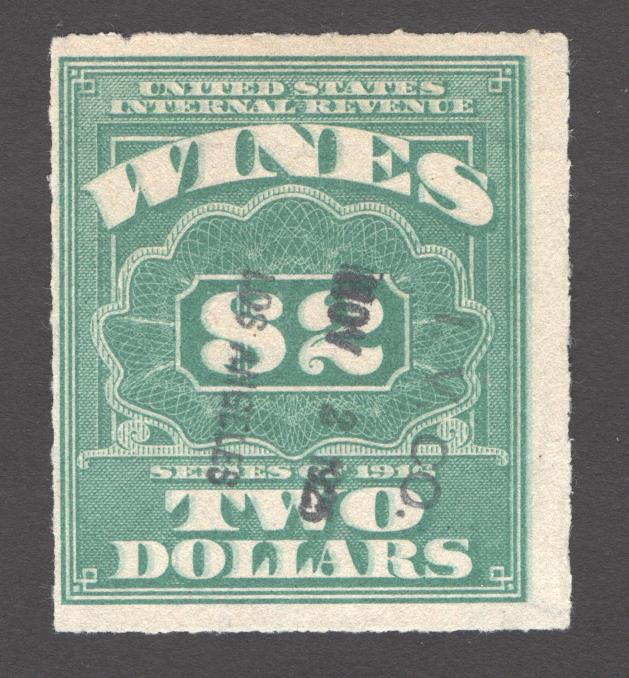 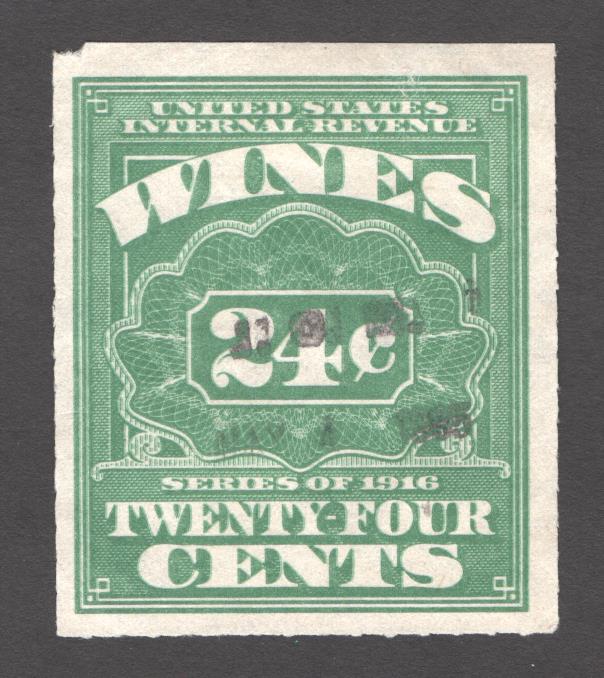 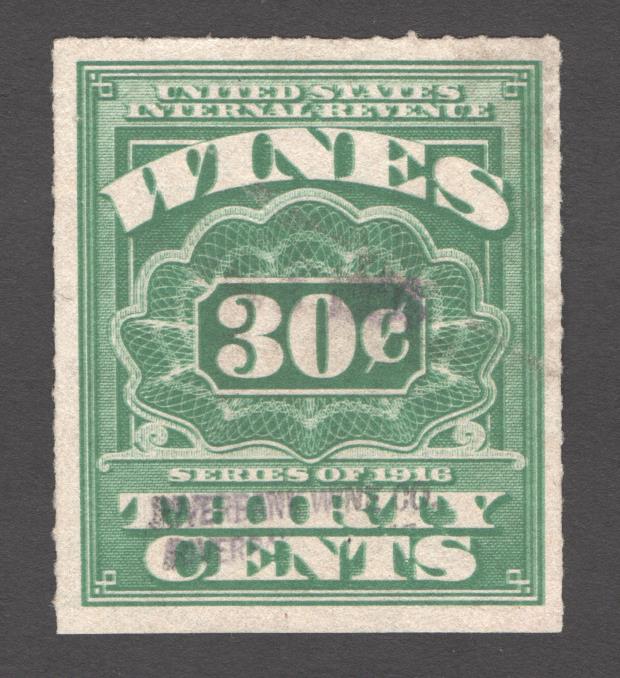 |
|
Send note to Staff
|
|
|
Pillar Of The Community
United States
868 Posts |
|
|
They all appear to be double impressions from what I can tell from your images.
|
|
Send note to Staff
|
Ron Lesher |
|
|
Pillar Of The Community
United States
791 Posts |
|
|
One way to distinguish a true double impression from excess squeeze is that a double impression can only show excess ink in one or two directions. A squeezed impression will show excess ink on all four sides -- impossible if the sheet was run through the press a second time. |
|
Send note to Staff
|
|
|
Rest in Peace
United States
1738 Posts |
|
|
Pillar Of The Community
United States
868 Posts |
|
|
Jim and Kent - Find me an RG11 without that doubling, or more accurately squeeze, on the RG11. I have never seen one without it. |
|
Send note to Staff
|
Ron Lesher |
|
|
Rest in Peace
United States
1738 Posts |
|
|
Mercilessly ripping the scab off this semi-healed topic: A variety of a common narcotic stamp is shown below. The stamps were printed by offset, as were the previously-mentioned wine stamps. I believe this to be a double impression, although a subtle, left-right one. Eric Jackson included this unlisted-in-Scott variety in his inventory many years ago, but I don't have an image of that item. Although this is analogous to throwing a big piece of raw steak into a cage of lions... what do you think? Jim 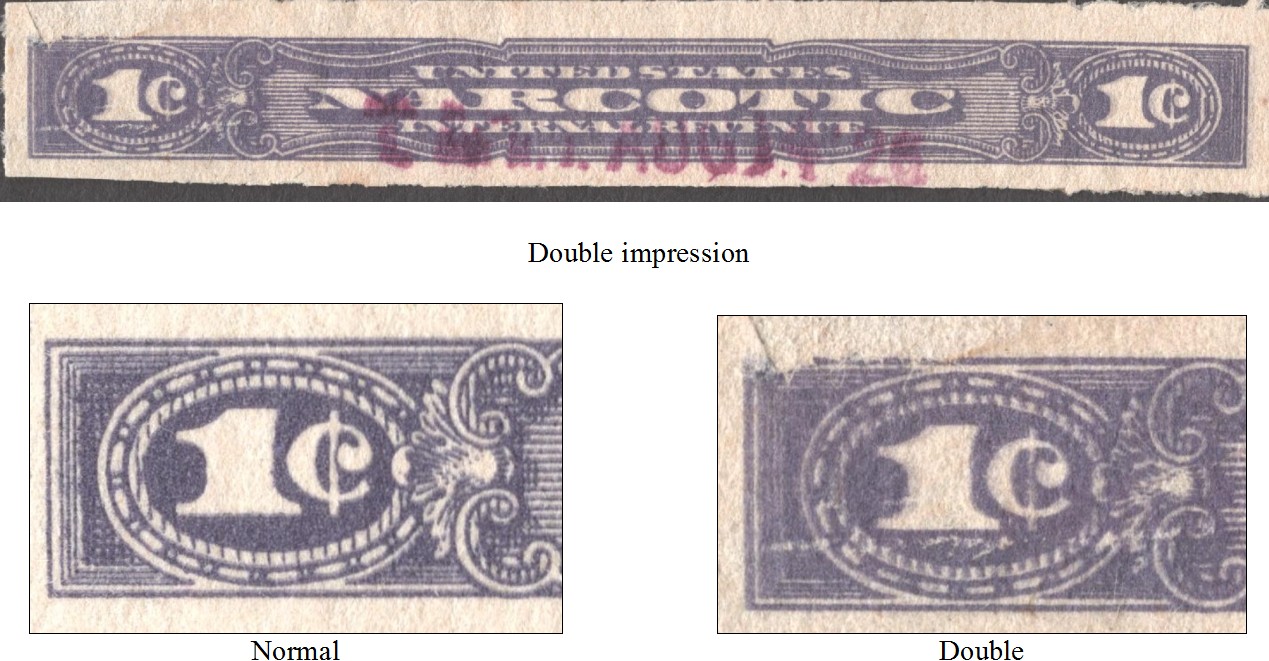 |
|
Send note to Staff
|
|
|
Replies: 46 / Views: 9,350 |
|




 Posted 10/29/2017 12:43 pm