Quote:
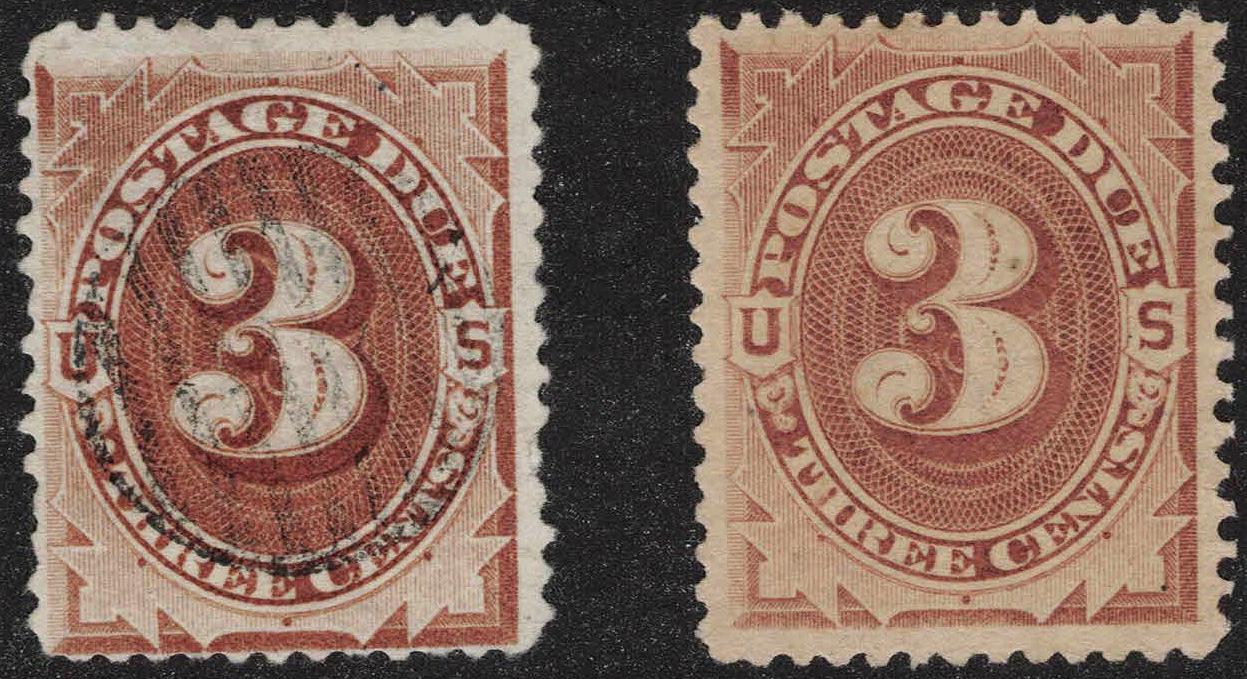
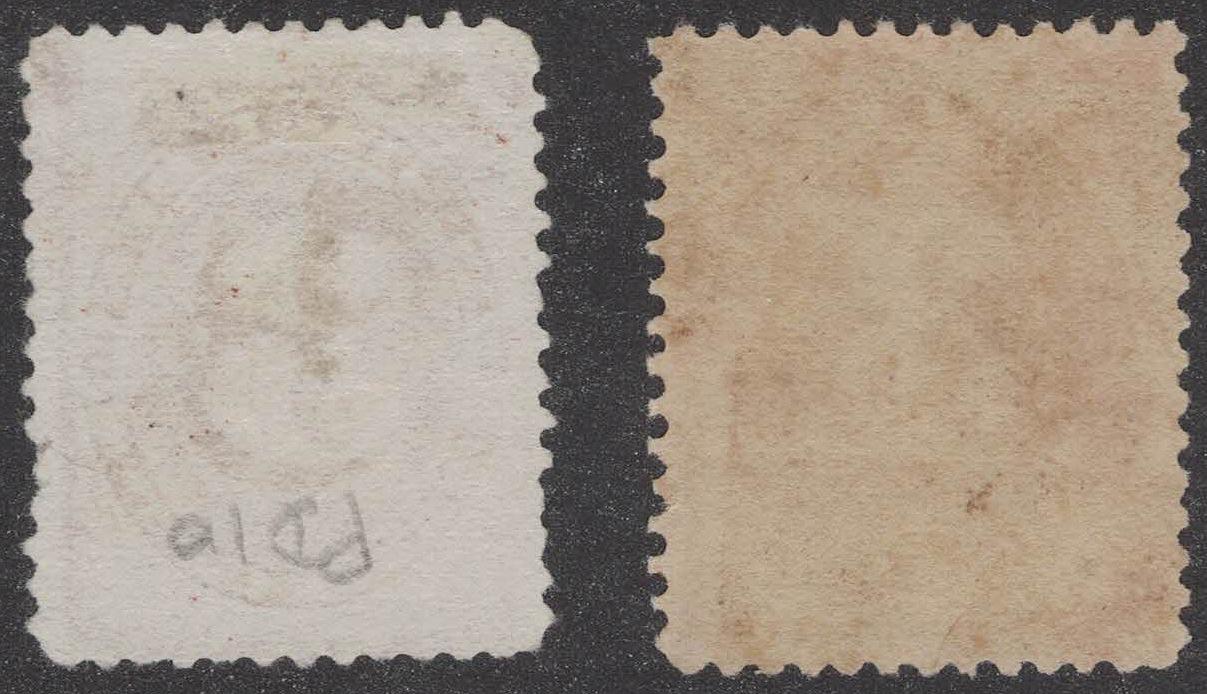
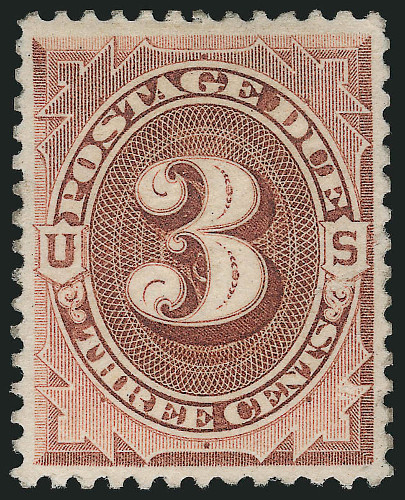
Neither stamp is a Special Printing. Because of the extra care taken with Special Printings they typically show what is called a "cameo" effect on the reverse. The central portion of the design which includes the numeral shows on the reverse side. Additionally, the used example can not be a Special Printing as they were not available for sale at post offices and they were the only ones allowed to use postage dues. They (postage dues) are really an accounting method for the post office and not postage useable by anyone.
Bill... (if I may call you Bill) my first question to you would be if
there is any data available for paper type for a J3... Clark clearly
stated the papers were soft (as delineated for the special printings)
and no delineation of paper type in Scott for J3. Given the cameo
effect which you've mentioned, I assume there's a reference book on
dues which mentions this. I assume by the cameo (fact) would be why
you are discounting the possibility of J17 for the unused copy, given
J17 (based upon paper type) would be more of a conclusion for it versus
J3. Second would be explanation (or theory) as to the color of the
paper, and how it might have gotten that way.
Next... the used copy displays (what could be construed to be) the
cameo effect, (as well as being soft porous)... so why would your
conclusion be (it, as well) could not be J10 or J17?
Randall





 Posted 08/13/2017 02:18 am