Quote:
The letterset printings tend to have fuzzy images on the outside edges. When too much pressure was present in the press, an extra line of ink appears in the ordinarily white spaces, and is quite evident inside the denomination
One of the advantages of understanding the three different types of 1917 documentary stamps is to apply the dates that they were issued against questionable varieties.
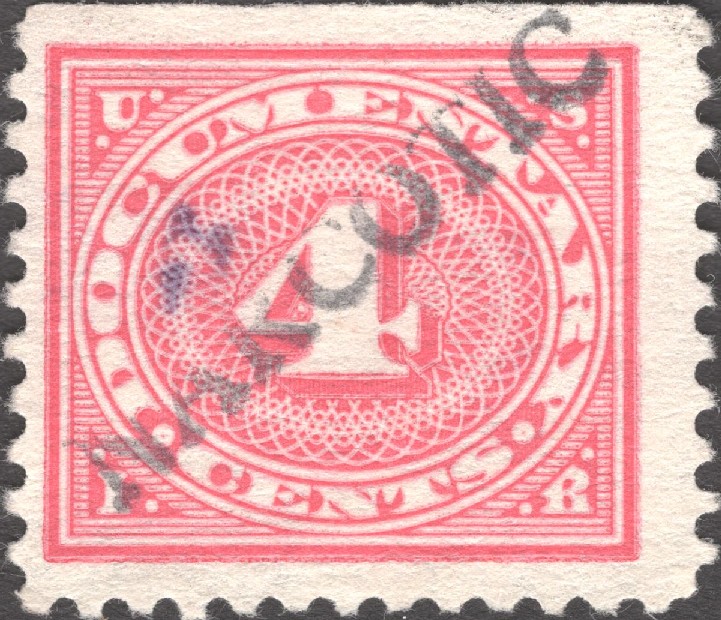
For example, shown below is a scan of what looks like a genuine narcotic overprint on the four cent value.
However, note the fuzziness to the edges that Ron mentioned. Also note the tiny dots in the circles. This makes this stamp a good example of a type 3 Bureau print from 1924 or later.
The genuine narcotic handstamps were used for just a few months, from February 25, 1919, until around the summer.
There is no way that anyone would need to handstamp a four cent documentary stamp five years later; the violet strips had been readily available for many years.
In other words, this overprint couldn't have been applied in 1919, as this documentary variety didn't exist then.
Therefore, this particular narcotic overprint is definitely fake.
Jim





 Posted 08/19/2017 4:15 pm


