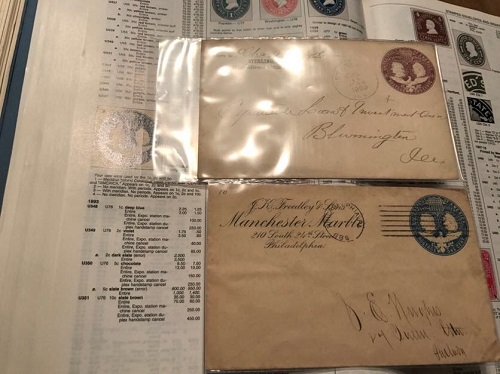
Quote:
And of course there is the Scott catalog value, the commercial value if buying, and the commercial value if selling. Normally these three values are in descending order.
Kimo,
I'm not sure what you are saying here. First, we all (or most of us) know that Scott CV's are optimistic, at best. So let's set that aside, and get at what you mean by "commercial value." As an economist (retired), I am more used to thinking "market value." And in any given "market" the "value" is the same for both buyer and seller. (To those who know what I'm talking about, I'm taking about a market clearing price, and ignoring producer or consumer surplus "value"). Take
ebay for example. For a "sold" listing the "value" is what it sold for, both for the buyer and the seller. There are not two values, one for selling and one for buying.
So, I'm wondering if you are distinguishing different
markets, like the difference between "retail" and "wholesale." This is what gives the difference between what a
dealer might offer, and what a
buyer would pay at retail. I suspect you mean something like this, so that "the commercial value if selling
to a dealer" would be lower than "the commercial value if buying
from a dealer." Is that what you are saying?
This is still not two values, one for selling and one for buying. If a seller acquires product to retail, say from estates or collections acquired from other dealers, the "value" for the seller is not what they paid for it, but what they can sell it for. And what they can sell it for is the price a retail buyer is willing to pay, and no one pays more than they value for an item (if rational). So that sale price is the value to both the seller and the buyer. That the seller was able to buy it for less because they can get product "wholesale" isn't establishing a lower value for the item. The seller's retail price has to cover operating expenses (which includes what is paid to acquire product to resell, as well as other operating expenses) and return on investment. If the retail price is not producing the value necessary to cover all of these costs, the seller closes up shop and finds another line of business.
Basil





 Posted 08/26/2017 7:52 pm