About the cancel (translation) link below:
We have already seen that a very peculiar system was adopted in the Kingdom of Naples to cancel the correspondence: the so-called "annulling" (see its in-depth study).
Since the Kingdom of Sicily was also part of the Kingdom of the Two Sicilies, perhaps it did not want to be less ...
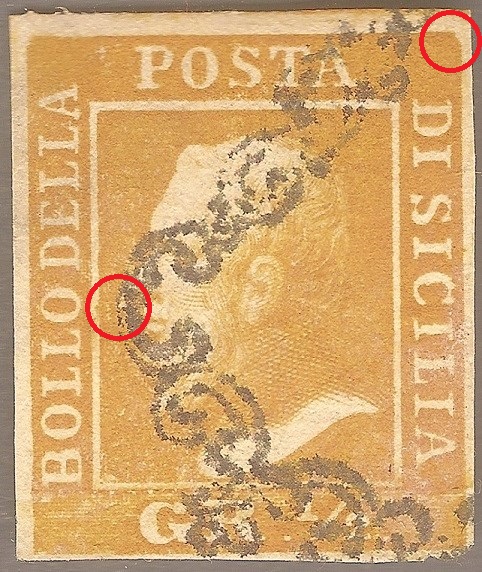
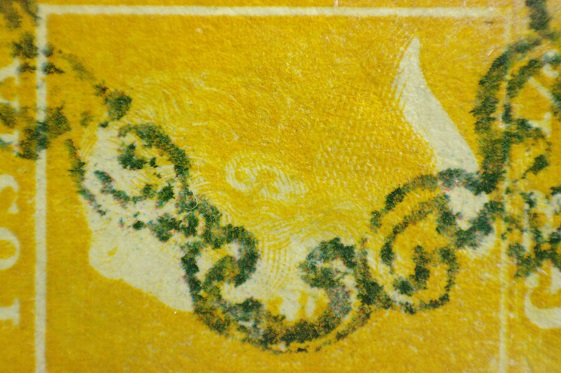
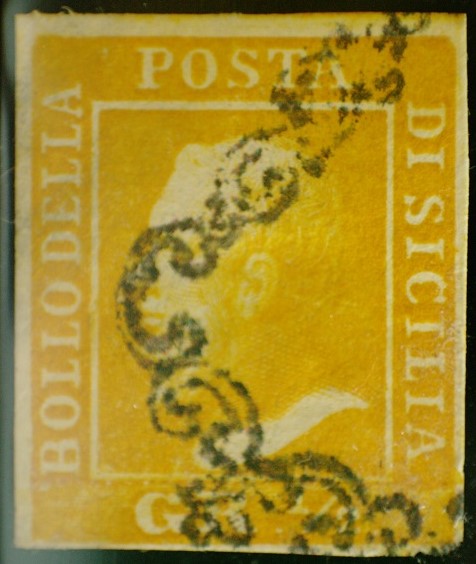
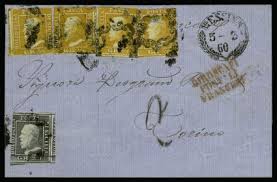
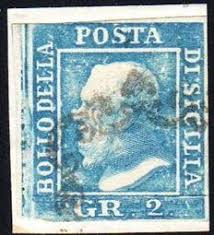
For this reason, the cancellation of the Sicilian stamps was executed with an original and elegant system: the so-called "horseshoe", so nicknamed for its shape.
As I mentioned the annulments of the Kingdom of Naples, complete the argument, also dealing with the cancellation of the Kingdom of Sicily.
Actually repeat Article 7 of Royal Decree of 29 November 1858 concerning the issue of "mail stamps": "In order for a used mail stamp to be used fraudulently for the second time, in the act of shipment of the letter or I use a black mark on the mail stamp according to the design approved by us. "
The "black mark" in the "design approved by us" is precisely the famous "horseshoe" nullification.
When the series of stamps with Royal Empress was made, it immediately seemed a "sacrilege" to detract from it with an oily stamp. For this reason, "to avoid such a case of so much irreverence," Minister Cassisi ordered to make the barrister Carlo La Barbera a stamp made so as not to affect the effigy of the king.
The canceling system is approved and the stamps are made: brass nullifies mounted on a handle: the postman had to stamp the stamp, be careful not to strike the sovereign effigy; that this has not always happened (indeed ...) is another thing!
The stamps were sent to the various Post Offices and differed for very small details: only an almost "manic" study can recognize them.
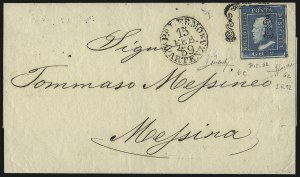
It can also be rarely found on stamps of the Kingdom of Naples or of the Neapolitan Provinces, on unsatisfied correspondence (Fig. 4-5).
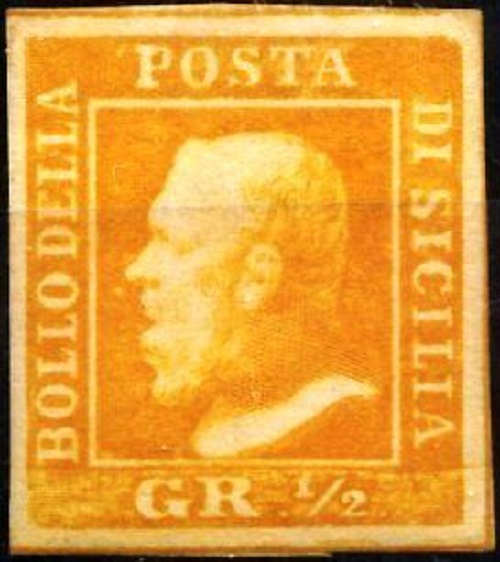
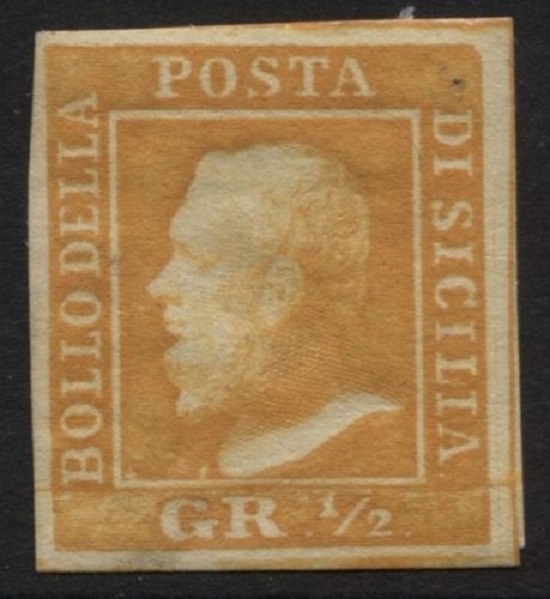
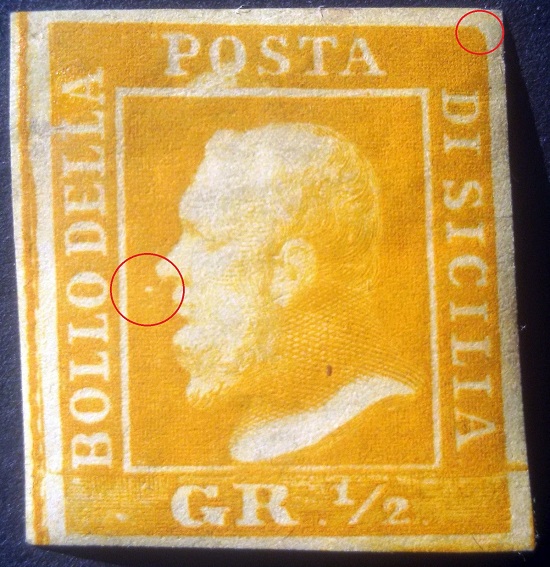
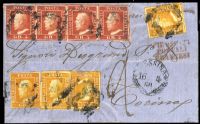
Here's how the nullification, with its typical ornate (Figure 1), and how it was used on stamps (Figures 2 and 3).
http://www.antichistati.com/1024/appr/ap_33.htm





 Posted 09/27/2017 5:28 pm