| Author |
 Replies: 37 / Views: 8,561 Replies: 37 / Views: 8,561 |
|
Rest in Peace
Netherlands
963 Posts |
|
|
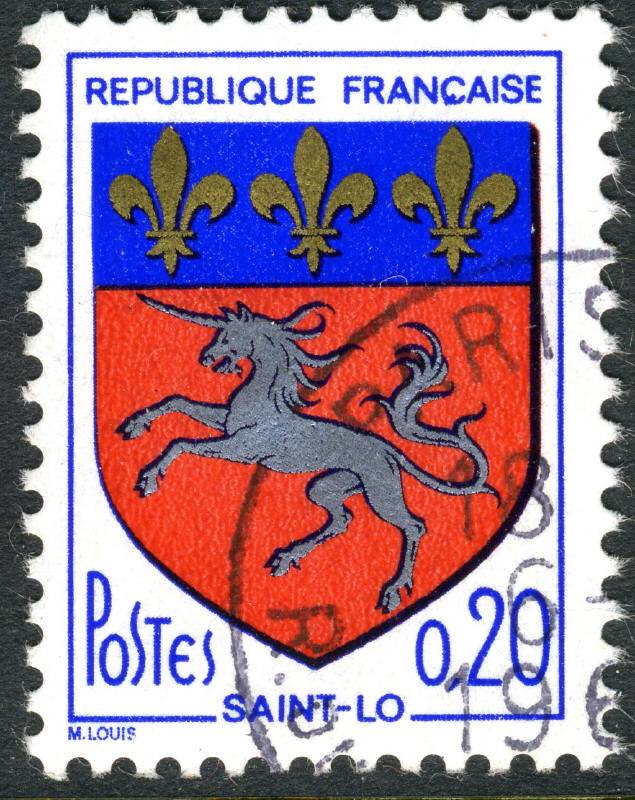
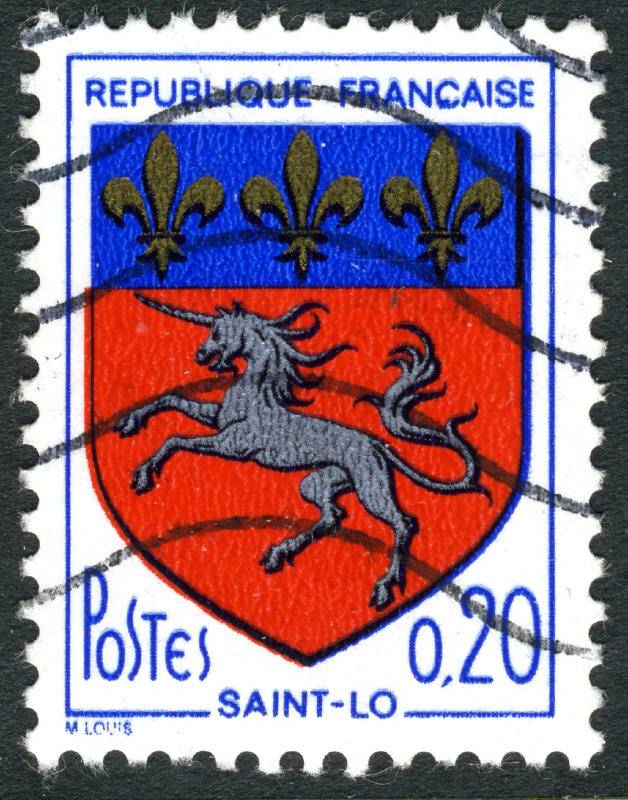
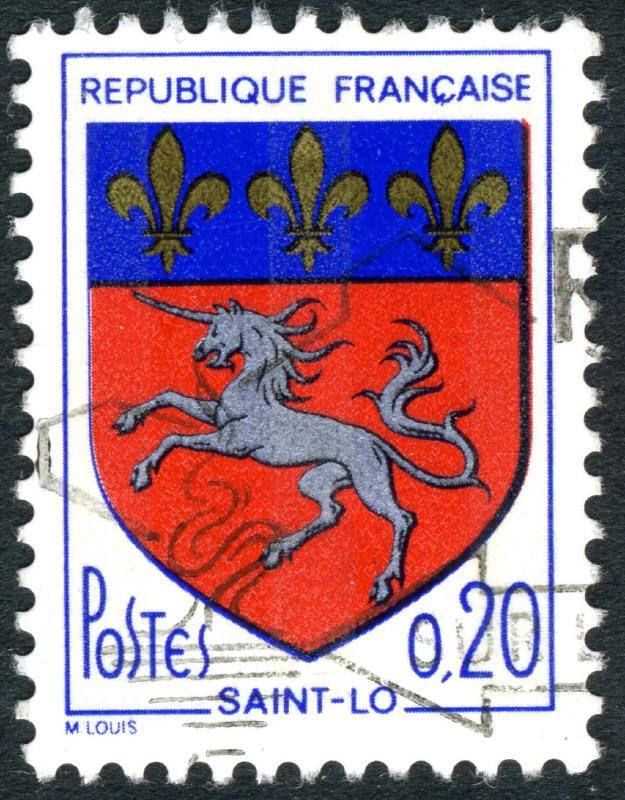
The first French stamp in modern days printed in photogravure. A simple French definitive stamp Still has some loose ends when it goes for the research on how it was printed, which material had been used etc. The French collectors have published a nice leaflet years ago but rather stuck to the particular prints on the sheet margins than examined the stamps themselves. 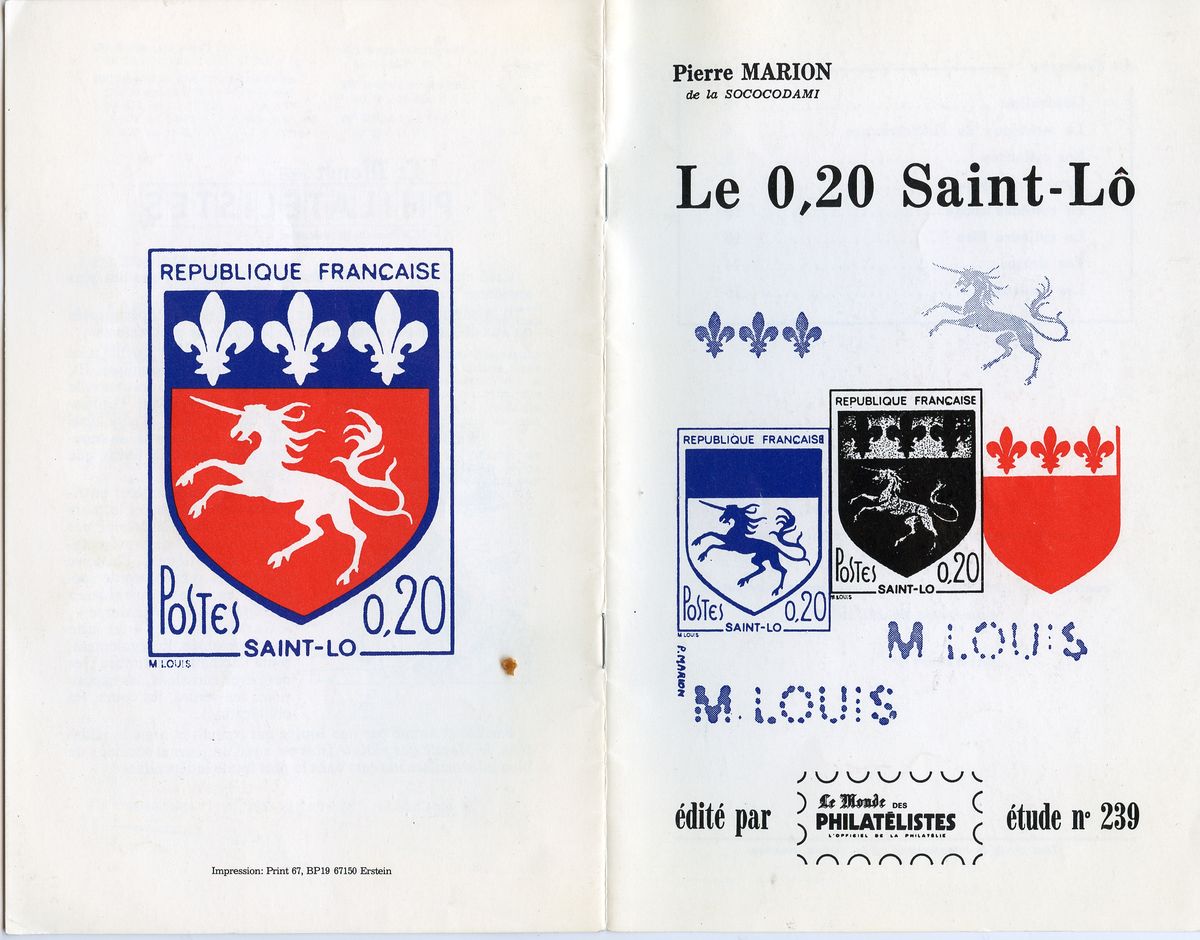 Probably for French philatelists this was the final answer, but when I started to dig into the material again - I have been intrigued by this stamp for more than 40 years - I found some remarkable details in the stamps themselves that even may upset theories of stamp printing history! In particular which stamp was the first to have cylinders produced using computers.... |
|
Send note to Staff
|
|
|
|
|
Rest in Peace
Netherlands
963 Posts |
|
|
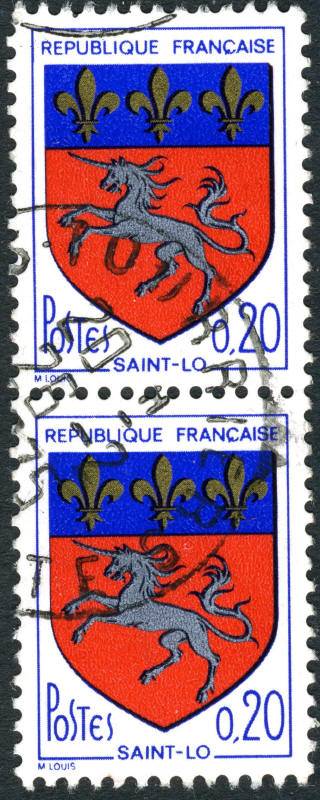
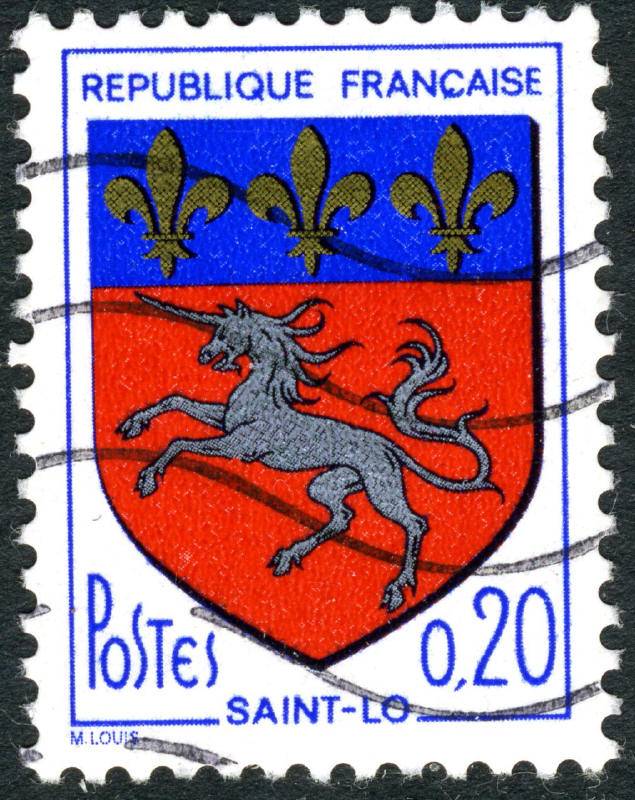
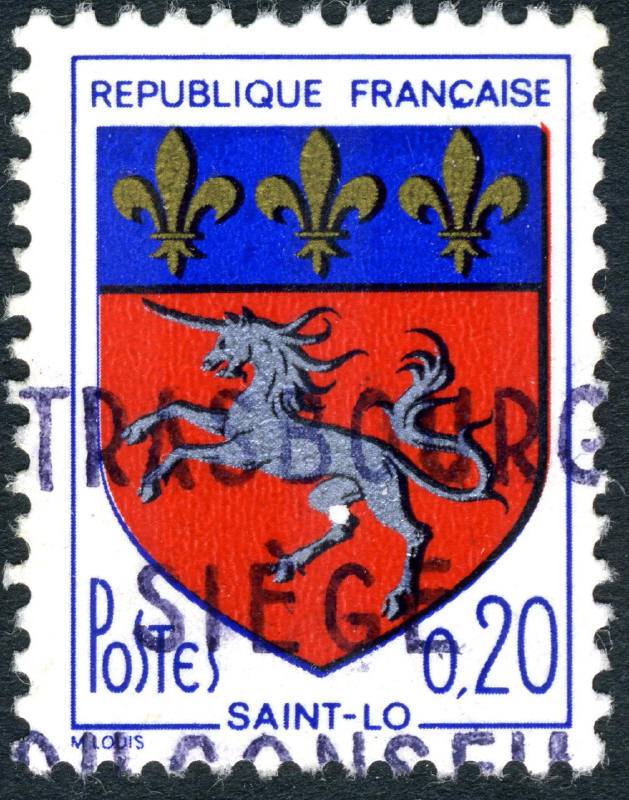
The 0.20 stamp was printed in Paris by the "Imprimerie de Timbres-Poste" during the years 1966-1968, and after the transfer of that printing house to Périgueux, during the years 1970-78.
Print on a reel-fed photogravure printing press of Chambon, the first to be used by this printer debnoted by the collectors HEL-1, to be followed in 1971 by the HEL-2.
The stamp was printed on 1-sided coated paper that reacts "white"under UV due to the optical brightening agents both in the coating as well as in the paper pulp. At the back gum arabic with gum-breaking diagonals.
Comb-perforated 13.
The direction of printing is U[pwards] at times very clearly due to excessive inking. |
Send note to Staff 
|
| Edited by Galeoptix - 10/03/2017 05:15 am |
|
|
Rest in Peace
Netherlands
963 Posts |
|
|
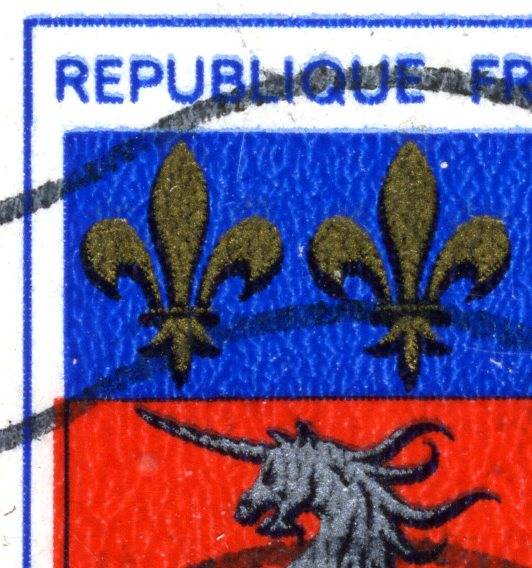
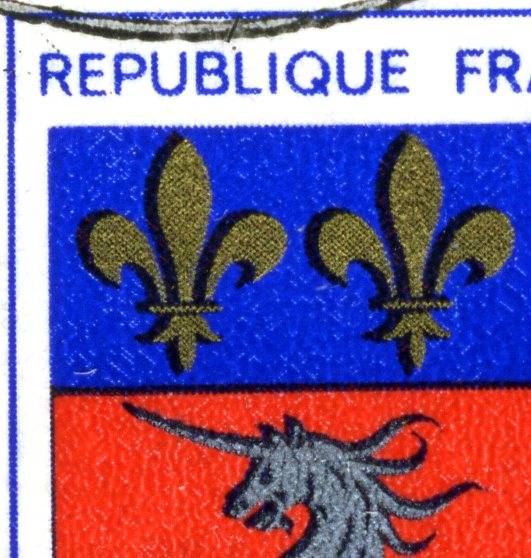
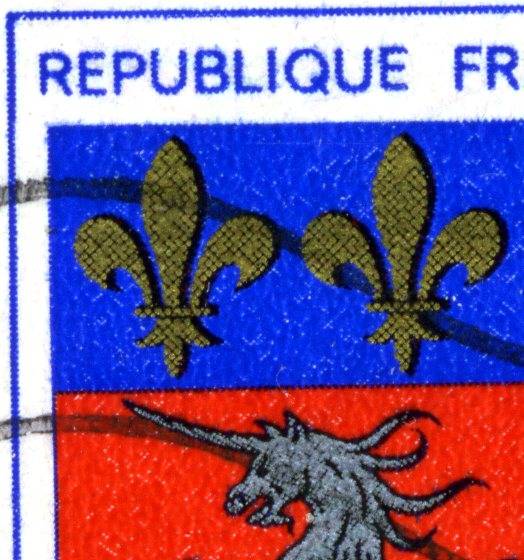
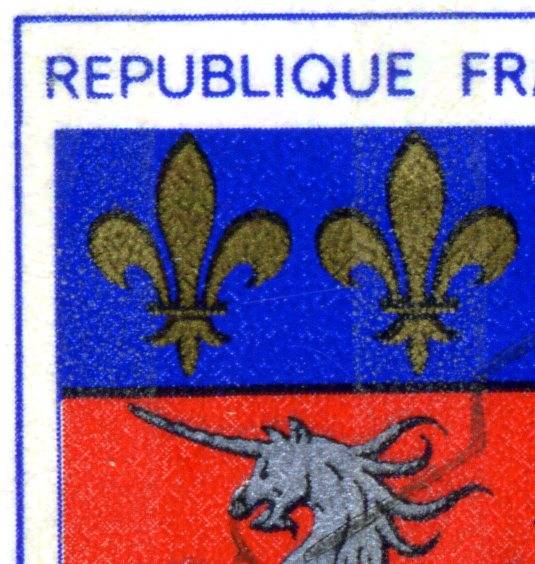
What drew my attention to this stamp in the first place was the arrangement of the screen dots in a rhombic setting. 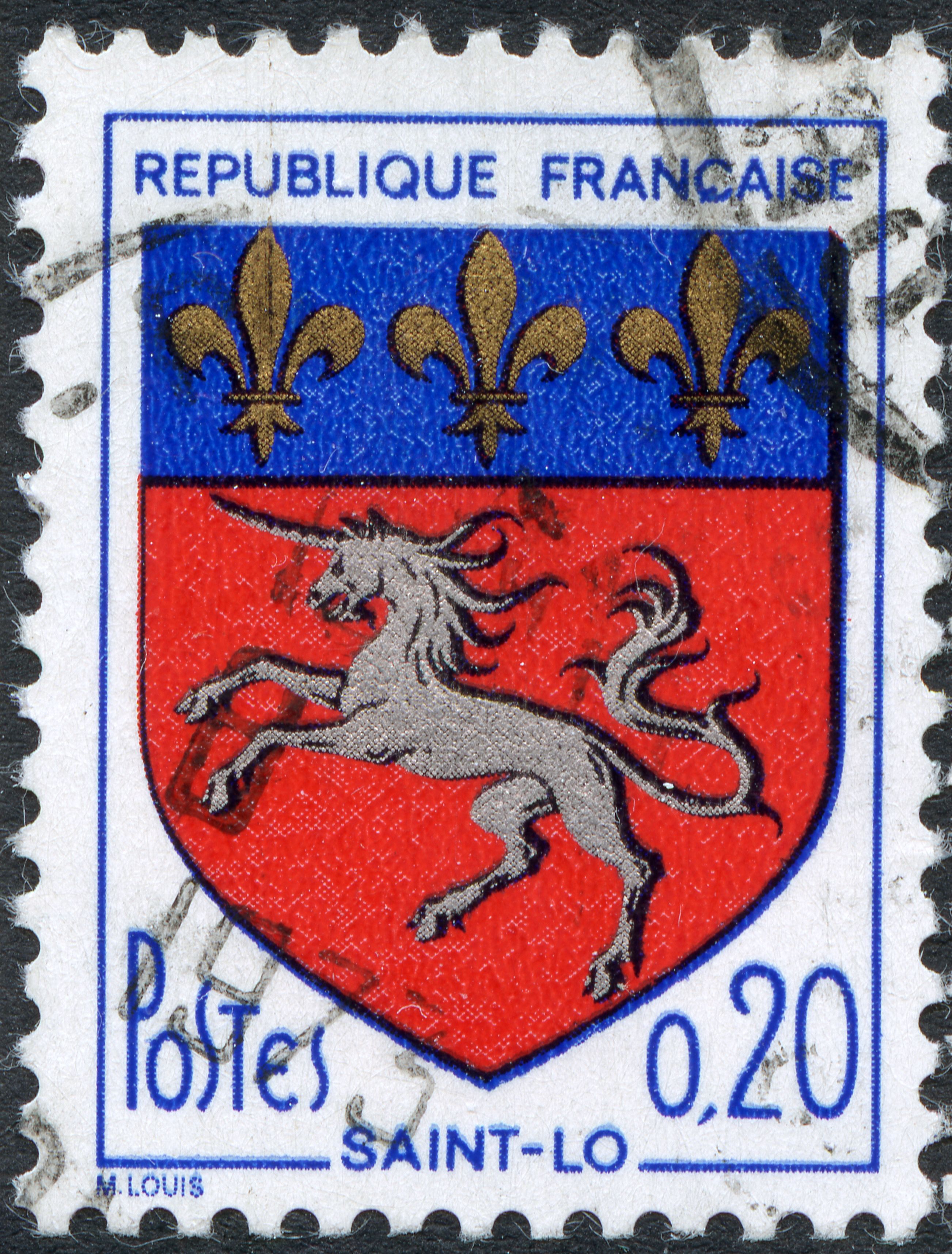 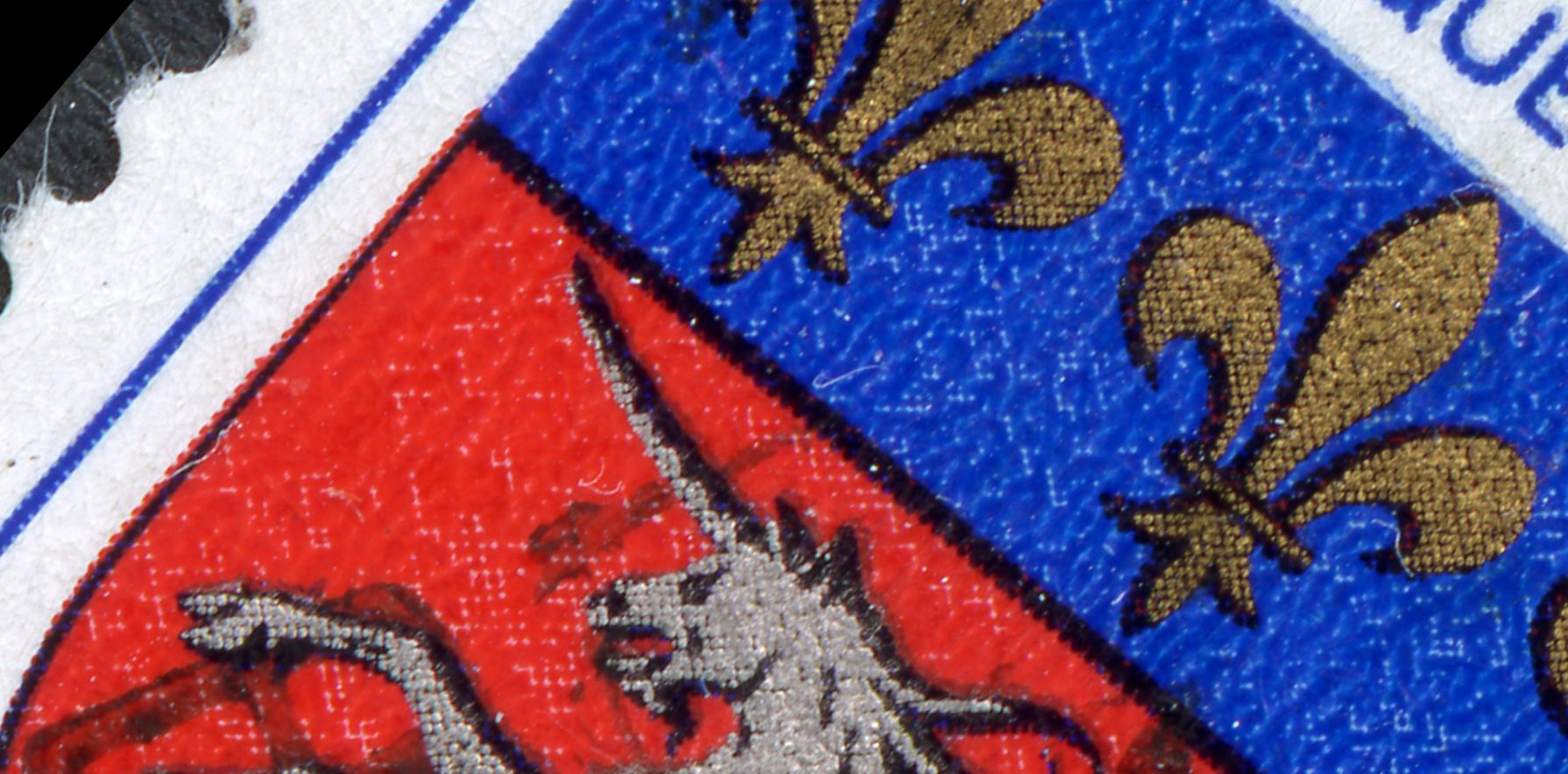 And this goes for all 4 colours in this particular printing! |
|
Send note to Staff
|
| Edited by Galeoptix - 10/03/2017 05:04 am |
|
|
Rest in Peace
Netherlands
963 Posts |
|
|
The French philatelists refer to the history of this stamp in terms of 3 periods: - 1966-1968 cylinders prepared by the "industrie privée" break due to the transfer - 1970-1972 idem - 1973-1978 cylinder prepared in Périgueux in the printing house itself 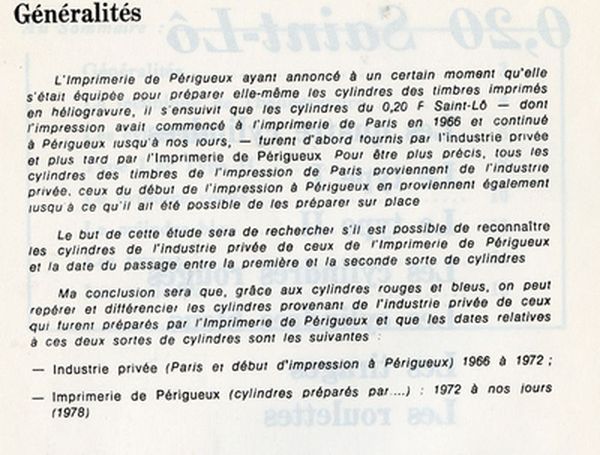 |
|
Send note to Staff
|
|
|
Rest in Peace
Netherlands
963 Posts |
|
|
The aim of Pierre Marion's leaflet is to show - using blocks of 4 of dated corners - all the different blue cylinders and by using the red register bar on the right hand margin to show the different red cylinders. 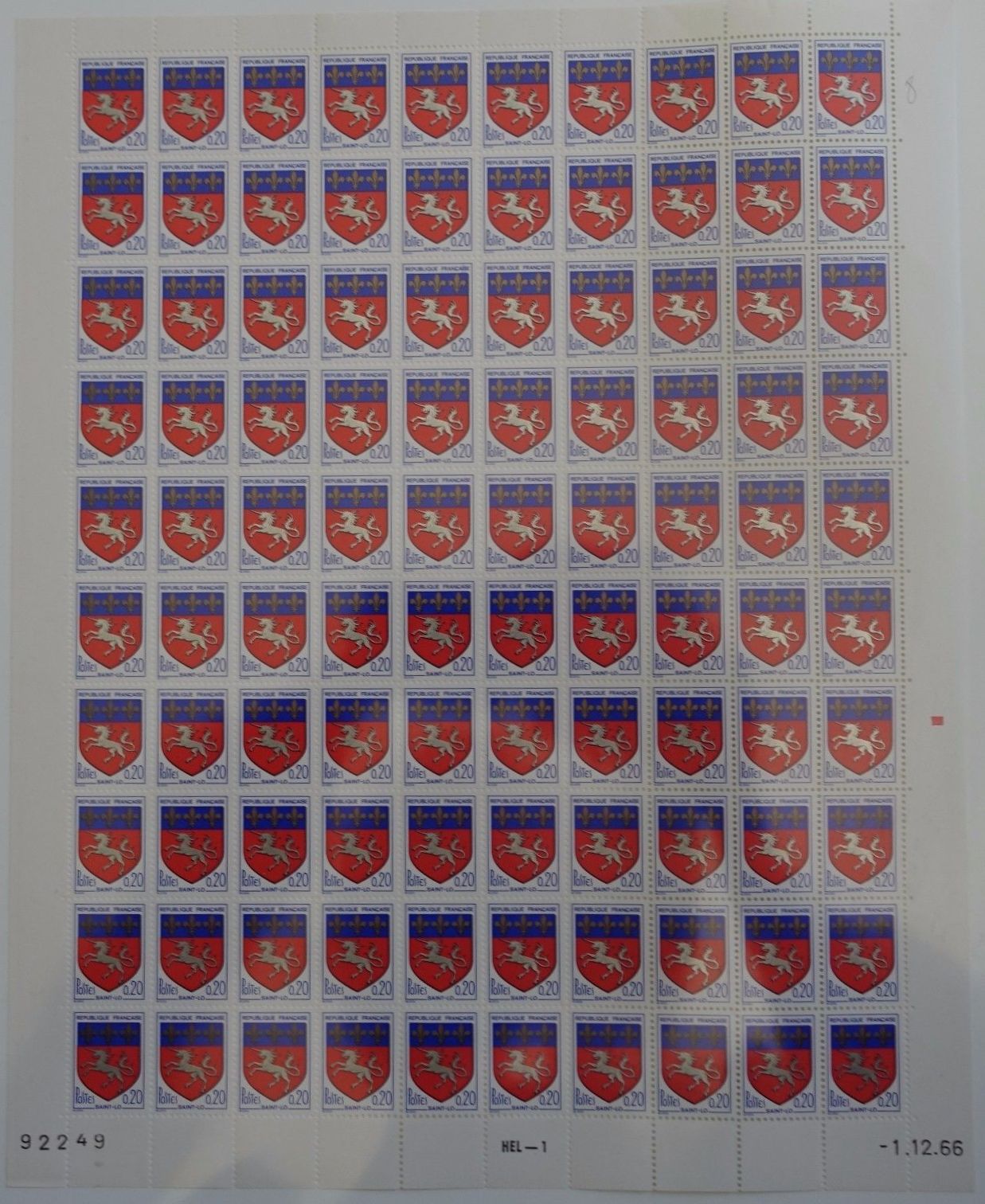 |
|
Send note to Staff
|
| Edited by Galeoptix - 10/03/2017 05:19 am |
|
|
Rest in Peace
Netherlands
963 Posts |
|
|
The rhombic structure reminds me of the first Belgian computer steered engraving for the King Baldwin definitives. The printing house in Mechelen/Malines claims to have printed the first ever EME [electro-mechanical engraving used for] postage stamps in 1982.
Is this claim right????
I started to doubt!
Maybe the French were first using cylinders prepared by the private industry???
Bear in mind that the Hell Helio-Klischograph was introduced in 1962.... |
|
Send note to Staff
|
|
|
Rest in Peace
Netherlands
963 Posts |
|
|
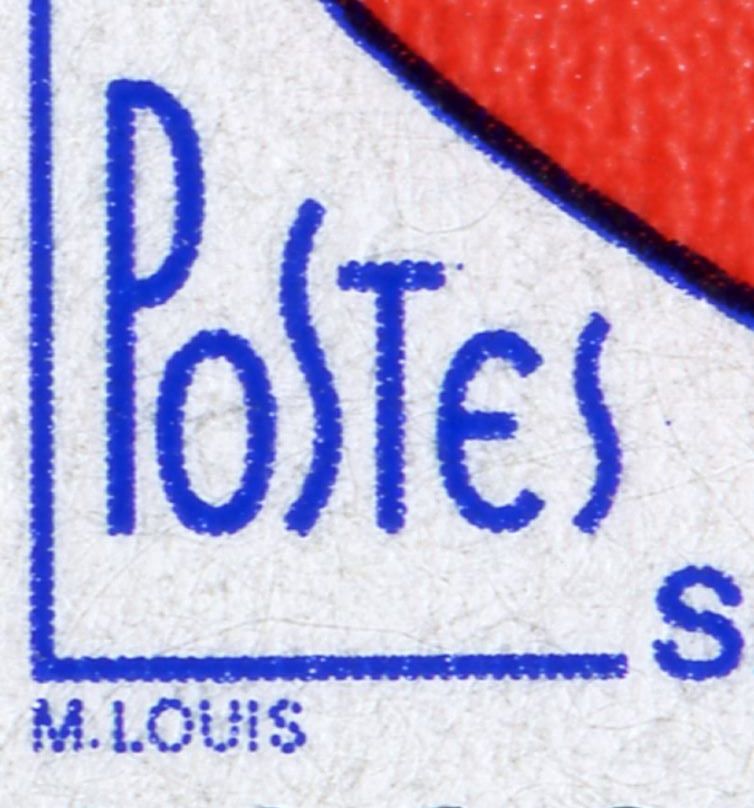
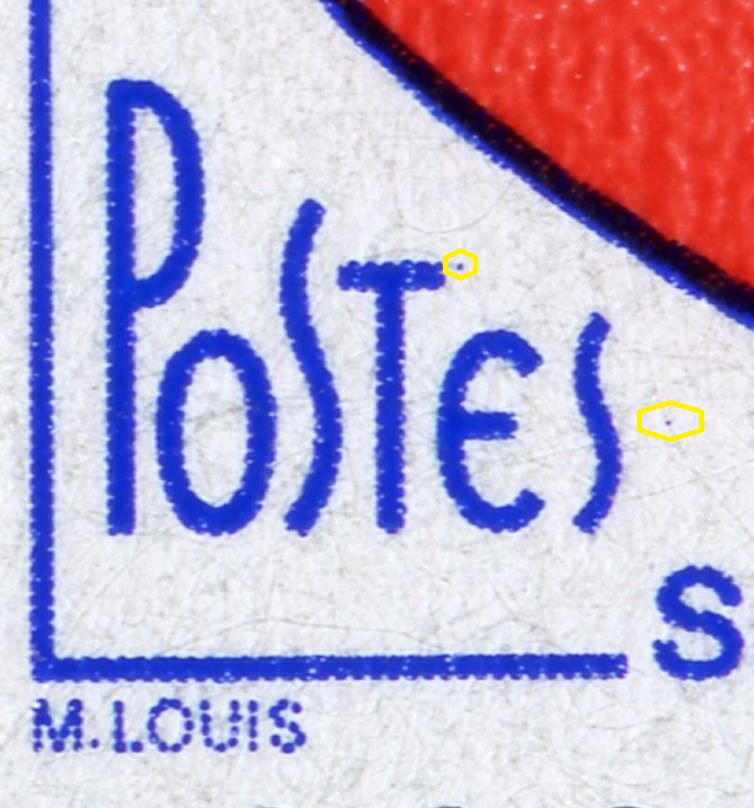
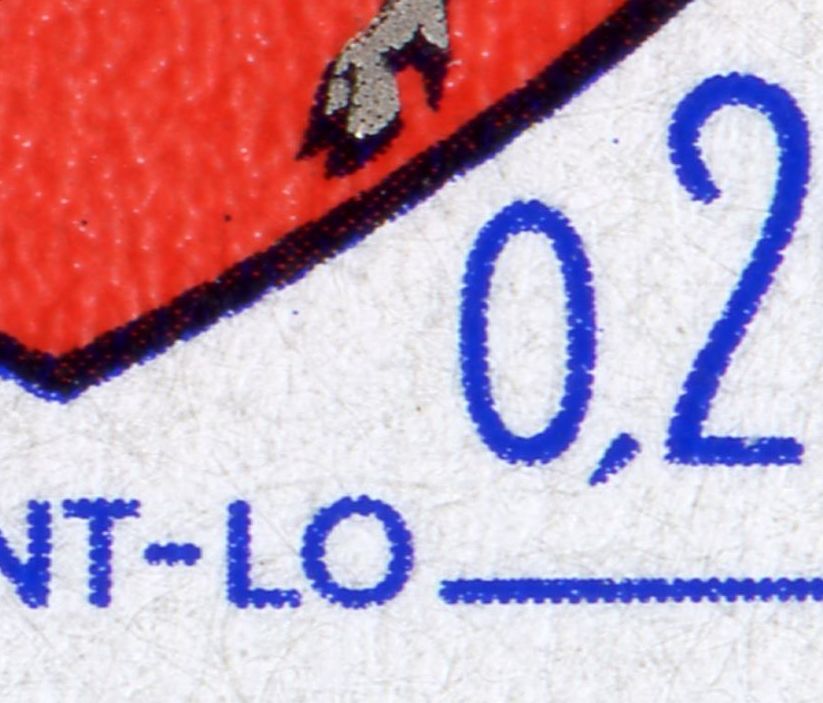
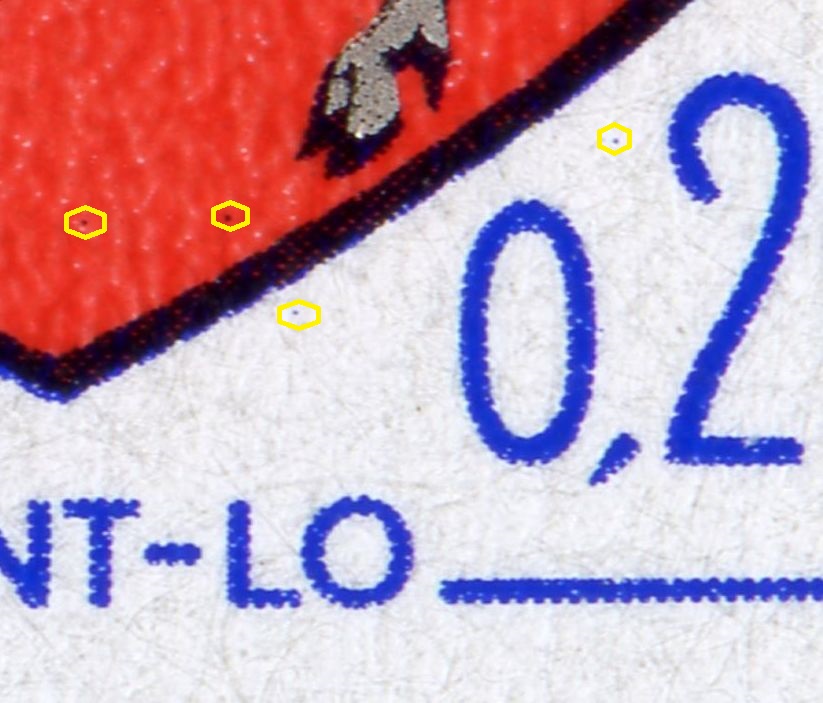
In the preparation of any photogravure cylinder so far, a glass/film with a pre-engraved screen had been used. Transposing this over a film containing all stamps images - multi-positive - onto the carbon tissue,etc.... would lead to individual stamps having difference in the arrrangment of screen dots! No stamp is exactly the same... In this French stamp ALL individual stamps out of the 100=10x10 have the SAME arrangment of dots! 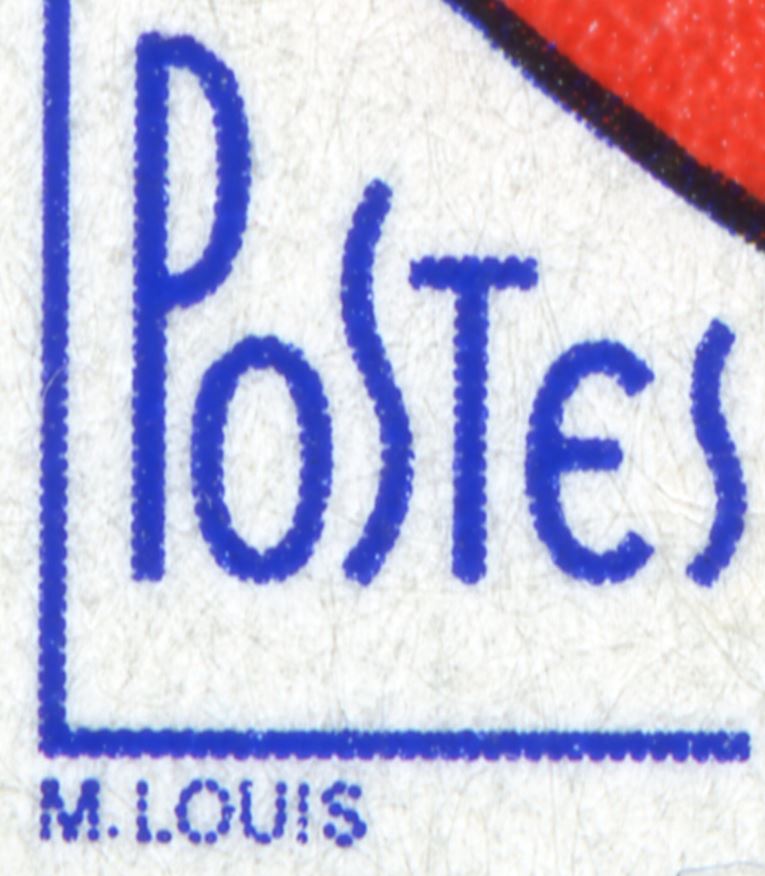 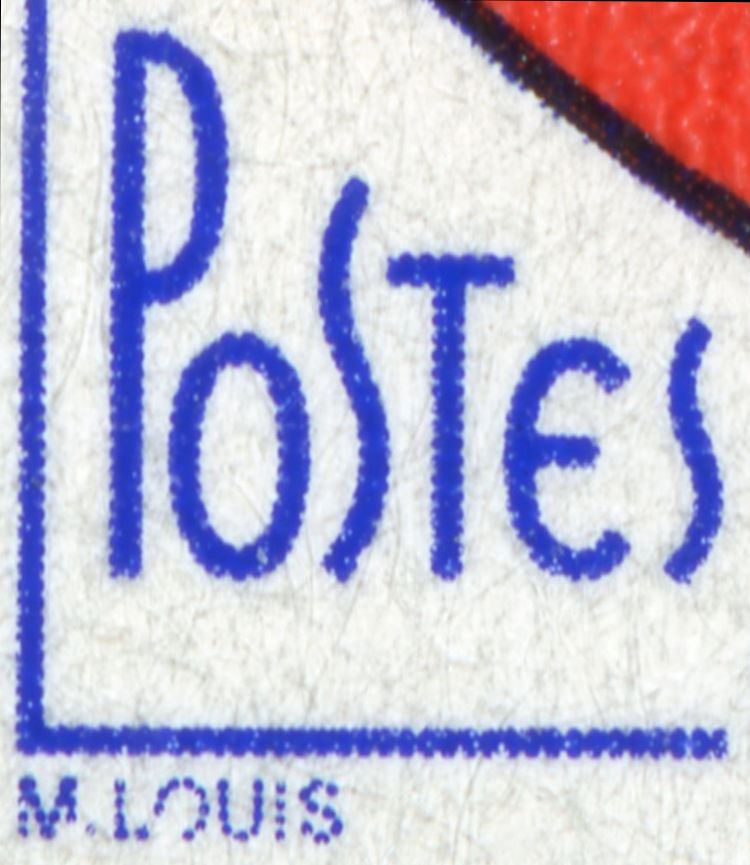 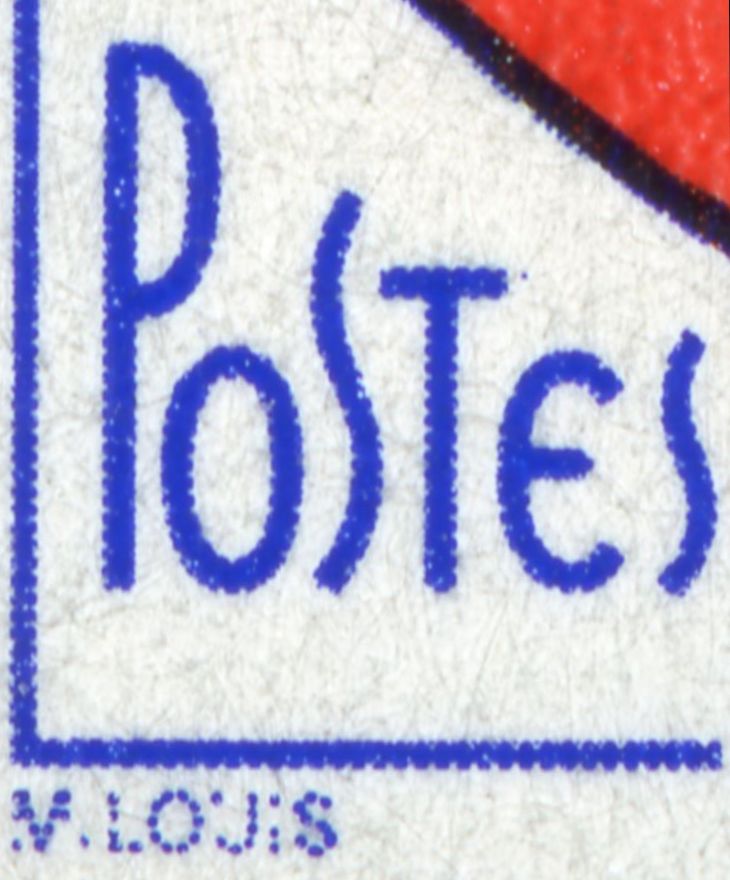 The only exceptions are some dots that have "fallen out" as in the name of the designer Mireille Louis OR in a few extra dots that do not seem to be part of the design such as the dot right behind the top of the "T". |
|
Send note to Staff
|
|
|
Rest in Peace
Netherlands
963 Posts |
|
|
Rest in Peace
Netherlands
963 Posts |
|
|
Would a commercial producent of photogravure cylinder go that far as to bother about the identical appearance of stamps? To such a far degree????
Would they have bothered to screen the individual stamp image first before using a step-and-repeat machine to prepare a multi-positive???
Or did they have the single stamp image [i.e. the colour extract of blue] in a kind of Hell Helio-Klischograph machine and had the engraving needle follow a pattern set in the computer program??
|
|
Send note to Staff
|
|
|
Pillar Of The Community
Canada
5821 Posts |
|
|
Rein, thanks for another one of your interesting studies
in stamp production.
I actually saw your posts on Foro de Filatelia Argentina
regarding these stamps and was hoping you would
start a thread here.
It's amazing what can be learned from such a common
stamp.
I will check the few France Scott 1143 I have
to see if I can see any differences in the
photogravure printing.
|
|
Send note to Staff
|
|
|
Rest in Peace
Netherlands
963 Posts |
|
|
Martin, I need quite some material - any used stuff I can find on ebay I try to gather ... - and although I think to have found the main line, there are still quite some surprises to be expected... It seems that the blue cylinders - according to Pierre Marion 12 of them prepared by the private industry, in the period 1966-1972 have the text parts in exactly the same dot arrangment for ALL stamps [but for some dots missing in "M. Louis"]. In the Périgueux period the blue cylinders seems to have different dot arrangment per stamp as would be expected in the traditional manner of making a cylinder... |
|
Send note to Staff
|
|
|
Pillar Of The Community
Canada
5821 Posts |
|
|
Rest in Peace
Netherlands
963 Posts |
|
|
Martin,
thanks!
Your first stamp should have the following screen specs:
- blue 6.5 dots/mm horizontal, 9 dots vertical
- red 8 dots/mm vertical
- silver dots arranged under +50 and -30 degrees
- gold probably 5dots hor. and vert. i.e. R70 [could be R80 with 5.5 dots]
Could you check that? And did you see any of the 6 blue extra dots?
Gruss, Rein |
|
Send note to Staff
|
|
|
Rest in Peace
Netherlands
963 Posts |
|
|
Martin,
Your second and third stamp should have the following screen specs:
- blue 6.5 dots/mm horizontal, 9 dots vertical
- red 6 dots/mm vertical [the 8 dots version does exist as well...]
- silver and gold dots arranged under +30 and -30 degrees
Gruss, Rein
|
|
Send note to Staff
|
| Edited by Galeoptix - 10/04/2017 03:53 am |
|
|
Rest in Peace
Netherlands
963 Posts |
|
|
Martin,
Your fourth stamp should have the following screen specs:
- blue 6.5 dots/mm horizontal, 9 dots vertical
- red 8 dots/mm vertical
- silver dots arranged under +50 and -30 degrees
- gold dots R 70 [or 5 dots/mm hor./vert.]
Gruss, Rein |
|
Send note to Staff
|
|
|
Rest in Peace
Netherlands
963 Posts |
|
|
Martin,
Your fifth stamp should have the following screen specs:
- blue 9 dots/mm hor. / vert.
- red 8 dots/mm vertical
- silver and gold R80 [or 5.5 dots/mm hor.vert.]
Gruss, Rein |
|
Send note to Staff
|
|
|
Replies: 37 / Views: 8,561 |
|



 Posted 10/03/2017 03:35 am