| Author |
 Replies: 23 / Views: 6,015 Replies: 23 / Views: 6,015 |
|
Rest in Peace
Netherlands
963 Posts |
|
|
Aopparently the definitives of France get highly neglected apart from their phoshpor-bars ... 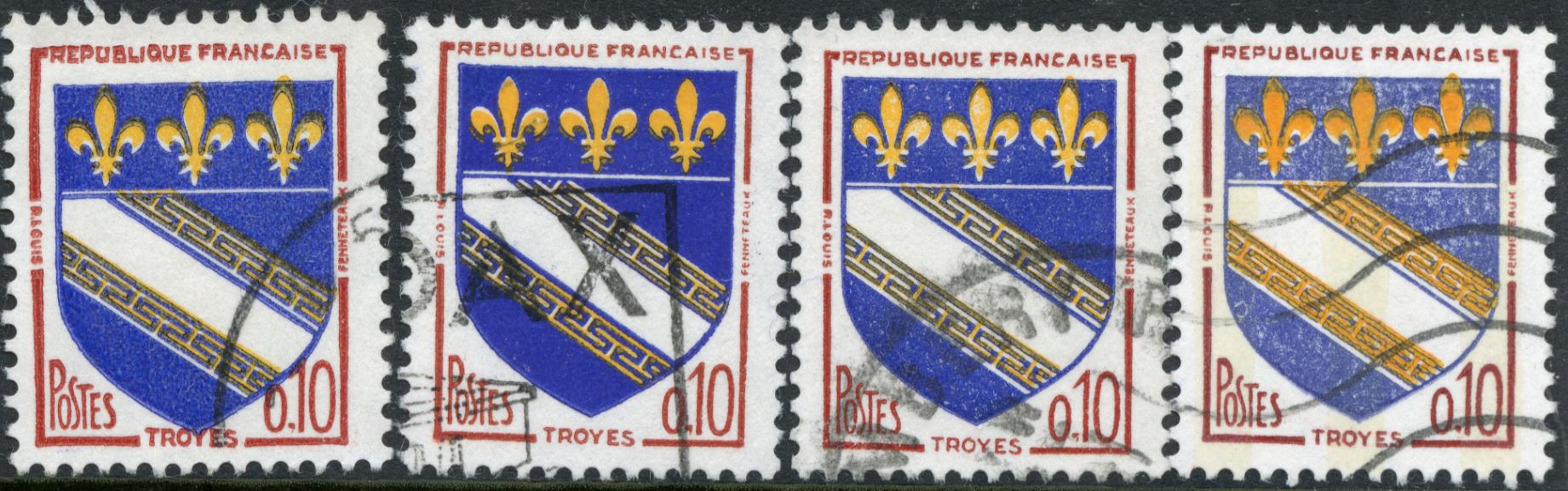 Does yellow get printed after the blue? 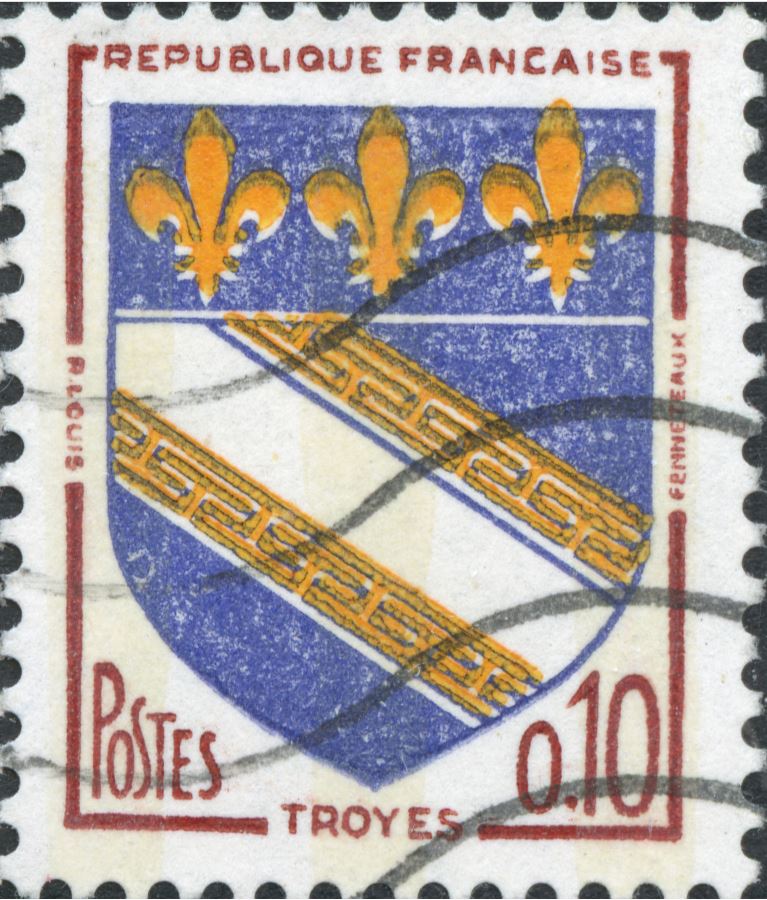 Most of the Troyes stamps I have a short-legged "P" and thinner characters.... 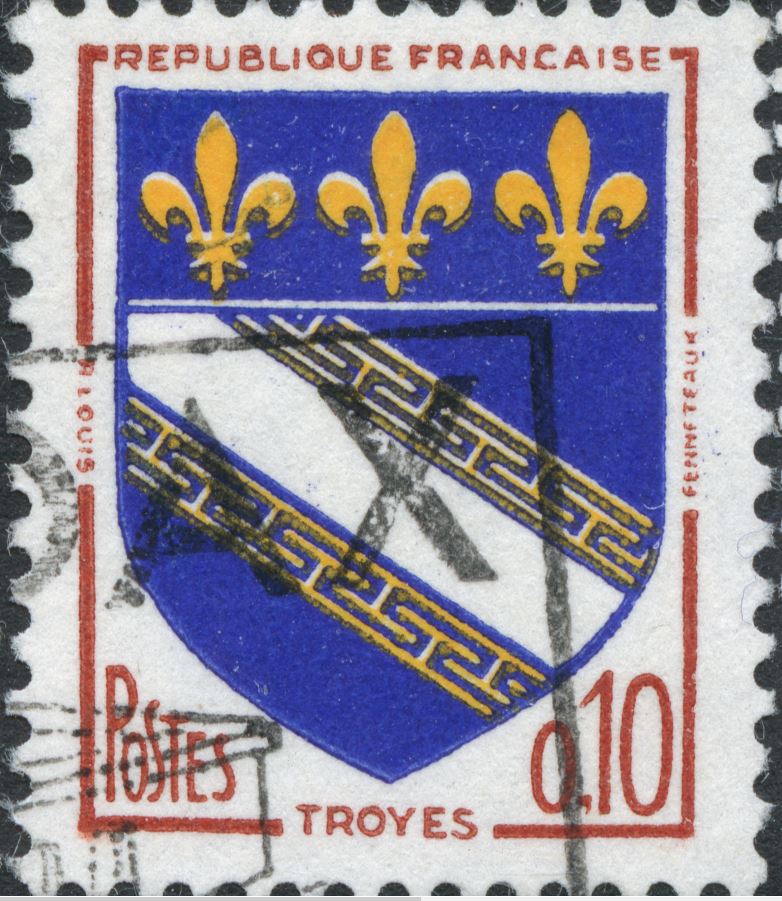 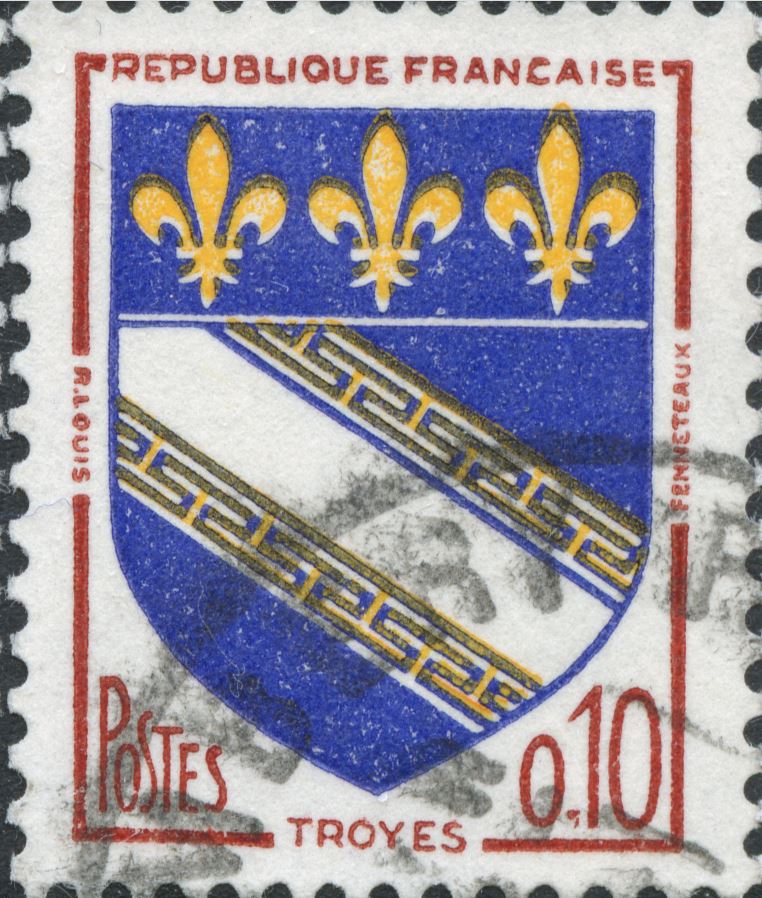 But such a thick text can't be just overinking?! And why do the yellow lilies climb higher and higher from left ot right? This goes for all 4 of them... 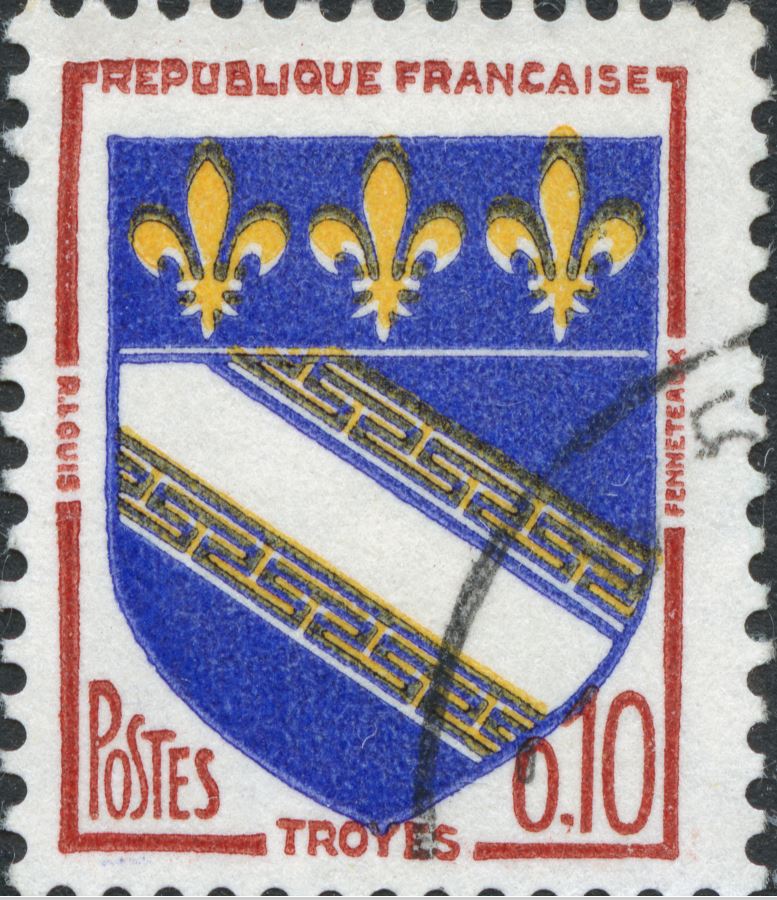 |
|
Send note to Staff
|
|
|
|
|
Pillar Of The Community
United States
8956 Posts |
|
|
The yellow climbing higher and higher? Poor quality control is my guess,
Peter |
Send note to Staff 
|
|
|
Rest in Peace
Netherlands
963 Posts |
|
|
Peter,
have a look at these stamps! It is not just 1 or 2! And it is WITHIN a particular stamp!! |
|
Send note to Staff
|
|
|
Pillar Of The Community
United States
3224 Posts |
|
|
In the examples shown it is clear yellow gets printed after blue. See if there are ones that are printed the other way around. True of other some countries; don't know about France. But note that the yellow overfills the white space allowed for it. This is done on purpose to allow for some variation in alignment. The printers failed to do the best job of alignment in any case. Not a big deal.
Peter is correct. These very commonly used low values were probably printed at fairly high speed so paper slips happen, inking varies and there's more tolerance of what you might consider to be imperfect or variant stamps. There are variations all over the place from stamp to stamp here. Note the bottom stamp's blue shield touches 'TROYES'. Interesting, but not a big deal. The lettering variation including the short P looks to be due to underinking/overinking. Also interesting but not a big deal.
What's more interesting is the top single has filled in or rounded blue points in the fleurs-de-lis. Might be a different plate used at some (later) time with the yellow ink color a bit more orange at the same time. How long was the 10c available and how many were printed? It's a very, very, very common stamp so there's going to be printing variation over time. Can anyone tell us if Maury lists any varieties for this?
|
|
Send note to Staff
|
| Edited by hy-brasil - 11/11/2017 07:13 am |
|
|
Pillar Of The Community
Norway
1661 Posts |
|
|
Pillar Of The Community
Norway
1661 Posts |
|
|
The left stamp (or bottom large size) in the OP has the coat of arms shifted out of centre. Maury is listing many varieties were design elements is very misplaced, but I believe it will need to be more significant than this example. Maury is also listing lots of varieties where under or over-inking is involved (particularly for the Sower issues), but again I think it need to be more significant to be covered in the catalogs. These printing varieties are numerous or even endless, so the catalogs cannot include any minor detail not perfect. I agree with Peter and hy-brasil - quite interesting - I would keep it as a curiosity - but no big deal. Experts on these stamps may prove us wrong tough  |
|
Send note to Staff
|
|
|
Valued Member
France
69 Posts |
|
|
Hello,
When I was young, I printed this stamp and I can say that the yellow was printed first, blue and brown after and at last phosphor bars.
The rotative press worked night and day. The colors was not at the good place and the impression was not ever well done. Not important, we had no time to do better.
Papy24 |
|
Send note to Staff
|
|
|
Pillar Of The Community
Norway
1661 Posts |
|
|
Wow papy24 - now that is an expert on this stamp! Interesting, thanks for sharing. btw - where you on shift the day they forgot to do the brown color printing - or did you simply forget to refill the brown ink ??  You should have done it on purpose - and kept a few sheets for a rainy day - could have a few good red wines 'for free'  |
|
Send note to Staff
|
|
|
Pillar Of The Community
France, Metropolitan
3753 Posts |
|
|
The rarest examples of this stamp sell for 150-200 euros.first 2 pics.(incomplete printings).    partial missing e & s less rare. |
|
Send note to Staff
|
|
|
Valued Member
France
69 Posts |
|
|
I can't answer you, Blaamand. Show me an example. May be an other reason.
It was impossible to keep bad sheets. They was numbered.
Papy24 |
|
Send note to Staff
|
|
|
Valued Member
France
69 Posts |
|
|
I have not see the example shown by perf12.
It is not ink missing, but the pressure was get out at the end of the day. This sheet should be eliminated, and not sold by the post office. But it is for the pleasure of philatelist.
Papy24 |
|
Send note to Staff
|
|
|
Pillar Of The Community
Norway
1661 Posts |
|
|
papy24 - I was not being serious, only trying to make a joke, my bad if it was not perceived that way. (Obviously you could not do what I suggested)
perf12 - nice! |
|
Send note to Staff
|
|
|
Pillar Of The Community
Norway
1661 Posts |
|
|
Please allow me to go slightly off topic.
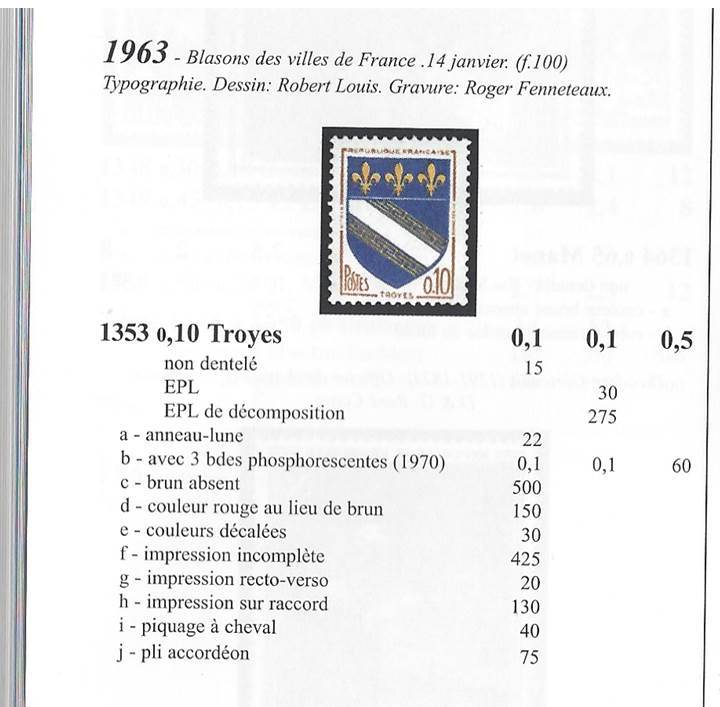
Maury lists variety 1353 i) - 'piquage á cheval'. Similar varieties are listed for very many French stamps. I know these varieties are caused by misplaced perforations, so that a part of the neighbor stamp(s) is included within the perforation. These stamps/sheets should have been destroyed at the printers and never reached the post office, however some were not detected. My question is - is there a defined criteria for how much of the neighbor stamp must be visible in order to say it is a 'piquage á cheval'? I have many French stamps with 1,2,3 mm of the neighbor stamp on them - are they all such a variety - or neither of them? Sorry for asking, Maury is not giving any explanation at all, at lest I cannot find any in my catalog.
Thanks in advance! |
|
Send note to Staff
|
|
|
Pillar Of The Community
France, Metropolitan
3753 Posts |
|
|
A real "Piquage à cheval" should show at least 1/3 of the next stamp. Otherwise it's just a badly centered stamp.Of coarse this is open to one's evaluation.  |
|
Send note to Staff
|
|
|
Pillar Of The Community
Norway
1661 Posts |
|
|
perf12 - thanks for your feedback. The sample you provided is an 'extreme' version. Quote:
this is open to one's evaluation. It is exactly this 'one's evaluation' part I would like to avoid. Many of the 'piquage á cheval' varieties are listed with significant catalog value, even for very common definitives. Bad centered stamps are normally considered damaged or at least un-attractive - but at some point the mis-aligned stamp becomes 'piquage á cheval' -and at this point it has suddenly become much more attractive than a normal stamp - but where is that limit ??  I would presume the catalog publishers or dealers should have some kind of criteria - is the 1/3 something you made up yourself or is this the norm? Sorry for keep asking - I have tried google translate and various French stamp forums, but I do not understand any French (except for philatelic descriptions used in Maury that is...) - so it's difficult for me to find any answer to this. Anyone knows or able to find out? Much appreciated |
|
Send note to Staff
|
|
|
Pillar Of The Community
France, Metropolitan
3753 Posts |
|
|
The Auction houses use the 1/3 criteria.The maximum 'Piquage à Cheval' the more affirmative can be the asking price for such stamps. Pic 1) Maury 25b cat. price 200 euros,sold 58 euros Pic 2) Maury 30b cat. price 200 euros,sold 50 euros   http://www.roumet.com/droite.php?no...orie=TIMBRES http://www.roumet.com/droite.php?no...orie=TIMBRESThe "Piquage à Croix" is the same thing.The more of the Cross that is centered:the higher the premiums.  Another strange variety:  |
|
Send note to Staff
|
| Edited by perf12 - 11/11/2017 1:13 pm |
|
|
Replies: 23 / Views: 6,015 |
|



 Posted 11/10/2017 12:20 pm