| Author |
 Replies: 16 / Views: 4,308 Replies: 16 / Views: 4,308 |
|
Pillar Of The Community
Croatia (Local Name: Hrvatska)
1131 Posts |
|
|
I have this piece of the cover (with a good provenance) with mixed stamps of Singapore, Kedah and Kelantan, all Malayan States. Because the paper is really rough, and stamps are really "screaming" to be soaked and placed on quality album pages, my question is next... is this combination scarce and possibly will be better to keep them this way (on paper) instead of soak them? Paper itself is very rough and surely will be better for stamps themselves to be soaked and placed on album pages... but, if this combination is something unusual, surely will be better to keep "as is", and not to ruin the postmark integrity. I think that the postmark is Singapore, but can't see it clear... 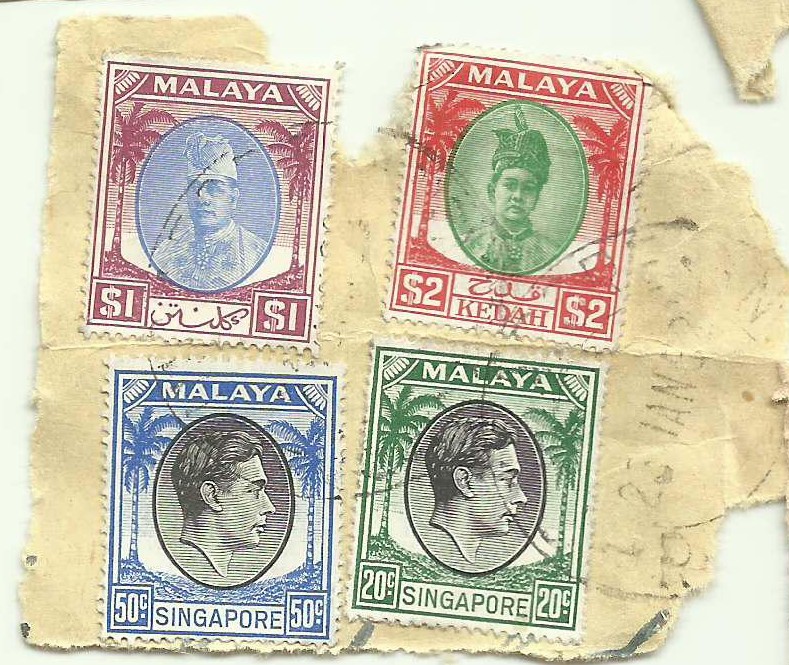 |
|
Send note to Staff
|
|
|
|
|
Pillar Of The Community
United States
7239 Posts |
|
|
Hi fillipo. I am a Singapore collector, but I would not call myself an expert. Singapore and the other Malayan states allowed the use of other Malayan states in my experience. I have a few of these "mixed frankings". Paper looks fresh, so I would definitely not soak them off. Cancel looks to be Singapore registration. |
Send note to Staff 
|
|
|
Pillar Of The Community
Croatia (Local Name: Hrvatska)
1131 Posts |
|
|
Thank you for reply, Bookbndrbob. I didn't have an info about that these mixed frankings has been allowed amongst the Malayan states. |
|
Send note to Staff
|
|
|
Bedrock Of The Community
Australia
38679 Posts |
|
|
Opinion: I see no advantage in soaking common stamps off piece, maintained on fragments can offer lots of information on Postmarks auxilliary markings etc. If a valuable singleton emerges, then one may opt, for good husbandry, to remove. I am by no means an expert, but the large ring "REGISTRATION" I have not spied before. Mixed frankings are common in my experience. Yours is obviously from a parcel. I have seen Malay stamps on exercise Book lined paper made envelopes, tea chests, and even a wooden box. Times were tough then and all sorts of material was used. I have over 300 stamps, which I have all kept on piece................. These are FMS Federated Malay States examples. 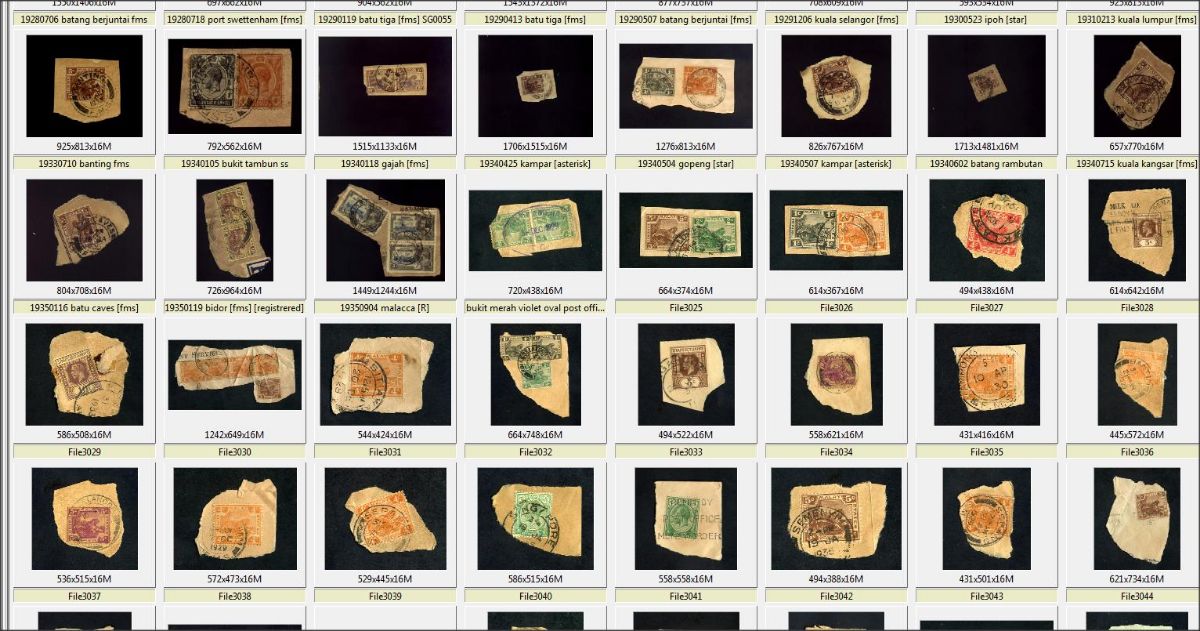 |
|
Send note to Staff
|
| Edited by rod222 - 10/09/2017 10:33 pm |
|
|
Pillar Of The Community
United States
7239 Posts |
|
|
Bedrock Of The Community
Australia
38679 Posts |
|
|
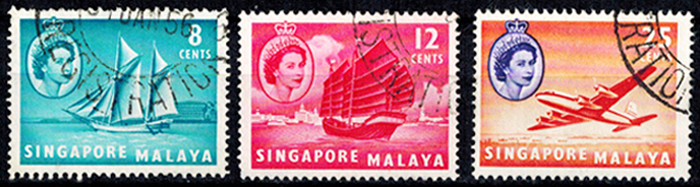
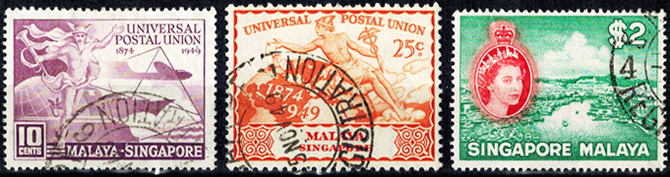
Very nice Bob.
I am surprised I have none of these, esp the UPU cancellations.
Most of my stock (I believe) came from an employee from NESTLE in the Selangor district. Sending lots of parcels home to Perth, but evidently without Registration.
|
|
Send note to Staff
|
|
|
Pillar Of The Community
Croatia (Local Name: Hrvatska)
1131 Posts |
|
|
Moderator

United States
12330 Posts |
|
|
It should be mentioned that there is a significant 'downside' to leaving stamps on paper. The paper shown above are very good examples of the low quality packing paper often used on parcels. This paper is notorious for being an 'acid sponge', it is absolutely loaded with acid forming lignin. The stamps will get toned and then finally brittle; it is just a question of time.The only way I know how to prevent this is to either remove the stamps and get them off the acid paper or to neutralize both the stamp and paper piece. It MAY be possible to neutralize them by using a solution of baking soda and water but this would float the stamps. Additionally there is very little (none?) philatelic documentation on neutralize paper for archival purposes. (There is some info for this at Library Of Congress and other archival organizations.) To learn more you can check out these links http://www.loc.gov/preservation/care/paper.htmlhttp://www.niso.org/publications/tr/tr01.pdfDon Edit: If they were mine, I would record the cancel/postmark info with a digital image and then get them off that crappy paper as soon as possible. |
|
Send note to Staff
|
|
|
Bedrock Of The Community
12705 Posts |
|
|
Pillar Of The Community
United States
7239 Posts |
|
|
An internet search can find the most reasonably priced archival products, at least here in the U.S.A. I have no idea of the availability (number of choices) for a European stamp collector. |
|
Send note to Staff
|
|
|
Moderator
United States
12330 Posts |
|
|
The trouble with 'self neutralizing' is that we do not know the existing pH of each item. Some might be made with 4% wood pulp and the next might be 30%; and the actual amount of existing acidification is also unknown. So does one 'quick squirt' work for each item? You don't know the actual pH you are starting at and you don't know the pH after spraying.
Don |
|
Send note to Staff
|
|
|
Bedrock Of The Community
12705 Posts |
|
|
Don - Good questions. A relative of mine deals in rare books dealing with Napolean. I will ask if he knows. |
|
Send note to Staff
|
|
|
Bedrock Of The Community
12705 Posts |
|
|
Moderator
United States
12330 Posts |
|
|
I would assume that some neutralizing is better than none. I also assume that to measure paper pH you would take a destructive small paper sample, combine it with distilled water, and then measure the pH of the solution. But note adjusting pH is tricky, I worked with pH meters and adjusting pH for many years in one of the family businesses. pH is critical in keeping aquarium fish happy and healthy, here were some of the holding tanks in our wholesale business. 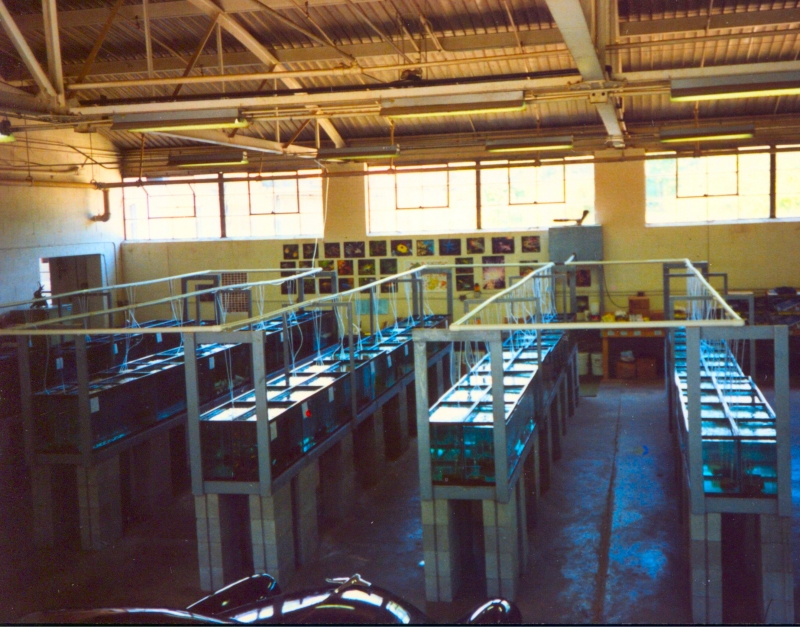 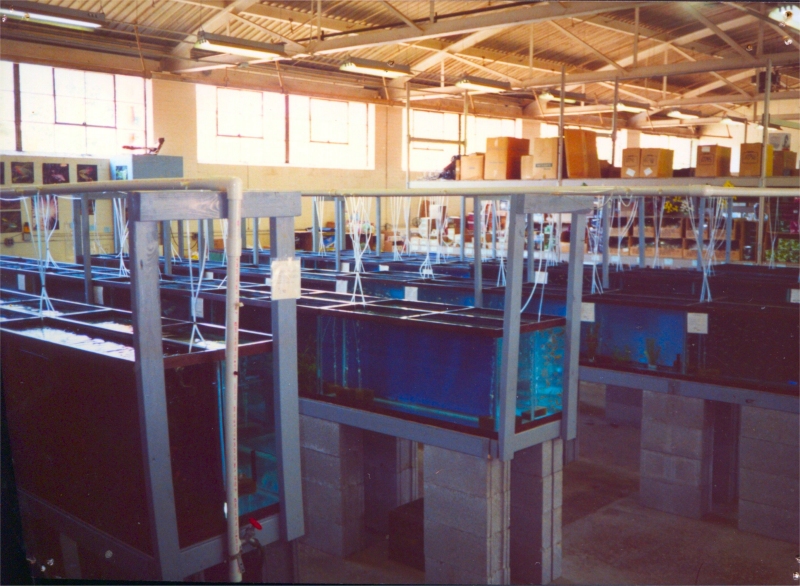 Buffer can be held in 'reserve' and measuring how much buffer is in the reserve is not capture by most to the pH measuring devices and reagents. So you can have a pH of 6.5, add 5 grams of buffer and have to pH move up nicely to 6.9. Yet in another situation you can have a pH of 6.5, add the same 5 grams of buffer, and not move the pH one bit. This is because the buffer was absorbed into the 'reserve' but none was left over to move the solution pH. But I have no experience with measuring and adjusting paper pH, will be interesting to hear what your relative thinks. Don |
|
Send note to Staff
|
|
|
Bedrock Of The Community
Australia
38679 Posts |
|
|
Wow! filipo, nice stuff indeed.
They have survived handsomely for nigh on 70 years, no sign of rusting / toning
which indicates good husbandry in low humidity.
Bravo ! for you for keeping on piece.
|
|
Send note to Staff
|
|
|
Pillar Of The Community
United States
7239 Posts |
|
|
Yes, I agree with Rod; I would keep most of these on piece. It is obvious that they spent very little time in Malaya. Personally, I keep stamps on paper if they have nice, or readable postmarks. With small stamps like these, you very seldom if ever get nice, or complete markings if they are soaked off their paper. Another consideration is that you may get postmarks from post offices or places that no longer exist, since Malaysia and Singapore are changing so fast.
And, as Rod noted, these pieces are MUCH fresher than what you ordinarily see with old Malaya. |
|
Send note to Staff
|
|
|
Replies: 16 / Views: 4,308 |
|



 Posted 10/09/2017 12:46 pm