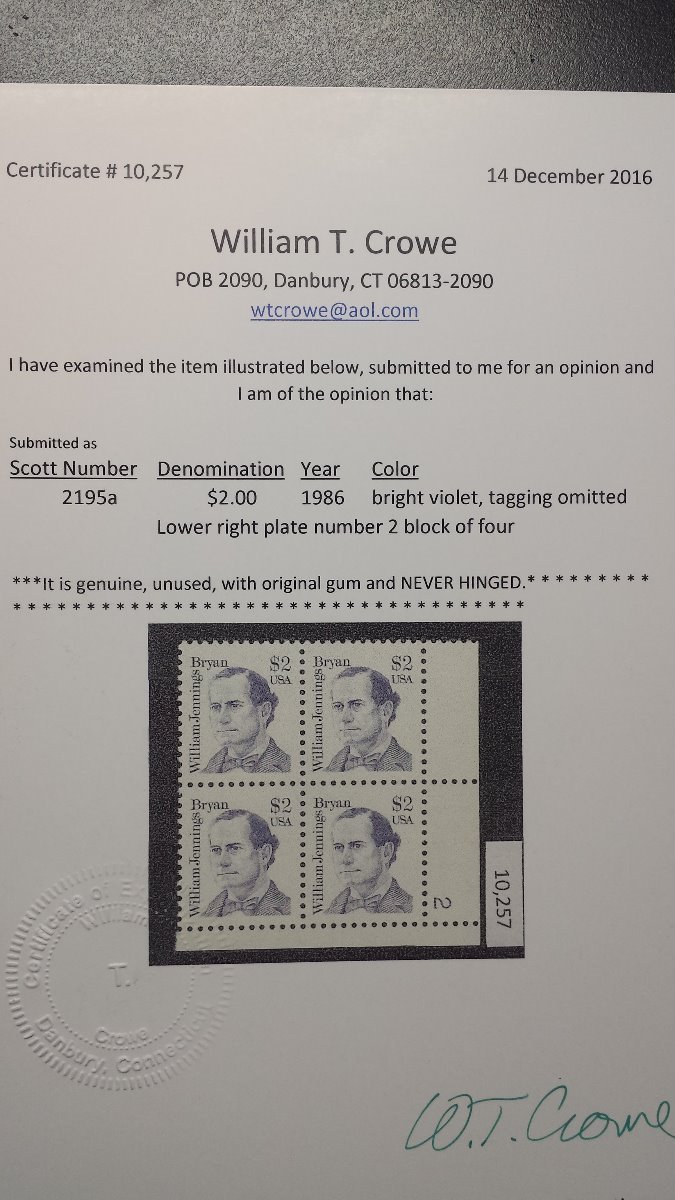
Robert: At a guess, your UV lamp is under-powered. You also need to know that the tagging on virtually identical stamps can vary widely in intensity. This is especially true of stamps produced prior to the prephosphored paper era. The U.S. stamps from the 60s & 70s especially come to mind. Moreover, while rather unusual, I have seen a case where taggant was accidentally transferred from one stamp to another. For overall & block tagging, the taggant is applied over the printed design. You can actually rub some of the taggant from the surface of the stamp.
I purchased my UV lamp at the end of 2010 and immediately started collecting minor tagging varieties. Initially I planned to buy a cheap UV lamp, but after consulting with an expert, I opted for a more expensive Raytech lamp. As I recall, it cost a bit under $200. I have never regretted the additional cost and have returned numerous (nearly 50) items purchased on
ebay and elsewhere as untagged. My UV lamp told me the truth ... in some cases the tagging can be very light and in these cases it takes a good lamp to detect the tagging. This is especially critical when looking for tagging omitted items. But be forewarned ... tagging omitted (TO) errors are not easy to find. In my 7 years of looking, I have detected only one TO item that I had assumed was tagged. On the other hand, I have purchased many stamps described by the seller as TO in that same timeframe.
Be forewarned that a TO stamp must not exhibit even a trace of tagging. I have purchased 3 or 4 copies of 1551b at auction and returned every one of them. Each showed at least a trace amount of tagging.





 Posted 10/25/2017 5:15 pm