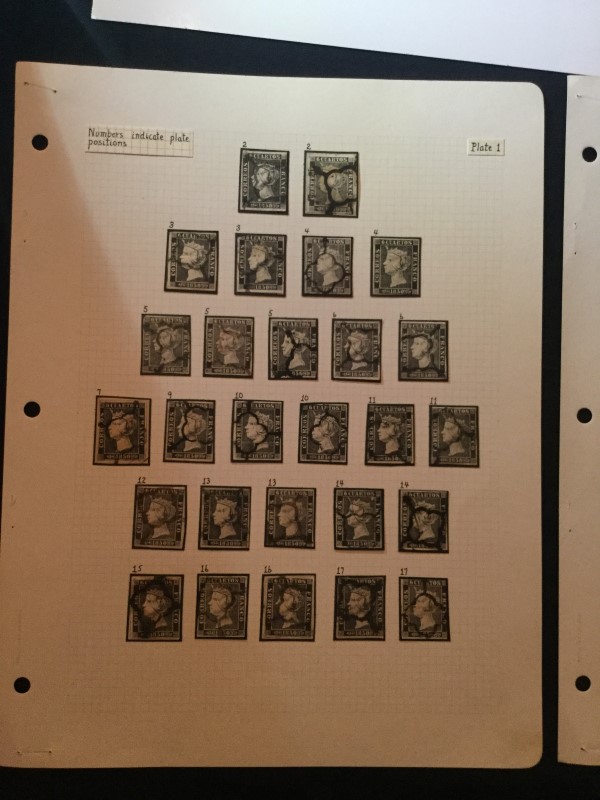
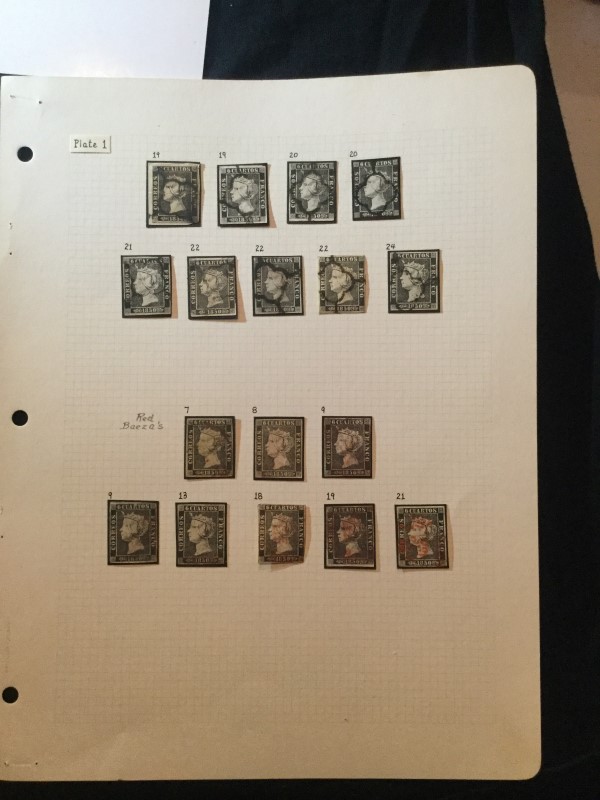
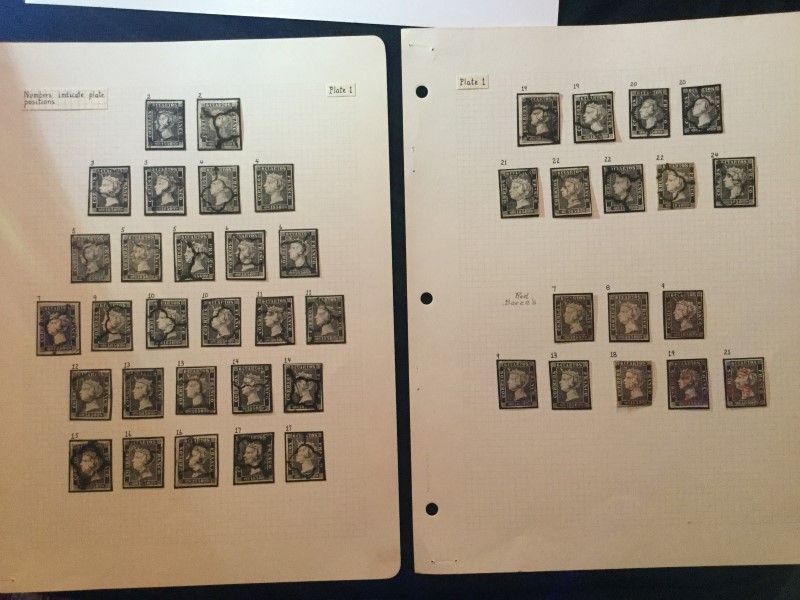
What you have there are plated copies of Spain's first stamp. Checking for fine details in the stamps it is possible to tell where each stamp came from in the plate. In this case it is type 1 (noted as plate 1 here) and each numbered stamp represents a particular position in the plate (actually referred to as the report block). There are 24 positions for this report block. The Block was arranged in 4 rows of 6 cliches, henceforth 24 positions. For example, the first stamp on your page is #2. This is the 2nd stamp in the first row of 6. #3 would be the 3rd stamp in the first row of 6, etc... all the way to #24 which would be the last stamp in the last row of 6.
The group of 8 on the second page, marked "Red Baezas", are from the same report block, but have red, dated, postmarks on them, as opposed to the black spider postmark on all the others. The "Baeza" postmark was named after Don Juan Baeza, who was the Spanish minister of the posts at the time. The red Baeza postmarks are more difficult to find, and much harder to recreate the report block of 24 positions. This is why the person you
inherited them from only had 8 of them and many more of the black spider cancellations.
All in all a nice group of stamps.
Here is what the red Baeza postmark looks like.






 Posted 10/29/2017 9:53 pm